
SA to prioritise EU agricultural trade over the US, Russia:

South Africa’s agricultural sector is largely export orientated, making it imperative for the country to maintain trade relations with its key markets, including the EU and the US.
Wandile Sihlobo, chief economist at the Agricultural Business Chamber of South Africa, made the comment against the backdrop of South Africa’s fraught relations with the US over Pretoria’s refusal to condemn Russia’s invasion of Ukraine.
Sihlobo noted that South Africa had recorded $ 12.8 billion in agricultural exports in 2022, with Africa accounting for 40%, Asia for 27% and the EU for 20%, while the UK and the US each made up 4%.
“Russia is nowhere in our exports — it’s less than 2% of our agricultural exports,” he told a webinar this week, hosted by financial investment consulting firm PSG.
There has been talk recently of the consequences if South Africa was elbowed out of duty-free access to the US trade market under the African Growth and Opportunity Act (Agoa).
This follows a letter by US lawmakers asking President Joe Biden’s administration to sanction South Africa for its perceived support of Russia. Officially, Pretoria has taken a non-aligned stance on the Russia-Ukraine conflict.
“The US is important [in terms of exports] but I think that sentiment is broadly true in other markets. The EU is one of the more important markets and we want to nurture that relationship,” Sihlobo said.
The sector is also grappling with the impact of a weaker rand. On one hand, Sihlobo pointed out that the period between May and the end of the year is the peak export period and so the softer currency makes South African products more competitive on the global market.
But, he added, the “dilemma” comes when the industry has to import agricultural goods using a weaker rand.
“When you’ve enjoyed good earnings selling at a weaker rand, then you have to bring in fertiliser, agro-chemicals, machinery and that, on a net basis, really makes your maths complicated when you look at the financials,” Sihlobo said.
South Africa’s agricultural sector exported about 51% of the food it produced in 2022, even as the country dealt with food inflation hitting a 14-year high. But Sihlobo said exporting about half of what the country produced in value terms was not responsible for driving domestic prices higher.
“The poverty we have is an income poverty in the sense that we have a number of South Africans who are out of work — there is no income. In such instances, even if you drop a price from R20 to R10, if there is no income, that will still be expensive to a consumer,” he said.
“If you look at the global food price index, South Africa has one of the more affordable food products but the issue is that we have a number of people that, as a country, we have not been able to assist in getting into the labour market.”
According to data released by Statistics South Africa, the country’s jobless rate rose to 32.9% of the labour force in the first quarter of 2023, up from 32.7%.
The Competition Commission has said some price increases were unjustified and has launched an inquiry into the fresh produce supply chain in the country, looking for indications of uncompetitive behaviour or price fixing.
Sihlobo said the commission had “missed the mark”, arguing that South African food processors actually absorbed some of the rising costs of production, without passing them on to the consumer.
“South Africa was one of the countries that saw moderate food price increases last year. We averaged at 9.5% in 2022 while other countries were seeing double-digit food price inflation,” he said.
NATIONAL ARTS FEST: All things enticing:

The 49th instalment of the National Arts Festival officially started on 22 June. The town is abuzz with local artists from all over South Africa, looking to use this platform as an opportunity to not only showcase their art but also to make financial means for their families.
Many of the artists the Mail & Guardian spoke to say that jobs are scarce in South Africa and especially for artists. They say that art festivals such as this one is a way in which they can sell their art and be able to survive until the next gig comes.
Others say that this is also a great way to showcase and preserve our culture, but most importantly, to tell our stories honestly, through art.
Onke Mbulali from Port Alfred is a fashion designer whose brand is called De Salu Creation. He specialises in men’s streetwear. Mbulali says that he loves using denim to create his products and is inspired by the likes of TSHEPO, a bespoke denim clothing, and ready-to-wear clothing brand.
Mbulali says that he came to the festival to make money and to promote his brand.
“I believe in this brand so much that I put my name on it. Salu is my clan name and just as Levi Strauss was bold enough to put his name on a pair of jeans and make it, so can I” Mbulali said.
Mbulali puts South African cultural prints on denim items, he says that because we are living in modern times, it is important that even in this modern way of living we always remember who we are and where we come from.
Bulelwa Mashiyi of Amathole proudly recited her clan names to us when asked who she was. She says that her culture is embedded in her roots and everywhere she goes, she will always acknowledge all those who came before her and all those who will carry the baton after she is long gone.
“All this jewellery and traditional Xhosa clothing we sell here which we call umbhaco are handmade. We were taught by our elders to make it and we are now teaching young children from our various communities in the Eastern Cape” said Mashiyi.
Mashiyi says that these programmes that they run in their neighbourhoods are self-funded and that does not solve anything, in fact, it makes things worse.
“We don’t get any funding or support from the government, we use the R350 they give us and some even chip at their children’s grant to be able to fund these programmes we have, so in an effort to help children in our community, we also cause suffering to our families,” she says.
Mashiyi says she hopes that she can make some connections and money during the festival but more importantly, she wants to use this opportunity to teach people about the Xhosa culture.
Caroline Nyoni and her husband Graham Mhari make and sell bamboo foldable baskets. They are easily storable and have multiple functions.
Nyoni says her husband grew up in a family of artists. She says that his father taught him carpentry and that knowledge of carpentry and after a few attempts, they came up with this concept.
Nyoni says that this is their third time coming to the festival and says they would have had for longer had the pandemic not happened.
“We were so eager for the festival then Covid happened. Business was terrible and we decided to try to sell online. That helped but the money was not as great as being at festivals like this where you can tell the story behind the product” she says.
Nyoni says that she simply is happy to be at the festival to tell the story behind the concept.
“Outside of money, all I want is to engage customers and potential customers about our product. I just want the whole experience” she says.
Crystal Reid of Craft to Heal says that it is time for artists to think outside the box by being aware of the economics of the country. Read makes items such as baskets and placemats from paper and plastic.
“People love beautiful things but people can’t afford beautiful things because they are going through financial strain and there are no jobs,” she says.
Reid says this is an opportunity for artists to teach crafts and trades so people can make means for themselves.
She says that art lives long after we are gone, therefore the job of the artist is to teach and train others so they too can make sure the art stays alive.
Namhla Dotwana of Namhla Collection makes African traditional cosmetics using impepho, which is indigenous sage.
Dotwana says that the business started during the lockdown after doing extensive research about the benefits of impepho, especially on the skin.
“Back in the day it was used to heal wounds, so I thought let me incorporate it with my skin cosmetics to heal pimples, scars, and rashes,” she says.
Dotwana handmakes soaps, bath salts, and candles among other things. She says that it is time we start to move our focus from all these international skin brands that don’t understand our pigment and climate to more locally made products that our forefathers used.
“I Namhla Collection to take over South Africa and also make its name in the international cosmetic space. That’s why I am at this festival, to foster those connections which will one turn into contracts” she says.
After the birth of her baby girl in 1999, Serena Gess of Greenways Herbal Ointments could not find completely natural skin products to use on her baby, which led to her doing research and reading old recipes until she found what worked for her.
“I found a recipe containing three different herbs containing Comfrey, Lavender, and Plantain which are good healing herbs. I use cold-pressed sunflower oil blended with beeswax as the base of the ointment” she says.
People fear the future if Grootvlei power station closes:
“What breaks my heart is that I might have to pack my ambition away and go back to North West with nothing,”
Gadifeli Bhuiyan, the owner of the Aqua Shopping Centre in Dipaleseng
‘Just look around, there isn’t much in this town,” says Gadifeli Bhuiyan, the owner of the Aqua Shopping Centre in Dipaleseng, near Eskom’s Grootvlei power station in Mpumalanga.
Bhuiyan says she has built a life here with her family, but she’s watching it fade away.
“I have children, my husband and I have a home here. Sometimes we wonder if coming here all those years ago was a good idea,” she says.
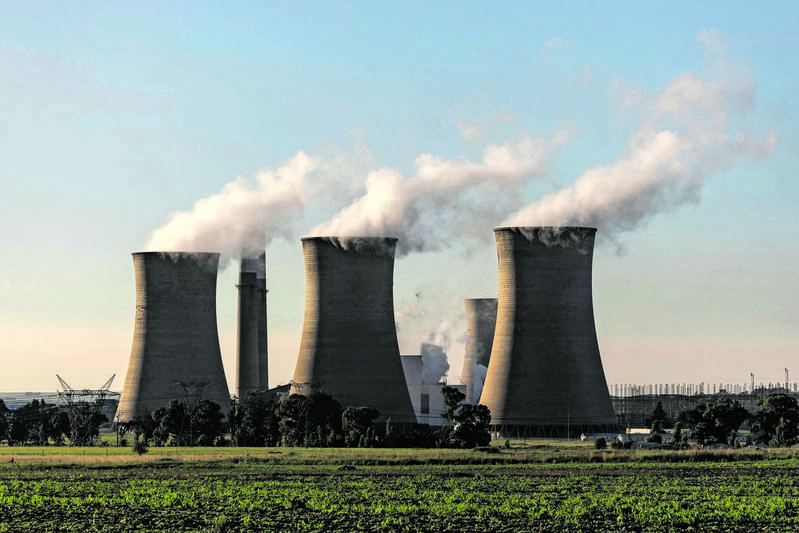
The future of small businesses in the country’s coal belt is uncertain. Many of South Africa’s predominantly coal-fired power stations are ageing and the government wants to reduce carbon and other emissions that contribute to climate change. This means power stations such as Grootvlei are marked to produce renewable energy.
Grootvlei was built in 1969 and was meant to be shut down in 2019, after 50 years’ service, but because of the electricity crisis, its life expectancy was extended to 2027. It currently provides 1?200 megawatts to the national grid.
The government remains tight-lipped about whether it will close the Grootvlei plant in four years’ time.
Bhuiyan has always been a hardworking businesswoman.
“When I left North West [in 2016] to come to Grootvlei, I knew that failure was not an option. A lot was riding on my future and that of my family. I worked hard until I managed to buy the shopping centre and employ locals.
“What breaks my heart is that I might have to pack my ambition away and go back to North West with nothing,” she said.
Grootvlei is a small piece of the puzzle, but for people’s livelihoods here, it’s potentially life-changing. They feel in limbo while they wait to hear whether the plant will be shut down and repurposed, or if it will be kept open as Electricity Minister Kgosientsho Ramokgopa wants.
Net zero
In pursuit of a greener future, many jobs and livelihoods are at stake as South Africa forges ahead with plans to decommission 10 of its coal plants, which employ more than 100?000 people.
In 2015, South Africa joined the 195 countries that committed to the United Nations Paris Agreement which binds them to targets that will result in a neutral balance of carbon pollution, or net zero, by 2050.
Net zero, according to the United Nations, means cutting greenhouse gas emissions to as close to zero as possible, with any remaining emissions re-absorbed from the atmosphere, by oceans and forests, for instance.
Although South Africa is responsible for what looks like a small 1.06% of the world’s total carbon emissions, it is the world’s 14th-biggest emitter, and the largest in Africa.
To reach its Paris Agreement goals, South Africa has committed to closing 10 coal-fired power stations by 2036.
As part of the Just Energy Transition Partnership announced at the COP26 climate conference in Glasgow in 2021, the United States, the United Kingdom, Germany, France and the European Union pledged $ 8.5?billion in the form of loans, grants and investments to help South Africa achieve its net zero objectives, some of which could go towards refurbishing coal-fired power stations in the Mpumalanga coal belt.
Just transition
Last October, Eskom decommissioned the Komati power station in Mpumalanga as a litmus test for South Africa’s transition away from coal, calling the closure “just and equitable, leaving no one behind”.
In the country’s investment plan presented at the United Nations climate negotiations, COP27, held in Egypt last year, President Cyril Ramaphosa said South Africa wanted to reduce carbon emissions but it had to ensure that it was done in a just manner.
He said the investment plan aims to place South Africa on the right side of history concerning climate change, yet it must also try to solve other interrelated crises: addressing the electricity crisis in the country, which has increased the levels of load-shedding, which contributes to growing unemployment and poverty.
To ensure the transition to cleaner energy was just, Ramaphosa created the Presidential Climate Commission to ensure citizens and Eskom workers were consulted.
The commission was also tasked with finding alternative solutions to the energy crisis and how Eskom workers and others could be reskilled to work in the renewable energy sector.
When state-owned entity Eskom announced the planned closure of 10 coal-fired power stations, it faced a backlash from residents, small business owners and employees who saw that they faced job losses and fewer work opportunities.
People in the Komati area and those working in the power station said they weren’t thoroughly consulted about the closures and were not given alternative solutions to keep their businesses open. Grootvlei residents echoed the same worries, threatening to strike to keep Dipaleseng from becoming a ghost town.

Ghost town
Like Bhuiyan, many people rely on the Grootvlei power station. “We saw what happened in Komati and we know that that is inevitable in our town,” she says.
Noyi Mthabela, 21, and Noluthando Ngcobo, 20, run a vetkoek stall outside Grootvlei. They have heard the rumours about the power station’s possible closure, but nothing official.
“We hear it all the time, that the station will stop operating one day and people will be without jobs. I think this is going to cause more problems in the community. You can just look around and see that unemployment is a real thing here in Grootvlei. What more when the power station shuts down?” says Ngcobo.
In June, Mineral Resources and Energy Minister Gwede Mantashe told the Presidential Climate Commission’s 2023 quarterly meeting that Komati has become a ghost town and that the power station’s move to renewable energy had not been “just”.
“It is an energy transition. ‘Just’ doesn’t qualify at Komati in terms of the number of jobs destroyed and the number of jobs created, the megawatts destroyed and those created. In all aspects, it is not a just transition. It is an energy transition,” Mantashe said.
The plan for Komati power station is to transform it into a wind and solar energy production site. The plant will include a micro-grid assembly line and agri-voltaic plant, which could contribute to job creation in the area.
It would also act as a training facility in partnership with the Cape Peninsula University of Technology’s South African Renewable Energy Technology Centre.
Eskom has secured a R180?million grant from German development bank KfW to establish a renewable energy training facility at Grootvlei and “discussions are underway”.
The delay in providing people with training has created doubt for workers and residents about the government’s plan.
People living in the area are uncertain about how to plan for their future. They say the government has not been able to provide jobs and people continue to leave the town to find better opportunities.

Keeping coal
Ramokgopa has previously said that extending the lives of ageing coal-fired power stations in the short term was not deviating from longer-term goals to cut carbon emissions, and it addresses the electricity shortage that’s plunged the country into darkness and harmed the economy.
In March this year, Ramokgopa visited the Grootvlei power station and told workers that the plant’s megawatts were needed to get the country out of its current electricity crisis.
Forestry, Fisheries and the Environment Minister Barbara Creecy said it would be “counterintuitive” to shut down coal-fired power stations amid an energy crisis. Responding to questions from the National Council of Provinces in May, Creecy said although the country planned to decommission the plants, they are reconsidering the timeframes.
The Presidential Climate Commission, tasked with finding solutions to the energy crisis, said in its latest report that extending the life of Eskom’s coal plants was unsustainable.
Executive director Crispian Olver added that it would be detrimental financially, especially with partner groups pledging money to South Africa for clean energy.
What really matters
Mthabela paints a grim picture of what might happen should Grootvlei power station shut down.
“If it happens that the power station shuts down and does not employ people, the crime in the community is going to increase drastically. Most people that are here, came here to work, so if they are not given jobs they will turn to crime to survive,” says Mthabela.
Early in the morning, Ngcobo prepares her first batch of vetkoek outside the Grootvlei power station, for workers and job seekers making their way to the plant.
“People that are waiting here for jobs as well as those who are working inside the station buy from me all the time. With that money, I am able to do a lot for myself and my family. It really helps.”
Ngcobo says the uncertainty about the future of the power station weighs heavily on everyone. She thinks that one day, it will come crumbling down and all that will be left are buildings that once carried people’s hopes and dreams.
This article was funded by Internews’s Earth Journalism Network. Mandisa Nyathi and Lesego Chepape are climate reporting fellows, funded by the Open Society Foundation for South Africa.
Submit and get free exposure here: Showcase Your Business | Advertise Your Special Offers.
