
Saftu calls on education department to ensure workers’ rights are upheld at Educor colleges:
The South African Federation of Trade Unions (Saftu) has called on the department of higher education and training to ensure the rights of workers are recognised after it decided to reinstate the registration licence of private learning group Educor.
The department, which in March cancelled Educor’s registration over its failure to submit audited financial statements since 2020, said the decision to reinstate it was made “purely on humanitarian grounds” after it was reported that more than 13 000 students registered at Educor institutions could be left stranded.
It said the decision was made “with the primary aim of minimising the disruption to the education and future prospects of the students currently enrolled”.
Saftu had urged the department to ensure that the company “does not continue with the violation of workers’ rights and operates effectively to ensure the education services are delivered to the students who are registered”, spokesperson Trevor Shaku told the Mail & Guardian.
According to the Higher Education Act, private tertiary institutions are obliged to submit financial statements to the department as part of the accountability process. However, a private company is not required to disclose financial information to the public.
Educor, the largest private education provider in Southern Africa, owns the Damelin, CityVarsity, Icesa City Campus and Lyceum colleges. It manages 10 educational brands on more than 60 campuses and sites in South Africa and internationally.
As part of the conditions set out by the department of higher education, Educor must fully comply with Council on Higher Education accreditation requirements before commencing any teaching and learning activities. This includes an evaluation of the institution’s policies, systems, strategies and resources for quality management of the core functions of teaching and learning.
Educor must also submit comprehensive monthly financial reports to the department, including detailed financial statements, student enrolment statistics and progress updates on compliance with Council on Higher Education accreditation standards.
Earlier this year, then higher education minister Blade Nzimande slammed Educor for its “gross governance and compliance failures” and gave it until December to “conclude the remaining examinations or assessments for the remainder of the current academic year”.
Saftu — which has been pushing for fair labour practices at the Educor colleges — said it had been receiving complaints about maladministration and the non-payment of salaries to employees at campuses nationwide since November 2023.
“Educor abused their lecturers and other staff in several ways, including late payment of wages, unilateral change of conditions of employment, firing workers who dared stand up for their rights and lacking basic functions that any employer is obliged to have in their workplaces, such as grievance mechanism and handling,” Shaku said.
Despite the department’s decision to reinstate Educor’s registration, it warned that it reserved the right to revoke it should the company fail to adhere to the stipulated conditions.
“The provisional reinstatement does not in any way waive the department’s rights and powers entrusted to it in terms of the Higher Education Act or invalidate the legal proceedings that the parties were involved in,” it said.
A student at Damelin’s Braamfontein college told the M&G that, after months of uncertainty, the department’s decision had come as a relief.
“I’m glad the department decided to prioritise the students but we can only hope that the institution will do its part in adhering to the conditions,” the first-year accounting student said.
A student at CityVarsity in Braamfontein also hailed the decision, adding that “private institutions offer you options that public universities often do not”.
The untapped potential of autism-friendly tourism in South Africa:
The staff of our travel and tourism sectors require a deeper understanding and acceptance of neurodiversity
One percent of the world’s population is on the autism spectrum. While that might not sound like much, this equates to over 75 million people. In addition, and of more concern, is the fact that autism prevalence has increased by 178% over the past two decades.
In South Africa, it’s estimated that around 0.08% to 2% of residents are on the spectrum. Just like people living with a physical disability, people with autism require special assistance and consideration in their day-to-day lives, as well as on their travels.
“There are two main things most people with autism need to be able to travel smoothly and comfortably: lots of planning and, most importantly, flexibility,” says Euan McNeil, Managing Director of Flight Centre Travel Group.
“Just a few offerings that can streamline travel for these travellers are things like priority boarding and ‘quiet sections’ for more relaxed check-ins at airports and accommodations. Some airports, like New York’s JFK International Airport and Dubai International Airport — the world’s first airport to receive Certified Autism Centre designation — already offer programmes allowing individuals on the spectrum to visit and practice navigating the airport before their date of departure,” McNeil adds.
It’s these small courtesies and considerations that can completely transform the travel experience for someone on the spectrum. And with inclusivity top of the agenda across the globe, these considerations are not only becoming more prevalent; they’re becoming an expected norm.
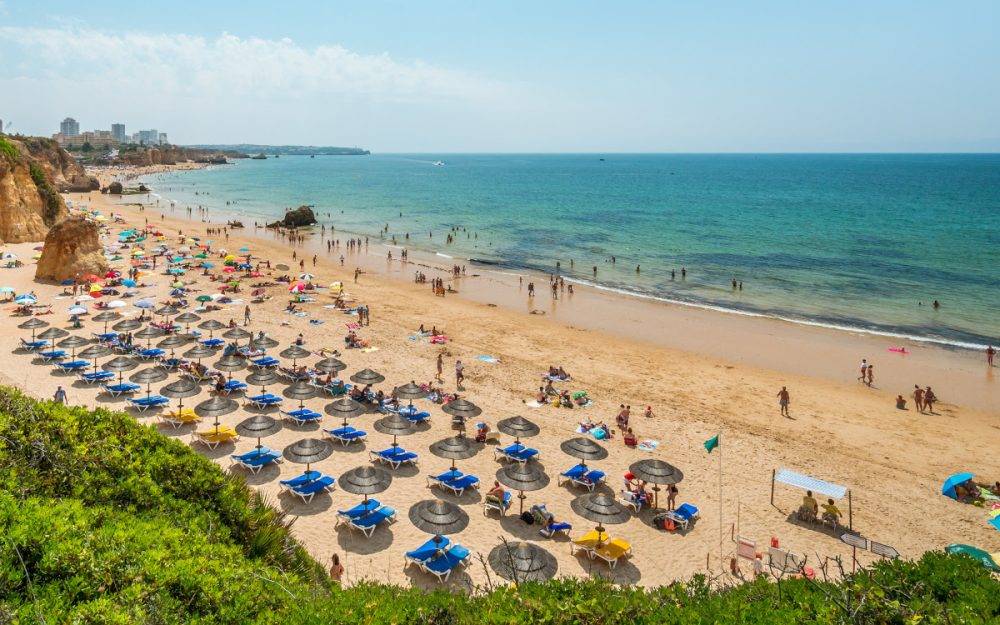
So, how does South Africa stack up when it comes to autism-friendly travel? What needs to change? And how can travel agents play their role in streamlining their neurodiverse clients’ journeys? McNeil provides answers below.
Is South Africa autism-friendly?
While there’s growing awareness around neurodiversity in South Africa, our country is still lagging behind in many ways.
“South Africa has so much potential to become an autism-friendly travel destination. After all, we offer some of the most remote, peaceful, sensory-friendly locations in the world. For example, sensory overload is highly unlikely somewhere in the bush or somewhere secluded in the mountains, but the reality is that most staff members at camps and lodges simply aren’t trained to assist guests with autism. They don’t have any knowledge of these guests’ sensory needs and triggers, they aren’t aware of how best to communicate with them, and they don’t know what action to take to prioritise their safety,” explains McNeil.
“The reassuring news, though, is that with a bit of training and sensitivity, South Africa could quickly become more than just autism-friendly – our country could become a safe haven for travellers on the spectrum.”
We have a lot of work to do considering we’re competing with destinations like Portugal, Ireland and the UK. Portugal has been named one of the top autism-friendly destinations in the world, with several sensory-friendly accommodations and attractions, such as the Oceanarium in Lisbon, Europe’s largest indoor aquarium. The country’s also known for its autism-friendly beaches, particularly in the Algarve region. The UK offers special autism-friendly theatre performances and theme parks, while Ireland is home to 12 designated autism-friendly towns, including Clonakilty, the first Irish town to receive this designation. Ireland also has 212 organisations accredited as Autism Friendly Champions.
What makes a destination/accommodation/attraction autism-friendly?
For a place or attraction to be autism-friendly, owners or organisers need to have made specific accommodations and adjustments to create a welcoming and accessible environment for individuals with autism and their families.
“Undoubtedly, the most crucial aspect of an autism-friendly destination or attraction is proper staff training. Employees need to understand and accept autism. They should also be equipped to recognise the signs of sensory overload and provide empathetic support when required,” says McNeil.
But, of course, recognising and empathising with someone experiencing sensory overload isn’t enough. Travellers should also have access to quiet rooms or spaces, sensory kits with noise-cancelling headphones, and adjustable lighting to reduce sensory stimuli.

“Another vital component is to help neurodiverse travellers and guests understand what to expect. Owners and organisers can achieve this by providing detailed visual guides and opportunities to ‘practice’ ahead of time to help reduce anxiety. Flexible policies are also key — for example, allowing neurodiverse guests to bring their own food and drinks, skip queues, and to leave and re-enter an attraction at any time,” McNeil adds.
“Ultimately, if your neurodiverse guests and their families feel safe, comfortable and accepted, you’ll know you’re getting it right.”
How travel agents can play their part
The role of a travel agent is to remove the stress from travel planning, while also being there to assist if anything doesn’t go according to plan during the trip itself. Travel agents help to make the unpredictability of travel a little more predictable — and that goes a long way for all travellers, and neurodiverse travellers in particular.
According to Gary Bernstein, a neurodiverse frequent traveller, for many people with autism, the biggest travel concern is the unknown and the potential for hiccups throughout the journey.
“If there are any delays or changes to travel plans, this is a big worry and can trigger a domino effect, negatively impacting the rest of the trip.”
Having an expert on hand to help whenever necessary can be extremely calming for a neurodiverse traveller. But the question is, are local travel agents properly equipped to support their clients with autism?
McNeil says there’s still quite a way to go: “Along with a need for more autism-friendly accommodations and attractions for agents to recommend, there’s also a need for more education for agents around neurodiversity. Agencies need to train their agents on how to ask all the necessary questions without seeming invasive, as well as inform them of these travellers’ unique needs and expectations.”
Ultimately, the journey towards becoming a truly autism-friendly destination demands a multi-faceted approach, encompassing not only physical adjustments to spaces but also a deeper understanding and acceptance of neurodiversity within the tourism sector.
“Business owners can help our beautiful country reach its full potential through staff training on inclusivity across the board. That is the key to empowering the travel and tourism industries to offer memorable and meaningful experiences for all travellers, neurotypical and neuroatypical alike,” McNeil concludes.
South Africa’s avocado export agreement with Japan could boost economy:
South Africa’s first consignment of avocados to Japan has landed, marking the renewal of a trade relationship that has the potential to bolster exports and create jobs.
Japan had initially rejected avocados from South Africa, citing health and regulatory standards, but last November the two countries reached an agreement to allow the exports, and signed the deal in January to begin trade in the middle of the year.
South Africa’s access to Asian markets will boost exports of avocados, said Thabile Nkunjane, an economist at the National Agricultural Marketing Council
“Japan is quite a good and a large market. Avocado is a superfood, and a lot of people that are kind of affluent like it because of its benefits,” said Nkunjane.
South Africa is among the top exporters of avocados alongside Peru, Mexico and Israel.
According to the South African Avocado Growers Association (SAAGA), the estimated three-year average annual production is 146 600 tonnes, 45% of which is exported mainly to Europe and the United Kingdom. The remainder of the crop is consumed domestically while about 10% is processed for avocado oil and purée.
South Africa and China signed an export agreement for the product in August last year.
International Relations and Cooperation Minister Ronald Lamola, who attended the Tokyo International Conference on African Development ministerial meeting in Japan last week, said the avocado trade agreement marks the beginning of a new market in the East.
“South Africa’s economic diplomacy efforts continue to yield results in 2024, as evidenced by breakthroughs for our avocado industry, with the opening of new big markets in Japan, China and India,” the international relations department said in a statement.
South Africa expanding trade with Asian nations comes as neighbours Botswana and Namibia have banned imports of its citrus and some vegetables to protect their own producers.
“It is a good thing that we are diversifying our exports as much as possible, because we don’t know if Botswana or Namibia could say in the next two years, or maybe next week, that they are no longer importing avocados from South Africa,” Nkunjane said.
“So when we have a very diverse market, like opening these new markets, and we export avocados across a number of countries, and a situation like the one that happens in Namibia, it’s going to help in terms of not the impact.”
Avocados are mostly grown in subtropical areas such as Limpopo and Mpumalanga, but because of increased demand locally and internationally, avocado farms have expanded in KwaZulu-Natal and the Eastern and Western Cape provinces, according to SAAGA.
“Since 2009, total plantings have increased due to a growing consumer demand for avocados. The latest avocado tree census indicates that the area under commercial avocado orchards stands around 20 000 hectares with new plantings amounting to approximately 800 hectares per annum,” the association said.
Khathutshelo Matika runs a farm in Vhembe, Limpopo. Of his 10 hectares, four are for avocados and the remainder for macadamia nuts and litchi.
Matika said he recently harvested about two tonnes of avocados from half a hectare of land and has had to plant more avocado trees in response to demand from his buyers.
This has helped boost the local economy and create more jobs for people from the surrounding villages. “We work with our families based in the village. We are supposed to hire the people around our farms … it benefits the people and the workers,” Matika said.
Nkunjane said the increased demand is encouraging for farmers throughout the country.
“When there is a demand for a typical product, it increases the incentive for farmers to expand their production. The more the demand for the product, the bigger the orchards,” he said.
“I think that in the next few years, based on the expansion in the orchards that we are producing avocados from, we are seeing quite a bit of a noticeable rise in production …, and when the industry grows one of the outcomes is that they provide a lot of jobs for South Africans.”
Submit and get free exposure here: Showcase Your Business | Advertise Your Special Offers.
