
Senegal election still anyone’s game:
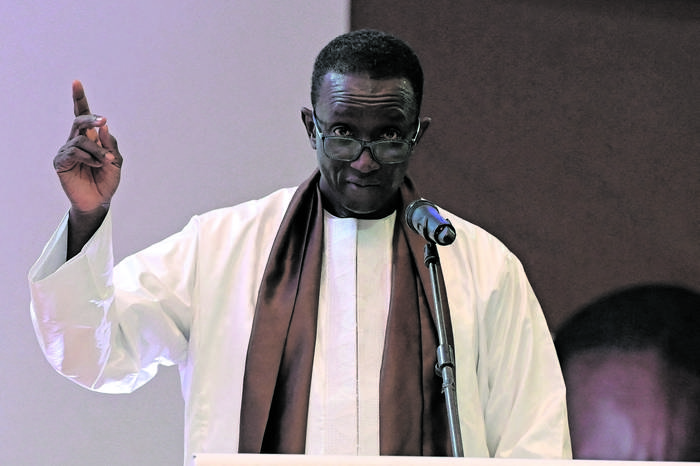
Under the watchful eye of the international community, Senegal — often held up as a bastion of stability in coup-hit West Africa — is preparing for a potentially fraught presidential election.
No clear frontrunner has yet emerged in the 25 February vote, with an unprecedented 20 candidates in the running including an imprisoned anti-establishment contender.
Fears of pre-election violence have not materialised despite a turbulent candidate validation process and the elimination from the race of prominent opposition figures Ousmane Sonko and Karim Wade. But tensions persist just days before campaigning officially begins on 4 February.
“I think I’ll be elected in the first round on February 25,” Prime Minister Amadou Ba told French news networks France 24 and Radio France Internationale.
Ba was chosen by President Macky Sall as his successor after Sall announced in July that he would not seek a third term — making this the first Senegalese election without an incumbent standing.
Analysts agree that neither Ba, a continuity candidate, nor any other of the hopefuls are guaranteed a place in the second round.
“This is the most open election” of the 12 presidential votes held under universal suffrage since Senegal gained independence from France in 1960, said Sidy Diop, deputy editor of Le Soleil daily newspaper.
The eventual outcome is just one of the unknowns in a keenly watched election at home and abroad.
Senegal is among the bottom 30 countries in the world on the United Nations Human Development Index but is due to start producing hydrocarbons this year.
Despite a growing trend in the surrounding region, Senegal has never experienced a military coup, leading Western powers to praise its stability, democracy and history of peaceful power transfers.
But, since 2021, Senegal has witnessed often deadly unrest caused by the bitter stand-off between the state and opposition firebrand Ousmane Sonko. The violent episodes have led to dozens of deaths and hundreds of arrests.
Human Rights Watch and others have denounced Senegal’s repression of opposition leaders, the media and civil society — to which the government has responded that “all freedoms are exercised without hindrance”.
Sall has maintained strong ties with the West at a time when Russia’s influence is growing in the Sahel and nearby countries are battling jihadist insurgencies. But he has called for a diversification of partnerships and proclaimed that Africa’s place as Europe’s “private turf” is over.
Sonko’s pan-Africanist rhetoric and tough stance on former colonial power France has also struck a chord with Senegal’s disaffected youth. Sonko, who came third in the 2019 presidential election, has been jailed since the end of July on a string of charges.
The Constitutional Council rejected his bid to run in February’s election but along with his dissolved party, Pastef, he has put forward a substitute candidate — Bassirou Diomaye Faye.
Faye is also detained but his candidacy was approved by authorities, making him the first imprisoned hopeful to run in a Senegalese election.
Analyst Sidy Diop listed Faye as among the favourites to win, along with Ba, former deputy minister and Dakar mayor Khalifa Sall and others. But he said the turbulence brought about by the pro-Sonko camp might put voters off.
“One of the problems with Pastef is that it is frightening” voters, Diop said, adding that “elections are won by the working classes” whose days are focused on finding work and income.
“These classes need stability,” he said.
Ba has lauded the achievements in office of the incumbent president Sall but said he needs to “do even better and even faster”.
The infrastructure projects undertaken by Sall’s government have not benefited everyone. His successor would inherit the legacy of the last few difficult years of Sall’s presidency, marked by Covid-19, Russia’s war in Ukraine, and the departure of tens of thousands of Senegalese to Europe.
Ba also faces significant challenges and rivals from within his own camp. Doubts about his ability to win have prompted speculation that those in power may wish to postpone the election.
It comes as Wade, who was excluded from the presidential race, has called for an inquiry into the workings of Senegal’s Constitutional Council, the body which announces the winner of the election.
Against all odds, MPs from the president’s party supported the move.
Working-class Senegalese voters said anonymously that they would not accept a postponement.
Gilles Yabi, executive director of the Wathi think-tank, instead anticipates possible “points of tension” when the results are announced. — AFP
Elections won’t be hacked by foreigners, says IEC:

The Electoral Commission of South Africa (IEC) said on Saturday it was confident that this year’s elections would not be hacked by foreign adversaries as the country’s voting and counting processes were manual.
The IEC was reacting to concerns by President Cyril Ramaphosa, who said this week that South Africa’s genocide case against Israel in the International Court of Justice — which found that it was “plausible” that Israel was committing crimes against humanity on Palestinians in Gaza — could lead to “regime change” attacks on the country.
“The fightback may also focus on our domestic politics and our electoral outcomes in order to pursue the regime change agenda,” Ramaphosa said, while addressing the governing ANC’s gathering in Boksburg, Gauteng.
But IEC deputy chief electoral officer Masego Sheburi warned that it would be “foolhardy” to believe there would not be any foreign interference during this year’s provincial and national elections.
“However, the saving grace is that our voting processes are manual. We vote at the voting station, we count at the voting station, we announce the results at the voting station — all this [is done] in the presence of party agents and observers,” Sheburi said.
He was speaking at a media briefing in Centurion, Tshwane, to give an update on the 3 to 4 February voter registration weekend.
“So, the chances of interference, while we cannot rule them out one hundred percent, we think our system is such that we are not exposed to any risk because there is no transmission of results or voting during the day,” Sheburi added.
“But we are working internally to fortify our systems to minimise and mitigate the risk of illicit interference in the results announcement.”
Meanwhile, Granville Abrahams, the IEC’s national general manager for electoral operations, announced that families of inmates could, for the first time, register on behalf of incarcerated relatives using the commission’s online platform.
Abrahams said section 24(b) of the Constitution stated that inmates had to vote in the district they were imprisoned in, adding that, during the November 2023 and this weekend’s voter registration days, the IEC had registered 3 000 prisoners after visiting 180 correctional facilities.
“I must also add that inmates do not necessarily have their ID documents with them where they are incarcerated. The [documents] are mostly at home,” he said.
“And there’s also now an option for a family member to register them online, obviously, instead of going through the expense of taking [ID documents] to [inmates].”
Sheburi lauded “citizens engaged” with the country’s affairs, saying 55 019 new voters registered for this year’s provincial and national elections assisted by more than 700 electoral staff worked at voting stations countrywide.
In total, Sheburi added, 304 221 people visited stations on Saturday to change voting districts, check their status, or become new voters.
“This early turnout not only sets a positive tone for the registration period, but also serves as a testament that citizens remain engaged with the affairs of their country,” he enthused.
“We urge voters, who may have had a less than pleasant experience using the online platform to try again. The platform remains open 24 hours a day, until the day on which the date of the elections is proclaimed by the president.”
Sheburi said the voters’ roll surpassed the 27 million mark, adding that the online registration platform continued to “yield a return on investment” owing to more than 200 000 people using it between November 2023 and Saturday’s registration day.
He said voters who have lost or misplaced their identity documents, replacement documents were available at the home affairs department.
“The Department of Home Affairs will maintain its network of offices open [on Saturday and Sunday] to assist [that] category of citizens. The commission wishes to extend its profound gratitude to the department for enabling citizens to participate in [the] affairs of their country,” he said.
“For this election, it will not be possible for a voter to vote outside of the voting district at which they are registered without giving [prior] notice to the chief electoral officer of their intention to vote outside their voting district, and also to indicate the details of that other voting district.”
The details of notifying the chief electoral officer of voting outside the district where a person is registered will be published after Ramaphosa proclaimed the election date, Sheburi said.
Bafana Bafana’s glass is half full:

In June 2022, Bafana Bafana coach Hugo Broos, during one of his verbal lynchings of the state of South African football, slammed his “short-sighted” critics for not giving him the space he needed to build a competitive international team.
At the time, the Belgian had served 13 months in the national football team’s hot seat. It is renowned for being a revolving door, having had 19 incumbents since 1992 when South Africa returned to international competition after the release of Nelson Mandela two years prior.
The straight-talking Broos, seemingly unperturbed by the trigger-happy South African Football Association (Safa), has riled administrators at every turn since his May 2021 appointment.
“Again, let’s face the problem of South Africa. The problem is the level of our PSL [Premier Soccer League] is not high enough. We don’t make players with high quality,” he has repeatedly asserted.
It took Broos to remind local critics that a lack of consistency in Bafana Bafana’s coaching roles saw the team become a perennial laughing stock in football, despite the country boasting the richest and best-organised league on the continent.
The 71-year-old was reacting to calls for him to be fired after Bafana Bafana narrowly missed qualifying for the 2022 World Cup in Qatar.
This was despite the fact that, under him, the team had amassed South Africa’s highest-ever points tally during a qualification phase and had missed out because of poor refereeing that favoured the home team, Ghana, which edged out Bafana Bafana on goal difference.
“We had 13 points and, with a little bit of research, it says over the last 12 years, in all the qualifiers that SA played for Afcon, you have never had 13 points.
“The maximum was 12 points and that means this was not bad what we did [in the World Cup qualifiers] — but still, after our match against Ghana, there were critics. I didn’t understand it,” Broos said in June 2022, before going for the jugular.
“I don’t understand why suddenly there were so many critics but I can assure you that those critics don’t affect me because it is short-sighted and cheap. People are saying the coach is not good and so on.”
It becomes no surprise, therefore, that Bafana Bafana’s most successful coach — the late Clive Barker, who won the country’s only Africa Cup of Nations (Afcon) title in 1996 and qualified the national team for its first Fifa World Cup a year later — had the longest tenure, serving from March 1994 to December 1997.
Barker’s almost four-year service to Bafana Bafana saw him build a successful side that reached the top 20 of the best international football teams — a dizzying height the country has failed to reach again.
For all his great work, the acclaimed coach was axed by the wise Safa suits six months before the start of the France 1998 World Cup, which Bafana Bafana qualified for, and replaced with Frenchman Philippe Troussier, nicknamed “The White Witch Doctor”.
Troussier knew very little about local football and the team failed to win a single game at the showpiece event — they were booted out in the first round.

About 70% of the South African team at this year’s Afcon, being playing in Côte d’Ivoire, have been part of the Belgian’s squad selections for more than a year.
The same players have given Broos a nearly 52% win ratio, winning 14 of the 27 games he has overseen and losing only five.
Shakes Mashaba has the best record as Bafana Bafana coach, winning 55% of the 58 games he was in charge of, with five losses, across four managerial stints, none of which lasted longer than 11 months.
Sir Alex Ferguson — the celebrated Scottish coach who managed Manchester United from 1986 until his retirement in 2013, after winning his 13th English Premier League title, to go with the two European Champions Leagues wins and a raft of other medals — put his success down to the time he was given to bring glory to a club that went 20 years without winning a league.
“There’s no evidence that sacking a manager gives you success,” Ferguson said in a 2015 interview with sportscaster ESPN.
“But there is evidence at Manchester United, at Nottingham Forest, at Arsenal that [if] you retain the manager for long periods, you get consistency and you get success.”
The period and space Broos has been afforded have seen him being consistent in building a team worthy enough to compete at big tournaments, such as Afcon.
Whether Bafana Bafana — which shocked many by making the playoff rounds, even knocking out Africa’s best team and world number 13 Morocco — goes on to clinch the biennial continental tournament should not be a mark of Broos’s success.
What he has proved — in between the harsh truths he has dispensed — is that allowing a quality coach to work magic can only be beneficial.
After all, Broos won the Afcon with an unfancied Cameroon team in 2017, so he has some coaching pedigree.
Whatever happens, after the marquee continental event ends next Sunday, Broos should be allowed to take the national team through the qualifiers for the 2026 World Cup which is to be hosted by the US, Mexico and Canada.
The glass is evidently half full for the senior men’s team.
He has earned the right to do so after silencing naysayers, who thought he was too old to handle the rigours of managing an international team, especially one dogged by political interference and with an impatient public that pines for the glory years of the mid-1990s and early 2000s.
As Broos said ahead of beating Morocco on 30 January, the more Bafana Bafana play in major international tournaments, the easier it will be for local players to ply their trade in major leagues overseas, especially in Europe.
“When there’s interest [from foreign clubs], those players will have to go to Europe and get that experience. It’s something that we need in the future. Again, it’s not only important to go through [to the next Afcon rounds] but also important for South African football in general.”
Submit and get free exposure here: Showcase Your Business | Advertise Your Special Offers.
