
She changed the world before they changed their minds:
In 1903, Marie Curie became the first woman to win a Nobel Prize. She had no proper laboratory. She worked in a converted shed. The radiation she studied would eventually kill her. None of that stopped her. Eight years later, she won a second Nobel, this time in Chemistry, becoming the only woman in history to win the prize in two different sciences. She did not wait for the world to be ready for her. She simply did the work.
In the 125 years since the Nobel Prizes began, only 67 women have been laureates, compared to 894 men. In physics, the number is five. Five women in more than a century. And yet, look at what those five accomplished. Marie Curie decoded radioactivity. Maria Goeppert Mayer explained why some atoms are more stable than others, working for decades without a single paid position because universities would not hire a woman alongside her husband. Donna Strickland developed a technique for creating ultra-intense laser pulses that now powers everything from eye surgery to manufacturing. Andrea Ghez proved the existence of a supermassive black hole at the centre of our galaxy. Anne L’Huillier captured electrons in motion using attosecond light pulses, letting us see things that had been invisible since the beginning of time.
The pattern repeats across every category. Tu Youyou saved millions of lives by extracting artemisinin from ancient Chinese medical texts to fight malaria. She had no doctorate, no medical degree, no training abroad. She tested the compound on herself first. Jennifer Doudna and Emmanuelle Charpentier developed CRISPR gene editing, a tool that may reshape medicine for centuries. Katalin Karikó spent decades being demoted and defunded before her mRNA research became the foundation for the COVID-19 vaccines that saved the world.
These women did not succeed because the system supported them. They succeeded in spite of it. And that is the uncomfortable truth we must sit with on this International Women’s Day. The theme for 2026, chosen by the United Nations, is “Rights. Justice. Action. For ALL Women and Girls.” It asks us to look honestly at the gap between rights on paper and justice in practice. Nowhere is that gap more visible today than in the field that is reshaping every industry on earth: artificial intelligence.
Women make up just 22 percent of AI professionals globally. Only 12 percent of AI researchers are women, and in leadership the figure drops below 15 percent. The consequences are not abstract. A 2024 study found that 44 percent of AI systems exhibited gender bias. AI is now deciding who gets hired, how diseases are diagnosed, and whose loan application gets approved. When the people building that technology do not reflect the people living with its consequences, it encodes that absence into every decision it makes.
This matters in ways that are already measurable. Harvard Business Review found that female engineers who used AI for code generation were rated nearly 9 percent less competent than male counterparts, even when evaluators were looking at identical work. The technology is not neutral. It learns what it is taught, and right now it is being taught mostly by men.
But there is reason for hope, and it is arriving fast. Women’s adoption of generative AI in the United States has tripled over the past year, outpacing men’s growth rate. LinkedIn data shows that women listing AI engineering skills rose from 23.5 percent in 2018 to 29.4 percent in 2025. In Africa, 47 percent of STEM graduates from universities are women, a higher share than Europe, Asia, or North America. The pipeline is not empty. It is being blocked.
I see this in South Africa every day. We produce brilliant women in science and technology, and then watch them disappear. Women make up 39.5 percent of our ICT workforce, but in the rooms where AI strategy is decided, where policy is written, where funding is allocated, the chairs are overwhelmingly filled by men. Only 5 percent of ICT companies in this country are led by women. We are not short of talent. We are short of willingness to let that talent lead.
Marie Curie worked in a shed. Maria Goeppert Mayer worked without pay. Katalin Karikó was demoted and told her research was a dead end. Every one of them proved the world wrong. But we should not need women to be extraordinary just to be included. The goal is not to produce more exceptions. It is to dismantle the systems that make exceptions necessary.
On this International Women’s Day, the call is not just for celebration. It is for action. Fund women-led research in AI. Train girls in digital skills before the gap becomes a canyon. Put women in governance roles where AI policy is being written. And remember that every algorithm carries the fingerprint of whoever built it. If we want AI that is fair, we need the teams behind it to look like the world it serves.
Curie once said, “Nothing in life is to be feared, it is only to be understood.” The women who come after her, the researchers, the engineers, the builders, are still working to be understood. Let us make sure they no longer have to work to be seen.
Dr Zakia Salod is a medical AI research scientist, software developer, artist and philanthropist. Mail & Guardian Power of Women awardee 2024, STEMI category, youth leader and multi-awarded STEMI advocate in South Africa.
Mideast war: Global energy markets jitters and humanitarian crisis loom large:
The war triggered by United States and Israeli strikes on Iran has widened significantly over the past several days, expanding across multiple fronts from Iranian cities to the Gulf and Lebanon while raising new concerns about the stability of global energy markets and the humanitarian consequences of the conflict.
What began with coordinated US and Israeli air strikes on Iranian targets on 28 February has since evolved into a regional confrontation involving missile exchanges, attacks on military installations across the Gulf and intensified fighting along Israel’s northern frontier.
Israeli strikes inside Iran have continued over the weekend, targeting sites across several provinces including Tehran, Shiraz, Qom, Kermanshah and Ahvaz. Iranian officials say the attacks have struck military infrastructure but have also damaged residential areas and civilian facilities. Emergency services in several cities have reported destruction in residential neighbourhoods and damage to public infrastructure.
The humanitarian toll inside Iran has drawn growing international scrutiny as the bombing campaign continues. Humanitarian monitors estimate that more than 1 300 civilians have been killed since the strikes began, with hospitals reporting thousands of wounded across several regions.
Children account for a significant share of the victims. The United Nations Children’s Fund (UNICEF) says approximately 180 children have been killed since the escalation began.
One of the deadliest incidents occurred in the southern city of Minab, where a missile strike destroyed the Shajareh Tayyebeh girls’ elementary school during class hours on 28 February. UNICEF reported that 168 girls aged between seven and twelve were killed when the school was struck while pupils were in class.
The attack has prompted international concern and calls for accountability. United Nations human rights experts have called for an independent investigation into the strike, warning that attacks on schools and other civilian infrastructure raise serious concerns under international humanitarian law.
UNICEF has also reported that at least 20 schools and 10 hospitals across Iran have been damaged during the bombardment. The agency warned that the conflict is exposing children to extreme danger while disrupting access to education and medical care.
At the same time, the battlefield has widened beyond Iran.
Iran has continued launching missiles and drones toward Israeli territory in retaliation for the initial strikes. Air-defence systems have been activated repeatedly over cities including Tel Aviv and Haifa as incoming projectiles were intercepted.
Iran has also targeted United States military installations across the Gulf, striking bases and radar systems in countries that host American forces. Explosions and interceptions have been reported near facilities in Bahrain, Saudi Arabia, Kuwait, Qatar and the United Arab Emirates.
Bahrain has become one of the most sensitive locations in the conflict because it hosts the headquarters of the US Navy’s Fifth Fleet. Iranian missiles and drones were directed toward facilities linked to the base, signalling Tehran’s strategy of expanding the battlefield to locations associated with American military operations.
Iranian officials say the strikes are aimed at US military infrastructure rather than neighbouring governments, arguing that the facilities have been used to support attacks on Iranian territory.
The conflict has also intensified along Israel’s northern border with Lebanon. Israeli air strikes against Hezbollah positions have escalated across several parts of the country, including Beirut’s southern suburbs, the Bekaa Valley and areas in southern Lebanon.
Lebanese authorities say the bombardment has killed hundreds of people and forced large numbers of civilians to flee their homes.
The scale of displacement has become one of the most visible humanitarian consequences of the widening conflict. Hundreds of thousands of people have been displaced since the escalation intensified, with entire towns in southern Lebanon largely emptied as civilians move north to escape the fighting.
Hezbollah fighters have launched rockets and drones toward northern Israel in response to the strikes, triggering air-raid sirens across parts of the Galilee and prompting further Israeli retaliatory attacks.
Alongside the expanding battlefield, a maritime dimension to the conflict has also emerged. Iran has warned vessels against entering the Strait of Hormuz and has signalled that ships attempting to pass through the narrow waterway could face attack.
The strait is one of the world’s most critical energy corridors, carrying roughly one fifth of global oil supplies from producers in the Gulf.
Even the possibility of disruption has already begun to affect global energy markets. Oil prices have risen amid concerns that the conflict could interfere with shipping through the strait or damage energy infrastructure in the region.
The targeting of oil facilities in Iran has heightened those fears. Israeli strikes over the weekend hit oil storage and refining facilities near Tehran, marking an escalation in which energy infrastructure has become part of the battlefield.
Analysts say the move suggests that both sides are increasingly attempting to impose economic costs on the other.
For energy-importing economies such as South Africa, the implications could be significant.
South Africa imports most of its fuel and therefore absorbs global price movements directly. Sustained increases in oil prices would feed into inflation, raise transport costs and place additional pressure on economic growth.
Finance minister Enoch Godongwana acknowledged earlier this week that the government is already assessing the potential economic consequences of rising energy prices.
“My team is building a scenario plan to assess the implications, depending on the extent of the problem,” he said.
“Insofar as fuel is concerned, we are a price taker because we are not a producer of gas or oil.”
South Africa’s exposure to global fuel markets means that prolonged instability in the Middle East could quickly translate into domestic economic pressure.
Economists say the conflict has already complicated expectations for interest rate policy.
Dr Elna Moolman, Standard Bank’s head of South Africa macroeconomic research, said the likelihood of an interest rate cut in March has declined significantly unless the war ends quickly.
“The likelihood of an interest rate cut in March has declined significantly and now seems plausible only if the war is decisively ended within the next week,” she said.
If the conflict proves short-lived, interest rate reductions could still occur later in the year. However, if oil prices remain elevated because of a prolonged war, monetary easing could be delayed further.
Professor Daniel Meyer, an economist at the University of Johannesburg, said sustained increases in global oil prices would quickly filter through the South African economy.
“If oil rises towards $ 100 per barrel it could add between R1 and R2 per litre to fuel prices locally,” Meyer said.
“Every rand increase in the fuel price translates into roughly a 0.4 percentage-point rise in inflation.”
Higher inflation would likely force the South African Reserve Bank to consider raising interest rates, further slowing economic growth.
Diplomatic efforts to contain the confrontation remain fragile. Several governments and international organisations have called for restraint, but with attacks continuing across Iran, Israel, Lebanon and the Gulf there is little indication that the fighting will end quickly.
The conflict now spans multiple fronts: Israeli strikes inside Iran, Iranian missile attacks on Israel, attacks on US military infrastructure across the Gulf and an expanding conflict between Israel and Hezbollah in Lebanon.
What was initially framed as a limited military operation has therefore evolved into a multi-theatre regional confrontation whose consequences are beginning to extend beyond the Middle East.
As attacks continue across Iran, Lebanon and the Gulf, the crisis is increasingly shaping into one of the most significant geopolitical escalations in the region in years, with implications for energy markets, global security and economies far beyond the battlefield
‘Silent Rebellion’ wins top honour at Joburg Film Festival 2026:
The curtain has fallen on the 2026 Johannesburg Film Festival, with the Swiss wartime drama Silent Rebellion emerging as the evening’s biggest winner.
Directed by Marie?Elsa Sgualdo, the film claimed the festival’s Best Feature Film prize at a glittering awards ceremony held on Saturday night at Theatre on the Square. The gala brought together filmmakers, actors and industry figures from across the global film community as the festival celebrated a week of cinema that spanned more than 100 titles.
In keeping with the festival’s 2026 theme, Feel the Frame, the evening’s awards placed a deliberate emphasis on the craft that shapes cinematic storytelling. Each winner received the festival’s distinctive Nguni Horn trophy, recognising excellence across categories ranging from feature filmmaking to editing, cinematography and emerging voices.
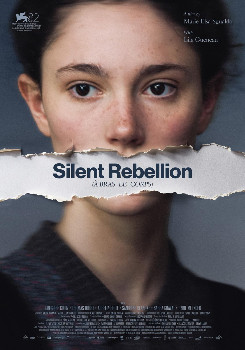
For Silent Rebellion, the top prize caps a growing international profile. Set in Switzerland during the final years of World War II, the film examines the rigid social structures and gendered expectations of rural life in 1943. At its centre is Emma, a young woman whose life is upended after a seemingly innocent encounter leads to sexual violence and an unexpected pregnancy.
Rather than retreating under the weight of patriarchal and religious restrictions, Emma charts a difficult path toward autonomy, confronting the contradictions of a village that claims sympathy for wartime suffering while quietly accommodating occupying German soldiers. The film’s emotional intensity and visual precision helped it stand out among nearly 700 submissions from around the world.
The jury, which included film curator Keith Shiri, festival programmer Dorothee Wenner, producer Sia Stewart, cultural strategist Bongiwe Selane and filmmaker Cait Pansegrouw, also singled out the film’s lead performance with a special acting mention.
Speaking after the ceremony, Stewart reflected on the breadth of storytelling showcased across the festival programme.
“It was a privilege to serve as a juror for the Johannesburg Film Festival and witness the extraordinary creativity of the filmmakers whose work was showcased,” she said. “Festivals like this play a critical role in highlighting the depth and beauty of African storytelling, while creating a platform for artists from all over the world to share stories that reflect culture, spirit and imagination.”
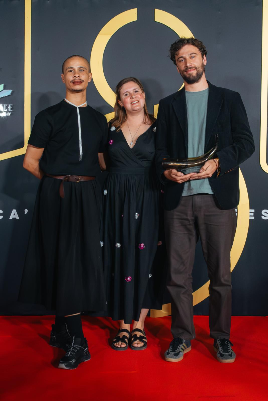
While Silent Rebellion took the festival’s top honour, African cinema remained firmly at the centre of the awards conversation. The prize for Best African Film went to Variations on a Theme, a recognition that underscores the festival’s continued commitment to amplifying voices from across the continent.
Founded as both a showcase and industry platform, the Johannesburg Film Festival has steadily positioned itself as one of the region’s most significant cinematic gatherings. This year’s edition featured films from nearly 100 countries, reflecting a programme designed to move fluidly between global perspectives and local storytelling traditions.
The awards ceremony also highlighted the collaborative labour behind filmmaking, from editors and cinematographers to emerging student filmmakers whose work often provides the earliest glimpse of the industry’s future.
Festival founder and executive director Tim Mangwedi noted that the winners collectively embody the ethos behind this year’s theme.
“Silent Rebellion reflects the perfect pairing of an engaging narrative with striking cinematography,” he said. “This year our aim was to pay homage to the artisans who shape what audiences experience, and all the winners place a spotlight on the unseen hands that contribute to impactful storytelling.”
Beyond the major feature categories, the festival recognised work across documentary, short film and student filmmaking. The Young Voices competition, designed to spotlight emerging storytellers, awarded its top prize to Umxoxiso, while veteran South African producer Harriet Gavshon received a special recognition honour for her contribution to the industry.
The festival concludes on Sunday with the premiere of The Trek, a horror western directed by Meekaeel Adam. Set against the stark landscape of the Karoo, the film closes a programme that has attempted to broaden the ways audiences think about craft, authorship and the cinematic frame itself.
After six days of screenings, discussions and industry gatherings, the awards offer a final snapshot of the stories and filmmakers that defined the 2026 edition.
Joburg Film Festival 2026 Award Winners
- Best Feature Film — Silent Rebellion
- Best African Film — Variations on a Theme
- Best Cinematography — Silent Rebellion
- Best Edit — Broken Voices
- Best Documentary — Let Them Be Seen
- Best Short Film — Stero
- Best Student Film — The Silent Inheritance
- Young Voices Competition Winner — Umxoxiso
- Special Mention — Lila Gueneau (Silent Rebellion)
- Special Recognition — Harriet Gavshon
Submit and get free exposure here: Showcase Your Business | Advertise Your Special Offers.
