
Showdown looms as voters register:
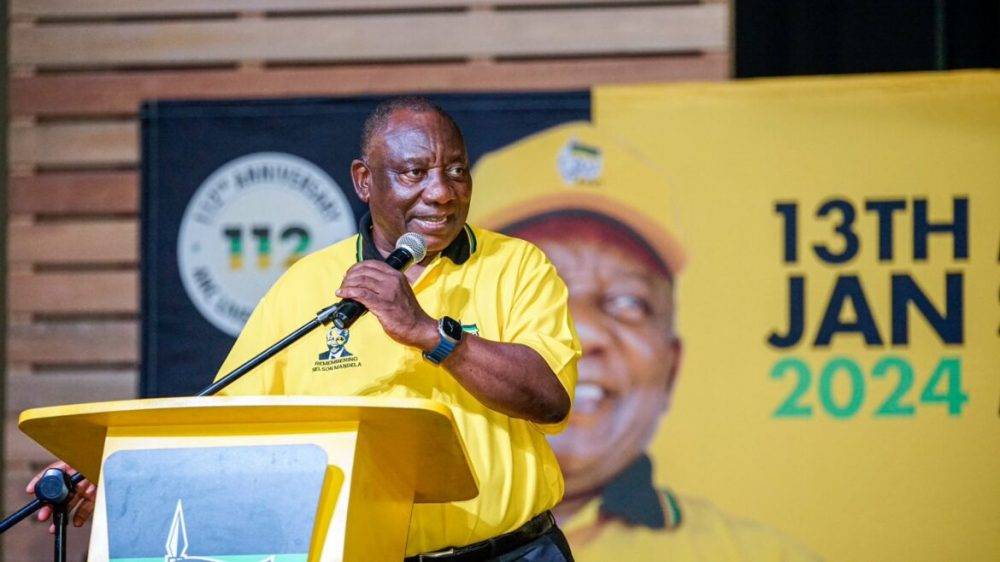
The enthusiasm of South Africans to vote in the upcoming general elections continued over the weekend, with the voter’s roll exceeding the 27 million mark for the first time since 1994.
The Independent Electoral Commission (IEC) deputy chief electoral officer, Masego Shiburi, said prospective voters did not only converge at their local voting stations but also utilised the IEC’s online voter registration portal.
“Today alone, the online voter registration portal recorded over 20 525 transactions. Of those, 7 234 were new registrations. The platform will remains available 24 hours as the online registration platform continues to yield a return on investments a day until the date of the election is proclaimed by the president. The online registration platform continues to yield a return on investments,” said Shiburi.
Potential voters who could not register over the weekend can still do so at their nearest IEC offices, with the registration cutoff date set for the day when the election date is proclaimed by President Cyril Ramaphosa — who is yet to make an announcement.
With over 350 registered political parties and scores of independent MP candidates to choose from, those who registered to vote during the registration weekend, which closed on Sunday night, are spoilt for choice.
In KwaZulu-Natal, the competition for voters between the four main political parties in the province – the ANC, IFP, DA and EFF – became wide open following the launch of the ANC splinter organisation, the uMkhonto weSizwe (MK) party late last year.
Ramaphosa, who denied that the MK party will negatively impact NC support in the elections, on Sunday visited various voter registration centres in Gauteng.
Unlike in previous elections, Ramaphosa said there appeared to be a lot of interest in the upcoming general elections, with the youth — which showed less interest in the past — registering in large numbers.
“The youth’s reluctance to vote is being washed away. Young people are coming forward wanting to register and to vote.”
IFP president Velenkosini Hlabisa visited voter registration centres in Ndwedwe, north of Durban.
DA leader, John Steenhusen, who visited some voter registration stations in Howick, described the weekend as “encouraging”.
In the build-up to the elections, Steenhuisen said, the DA would be presenting to young people who will be voting for “the DA’s plan to assist them build a better future”.
When The Witness visited various voter registration centres across Pietermaritzburg on Sunday, most of the centres were a hive of activity.
Some prospective voters said they were voting for change, while others wanted to preserve the status quo.
Thobelani Mkhize, from ward 34 in Panorama, said that he hoped his vote would make a difference.
“The one thing that I believe we all want is an end to load-shedding. I study online and it has been very difficult keeping up with load-shedding and their forever changing schedules.
“It is also very difficult for me because when there is no electricity, we often don’t have network as well. It would also be great to finish school and get a job because right now I am studying and I don’t know if I will have a job after I am done with school.”
“I am hoping that the party that will win in these elections will prioritise creating more jobs for young people.
Sobantu-based Masithokoze Mbatha, another of the youth who will be voting for the first time, said he is looking forward to casting his vote.
“I am 18 years old and this will be my first-time voting. I am feeling a lot of pressure because my vote is going to count for something and I really don’t want to make a mistake. But all in all, I am looking forward to the experience,” said Mbatha.
While several people around Pietermaritzburg confirmed that they will be voting in the upcoming elections, others told The Witness that they were not planning to vote. Landile Khena, also from Sobantu, said she has lost faith in political parties.
This article first appeared in The Witness.
Soon Comes Night highlights politics and redemption:

Although set in the post-liberation 1990s, the recent Netflix addition Soon Comes Night explores critical socio-economic issues South Africans still battle with.
Exactly 30 years later, the economic emancipation promised to the previously disadvantaged is marginal. Fees Must Fall, the unrest in July 2021 and the hundreds of service delivery protests sprouting all over the country are evidence of this discontentment.
Produced by Ochre Moving Pictures, and inspired by actual events, this six-part political series is about liberation and redemption.
Freedom fighter-turned-heist-king Alex Shabane (Kwenzo Ngcobo) seeks economic liberation for his people and himself. For Sakkie Oosthuizen (Albert Pretorius) — the dejected detective assigned to catch Alex — it is to find healing from old apartheid tenets and grief.
Both these men see themselves fighting for a righteous cause.
We are taken on a captivating cinematic voyage following these two similar, yet different, men battling with their demons after being betrayed by their seniors.
The recycling of some of the same old faces, a bit of overacting and questionable weapons handling by a few actors doesn’t detract from the stellar cast.
Kenneth Nkosi plays Minister Zungu, a former senior commander in the liberation camps who is now in government; Sisanda Henna plays Mpiyakhe Maseko, the minister’s right-hand man. Didintle Khunou portrays Thato Sekoati, a new police officer with a master’s in criminology, working alongside Sakkie.
Terry Pheto as the casting director complements Thabang Moleya and Sanele Zulu’s direction in showcasing local brilliance. The casting of younger characters in the 1990s and older characters in 2000 timelines was also well aligned.
Undeniably, the brightest star of the series is Ngcobo, who embodies Alex’s character well. From the first episode, we are introduced to a mountain of a man robbing a cash-in-transit vehicle with his ferocious crew.
Short-sleeved summer shirts, high-waisted pants and gold jewellery are his trademark dress code, reminiscent of Wesley Snipes as Nino Brown in 1991’s New Jack City.
Alex is theatrical and flamboyant. He robs from the capitalist system and gives to the disadvantaged. However, we wonder if his generosity is rooted in serving others or a self-serving project.
Alex and his crew are a representation of the discontented comrades, promised “spoils of war” that failed to materialise, who turn to crime. They are the township Robin Hoods trying to balance the economic scale on the other side of the rainbow.
Behind the cigarette smoke and menacing eyes, we wonder what will fill Alex’s endless craving for money. “More, isn’t enough!” is his stance when challenged by crew member Maskow (Mavuso Simelane).
Also a disappointed comrade, Maskow, however, is no raging bull in a china shop. He can tap into his emotional intelligence; a disciplined man who knows his place and limits.
Childhood girlfriend Lesedi (Gaosi Raditholo) also questions Alex’s rationale as a man and father: “You are no father. You are a man who kills other children’s fathers.”
Apart from the many medications hidden in his white plastic bag, Sakkie is carrying a lot. Grief, loneliness and the guilt arising from his manipulative superiors haunt his nights.
Ultimately, both these men are like broken boys who need safe spaces to offload — or even just a hug to begin to heal their hollowed-out hearts.
The swinging between the 1990s and 2000s time periods can be confusing but the story eventually comes together. These timelines offer a conversation between the older and younger generation — the liberators and liberated — on the trajectory toward a democratic country.
Through Alex, Minister Zungu and other comrades, the series focuses on the hurdles they must overcome to go from wartime guerrillas to public and private workers in civilian life.
Sakkie highlights the battles of former apartheid cops transitioning to a new, supposedly human-centric, police service.
It is the traumatic struggles of that generation that the younger generation might take for granted.
Soon Comes Night is a teaching moment for all South Africans. As painful as poking the wounds might be, having such inter-generational conversations could lead to better understanding, empathy and social cohesion. It could bring that despondent parent and unemployed graduate a bit closer in that they are fighting similar struggles.
Sympathy can be granted but only after contending with the notion of accountability.
For Sakkie, we question if “back in the day” justifications by former apartheid cops is enough accountability. Or if “a man needs to be rewarded for his hard work” arguments by former comrades justifies their corruption. It is this moral conundrum that adds an emotive and thought-provoking layer to the series beyond the guns and brawn.
The series showcases a South Africa still trying to find its footing.
The internationally influenced fashion, cars and other forms of materialism were symbols of success for the growing black middle class post-1994.
Mandoza, Trompies, and Skwatta Kamp were the sounds that captured those times. This nostalgic soundtrack was compiled by Kwelagobe Sekele, as music supervisor, added to with the overall score by Joel Assaizky.
The script — which is largely in English with textures of Zulu, Afrikaans and Sesotho — gives us an untainted South African series but with global appeal.
Soon Comes Night is a pulsating political thriller, with complex characters and timely themes which force the viewer to think about morality, redemption and the status quo in our country.
For the majority of South Africans, however, it could be a stark reminder of how things haven’t entirely changed for the better. If the voices of the electorate are muted, more artists are set to beam and stream our unsettling socio-political dynamics.
And, if the ruling party claims its triumphs in this election year, but the populace laments its failures, will we see more of the Alex Shabanes of our society — not only on the TV screens, but in real life too?
Soon Comes Night, distributed internationally by Red Arrow Studios, will air on SABC1 in 2025.
Why did Cyril Ramaphosa gladhand a genocidal general?:
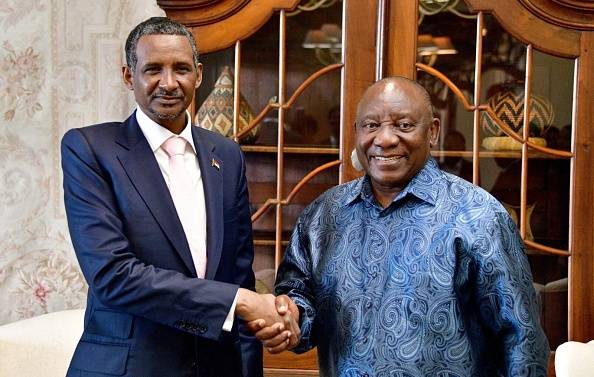
On 4 January, a beaming Cyril Ramaphosa shook the hand of Sudanese militia leader General Mohamed Hamdan Dagalo, commonly known as Hemedti.
The meeting took place as Sudan’s civil war raged on, with both sides accused of human rights abuses. In one case, in an advance on El Geneina in Western Darfur last year, Hemedti’s militia killed as many as 15,000 people, many belonging to the Masalit ethnic group. He is also implicated in the genocide in Darfur in the early 2000s.
Hemedti’s stop in Pretoria was part of a continent-wide trip to shore up support and gain legitimacy. Sudan is still technically led by his former ally and now opponent, General Abdul Fatah al- Burhan, who controls the army.
The backlash to the meeting included accusations that it was hypocritical and inconsistent with South Africa’s post- apartheid values of equality and justice. It also came in the very same month that South Africa took Israel to the International Court of Justice, accusing it of genocidal acts in Gaza.
Vincent Magwenya, Ramaphosa’s spokesperson, said that this was “not a meeting between two heads of state” but rather a gesture of courtesy.
The nonprofit that helped organise the meeting, the African Centre for the Constructive Resolution of Disputes, has invoked Nelson Mandela in defending it. Its executive director, Vasu Gounden, told The Continent: “Mandela said you can’t make peace by talking to your friends.”
Gounden was in the meeting and said South Africa would meet with all the sides to a conflict in Africa. “If Burhan gets on a plane and comes tomorrow to meet with Ramaphosa, Ramaphosa would meet him.”
Hemedti’s forces, which The Continent has previously reported are supported by the United Arab Emirates, currently have the upper hand in the war, controlling key parts of the capital Khartoum; Wad Madani, a major city south-east of the capital; and most of Darfur.
In his tour, Hemedti also went to Uganda, Ethiopia, Kenya, Djibouti and Rwanda. But the South Africa leg was particularly important, according to Sudanese political analyst Kholood Khair.
The handshake – with the leader of a stable democracy – showed that Hemedti “is not only meeting despots”, said Khair. She said the reception in Pretoria and other capitals also showed that presidents “consider Hemedti to be presidential material, if not president in actual fact”.
She pointed to the quickly-deleted tweet by South Africa’s government that referred to Hemedti as Sudan’s president. These steps also serve to weaken al- Burhan’s position.
Cameron Hudson, an analyst and former director of African Affairs at the White House’s National Security Council in the United States, said that while mediation would require meeting with Hemedti, Ramaphosa seemingly has “no particular interest in being involved … in bringing an end to this conflict”.
Others also claim that Hemedti’s reception across Africa was helped by the UAE’s outsized influence on the continent. The UAE has denied accusations that it has covertly been sending arms to Hemedti’s forces via Chad. A relationship exists, however: the paramilitary provided troops to the UAE and its partners in their devastating war in Yemen, which South Africa supported with arms.
Gounden denies that the UAE played a role in his organisation’s actions and said it has been involved in high-level conflict mediation efforts in Sudan since 2019.
More than 10.7-million people have been displaced since the start of the war and reports indicate that a victorious Hemedti could face revolutions at home and diplomatic isolation abroad.
This article first appeared in The Continent, the pan-African weeklynewspaper produced in partnership with the Mail & Guardian, which is designed to be read and shared on WhatsApp. Download your free copy here
Submit and get free exposure here: Showcase Your Business | Advertise Your Special Offers.
