Simple answers to questions about life insurance :

If you don’t have life insurance to protect it, the lifestyle you’ve created for your loved ones may be compromised when you’re no longer there
Life insurance is a topic that often sparks lengthy debates, especially when discussed over a braai on a Saturday afternoon. A quick Google search for “life insurance” yields over two billion results in just over 1.25 seconds, which is less than half of what Old Mutual paid in 2022 for life insurance claims, according to the Old Mutual 2022 Claims Statistics Report.
So, why is it that the 2022 Financial Sector Outlook Study by the Financial Sector Conduct Authority (FSCA) found that only one in 10 South Africans have life insurance? You may have heard people say things like “life insurance is expensive,” “I heard that insurance companies avoid paying claims,” or “I would rather focus on paying off my bond so that my kids will have a home when I die”.
Let’s look into some of the misunderstandings surrounding life insurance.
What is life insurance?
Life insurance is cover that pays out upon death to provide for your loved ones once you are no longer around.
Why do you need life insurance?
If you don’t have life insurance to protect it, the lifestyle you’ve created for your loved ones may be compromised when you’re no longer there. John Kotze, Product Management Head of Retail Protection Solutions at Old Mutual, says this about their cover: “Old Mutual’s Life insurance pays out a single amount of money or a monthly income when you die to ensure that those who depend on you can continue to afford essentials like school fees, accommodation, general lifestyle expenses, and other things that matter to them.”
So, is life insurance expensive, or are we missing the bigger picture?
Think about it this way: not having life insurance in place will be far more expensive for your loved ones once you are no longer around. An accredited financial adviser can help you determine the amount of cover you need, and together you can agree on a premium that suits your budget.
What must a person do to ensure that their claim is paid?
“Partner with an accredited financial adviser and be honest about your financial needs and goals,” says Kotze. “Understand the product and its benefits, and disclose all your necessary medical, financial, lifestyle, and occupational information upfront. The information you provide when you apply for life insurance will be used to determine your premium and the amount of cover you can qualify for.”
In what instances would an insurer not pay a claim?
“With life insurance, the main reason for a claim being rejected is non-disclosure — which is the fact or practice of not making information known to the insurer at policy inception. An example would be hiding the fact that you previously had a heart attack — which forces the insurer to take on a larger risk than they expect. Other reasons include fraudulent claims and general exclusions on your insurance policy for the event being claimed for, where exclusion means that certain causes of death are not covered by the policy. Your adviser can talk you through these,” Kotze explains. “That said, at Old Mutual, we paid 99.5% of the life and funeral insurance claims received in 2022!”
For more information, speak to your financial adviser or visit https://www.oldmutual.co.za/life
Old Mutual Life Assurance Company (SA) Limited is a licensed FSP and Life Insurer.
The post Simple answers to questions about life insurance appeared first on The Mail & Guardian.
ANCYL wants its deputy president to be a minister:
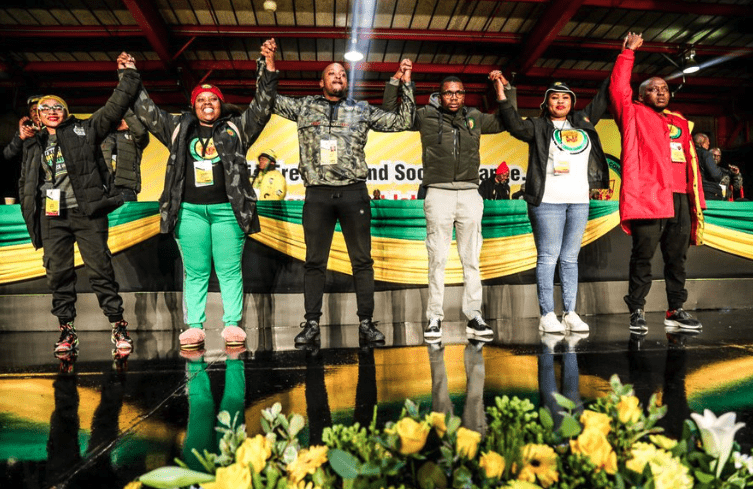
The ANC Youth League is determined that its deputy president and provincial chairs should be included in provincial and national cabinets.
The governing party is currently holding its branch executive committee meetings to select provincial and national lists to submit to the Electoral Commission of South Africa for next year’s elections.
Speaking to the Mail & Guardian this week, youth league spokesperson Zama Khanyase said the body wants all its provincial chairpersons to be part of the ANC’s list of public representatives.
“When they get to form part of the list and they form part of the legislatures, we want them to be MECs,” she said.
Khanyase said this move has been implemented in the Northern Cape where Venus Blennies was appointed MEC for youth, women, disability, communication and e-government last year.
“We want that to be spread across provinces. All chairpersons of the youth league must be members of the provincial legislatures, and must be MECs. In the list that we have, the deputy president of the youth league [Phumzile Mgcina] is part of the list; we would want to see our deputy president become a minister.
“We have other NEC (national executive committee) members, other young people who are part of the list. We want to see them becoming ministers but also we want to see them becoming deputy ministers so they begin to learn,” she said.
Khanyase said the league understood that some within their leadership who are ready to take up positions in President Cyril Ramaphosa’s executive need to learn.
Lobbying for placement in the ANC’s provincial and national lists has intensified, with many of its MECs and ministers jostling to be included in branch nominations for representatives in the 2024 general elections. Posters of party representatives and those wishing to be selected as MPs have been circulating on social media.
Khanyase said although the league was hoping to get at least three positions in Ramaphosa’s cabinet should the ANC be reelected, it is determined that deputy ministries must be populated by its members.
“It becomes a learning curve for us, exposure and understanding how a ministry is run and understanding what are the responsibilities of a political head — how they work hand in hand with other officials of government who work under their political leadership.”
Khanyase said key ministries such as the department of education should have a youth league leader as its political head.
She said that the league is also determined that it should be part of boards of key state institutions.
The ANC’s guidelines only speak to sufficient youth representation in its list process without clarifying how many should be nominated.
The guidelines have emphasised that women should have at least 50% of provincial and national list representation, and two of the three premier candidates to be considered in each province.
The process to select candidates as MPs and MPLs will be run by the ANC’s electoral committee headed by former president Kgalema Motlanthe. It will deliver a national list of 200 ANC candidates for parliament, as well as a provincial to national ANC list of five to 50 candidates for parliament per province. The process will also deliver nine provincial legislature ANC lists with a minimum of 30 and maximum of 80 candidates.
In its three months in office, the league’s national leaders have already ruffled feathers in Ramaphosa’s cabinet, taking on Public Works Minister Pravin Gordhan and Labour Minister Thulas Nxesi.
The league’s president, Collen Malatji, accused Gordhan of selling state-owned entities during an interview with The Citizen.
Gordhan retaliated, intimating that Malatji had vested interests intent on crippling ongoing reform of state-owned enterprises to the detriment of millions of South Africans. The two promised to iron out their differences are yet to meet, Khanyase admitted.
She said the league would continue to hold senior ANC members in the Ramaphosa cabinet accountable.
“What we say is what our members on the ground are saying. It would be us selling out if we try to change the messaging and sweeten it. If anything, I believe that in terms of what young people are saying on the ground, we are not even as close to reflecting the anger that they have and how impatient they have become with the government in terms of how quick they are responding to the needs that we have.”
Khanyase, who was appointed as youth league spokesperson shortly after its conference in July, said she believed the ANC has “great policies” but has failed to implement them.
“Part of the reason the youth league is raising [these issues and] displaying how impatient it has become is because we know that if these policies would be implemented then we would see the change we need to see,” she said, adding that the young lions are necessary in the ANC to agitate for change.
The post ANCYL wants its deputy president to be a minister appeared first on The Mail & Guardian.
Legacy vs issue-based voting in 2024:

As South Africa approaches its seventh national elections in 2024, it is important to scrutinise the voting patterns that have emerged over the past 30 years since the country attained democracy.
These elections are expected to be tightly contested as the country grapples with a struggling economy, high levels of corruption, poor governance, load-shedding and a cost of living crisis.
According to an Electoral Commission of South Africa (IEC) report, South Africa has about 1 562 registered political organisations, of which 1 222 are municipal parties and 340 are national or provincial parties, making it the African country with the highest number of parties.
The proliferation of parties could be attributed to South Africans seeking alternatives to the current democratic dispensation. An Afrobarometer report noted that “70% of South Africans are dissatisfied with the way democracy is working” and “65% support elections as the best way to choose their leaders”.
The journey to the 2024 national elections reflects a yearning for change, some coining it “2024 is our 1994’’ and others looking for an alternative or a political party they can identify with.
Although a lot of this interest comes from frustration, it can also be viewed as an indication of enthusiasm for democratic processes. Furthermore, the Electoral Amendment Act has adjoined this anticipation because it will be the first time independent candidates contest for the national assembly and provincial legislatures.
Since democracy, political parties have enjoyed hegemony over democratic and electoral processes provided by the 1996 Constitution. Political hegemony is the dominance of one political group over another, often supported by legitimising norms and ideas perpetuated by one political group over the other.
In parties such as the ANC, Inkatha Freedom Party (IFP), Pan African Congress (PAC), Freedom Front Plus (FF+) and the United Democratic Movement (UDM) have established political hegemony over democratic processes embedded in racial, rural-urban and ethnic divides.
South Africa’s political hegemony continues to evolve as new political organisations emerge, because of growing frustrations over a struggling economy, poor service delivery and governance. A further evolution will now comprise individual political leaders who enjoy the benefits of hegemony while they promise an alternative. These evolutions of political hegemony have given birth to legacy voting rather than issue-based voting.
Legacy voting is when voters vote for a political party or an individual based on the long-lasting effect of particular events or actions that took place in the past, or of a person’s life in the past. Voters believe the party or individual’s past contributions to either a struggle or a transition has paved the way for some form of freedoms and progression and they should continue to vote for the political party or individual.
Legacy voting is closely linked to the “mere exposure effect” or “the familiarity principle”, which describes the tendency to develop preferences for people or things simply because people are familiar with them. There are several political parties that enjoy the benefits of legacy voting, the most obvious example being the ANC, which was led by struggle icons such as Nelson Mandela and Oliver Tambo, and led the anti-apartheid struggle.
Other legacy parties include the IFP, which was led by the late Mangosuthu Buthelezi and derives its main support from Zulu people in KwaZulu-Natal; the UDM, which was formed in 1997 by Bantu Holomisa and Roelf Meyer, who were previously members of the ANC and National Party; the FF+, which protect the rights and interests of minorities, especially Afrikaners; and the PAC, which also fought in the struggle against apartheid.
This may expand to include an independent candidate who has had a legacy in South Africa. The challenges that are inevitable for legacy voters emanate from the assumption that liberation movements,and leaders who have been in governance for decades will deliver good governance and will bring socio-economic growth. Unfortunately legacy parties have come up short regarding delivering services and their willingness to be held accountable and voters have noted the demise of credible and effective leadership.
While legacy voting has its shortfalls, there are positive aspects to it. Legacy parties approach governance in a realistic manner — they are able to lead the country with an embedded appreciation of the complexities of this country and have systems in place to run a government with such complex and diverse interests. Additionally, legacy parties are trusted more than emerging parties, because of the sensitivity of South Africa’s past.
On the other hand we have issue-based voting which is when citizens vote for a party or an individual based on their proposed solutions to problems in the country or their actions towards addressing these key issues. This type of voting may extend to constituency voting, when voters vote for parties or individuals on the basis that they represent their interests — for example, religion.
Issue-based political parties in South Africa are mainly new parties that emerged as a result of internal political conflicts in a party or frustration about the state of the country. These include the Economic Freedom Fighters (EFF), ActionSA, African Transformation Movement (ATM), Good party, Rise Mzansi and Build One South Africa. Additionally, this pool of issue-based candidates will increase as independent candidates run for elections on the backdrop of a yearning to see change in the country.
Issue-based political parties tend to be characterised by specific matters they champion. For example, the EFF has positioned itself as addressing economic freedom and land, ActionSA is known for its anti-immigration policies and Rise Mzansi as the new alternative that is diverse and youthful.
Unfortunately, issue-based political parties and independent candidates tend to sell citizens “dreams” in exchange for a vote, which can arguably be said to be unrealistic and too ambitious. There is little appreciation for South Africa’s historical context and complexities in developing their policies, manifestos and strategies. They function on limited resources and capacity to run a government, and there is a trust deficit because they are unfamiliar to voters.
The upside of these political parties is that they are responding to the needs of South Africans and do not come with pre-existing egos based on things that they once did. They are equally excellent at holding legacy parties accountable through various routes such as motions of no confidence and court action. Another common feature is the diversity of the composition of their leadership — there tends to be effective representation of, for example, the youth, women, LGBTQ+ individuals.
Many legacy political parties are starting to evolve into issue-based legacy parties, because the voter population is becoming critical of poor governance. One of the political parties that has enjoyed both legacy and issue-based voting is the Democratic Alliance (DA).
Legacy components emerge from the fact that it is a party borne out of the Progressive Party that was a breakaway party from the National Party during apartheid. It has branded itself as a multi-racial organisation that will ensure service delivery, hence their rigorous court and accountability approach and use of the Western Cape as their example of what it can do to address problems in the country.
There seems to be a nexus between age dynamics and these two types of voting. Legacy voting resonates with the older generation that were around during the apartheid era or “born-frees” who were affected by the democratic transition. Whereas, younger people lean towards issue-based voting because they are more optimistic and are willing to give new political parties and individuals a chance, provided they can identify with the potential that could come with them.
The voting patterns between urban and rural areas tend to differ. Urban areas are more diverse in terms of political support, with the DA and other opposition parties gaining ground. Additionally, the middle and working classes are issue-based voters, while the economically marginalised are of the view that should the legacy political parties become removed, essential services will stop being delivered. This is most obvious in rural areas, particularly KwaZulu-Natal and the Eastern Cape, which are strongholds for the ANC, UDM and IFP.
With the prevailing state of affairs, introduction of new parties and inclusion of independent candidates, the 2024 national elections will be polarised between the legacy and issue-based voters. Electorates who believe in reinventing the wheel and those who are optimistic about the future regardless of the status quo will be the main decision-makers on what kind of government South Africa gets for its eighth administration.
Karabo Mokgonyana is a legal and development practitioner who focuses on human rights protection, international trade and investment and peace and security.
Yolokazi Mfuto is a development practitioner and political analyst at development firm RE4M Envoy, and a board member on digital rights and health projects for the Graduate Institute, Geneva.
The post Legacy vs issue-based voting in 2024 appeared first on The Mail & Guardian.
Submit and get free exposure here: Showcase Your Business | Advertise Your Special Offers.