South Africa: key statistics ahead of the 2024 elections:

Ahead of the 2024 election, we examined how South Africa has done on several important measures over the past few decades. We looked at the following topics
- murder;
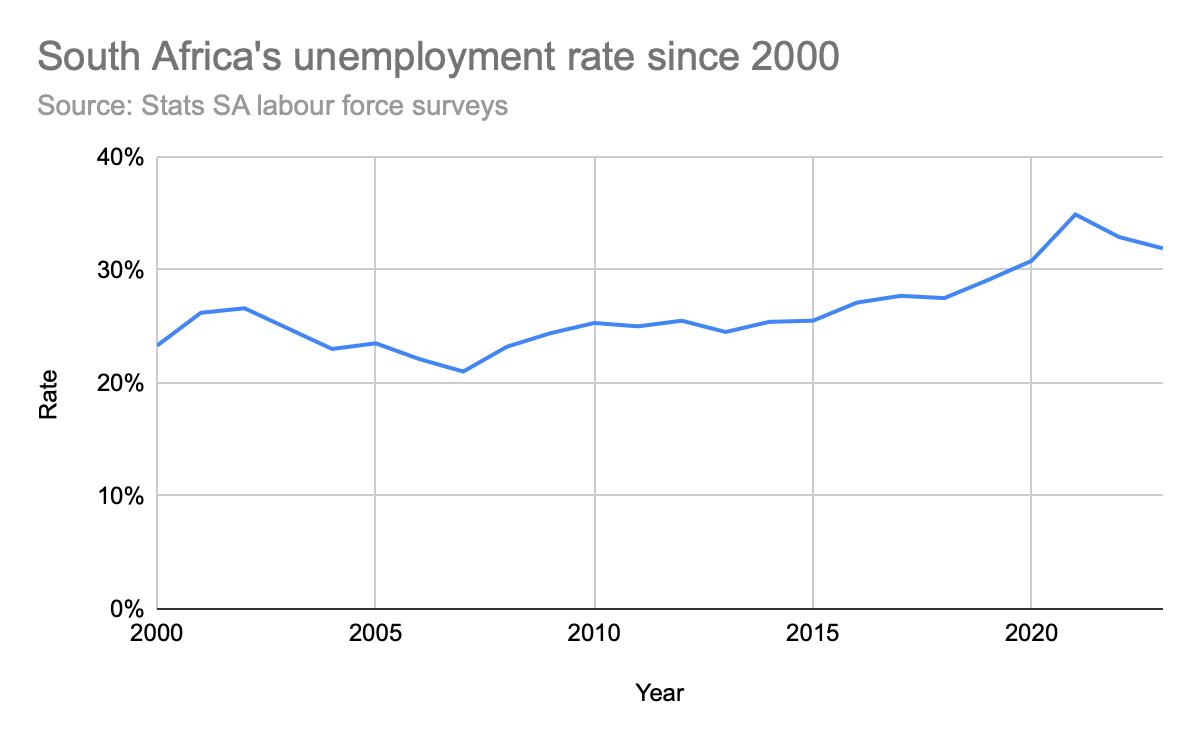
- unemployment and how it has changed since 2000;
- social grants and how coverage has changed since democracy;
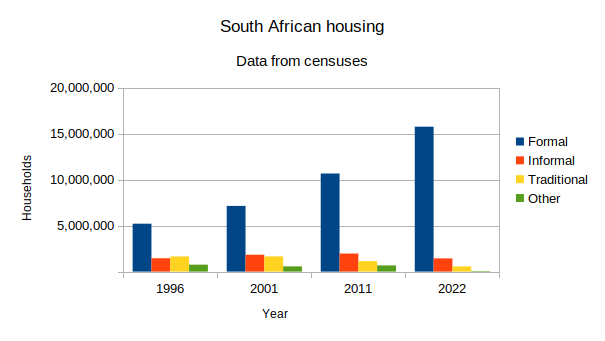
- state provision of housing; and
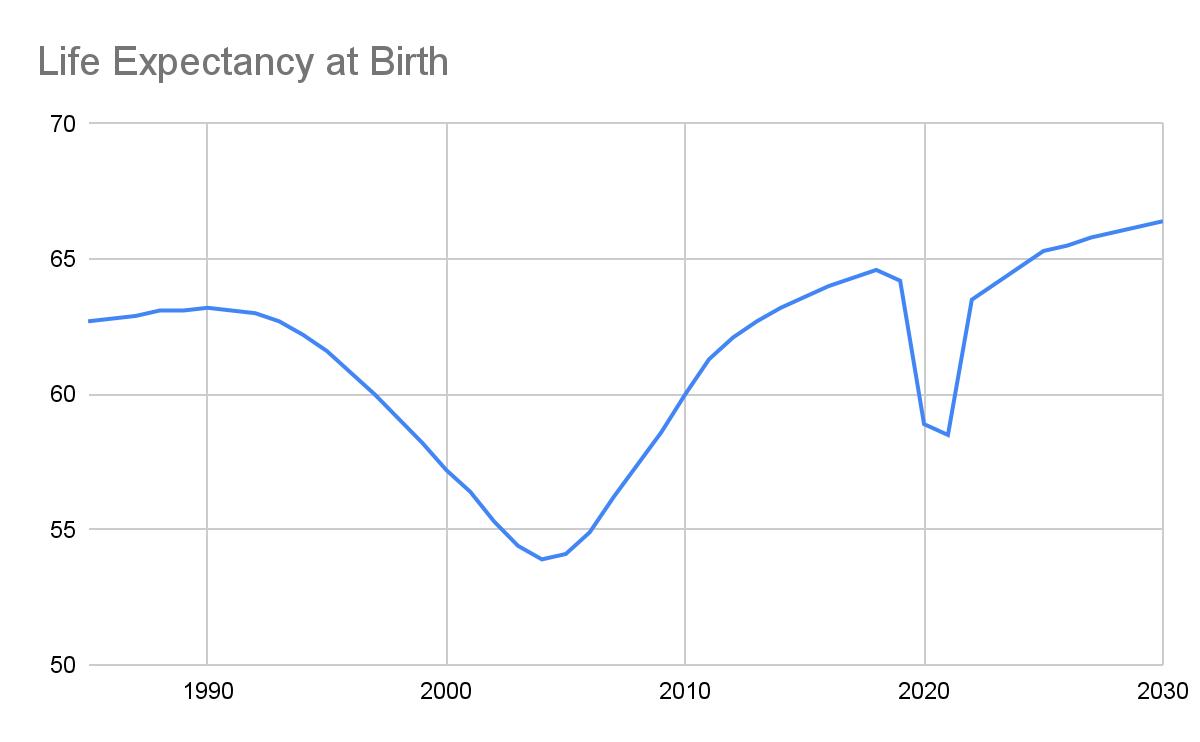
- HIV and life-expectancy.
Murder and crime
Crime consistently ranks as one of the two major concerns of South Africans, along with unemployment. But other than murder, crime rates are hard to measure because many crimes go unreported. Murder is both the most serious and best measured crime. It’s a proxy for how we’re doing on crime generally. Unfortunately the country is regressing.
From 1995 until about a decade ago South Africa was making headway. The murder rate was dropping. But for the past decade it has steadily got worse.
| Year | Murders | Per 100k |
| 2012/13 | 16,213 | 31 |
| 2013/14 | 17,023 | 32 |
| 2014/15 | 17,805 | 33 |
| 2015/16 | 18,673 | 34 |
| 2016/17 | 19,016 | 34 |
| 2017/18 | 20,336 | 36 |
| 2018/19 | 21,022 | 37 |
| 2019/20 | 21,325 | 37 |
| 2020/21 | 19,972 | 34 |
| 2021/22 | 25,181 | 43 |
| 2022/23 | 27,272 | 46 |
Unemployment
Our chronic, most pressing problem that we have failed to fix is unemployment.
Social grants
In the face of massive unemployment, the social grant system helps millions of people in South African to survive. Without it the country would be plunged into chaos. The following graph shows how the number of grant recipients has increased since democracy.

Housing
The Reconstruction and Development Programme of the ANC in 1994 was its flagship programme and promised to provide everyone with houses. While much progress was made, there is still a long way to go. We found that the quality of data was unexpectedly poor, especially the 2022 census that was published this year.
HIV and life-expectancy
We examined how antiretroviral treatment has reversed the country’s decline in life-expectancy. The following graph of South Africa’s change in life-expectancy since the late 1980s and projected to 2030 is quite extraordinary. One would be hard-pressed to find a country in the world with life-expectancy as volatile as this. The first dip was due to the HIV epidemic. The second, much shorter one, was due to Covid. The good news is that life-expectancy appears to be on a sustained upward trajectory.
The original version of this article used the table of murders for the Western Cape. We’ve changed it to be for the whole country.
This article was first published on GroundUp
The post South Africa: key statistics ahead of the 2024 elections appeared first on The Mail & Guardian.
Ladysmith Black Mambazo: Under international skies:

The acapella masters Ladysmith Black Mambazo could easily have just basked in the ample and deserved glory of their monumental South African Legacy Tour. This musical journey began in May at the Joburg Theatre and ended at the State Theatre in Pretoria on 15 December.
This ahead of yet another tour to the US next year.
The isicathamiya nine-piece has a long and glorious career that started in December 1960, when it was founded by the late Joseph Shabalala, that first incarnation as “Ezimnyama” (“The Black Ones”).
In 1964, they became Ladysmith Black Mambazo, named after Shabalala’s KwaZulu-Natal hometown. Black is a reference to oxen, the strongest of all farm animals, and Mambazo is the Zulu word for “axe”, a symbol of the group’s ability to “chop down” any singing rival who might challenge them.
Their collective voices were so tight, and their harmonies so polished, that by the end of the 1960s they were banned from competitions — although they were welcome to participate as entertainers.
A radio broadcast in 1970 opened the door to their first record contract. It was the beginning of an ambitious discography that includes more than 50 recordings. Their debut album in 1973, Amabutho, brought the hugely popular group their first of countless gold records.
But, as the Rough Guide to World Music wrote, by the mid-1980s the boom was over, with many urban black South Africans dismissing their sound as “hick”.
Just in time, in the mid-1980s, Paul Simon heard their music and was blown away.
He visited South Africa and incorporated the group’s rich harmonies into his famous Graceland album. He recorded two tracks he composed with Shabalala, Homeless and Diamonds on the Soles of her Shoes, which became two of the greatest hits off the album.
This 1986 release was Simon’s most successful album and his highest-charting album in over a decade. It is estimated to have sold more than 16 million copies worldwide. It exposed the world to Ladysmith Black Mambazo.
Their talent has been rewarded with multiple awards, including five Grammys, and attracted millions of fans around the world.
In addition to their work with Simon, Ladysmith Black Mambazo have recorded with numerous artists, including Stevie Wonder, Dolly Parton, Sarah McLachlan, Josh Groban, Emmylou Harris, Melissa Etheridge and even Burna Boy.
Their music has also featured in several films.
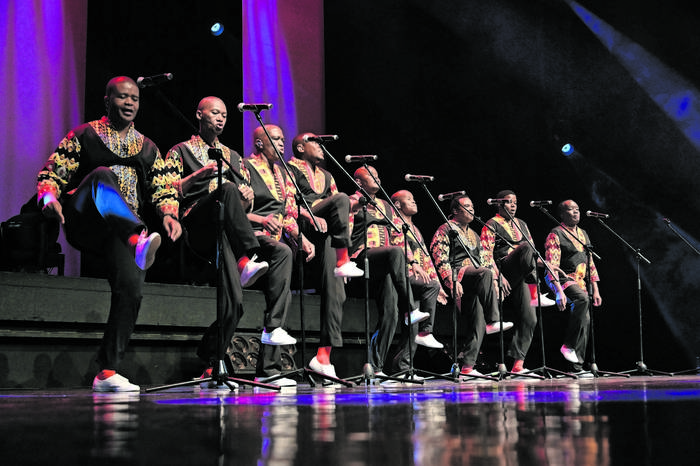
Nelson Mandela designated the group “South Africa’s cultural ambassadors to the world”.
The nonet, including four of Shabalala’s sons, are not resting on their laurels and are ploughing back into the industry through the Ladysmith Black Mambazo Mobile Academy. It was launched four years ago to develop young aspiring groups who sing isicathamiya and indigenous music, says group member Thulani Shabalala, one of Joseph’s sons.
“There are nine music groups that we have identified from our provinces and, of the nine, two groups had the privilege of joining us in the US,” says Thulani.
“We also managed to get the groups in the studio and facilitated workshops with them.”
He says that the Legacy Tour is a platform to get them exposure, so that more people can engage with them and their music.
“We want to fully expose them to people, which is why we have chosen a different strategy of having them part of the tour, not as opening and closing acts, but we have them right in the middle of our set. Our hope is to expose them to South Africa and our audiences abroad.”
Shabalala says the academy was the brainchild of his dad, Joseph, who had the wish of mentoring young groups.
The academy was taking way too long to come to fruition, so Shabalala says instead of waiting, they would go to people instead, hence the mobile academy.
There have been challenges, says Shabalala, that they came across along the way as they were touring the country, affording mentorship to a capella groups.
“You find that some are unable to use microphones and, of course, there are those group dynamics, such as time management and maybe the attitude of others.
“But we took on those challenges by teaching the groups some of the values that bab’Shabalala taught us.
“Also teaching them discipline and understanding that their voices are a gift from God, and they have to respect that,” he says.
Shabalala says what has kept Ladysmith Black Mambazo together for so long is its founding members’ vision of taking this indigenous music to the world.
“They left Ladysmith and went to Durban, where they rented a room which they shared among the 10 of them. Imagine that.
“And when a song would come to one member in the middle of the night, they would all wake up and participate. That is the kind of dedication and camaraderie we are trying to build in these groups.”
This programme, supported by the national department of sports, arts and culture, has unearthed and developed young groups, breathing new life into isicathamiya and indigenous music.
“The outcome of the Legacy Tour is to etch the memory of Joseph Shabalala into the hearts of South Africans, so they can remember him always. We hope that the music academy can be built as part of his wishes,” Shabalala says.
As the curtains close on the Legacy Tour in Pretoria, Ladysmith Black Mambazo invite their fans to join them for a musical journey through time, culture and the indomitable spirit of South Africa.
Joseph Shabalala would have approved.
The post Ladysmith Black Mambazo: Under international skies appeared first on The Mail & Guardian.
Water purification system brings economic opportunities to a Mpumalanga village:

The YoTenga Water Filtration and Purification System and Bottling Facility was launched at Pfunekani Preschool in Welverdiend, Mpumalanga
Turkish Co-operation and Co-ordination Agency (TIKA), Indalo Inclusive South Africa, and the Kusini Water partnership handed over a water treatment system and subsequently launched the YoTenga Water Filtration and Purification System and Bottling Facility at Pfunekani Preschool in Welverdiend, Mpumalanga.
For many years the school has struggled to access clean water, despite the fact that it has boreholes on its grounds. The quality of the borehole water unfortunately could not meet the preschool’s needs of meal preparation, cleaning and providing drinking water to the young kids — a major need in a village that experiences high temperatures and dry conditions.
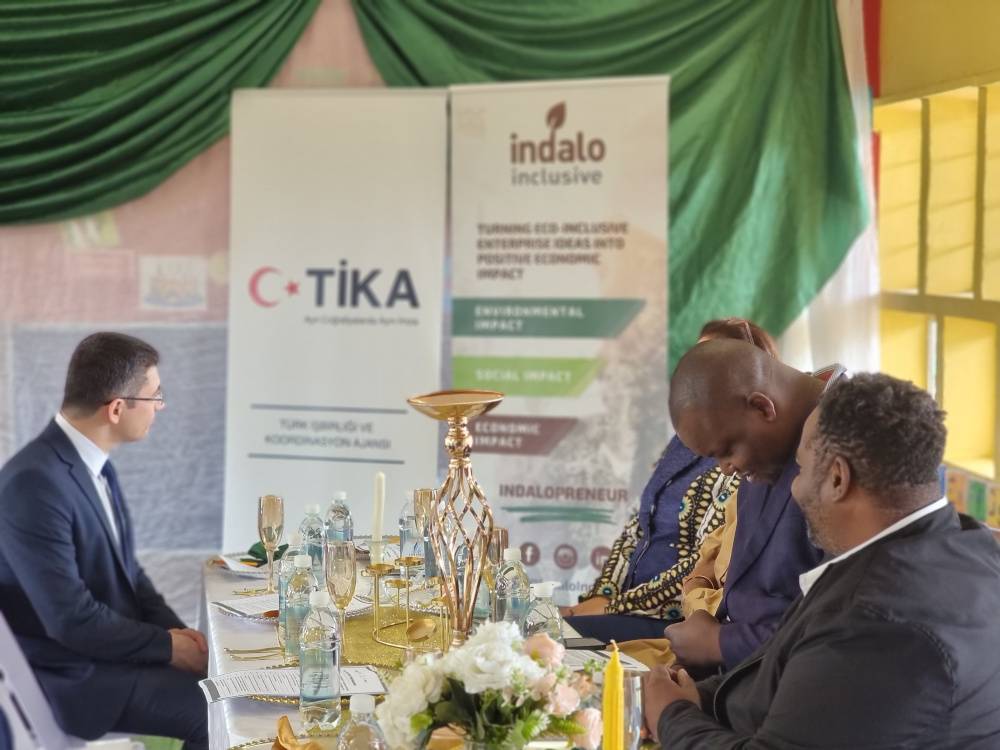
“At times we would have to bring water from our own households to cater for the kids or use rainwater, which we had to boil first, in order to use at the facility,” said the founder of the preschool, Ms Mavis.
The water project presents a solution to the challenge of access to water while offering the preschool and its community the opportunity to generate revenue through the bottling and sale of purified water to households and the many lodges surrounding the village, which is in the Kruger area.
Pfunekani Preschool has come up with the name for the water brand, “YoTenga”, which is the Shangaan word for “pure”.
The water filtration and purification system was installed in the pre-school and officially commissioned on Monday, 10 December at a launch attended by the Ambassador of the Republic of Türkiye to South Africa, Aysegul Kandas. TIKA, the international development co-operation agency of Türkiye with 22 offices across Africa, is the funding partner of this project.
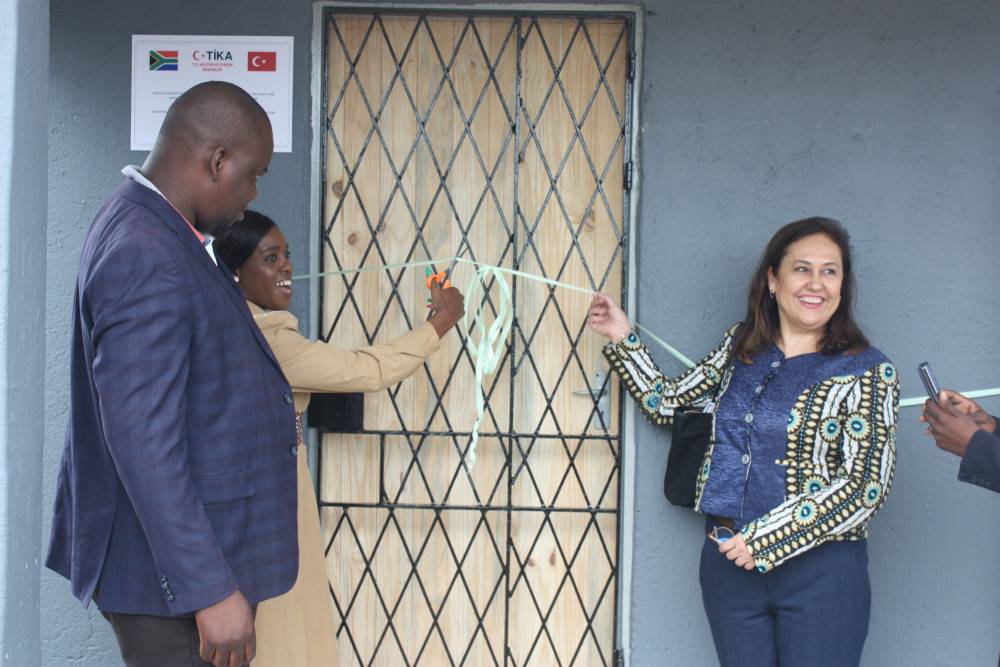
The presence of the ambassador at the launch signifies the Turkish government’s commitment to its developmental objectives.
In her remarks during her keynote address, the beginning of which she made in isiZulu, the Turkish ambassador expressed her enthusiasm for the collaboration between her country’s co-operative agency together with Indalo Inclusive and Kusini Water. Kandas, who was visiting the Kruger area for the first time, expressed interest in establishing more partnerships with Indalo Inclusive local institutions and lodges in the area.
“Türkiye is also looking forward to working and offering support to the nature reserves, and I will be further discussing these [plans] with the minister of tourism,” Kandas said.
She also said that her office is eager to identify a young scholar from Pfunekani Preschool to be a beneficiary of their bursary scheme, Türkiye Scholarships.
The water filtration system installed at Pfunekani is the innovation of project partner, Kusini Water, founded by Murendeni Mafumo. The Indalo alumnus builds water treatment systems from nanotechnology and macadamia nut shells to bring clean and safe drinking water to people in rural, peri-urban and informal settlements throughout Africa.
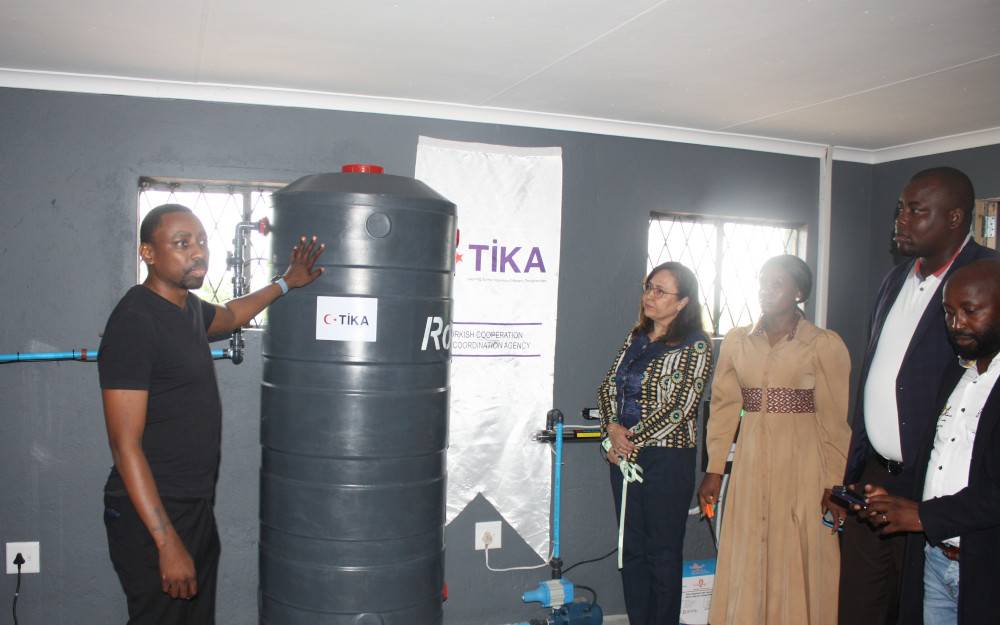
Kusini Water rolls out their innovative water system through a skills development programme, which trains unemployed youth to operate water kiosks in their own communities.
Indalo Inclusive’s mission is to initiate and support high-impact, environmentally friendly and social entrepreneurial innovations as well as to foster partnerships among ecosystem stakeholders. The YoTenga Project accomplishes this by forging mutually beneficial and co-operative relationships between the various stakeholders within Indalo’s nexus of partnerships, which span across several sectors.
The Muthlwarini Co-operative, represented by its deputy chairperson Isaac Mdluli, was present and addressed the gathering. The Muthlwarini Co-operative is a beneficiary of the partnership between Indalo Inclusive, Old Mutual and the Mont d’Or Hotel Group, which sees local community members benefiting from the employment and economic opportunities presented by the nearby lodges in the area.
Rest Kanju, Director and Head of Operations at Indalo Inclusive, said partnering with enterprises like Kusini Water and receiving financial support and cooperation from TIKA to help the Muthlwarini Co-operative would achieve the organisation’s desired outcome of seeing social and economic development of the community. This occurs through the generation of much-needed revenue from the sale of bottled, purified water to individuals and families in the community. They also supply water to the nearby lodges, impacting local tourism.
In keeping the spirit of community involvement and inclusion, Chief Mlambo represented the local tribal authority at the launch.
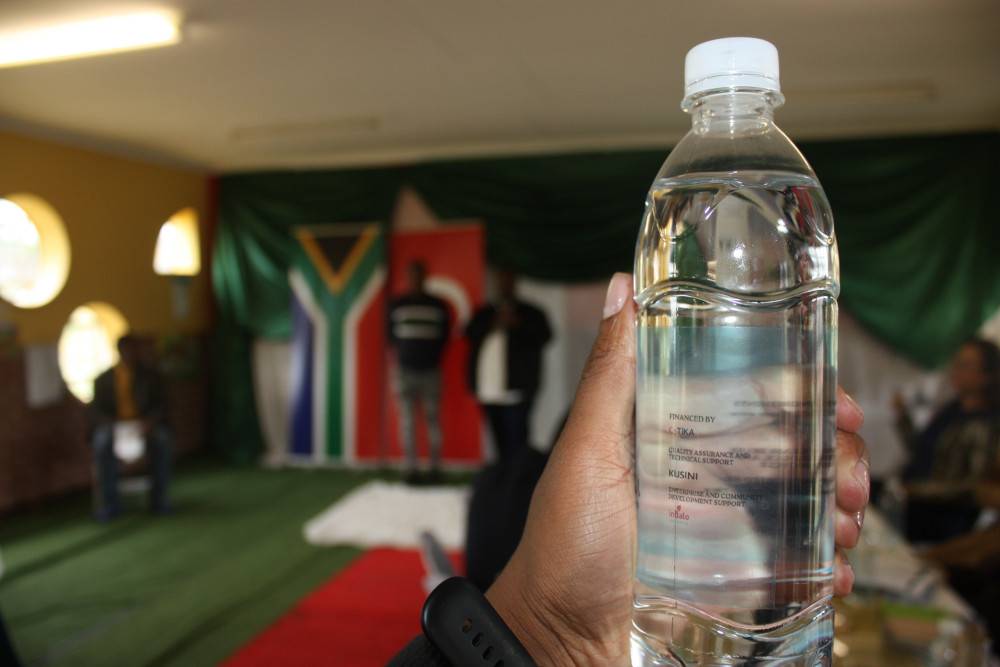
MMC of the Bushbuckridge Local Municipality Patricia Gubayi said that the water filtration system will not only benefit Pfunekani Preschool, but that it will also benefit the community at large by fighting the scourge of poverty that the area faces. She added that the municipality has a large number of wards to deliver services to, making it a challenge to meet the demands of its population with state funds alone.
“We are thankful to have embassies like that of Türkiye who lend their support where needed,” Gubayi said in her address.
“We are happy to be one of the lucky municipalities who have received such facilities that will bring a huge change in the province, not just the community of Welverdiend,” Gubayi added, and concluded by stating that it is the responsibility of the community to look after the facility and ensure that all the equipment is taken care of.
The post Water purification system brings economic opportunities to a Mpumalanga village appeared first on The Mail & Guardian.
Submit and get free exposure here: Showcase Your Business | Advertise Your Special Offers.