
The South African Weather Service has issued a Level 8 warning for further distributive weather conditions as snowfall continues to blanket the N3 highway, particularly between Warden and Tugela Plaza in KwaZulu-Natal, leaving motorists stranded for hours.
The KwaZulu-Natal Disaster Management Centre said it had convened a joint operations centre meeting on Saturday morning to discuss relief efforts for trapped motorists in the form of soup kitchens, shelter and blankets.
“Local municipalities, in conjunction with other state organs, have mobilised graders to clear snow in affected regions, prioritising major routes to facilitate emergency access,” KwaZulu-Natal cooperative governance and traditional affairs MEC Thulasizwe Buthelezi said in a statement.
The N3 Toll Route remains closed between Estcourt in KwaZulu-Natal and Harrismith in the Free State due to the severe weather conditions.
The heavy snow has also disrupted essential services, including water and electricity, in several communities.
Buthelezi said technical teams were working to restore these services as quickly as possible, but cautioned that residents should prepare for potential delays due to the weather conditions.
Meanwhile, the Border Management Authority has issued a notice to travellers that in light of the persistent snowfall it has decided to close the Sani Pass, Boesmansnek and Monontsha ports of entry until further notice.
It said the Ficksburg, Caledonspoort, Makhaleng and Maseru Ports of entry could be used as alternatives to enter Lesotho.
Parts of the Eastern Cape including Gqeberha, Penhoek Pass, R58 in Barkly East, and Mountain Shadow near Elliot have also reported snowfall.
Eastern Cape transport spokesperson Makhaya Komisa said emergency services had been activated to monitor the N2 highway towards Gqeberha.
“We advise our motorists to reduce speed when driving along this road as they approach Gqeberha from Makhanda. Our traffic officers are on the scene,” Komisa said in a statement.
Food, power and identity: A colonial and culinary heritage:
When we reflect on our collective or individual heritage, we often overlook the elemental role that food plays in our lives. It has always meant more than basic sustenance. Food has been a cornerstone of human existence, arguably the very foundation upon which civilisation and community were built.
Many of our earliest celebrations are rooted in the harvest, with religious festivals deeply intertwined with food. Whether it is the consumption of specific foods, such as vegetables during Hindu festivities, the sacrificial rituals of Eid al-Adha or the acts of fasting observed by various religions, food is an essential part of cultural and spiritual life.
Food not only provides a sense of identity but is also woven into the national narratives of many countries. Consider pasta, which is synonymous with Italy, curry with India and hamburgers with the United States. These narratives often have a romantic character, frequently quite far removed from reality.
Conversely, food — or its scarcity — has sparked major political, economic and societal upheavals, from the bread riots in 18th-century England to the food shortages that ignited the French Revolution. Lenin’s famous slogan “Bread, land, and peace” ushered in the first socialist state in history.
In all these instances, the fight for food was inextricably linked to broader struggles for liberation. Yet, food has also been used to enforce repressive politics.
The earliest examples of this are tied to the process of capitalist accumulation, where, in Europe and subsequently around the world, people were dispossessed of their land, and where food, once a communal resource, became a commodity.
This was a key means of forcing people into the cities and into wage labour. The power of the colonial state was directly linked to the control and flow of resources, resulting in deprivation for the colonised and abundance and excess for the colonisers.
The Irish Potato Famine (1845-1852) was a devastating event that led to the death of more than a million people. The British government’s laissez-faire approach and failure to address the famine’s root causes led to starvation and suffering, entrenching widespread resentment of the British.
Almost 100 years later, the Bengal Famine of 1943, which led to the death of an estimated three million people, was also exacerbated by British colonial policies. Similar to the Irish Famine, the British government diverted food supplies to support the war effort, while local authorities hoarded grain, leading to widespread starvation.
Outside of these overt forms of using food as a tool of oppression, the quest for spices and new ingredients fuelled colonial expansion, with the brutal Atlantic slave trade driven by the insatiable demand for sugar, which later diversified into other crops such as rice and wheat.
Slaves taken from West Africa were valued for their knowledge of farming, having for centuries already cultivated crops such as drought-resistant rice. This knowledge was desperately needed in Europe’s zeal to fuel its ever-growing colonial expansion and imperialist projects.
The profits of the labour of that food production fuelled the building of the superpower that was to become the United States of America. Today, the food industry still remains one of the most profitable sectors of the US economy.
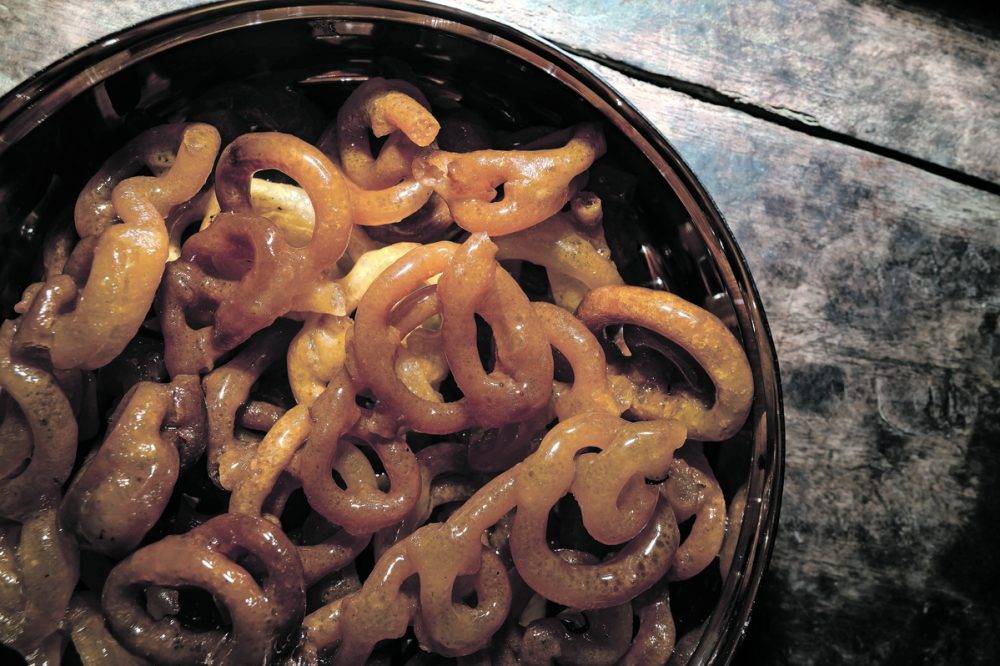
On the other end of the scale from those who control food are those who have had to radically change their lives and leave their homes, usually escaping wars, famine and droughts. Although powerless, these communities of people come to have an effect on our lives in much richer ways.
The migration of communities — whether forced or voluntary — has often been intertwined with food. Migrants frequently turn to food as a means of survival in their adopted countries. The global spread of Indian, Chinese, Italian and Ethiopian cuisines is not only a testament to these communities’ resilience but has also left an indelible mark on the culinary landscapes of their new homes.
For instance, fish and chips, now considered quintessentially English, was introduced to England by Jewish migrants from Portugal and Spain who sought refuge from persecution. One of the earliest fish and chip shops in England was opened by Joseph Malin, a Jewish migrant, in the 1860s. Today, chicken tikka masala, invented by migrants from South Asia in the United Kingdom, is widely deemed to be the national British dish.
Just as fish and chips have become a symbol of English tradition, pap is seen as a staple food in South Africa and across sub-Saharan Africa. Yet the maize from which pap is made is not indigenous to our continent. Maize was first domesticated in southern Mexico about 9??000 years ago, spreading across the Americas before 15th-century colonisers encountered it and transported it worldwide through colonial trade networks. It was brought to Southern Africa as a high-carb, high-energy food for workers.
Similarly, ingredients such as chilli, potatoes, chocolate and tomatoes, central to our daily diet and cultural traditions, trace their origins to Latin America.
South Africa’s culinary heritage is woven from the diverse histories and traditions of our people. Biltong, peri-peri chicken livers, samoosas, bunny chow and boerewors have specific origins and histories but have come to belong to us all. The same is true, of course, of the braai, which, although it has different inflections in different contexts, is recognisably the same ritual with a shared set of foods across different communities.
The beans for chakalaka originated in Latin America. The spices that flavour our marinades and sauces are the legacy of Indian, Malay and Indonesian influences brought by slaves in the Cape and indentured labourers and traders from India.
The boerewors sizzling on the grill has its roots in rural French sausage-making traditions, while the beer often accompanying it has its origins in German and Dutch brewing techniques.
Despite adversity, food has the power to unite people and break down barriers between communities. It can also serve as a healing force, helping individuals reclaim a sense of identity and belonging after it has been stripped away.
In the US, soul food is a poignant expression of love and creativity, born out of the hardships and cruelties of slavery. The same is true of many forms of food here, some of which now belong to us all.
Although we must celebrate this, we cannot forget that we are a country in which more than one in 10 households is going hungry. That is a political choice that we have made and continue making. Lenin’s slogan is still all too relevant for millions of our people.
Dr Vashna Jagarnath is a curriculum developer, historian, trade union educator, pan-African specialist and former deputy dean of humanities at Rhodes University.
In honour of South Africa’s cultural and linguistic richness this Heritage Month:
“South Africa belongs to all who live in it, united in our diversity.”
As South Africa celebrates Heritage Month, we are reminded to come together and embrace our rich cultural diversity.
Heritage Day, which is celebrated on 24 September every year, is a time for South Africans to reflect on and appreciate the languages, cultural traditions and customs that make the nation unique. This month, we are not just celebrating our traditions and histories, but also the essence of our communities, the language we speak, the beliefs we hold and the cultures we pass down to future generations.
Our Constitution, a beacon of hope and unity, provides us with the rights that protect and promote this diversity, which ensures that every South African can take pride in their unique heritage.
From the outset it is important to know how the Constitution views diversity: it sees and celebrates diversity as one of South Africa’s core assets, which is very different from merely tolerating that the nation’s men and women are from different cultural, social, religious and linguistic backgrounds.
Given that protecting diversity is one the key characteristics of a free and open society it is no surprise that the Constitution guarantees rights to all South Africa’s cultural, religious and linguistic communities.
The power of language in preserving heritage
One of the cornerstones of our cultural heritage is the recognition and promotion of South African official languages.
Section 6 of the Constitution will soon be amended to recognise 12 official languages, including sign language, after the Constitution Eighteenth Amendment Act, 2023 comes into effect.
Giving each of these languages the status of an official language allows every citizen in the country to communicate and express themselves in a way that resonates with their identity. This commitment to linguistic diversity is a celebration of our multicultural society.
During this month we are reminded of the importance of promoting indigenous languages, which serve as a vessel of our traditions and history.
Without language, we might not know our culture and history — passed through communication — which is why we must always be proud and promote each language.
Section 6 ensures this by mandating local government (municipalities), as well as provincial and national governments to promote and utilise these languages in their respective institutions.
The Pan-South African Language Board also plays a very important role on promoting and ensuring that these languages are preserved and celebrated, especially in our schools and communities.
It is also important to note that education is one of the most powerful tools for preserving cultural heritage. Schools and universities are not just places of learning but also spaces where cultural, religious, and linguistic diversity can be celebrated.
The Constitution recognises this in section 29 by ensuring that everyone receives an education in the official language of their choice in public educational institutions, where it is reasonably practicable.
The use of indigenous languages in school is crucial, especially for children who are still young. It has been noted that learners who are taught in their mother tongue language excel in their academics. Therefore, by prioritising the use of indigenous languages in school, we empower future generations to connect with their roots, fostering a sense of pride in their cultural heritage.
The Department of Basic Education has made significant progress in promoting the use of indigenous languages at schools. As of 2023, approximately 2015 schools in the Eastern Cape are participating in the Mother Tongue-Based Bilingual Education pilot programme, using isiXhosa and Sesotho from grade 1 through to grade 9.
Learners in these schools are taught other subjects such as mathematics and natural science in their mother tongue languages.
Embracing cultural and religious diversity is a path to unity
Heritage is not only about the language we use in our daily lives, it is also about recognising the cultural and religious practices that make us unique.
Section 15 provides us with the right to freedom of conscience, religion, thought, belief and opinion. This right protects all people (the religious and irreligious) and ensures that everyone has the freedom to not only believe (or not) internally, but to manifest their beliefs externally, fostering a society that respects and values diversity.
Furthermore, sections 30 and 31 of the Constitution ensure that everyone has the right to use their language and participate in the culture of their choice.
On the other hand, section 185 establishes the Commission for the Promotion and Protection of the Rights of Cultural, Religious, and Linguistic Communities. These legal provisions are fundamental in fostering an inclusive society where every individual can express their identity freely.
Deputy President Paul Mashatile recently highlighted the need to celebrate our cultural diversity, which includes African, Asian and European traditions. By embracing our differences, we can create a society rooted in mutual respect and understanding.
This Heritage Month, let us celebrate our heritage, let’s commit ourselves to embracing our diversity. By doing so, we not only honour our past but also pave the way for a more inclusive and united future.
Together, we can create a South Africa where every language is celebrated, every culture is respected, and every individual has the opportunity to thrive.
Daniela Ellerbeck and Alfred Mahkuntsu write on behalf of the FW de Klerk Foundation.
Submit and get free exposure here: Showcase Your Business | Advertise Your Special Offers.
