Spraying toxic herbicide on Vaal River to rid it of water lettuce ‘is criminal’:

Water specialists have said the use of glyphosate is in contravention of the National Water Act and is a risk for humans and toxic for aquatic life
Budget 2024: Government proposes electric vehicle tax incentive:
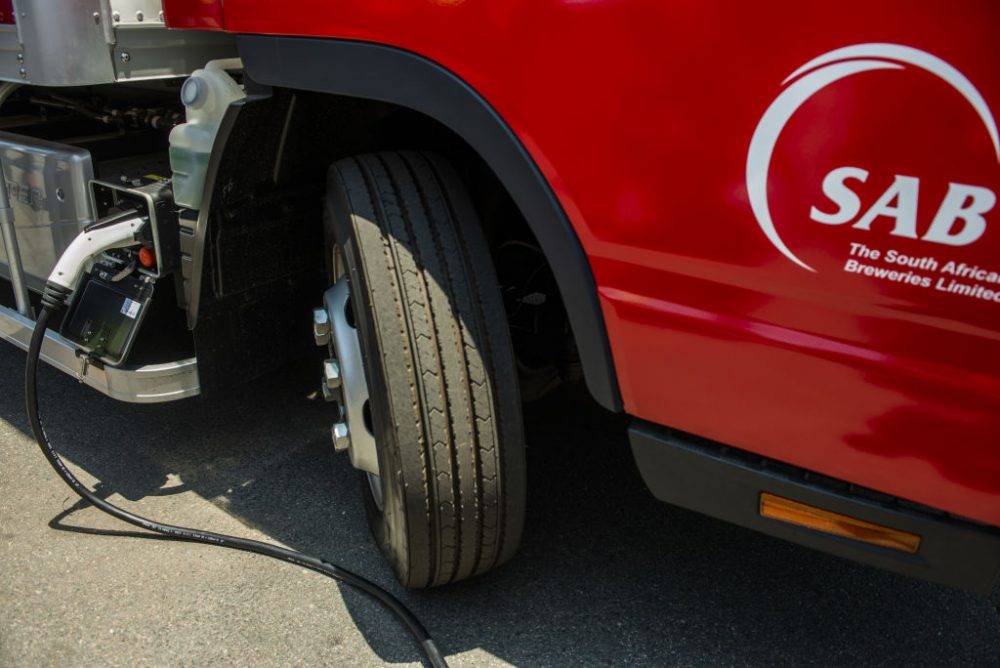
To encourage local electric vehicle production, the government has proposed a tax incentive that will allow manufacturers to claim 150% of qualifying investment spending.
According to the budget, tabled by Finance Minister Enoch Godongwana on Wednesday, the proposed incentive will be made available for new investments from 1 March 2026.
Producers will be able to claim 150% of qualifying investment spending on production capacity for electric and hydrogen-powered vehicles in the first year of investment. The tax expenditure is estimated to amount to R500 million for 2026/27.
The electric vehicle tax incentive follows similar moves by the government to encourage investments in green technologies.
The 2023 budget proposed an incentive for individuals investing in rooftop solar, allowing them to receive a tax rebate to the value of 25% of the cost of any new and unused solar PV panels. According to the budget document tabled this week, the incentive supported the installation of solar panels that are now generating 5 200 megawatts of electricity for households and businesses.
In his speech on Wednesday, Godongwana noted that the government has also reprioritised R964 million over the medium term to support the transition to electric vehicles.
Meanwhile, the government has proposed to increase the motor vehicle emissions tax rate for passenger vehicles from R132 to R146 per gram of CO2 emissions per kilometre. The tax rate for double cabs will increase from R176 to R195 per gram of CO2 emissions per kilometre from 1 April 2024.
Budget 2024: Tough line on bailouts could see Eskom debt relief cut by R4 billion:

The government has proposed that allocations to Eskom through the debt relief programme be cut by R4 billion, citing the power utility’s failure to dispose of its finance company.
The treasury outlined this proposal — which forms part of its tougher stance on bailouts to state-owned entities — in the budget, tabled by Finance Minister Enoch Godongwana on Wednesday.
According to the budget document, these reductions will be in the 2023-24 and 2024-25 debt relief allocations, initially set at R78 billion and R66 billion respectively.
Eskom’s debt relief conditions stipulate that the utility dispose of its finance company by 31 March this year.
The move follows a decision by the treasury to amend the Eskom Debt Relief Act, through which the government will take over a large portion of the utility’s crippling debt. The proposed amendment, announced in the medium-term budget policy statement, will empower the finance minister to charge interest on the debt relief if Eskom fails to comply with the loan’s conditions.
Last November, when the proposed amendment was announced, treasury director general Duncan Pieterse noted that it is informed by the government’s new approach to state-owned entity bailouts, which has come with stricter conditions.
Given the role certain state-owned entities play in the economy, many of these bailouts are unavoidable — lest the government risk being dragged down with them.
Eskom’s debt, for example, has kept the utility from investing in its ageing coal-fired plants, precipitating a 15-year energy crisis.
The treasury has also recently granted Transnet a R47 billion guarantee to allow the state ports and rail company to raise funding to service its debt and cover its operational costs.
According to the budget document, the government has approved Transnet’s use of only R14 billion of the guarantee from December 2023 to March 2024 to pay off maturing debt.
“This is to ensure that Transnet implements the short-term initiatives in the recovery plan and aligns it with the cabinet-approved roadmap for freight logistics,” the document reads.
“The key areas identified to improve operational performance in the short term include accelerating capital spending on operational equipment such as port cranes, marine vessels and rail rolling stock. The rail recovery focuses on allocating capital for the rehabilitation of rail infrastructure and returning older locomotives to service.”
Other conditions on Transnet require the entity to divest non-core assets, reduce its current cost structure and explore alternative funding models for infrastructure and maintenance.
The budget makes no further allocations towards Transnet, which has inflicted a huge blow to the economy in recent years, imperilling jobs, especially in the country’s mining industry.
Speaking at a media briefing ahead of his speech, Godongwana said: “We are engaging with Transnet to do the right things, so that they are able to sustain themselves.”
The budget document points to state-owned entity bailouts as a “key driver of South Africa’s increasingly constrained fiscal position”, noting that Eskom has received more than R240 billion in fiscal support since 2008.
“For this reason, several reforms have been implemented to mitigate such fiscal exposure.” the document notes.
“These reforms include improving the transparency of guarantees for better monitoring and accountability, and using guarantee conditions to raise operational efficiency and reduce financial reliance on government — such as by requiring cost optimisation and private-sector participation.”
A previous version of this article incorrectly stated that Eskom’s debt would only be cut by R2 billion. The article has been corrected to reflect that the proposed reduction is actually R4 billion.
Submit and get free exposure here: Showcase Your Business | Advertise Your Special Offers.