
Stagnating matric maths pass rate a sobering reality:
The decline in the National Senior Certificate (NSC) matric maths pass rate is not the result of a sudden collapse in teaching quality, but the outcome of long-standing weaknesses in the schooling system that begin in the early grades, say education experts.
In 2025, the maths pass rate declined from 69% to 64%. The number of distinctions attained for the subject followed a similar pattern, falling sharply from 9 752 in 2024 to 4 897 in 2025.
This comes against the backdrop of low matric maths participation. Of the 901 790 matric candidates, only 34% took up maths, while most opted for mathematics literacy.
“A stagnating pass rate points to several systemic pressures relating to learning gaps accumulated over time, particularly from earlier grades, which matric interventions alone cannot fix,” said Kat Yassim, the head of the education, leadership and management department at the University of Johannesburg.
Teacher shortages and uneven subject expertise, especially in gateway subjects such as maths, had contributed to lower learner performance, said Yassim.
Curriculum and assessment misalignment, where learners coped with rote learning but struggled with application and higher-order thinking, coupled with load-shedding, food insecurity and mental health challenges, directly affected learning, she added.
“This reinforces the need to shift focus earlier in the system, especially in the Foundation and Intermediate Phases, rather than relying on last-minute matric rescue strategies,” said Yassim.
Accounting also declined — from 81% to 78% — while physical science increased marginally — from 76% to 77%. However, physical science distinctions dropped from 5 680 to 3 865. Fewer distinctions were also recorded for accounting.
In 2024, the number of candidates registered for maths dropped by 12 338 to 255 762, compared with 268 100 in 2023. Physical science enrolments declined by nearly 7 000, while life sciences enrolments fell by more than 5 850 year on year.
“We would like to think it’s something that happened recently,” said Elizabeth Henning, chair of the South African Research Chairs Initiative .
Henning specialises in integrated studies of learning, language, maths and science in primary schools, with a focus on early-grade reading, maths and robotics.
She said poor matric maths outcomes must be understood as the cumulative effect of learning gaps that started as early as Grade 1.
“It’s not that teachers were worse in 2025; the problem goes a long way from grade 1 up to grade 12. What you do in grade 12 is a compilation of what you do in grade 1,” said Henning, adding that weak procedural knowledge in the early years had a direct impact on learners’ ability to perform in high-stakes examinations later on.
The growing tendency among learners to avoid pure maths in favour of mathematical literacy reflected deep-seated anxiety about the subject, Henning said, adding that restoring confidence and enjoyment in mathematics learning was critical.
“It’s not easy to change attitudes about mathematics and address young people’s fears,” she said.

The system also needed to adopt more appropriate and engaging teaching methods, including the use of maths animation and stronger teacher-learner dialogue, to simplify complex concepts and rebuild learners’ confidence, Henning said.
Despite the overall matric pass rate improving to 88% in 2025, the lower maths pass rate was a dampener.
Announcing the results, Basic Education Minister Siviwe Gwarube highlighted structural challenges facing the system.
She acknowledged that the department, which she has headed since mid 2024, should strengthen foundational skills earlier in the schooling system if more learners were to succeed in gateway subjects such as maths and physical science.
Departmental interventions included learners writing the country’s first bilingual grade 4 assessments in maths and natural science as part of the expansion of mother tongue-based bilingual education.
“A healthy system must grow the number of learners taking mathematics and physical science without sacrificing quality. That is why our next phase pairs higher participation with stronger support — better materials, targeted teacher development and earlier intervention so learners arrive in these subjects ready to succeed,” said Gwarube.
She said the system was not expanding fast enough in subjects that shaped access to further study, scarce skills and economic participation, describing that as “the quality challenge of the next phase”.
According to the 2025 NSC examination report, the department of planning, monitoring and evaluation has set national targets for the number of grade 12 learners achieving marks in maths and physical science required by faculties such as engineering, commerce and medicine.
While earlier targets focused on achieving at least 50% in the subjects, the threshold was raised to 60% in the 2019 to 2024 medium-term strategic framework and retained in the 2024 to 2029 medium-term development plan. The 50%, 60% and, sometimes, 70% thresholds remained significant, as they were used by universities depending on institution and faculty, the report said.
“The reduction in the number of mathematics achievers with a mark of 60% between 2024 and 2025 of just over 10 000 is obviously striking. It is likely that this is largely driven by slightly varying difficulty in the examination papers across years,” it said.
The report added that the decline was more pronounced in less advantaged parts of the country. High-level maths achievers declined by 28% in quintile 1 schools — public schools that serve the poorest communities and receive the highest level of government funding per learner — compared with 18% in quintile 4 and 5 schools, with the steepest declines recorded in Limpopo (33%) and the Eastern Cape (32%).
This was probably because more learners in those provinces were clustered around the 60% threshold and narrowly missed it in a more demanding examination year, the report said, noting that universities would need to take that into account in their admissions processes.
It emphasised that there was no clear evidence that maths skills themselves were deteriorating, pointing to improved Trends in International Mathematics and Science Study (TIMSS) Grade 9 results between 2019 and 2023.
“A large part of the challenge is to increase the number of high-achieving black African and coloured mathematics candidates in the examinations. This is essential if South Africa is to see a more representative workforce in areas such as accounting and engineering,” said the report.
The 88% matric pass rate was encouraging on the surface and reflected improved system efficiency, better learner support and stronger monitoring of curriculum coverage, said Yassim.
“However, pass rates alone do not tell the full story about the health of the basic education system.
“We must interrogate what level learners are passing at, how many qualify for bachelor-level study, and how many ultimately transition into post-school education or meaningful work,” she said.
She added that a strong system was not measured only by throughput, but by depth of learning, skills readiness and successful post-school pathways.
Makashule Gana, a Rise Mzansi MP and its chief whip, said South Africa had a ratio of one engineer for every 3 000 people, compared with an average of one for every 600 to 800 people in other developing countries.
“While there has been a gradual improvement over the years in the number of learners who achieve 50% or more in mathematics and science, the basic education system is not producing enough matriculants with strong problem-solving, critical thinking, literacy and numeracy skills, who can go on to higher education, training or apprenticeships,” said Gana.
Lerato Ngobeni, an ActionSA MP and its chief whip, said the pass rate masked deeper systemic failures.
“While (the) government celebrates an official matric pass rate of 88%, ActionSA’s analysis shows that the ‘real’ matric pass rate tells a far more sobering story. Using the accepted cohort methodology — measuring how many learners passed matric relative to the 1.14 million learners who entered grade 10 in 2023 — the effective completion rate falls to 57.7%,” said Ngobeni.
She said the gap reflected a system that continued to lose learners through dropout, repetition and disengagement long before they reached the examination hall.
“Matric outcomes are not simply an education milestone — they are an early indicator of the country’s future economic capacity, labour force potential and broader societal stability,” said Investec Wealth & Investment’s Osagyefo Mazwai.
Without stronger foundations in maths and science, Mazwai warned, South Africa risked entrenching youth unemployment and undermining long-term economic growth, despite high levels of public spending on education.
Yassim said the low participation in pure maths — 34% — was a structural concern because it limited access to STEM (science, technology, engineering and mathematics) careers and high-impact fields, which required changing the narrative around maths from a subject for the brighter students to a skill that could be developed with the right support.
That included clear post-school incentives, showing learners and parents how maths opened doors to bursaries, careers and economic mobility, she said.
“Ultimately, mathematics participation will increase only if learners experience confidence, relevance and quality teaching long before they reach grade 12,” said Yassim.
Uwineza’s ‘Wings’ teaches you how to sit still again:
Some sounds or music moments force one into a type of submission on the heart and the consciousness understands.
The moment you are sent a song or an album to review, you sort of want to listen to it on your feet, standing, waiting for it to literally rock your world, even when they promise that it will slow it down. It is rare.
We live in a time of immediacy, of music engineered for virality and volume, for the quick hit rather than the long exhale. So when something arrives quietly, almost apologetically, asking not for your attention but for your surrender, you have to stop and listen differently.
However, Zoya Uwineza Mothupi-Sarges, better known as Uwineza and her upcoming nine-track album titled Wings offer just that. It does not demand to be played loudly. It does not beg to be understood immediately. Instead, it sits with you, waits for you to arrive and only then begins to speak.
Wings is a quiet work that requires reflection and surrender, which in all honesty most of us need in this new year. It is the kind of album that meets you where you are emotionally but also gently nudges you toward where you might need to be. There is no rush here, no urgency to impress. Just honesty, space and a willingness to sit in discomfort until it becomes something else.
The album, set for release in April, follows her debut album titled You’re Gonna Hate It, which was released in 2025. Where that first body of work felt like an introduction — guarded, slightly ironic, testing the waters — Wings feels like a deep breath taken once the door has been closed and the noise has been shut out. It is not a response to anything external. It is an inward conversation.
This new body of work offers stillness, much like how the album was made, in the Greek Islands. Stillness not as emptiness but as presence. As awareness. As the act of staying long enough in one place for thoughts to catch up with the body. You can hear it in the pacing of the songs, in the restraint of the arrangements, in the way silence is allowed to exist alongside sound.
We catch up with Uwineza, who is enjoying some safari, to tell us about this stillness right before the beginning of the rat race. There is something fitting about that — speaking about quiet, about reflection, while the world waits impatiently for you to re-enter it.
“We’re not bored often enough anymore. So I guess that stillness was being in one spot. It was a great position to be in. To be at a beach in one spot and under the sun and contemplating or actually just listening to your inner voice.”
“So I think that, stillness, ironically means that. There’s a lot of unrest going on mentally, in the quiet. I feel like nowadays we have so many distractions that help us to not have to listen to that inner voice. But the longer you don’t just succumb to that stillness, the harder it becomes to achieve it after a while,” she shares with us in a video meeting under a thatched roof building.
Stillness is evident in the three songs that we got a chance to listen to. You can almost hear the space she was in when compiling the work. The air. The light. The unhurried passing of time. I have never been to Greece before but I was whisked away when I heard the composition of the sound in the songs. There is something transportive about them, not in an escapist sense but in the way they allow you to imagine yourself somewhere quieter, somewhere less cluttered.
One would think that the sole purpose of her student exchange to Greece was for her to pull together a body of work that sounds like that. But no — it was all organic and meant to be all at the same time. Life happening alongside art, rather than art being forced out of life.
“The album was really all for my own documentation purposes and succumbing to that stillness. It’s about a lot of insecurities that I think come up a lot when you’re traveling or when you’re just in a new environment or a new phase of life happens,” she says.
There is something deeply human about that admission. Travel, often romanticised as freedom, can also amplify doubt. New environments strip away familiarity, leaving you face to face with yourself. Wings feels like a diary written during those moments — not polished for public consumption but honest enough that others might recognise themselves in it.
“Those songs were written at a time where it was kind of like the last resort, in a way — to try and get that relief. And now looking back at them they definitely represent or symbolise confidence, enlightenment or peace in a way. But at that moment of time each song or each moment was like a small exhale for the feeling that was inside,” she shares.
That idea of the song as an exhale is important. These are not songs written with certainty. They are songs written to survive the moment. To release something before it becomes too heavy. And perhaps that is why, in retrospect, they carry peace — because peace is often what remains once you have allowed yourself to feel fully.
Uwineza says that she wasn’t trying to sound a specific way. It was really all up to the guitar, writing and singing and adding a few elements post-production.
“It’s really supposed to be as stripped down as possible. So I think that everything’s really just supposed to represent or symbolise being naked, almost like succumbing to nothingness and then seeing what comes out of that,” she says.
There is bravery in that kind of bareness. In a world obsessed with layering and masking, choosing to strip things back is a radical act. Wings does not hide behind production tricks. It trusts the song, the voice, the silence in between.
In Wings, she works closely with producer and long-time collaborator Nikolai Looft. Uwineza says they collaborated way more on this project than they did on the previous one.
“For the last project I had way more finished songs that I brought to him and he did his magic on the production of it. This time it’s just been a mix of both of us putting input in the writing, in the guitar parts and I have one or two songs that I wrote completely on my own. He has one or two songs that he wrote that he wrote on his own that I’m singing on,” she says.
“So I think it’s very cool that we … had the intention of just capturing the moment of Greece together instead of bringing older songs and trying to create the storyline out of that instead.”
That intention – to capture a moment rather than manufacture a narrative – is what gives the album its coherence. It feels lived in, rather than assembled.
Greece was absolutely captured in the songs, which is why there was a keen interest in pinning down what the visuals for such an offering would look like. “I love butterflies. I have, like, a butterfly tramp stamp. I’m obsessed with wings and the whole concept of the caterpillar going in its cocoon and then getting wings.
“I’m seeing the blues a lot. Not because it is very moody in that sense but more like a bright blue sky and the ocean. So I’m going to say nature and wings.”
“While you’re listening to the album, imagine the sun hitting your face and you’re hearing the ocean and the wind hitting your skin and there’s a breeze,” she hopes.
The takeaway is simple for Uwineza but simplicity does not mean shallow. “That you can resonate with it and read between the lines and find your own rhythm within your own answers to your problems. Everyone asks everyone for advice sometimes and obviously you have one or two people who you really trust but at the end of the day you know your truth, the truth that you feel complete and content and happy with,” she says.
“Trust yourself. Even though the answer isn’t easy, just to trust yourself that … like in those silent moments, you can unlock your intuition.”
Wings is not here to tell you what to feel. It is here to sit with you while you figure it out. And sometimes, that is the most generous offering of all.
Top learners reveal drivers of success in NPO-run schools:
South Africa’s 2025 National Senior Certificate (NSC) results have once again highlighted strong academic performance across a number of independent schools, with several institutions recording a 100% pass rate, high bachelor-level achievement and a significant number of distinctions.
Among the standout performers was Nizamiye School, Mayfair, where all 40 matriculants passed, achieving a 100% bachelor pass rate with no diploma or higher certificate passes recorded.
The school produced 73 distinctions, with an impressive aggregate of 1.83. Top achievers included one learner who obtained 10 distinctions, one with 8 distinctions, one with 7 distinctions and two learners achieving 5 distinctions each. Strong subject performances were recorded in life sciences, religion studies and Arabic, while all learners passed life orientation.
Similar results were recorded at Nizamiye School, Midrand, where 19 candidates achieved a 100% pass rate and a 94.8% bachelor pass rate. The school produced 53 distinctions, with multiple learners achieving between four and seven A symbols. Notably, every learner achieved a distinction in life orientation.
The Star College group also delivered consistently strong outcomes across its campuses.
At Star College Bridgetown, all 41 matriculants passed, with a 92.68% bachelor pass rate and 64 distinctions. The campus recorded a strong aggregate of 1.56, with top learners achieving up to 8 distinctions.
Star College Cape Town reported 118 distinctions from 41 learners, achieving a 90.25% bachelor pass rate, with particularly strong results in religion studies, life sciences and creative subjects such as visual arts and tourism.
At Star College Durban, 86 learners achieved a 100% pass rate, producing an exceptional 282 distinctions. One learner achieved 11 distinctions, while several others recorded between six and nine A symbols. The campus also recorded notably high distinction rates in life orientation, religion studies, IT and tourism.
Another strong performer was Al Azhar Institute, where 25 learners achieved a 100% pass rate and an 88% bachelor pass rate, producing 46 distinctions and an aggregate of 1.84. Maths and life sciences recorded particularly strong distinction ratios.
Beyond school-level success, the top matriculant in KwaZulu-Natal for 2025 emerged from the Star College network. Diya Hargoon achieved an exceptional 11 distinctions with an overall aggregate of 93%, placing her first in the province.
Her achievement was praised by Star College principal Ahmet Kayya, who described it as a reflection of discipline, commitment and academic excellence.
Overall, the 2025 matric results reflect sustained academic strength across the schools, with consistently high bachelor pass rates, strong aggregates and a growing number of learners achieving multiple distinctions in demanding subjects such as maths, physical science and life sciences.
As the Class of 2025 digests the release of the National Senior Certificate results, South Africa’s top-performing matriculants are offering a clear message to future candidates: excellence is less about last-minute cramming and more about consistency, discipline, emotional resilience and strong support systems.

distinctions.
From Durban to Cape Town, high-performing learners from Durban Star College, Star College Cape Town and Nizamiye School describe matric not as a single exam season, but as a demanding year — and for some, a multiyear journey — that tests endurance as much as intellect.
For Vardhan Raychand Maharaj of Durban Star College, who earned nine distinctions, consistency became non-negotiable after facing a major health setback early in the year.
Falling ill during first-term examinations forced him to write while undergoing treatment.
“That challenge taught me not to take time for granted in matric,” he says, adding that keeping focus on the “bigger picture” helped him ignore minor distractions. When results day finally arrived, the feeling was “a wave of relief after such an extended period of waiting”.
Discipline, rather than motivation, was a recurring theme among top learners.
Michaela Pillay, who secured eight distinctions, describes discipline as the fuel that remains when motivation runs out. Managing a heavy workload across multiple subjects while coping with the pressure of a final school year was her biggest challenge. Her practical advice is simple but widely echoed: organise and use past exam papers.
“Still, I am beyond grateful to have had the resources and support,” she says, reflecting on her results with both pride and humility.
Ashveer Lutchman, another Durban Star College learner who recorded nine distinctions, emphasises structure and self-awareness. He relied on strict timetables, intentional breaks and a rule to stop studying by midnight, preferring early mornings instead.
“Our matric year was challenging, with academic pressure, time constraints and constant self-doubt,” he says. Receiving his results brought “overwhelming relief, pride and gratitude”, affirming that the sacrifices were worthwhile.
For Kirav Ramphal, who walked away with eight distinctions, staying calm and trusting his preparation were key. Procrastination and managing competing demands — PATs, tests, exams and National Benchmark Tests — proved difficult, but starting early and working ahead of the syllabus eased the pressure.
Several learners highlighted burnout as a real and underestimated risk. Shivay Devhiechund, who also earned eight distinctions, dealt with recurring illness and the stress of university applications.
His advice to future matriculants is emphatic: “Do not overwork yourself. If it’s not done by 11pm, leave it and go to sleep.”
Mental well-being and personal loss also shaped the matric experience for many. Shreya Chinsamy of Durban Star College, who earned eight distinctions, describes matric as “a roller-coaster”, particularly after the loss of her childhood dog.
“Pressure creates diamonds,” she says, urging future learners not to underestimate themselves and to prioritise mental health alongside academic effort.
Minenhle Mkhize, who notched seven distinctions, echoed the sentiment. Failure, burnout and balancing multiple subjects marked her journey, reinforcing the importance of realistic timetables, reliable study partners and asking for help.
In Cape Town, top achievers also pointed to mindset and environment as decisive factors. Amarah Amod of Star College Cape Town, who produced eight distinctions, reflects on the uncertainty many learners feel at the start of matric.
For Nizamiye School Mayfair learner Maryam Ravat, who earned seven distinctions, matric success was the culmination of five years of growth rather than one year of pressure.
Romisaa Fadel, who delivered an exceptional 10 distinctions, describes the year as long and demanding.
“Results are important, but they do not define who you are,” she says.
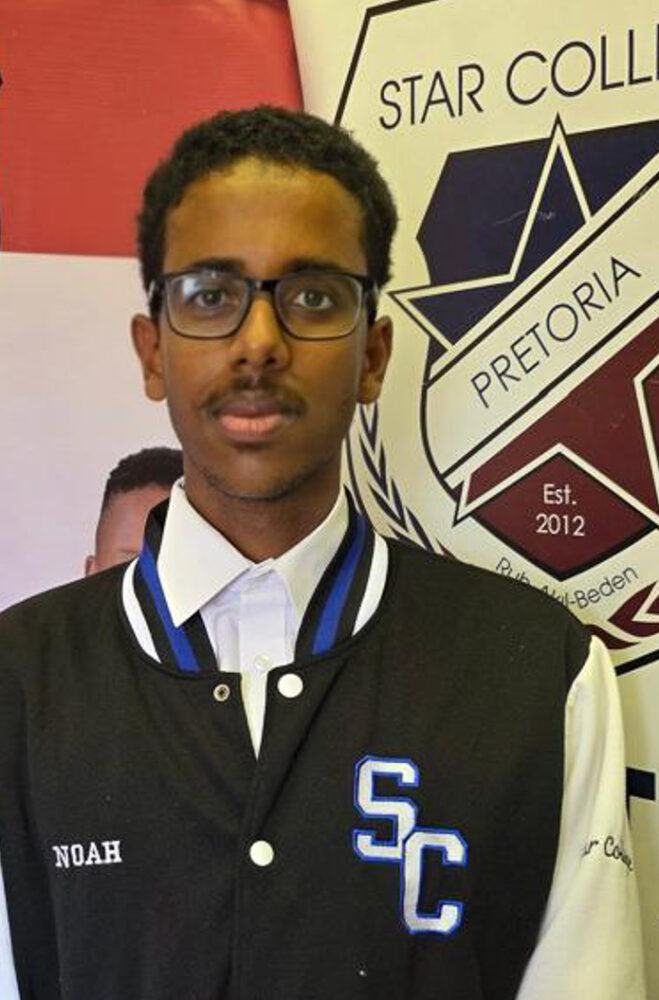
Similarly, Noah Abraham Tesfay of Star College Pretoria, who earned eight distinctions, said matric was “the culmination of years of hard work”.
He credited his success to disciplined preparation, including mastering content, practising past papers under exam conditions and revising weak areas.
Taken together, the voices challenge the myth of matric as a purely academic sprint. Instead, South Africa’s top learners present it as a test of balance — between discipline and rest, ambition and well-being, individual effort and collective support.
Submit and get free exposure here: Showcase Your Business | Advertise Your Special Offers.
