
State ready for trial of alleged fraudsters who tried to bribe NPA:

The state is primed for the start of the trial of three men who allegedly tried to bribe Independent Directorate officials investigating their R69 million police tender corruption case.
Neil Naidoo, a former director in the Eastern Cape community safety department, as well as alleged fraudsters Kenny Govender and Mathew Pillay, who own KJP Traders, allegedly offered Sergeant Suneel Bellochun and Investigating Directorate chief investigator Dylan Perumal R3.5 million to “make the case [against KJP Traders] go away”.
The Independent Directorate, a division of the National Prosecuting Authority (NPA), is investigating KJP Traders for an allegedly corrupt and fraudulent national police tender worth about R69 million that the NPA says the company was involved in.
According to the draft charge sheet in the bribery matter, Naidoo contacted Bellochun in March last year to ask whether the officer was involved in the KJP Traders investigation, to which Bellochun answered in the affirmative.
The charge sheet says Naidoo, who is based in East London along with Bellochun, told the officer that the owner of KJP Traders was “stressed” about the investigation into his company, that the firm’s representatives wanted to meet Bellochun to “iron out issues”.
On 27 March last year, Govender, on behalf of KJP Traders, allegedly flew from Johannesburg to East London to meet Bellochun, Perumal and Naidoo. Perumal noticed that an alleged bribe would be offered, and stopped the meeting “on the pretext that he wanted to obtain legal advice”.
Later that day, Naidoo went to Bellochun’s home and told him that he had a three-way telephone conversation with Pillay and Govender. Naidoo offered an amount of R5 million ‘to make the case go away”.
“Naidoo also promised to deliver a down-payment of R1.5 million to Bellochun and Perumal on the date of the next meeting,” the state alleges.
It further states that, after the NPA’s Makhanda director of private prosecutions office authorised an undercover investigation on 1 April 2022, Bellochun and Perumal met Naidoo four days later, when a final amount of R3.5 million was agreed on.
This amount, the state claims, was confirmed by Pillay at a 6 April 2022 meeting at the NPA’s East London offices, and Pillay allegedly offered to make a direct payment to Naidoo “for coordinating the scheme”.
Eight days later, the NPA alleges, Pillay called Perumal and told him that an amount of R1.8 million would be delivered to him by Naidoo. That same day Naidoo went to Perumal and Bellochun with a box stuffed with R1.5 million in cash.
“It later transpired that Naidoo had taken an amount of R300 000 for himself and delivered only an amount of R1.5 million to Perumal and Bellochun.”
Naidoo, Pillay and Govender face charges of contravening the Prevention of Organised Crime Act, as well as defeating the ends of justice, which they have indicated they will plead not guilty to.
Their trial will run from 15 to 19 January next year in the East London regional court.
Easier access to antiretrovirals helps people in rural areas:
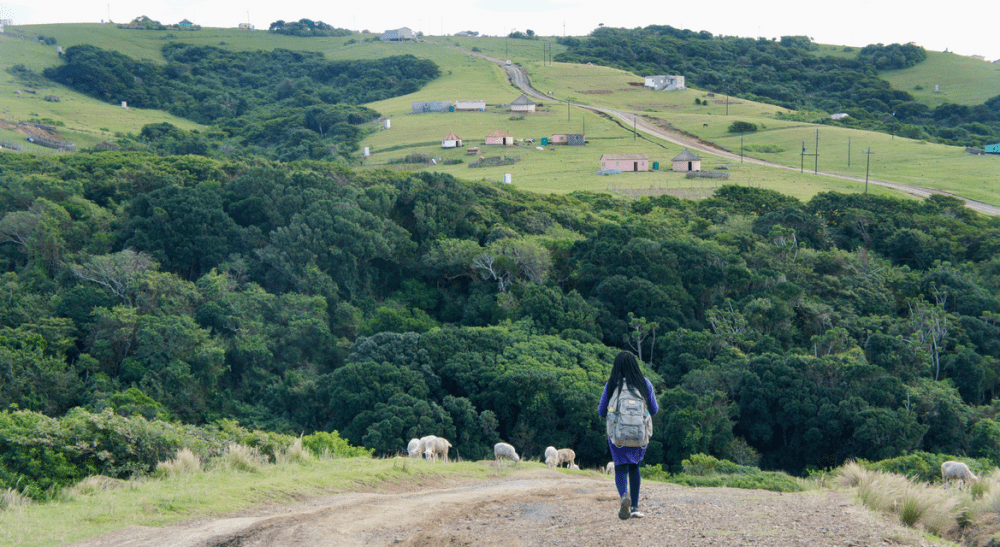
Along the rural coastline of the Eastern Cape, a small community grieves the loss of a beloved makhulu, Nosethu Siyo*, aged 62. As the matriarch of her family, she cared for 12 grandchildren.
But her death was not due to old age or natural causes. She died because she lived too far from the clinic to get her HIV medication.
At the end of each month, Siyo had to go to the clinic to refill her prescription. But the nearest one was a three-hour walk away, fraught with a river crossing and kilometres of steep hills.
She’d wake up early to start the trek, and after waiting for hours, she’d finally collect her antiretrovirals (ARVs) that would prevent the HIV in her body from making copies of itself and then begin the exhausting trip back home — all on foot, because there was no money for transport.
Because of the arduous journey, Siyo couldn’t get to the clinic every month as she was supposed to, which meant she’d miss taking her pills. Not keeping up with her treatment weakened her body and she often fell sick, a cruel cycle of illness and difficulty that made it even more challenging for her to travel to the clinic to get her medicine.
But it didn’t have to be this way.
Community-based pick-up points
Since 2014, people who use the state health system with chronic conditions such as HIV, diabetes or high blood pressure have been able to get their repeat prescription medication from a community pick-up point (PuP) instead of having to go to a government clinic.
These points don’t have to be a healthcare facility nor do they have to be staffed by a healthcare worker. For example, a non-profit organisation, church, youth centre, creche or even a traditional leader’s home can be a PuP.
Bulungula Incubator, a nonprofit based in Siyo’s community, registered as a PuP in 2021 during the Covid-19 pandemic, when lockdown rules made getting ARVs even more difficult because gathering in crowded spaces (such as queues at a clinic) was strictly controlled.
Bulungula uses its existing health programme, which has a health point and a team of community health workers (CHWs), to get people their medication — and help them stay on it.
The health point is like a “mini clinic” and is staffed by three nurses who offer primary care services to people in the community, including general health checks, maternal care and child immunisations. CHWs do home visits and, together with the staff at the health point, make sure that everyone receives primary healthcare.

For an HIV patient to get their repeat medication from a PuP, they must first have a check-up at a clinic to see if the amount of virus in their body has dropped, which means that they’re responding well to their medicine.
The facility then sends an electronic prescription to the government’s central system that dispenses chronic medication, and it gets packed and couriered to the community’s PuP — in Bulungula Incubator’s case, the health point. The patient can then pick up their pills from there or have it delivered to their house by CHWs. If someone stops collecting or taking their treatment, the CHW can help them get back on track.
With people being able to get their ARVs close to where they live and having CHWs who can help if they stumble, interrupted treatment is rare and patients only need to travel to a formal clinic twice a year — instead of every month — for routine check-ups.
Says Bongezwa Maleyile, the health programme manager at Bulungula Incubator: “People don’t want to be sick; they want to adhere to their medication. The biggest reason they stop taking their ARVs here is because the clinic is just too far for them.”
Why PuPs work — and why it shouldn’t be difficult to set one up
When someone takes their ARVs every day, the amount of the virus in their body becomes so low that they can’t transmit it to someone else — this is called viral suppression. By making it easier for people living with HIV to collect and take their treatment, PuPs can help to reduce the spread of the virus.
Opening more community-based PuPs can help people keep up with their ARV treatment, which is one of the lingering challenges to achieving the United Nations goal of ending the Aids epidemic by 2030.
Lynne Wilkinson, a public health expert on Bulungula’s team explains that making it easier for people to get their medicine can help them stay on it.
“The biggest gap is not people never diagnosed or started on ARVs but rather people dropping out, especially in the [early] months.”
Research shows that by March 2019, 37.5% of people on ARVs — almost four in 10 — were getting their medicine from community PuPs in districts where this service was available.

But for many small community sites, the process of becoming a PuP is drawn out and difficult, so many don’t open.
Because PuPs are seen as a service provider for the government, they are paid R10/patient for delivering the medication. To get paid this fee, a site must first register on the central supplier database and have all its tax matters in order. Often, the admin of the registration process is what discourages a collection point from opening, particularly those in poorer communities. But, once the initial registration is done, running a PuP is fairly smooth.
We know PuPs help to get more people their treatment to live longer, healthier lives. Now the big task is scaling them. The Bulungula Incubator has learned a few things along the way that can help to make the process easier.
- Spread the word
The first step is to know that a central place in a community can become a PuP. At Bulungula, we registered as a pick-up point in 2021 during the Covid-19 pandemic and with the help of a health systems expert, even though we’ve had an established health programme for nearly 10 years. We hadn’t registered before simply because we didn’t know we could.
The idea of getting chronic medication from someone who’s not a medical professional may seem strange. But a government pharmacist is still dispensing the script; the PuP is simply the distributor. You can think of it like couriers in cities delivering scripted medication from private pharmacies.
- Partner up
To run a PuP successfully and for a long time, it’s best to develop a relationship with a nearby clinic. This is important because the clinic will be the starting point to become a PuP.
There are also many partner organisations, for example, the Anova Health Institute, the Aurum Institute and the Health Systems Trust, which can help communities set up and run PuPs.
Bulungula Incubator is partnered with TB HIV Care and Nkanya Clinic, our local government clinic. TB HIV Care helps us register and stay open and we work closely with Nkanya Clinic to enrol patients and organise medication delivery to the PuP.
3. Know what people need
Setting up a community-based PuP is meant to make it easier for people to get their medication and improve their quality of life. Knowing what people in a community need is the best way to help them stay on their treatment.
When Bulungula Incubator first became a PuP, people still needed to come to the health point to collect their ARVs. However, we realised that even though it was closer than the clinic, it was still hard to get to for some.

The community is rural and sparse, with one long, winding road. Even walking just 5km to the health point can take over an hour, because the terrain is so difficult. And if someone can’t walk easily or uses a wheelchair, it can take them much longer, if they manage at all.
This prompted us to have the CHWs deliver the medication during their home visits. This added service has helped those enrolled on the government’s dispensing list to keep up with their treatment.
We realised that one size does not fit all. By adapting to the needs of the community, we make sure that no one gets left behind.
Despite having access to HIV testing and care, and medication being available at a nearby clinic, Siyo was missing the most critical component to improving her health — ongoing, easy access to treatment.
PuPs can help to change that, especially in the hardest-to-reach areas.
Says a resident, 67, from Xhora Mouth, who’s unable to walk after a stroke and depends on a disability grant: “Now I don’t need to worry if I have enough money to go to the clinic anymore, because my medication is delivered straight to my house.”
*Not her real name.
Sigrid Kite-Banks is the content manager at the Bulungula Incubator.

This story was produced by the Bhekisisa Centre for Health Journalism. Sign up for the newsletter.
IFP wins Umvoti ward, ANC retains two in Eastern Cape in latest round of by-elections:

The Inkatha Freedom Party (IFP) continued its trend of gaining new ground in the latest round of by-elections, taking a key ward in the Umvoti local municipality in KwaZulu-Natal away from the ANC.
By-elections were also held in the Kou-Kamma and Port St Johns local municipalities in the Eastern Cape, with the ANC retaining two wards and losing one.
The IFP’s Zwakhushiwo Zondi defeated former Umvoti mayor Philani Mavundla, the president of the Abantu Batho Congress (ABC) in a four-way battle for ward 2 in the municipality, which is in the KwaZulu-Natal Midlands.
Zondi took 53% of votes in the ward — previously held by the ANC, a significant victory over the ANC and the ABC, which run the hung municipality through a coalition — almost doubling the IFP’s support since the last election.
But the IFP’s new ward does not change the balance of power in Umvoti, with the win not being enough to dislodge the ANC/ABC coalition from control of the municipality, which is made up of Greytown, Kranskop and surrounding areas.
IFP provincial chairperson Thami Ntuli described the result as “a remarkable triumph” given the “fierce competition” for the ward from the ANC, the Economic Freedom Fighters (EFF) and the ABC’s high-profile candidate.
Mavundla, who had served as deputy mayor of eThekwini after helping the ANC retain control of the city in November 2021, contested Umvoti ward 2 with the intention of becoming its mayor again.
“This outcome reinforces the people’s unwavering belief in the IFP as the party that best understands and addresses their needs,” Ntuli said. “The victory of the IFP in this previously ANC-held ward symbolises a clear shift in the community’s trust and confidence.”
The IFP made significant gains in the 2021 local government elections in recovering municipalities in the province it had lost in 2016, taking control through coalitions with the Democratic Alliance (DA) and the EFF.
It has built on these gains in the by-elections since 2021, taking wards off the ANC through an alliance with the DA, which sees them both back one candidate, chosen on the basis of which of the two was the stronger in the ward.
In the Eastern Cape, the ANC maintained control of ward 2 in Port St Johns, taking 72% ahead of the DA’s 22%, the EFF’s 5% and the African Transformation Movement’s 1% of the vote.
The DA showed some growth in the ward, historically dominated by the ANC, which had nominated former independent candidate Patric Nomahobo to stand as its candidate.
In the Kou-Kamma municipality, the ANC retained ward 5 with 978 votes, and the Patriotic Alliance made significant gains, coming in second with 791 votes.
The result showed a decline by both the DA, which secured 254 votes, and the EFF, which took 92.
Submit and get free exposure here: Showcase Your Business | Advertise Your Special Offers.
