
Subtle magic of an itinerant statesman:
It began in an unlikely place: a modest lecture hall at SOAS in London, the kind where the air still carries the faint chalk-scent of older debates.
On a grey November afternoon, Ebrahim Rasool stood before a room of students, academics and a scattering of diplomats who had slipped in quietly at the back. His topic, “What can Britain learn from South Africa’s transition from apartheid?” sounded, at first, like a retrospective talk about a distant struggle.
But within minutes, it was clear the room had come for something else. Britain, raw from years of cultural fracture and political fatigue, was listening to a South African speak not about the past but about the mechanics of coexistence in the present.
One attendee whispered afterward that Rasool “seemed to be describing not just South Africa’s journey out of apartheid, but the UK’s journey into something it doesn’t yet have a name for, a society anxious, splintered, unsure how to speak across its differences”.
Rasool wasn’t offering easy moralising. He talked about negotiation as muscle memory, a skill developed in small, unglamorous rooms long before nations sign anything. He spoke about pluralism not as an ideal but as a discipline kept alive only through practice. And he spoke about the ANC’s original genius: its ability to treat diversity not as a burden but as the raw material for political imagination.
London was only the first stop. From SOAS, Rasool moved through the city’s diplomatic ecosystem with a pace that suggested someone increasingly in demand. The next day, he arrived at Chatham House, its polished wood and soft carpets a contrast to the utilitarian SOAS hall. He was there for an on-the-record roundtable, a rarity in an institution famous for its rule of secrecy.
The session, titled “South Africa’s Pluralist Foreign Policy in a Changing World,” was less a speech than a quiet tutorial in global navigation. Rasool explained the emerging Government of National Unity as something more than a coalition of necessity; he framed it as a forced return to the pluralist instincts that had shaped South Africa’s transition but had since been sidelined.
Foreign policy, he argued, must follow the same trajectory. In a world defined by geopolitical realignment, South Africa was discovering that it could neither lean entirely toward the West nor shelter wholly within the Global South. It had to play a more intricate game, one that held principles, interests and history in balance.
He spoke about the skill required to manage relations with China and the United States simultaneously, to remain credible in Palestine while deepening ties with Europe and to be taken seriously across the African continent.
His voice remained steady: “We are entering a time when nations will have to become each other’s contingency. Each other’s insurance.” In the room, pens paused mid-sentence. It was a line that carried the weight of someone who has lived long enough in diplomacy to understand its fragility.
The third act of this itinerary took place under far brighter lights. On Piers Morgan Uncensored, Rasool found himself in one of television’s most confrontational settings. Morgan pressed him on his criticism of Donald Trump’s repeated claim that a “white genocide” was underway in South Africa. Was it not dangerous, Morgan asked, to call Trump’s rhetoric supremacist?
Rasool didn’t match the hostility. He simply said: “I was put in jail by supremacists. When I hear the dog whistle, I understand it.” The studio air shifted. It was a reminder that some arguments are not abstract, they are memories disguised as analysis.
But the conversation also revealed something deeper: Rasool is perhaps one of the few South African political figures able to articulate the global consequences of misused narratives. His critique was not about Trump as an individual but about the choreography of fear manipulated across continents.
This theme carried into Istanbul, where Rasool appeared at the TRT World Forum — a gathering focused on the “Global Reset” and the collapse of old orders. Here, he was asked directly: Why is South Africa such a central fixation for Donald Trump and his circle?
His answer held none of the self-dramatisation common in political commentary. Instead, he connected the dots: MAGA supremacism in the United States, far-right populism in Europe, Zionist extremism in Israel and the residual white nationalism still present in South Africa. These movements, he argued, intersect in a shared storytelling economy, one that uses South Africa as a laboratory of white fear.
He then traced the punitive measures the Trump administration had taken against South Africa: the abrupt withdrawal of development assistance, the quiet death of AGOA’s preferential treatment and the 30% tariffs on South African exports. These actions were not random, he said; they were the foreign-policy expression of a domestic populist agenda.
But what set Rasool apart in Istanbul was not the critique; plenty of people criticise Trump but the strategic architecture he laid out in response. He outlined five scenarios through which nations might navigate a capricious superpower: Mutuality, Surrender, Retaliation, Appeasement and Contingency.
Contingency was his focus: “Insurance,” as he put it in both Istanbul and London. It meant diversifying alliances, deepening multilateral networks, strengthening African regional autonomy and preparing, not panicking, for cycles of unpredictability.
A diplomat later said, half amused and half admiring, “Rasool talks like institutions still matter and yet he knows exactly how brittle they’ve become. That combination is rare these days.”
Finally, Rasool took part in the TRT G20 Roundtable. While others debated abstract shifts in global order, Rasool pointed out a quieter reality: African nations, despite sitting on “mountains of coal,” had done more to meet global climate commitments than most wealthy countries.
He wasn’t boasting; he was reframing Africa as a moral centre of gravity in an era of dislocation.
Put together, these moments form a sketch of a political figure who seems to be thinking in longer, steadier lines than those dominating today’s politics.
He is not a firebrand, nor a technocrat. He is neither nostalgic nor nihilistic. His worldview blends Islamic ethics anti-apartheid activism, interfaith work, community memory and years of navigating the jagged edges of American politics.
In South Africa, where public discourse has thinned under the weight of scandal cycles and factional suspicion, Rasool’s tone feels oddly out of time and perhaps because of that, newly relevant.
He doesn’t offer slogans. He doesn’t flatter despair. He speaks as someone who has lived through collapse before and learned that societies can only be rebuilt through dignity, imagination and disciplined coexistence.
Whether Rasool has a role to play in South Africa’s political future is not this article’s question. What matters is that his voice reopens
a set of inquiries the nation has neglected: What does leadership sound like when rooted in memory rather than improvisation? What becomes of a democracy that forgets how to hold tension without fracture?And what might it mean, in this fractious age, to once again listen to those who speak softly but carry long, hard-won experience?
In a country searching for moral ballast, one wonders whether Rasool’s voice is merely timely or necessary.
Usman Ali is a charity consultant and former head of marketing and fundraising at MADE in Europe, as well as VP Higher Education at NUSUK (2010-2012). Based between Istanbul and Manchester, he advocates for equality and community integration.
African ratings agency a feasible option?:
As the G20 Summit approached, the conversation around a new African credit ratings agency was gaining momentum. The proposal has broad political appeal: many argue that global agencies such as Moody’s, S&P and Fitch systematically under-rate African economies, forcing them to borrow at higher costs.
But a key question remains: will a home-grown agency meaningfully change outcomes, or will it simply measure the same realities in different units?
This debate isn’t just about sovereign debt. Credit ratings affect the cost of borrowing for governments and corporates alike – and by extension, the intercompany lending rates multinationals apply across Africa. If perceptions of risk shift, it could influence how transfer pricing analyses are benchmarked.
In other words, when a nation is seen as high-risk, lenders charge higher interest rates. Those same perceptions filter down to private companies operating there, even affecting how multinationals operating in a country price loans between their own group companies.
If an African ratings agency were to help improve the continent’s perceived creditworthiness, borrowing could become cheaper across the board, from governments and banks to businesses and their subsidiaries. That would make it easier to invest, grow and create jobs.
Why credit ratings matter
A sovereign rating acts as the ceiling for all borrowers within that country. If a government’s creditworthiness is considered poor, no local company can be rated higher – even if it has sound fundamentals.
That matters because large companies often lend money between their own subsidiaries, just like a bank would. To make sure those internal loans are fairly priced, they use credit ratings to see what interest rate an independent lender would charge. If a country or company has a low rating, the cost of borrowing rises – and that affects how much interest the business pays and reports for tax purposes.
It’s a circular problem. A perception of sovereign risk filters through to company-level financing, raising costs for business and potentially reducing profitability. An African ratings agency could, in theory, change that dynamic – but only if it’s credible.
The African proposition
The proposed Africa Credit Rating Agency (AfCRA), to be headquartered in Mauritius under the African Union’s umbrella, aims to provide that alternative view. Backed by Afreximbank and several African development institutions, it promises a methodology better suited to African realities.
Ian Macleod, Co-Founder and Head of Strategic Narrative at Boundless World, believes that new thinking is overdue.
“We typically look at African markets with a long-term view – years, decades, even generations,” he says. “That requires understanding foundational factors like demographics, early education and savings levels. These are powerful forces that shape a society and an economy. Importantly, they tend only to change gradually. While one needs to monitor and account for variables that can change by the day, week or month, it is useful to read these against the backdrop of these heavy foundations.”
The Boundless World team has developed analytical frameworks that can add nuance to a ratings methodology.
“The Six Factor Model is a big data tool that quantitatively evaluates the strongest contributors to long-term prosperity,” Macleod explains. “It incorporates millions of data points over several decades, interrogating them to distil the ones with greatest significance for economic growth. Consider demographics as an example. A society with more young people entering the workforce than older ones leaving it is well positioned to grow over a generational time span. Similar reasoning applies to places with sound foundation phase education, primary healthcare and elevated savings levels.”
The Africa Investment Navigator framework has a shorter time horizon and evaluates 31 African countries on 20 metrics.
“We standardise these publicly available data, enabling us to score each country for overall investability. Additionally, it allows us to compare countries on particular pillars. This lets us apply it at an industry or company level of granularity. For example, Seychelles and Mauritius have been the top two overall scorers for the last two years.
However, they have small populations. So they offer little scope for mass consumption. For a firm looking to sell large volumes at a low margin, we would then elevate the weighting of population size and growth,” he explains.
Beyond data, Macleod argues, narrative itself plays a measurable role.
“The Nobel Prize winning economist Prof. Bob Shiller has championed the field of narrative economics. This body of work makes explicit the fact that the stories people share are drivers of the economy. We have seen evidence of this with so-called ‘meme stocks’. From coffee shops to online discussion boards, narratives in many shapes can move markets. When assessing creditworthiness, this must be accounted for. One must have a finger on the pulse of the national dialogue to appreciate political and economic risks.”
Credibility is the real currency
Henry Dicks, my colleague and advocate of Graphene Economics, points out that international investors are unlikely to accept ratings they perceive as lenient.
“Credit ratings underpin real financial decisions,” he says. “If AfCRA systematically produces higher scores than Moody’s or S&P, the question becomes: why? What’s different in the methodology, the data, or the weighting of qualitative factors? Furthermore, we need to ask whether the market will accept the difference or ‘recalibrate itself’.
If an entity credit rating is calculated using an African rating system, will financial institutions pay any attention to this, or will they rely on and default back to the known ratings agencies? Unless there are compelling reasons not to do so, I would think this would be the case.”
He notes that the OECD Transfer Pricing Guidelines highlight similar issues when multinationals use “publicly available tools” to approximate credit ratings. “Transparency is everything,” he says. “Market participants need to see the algorithmic inputs, the peer-review process and the governance safeguards. Without that, they’ll revert to what they know.”
Global agencies follow a rigorous, auditable process: data collection, management interviews, peer comparisons and multi-layered credit committees.
“If AfCRA wants to be trusted, it will have to match that discipline – and show how its model addresses perceived bias rather than just producing different numbers,” Dicks says.
Macleod agrees that reliability is earned over time. “There’s no quick route,” he says. “Independence, acumen and resilience will need to be demonstrated year after year. The currency of this industry is consistency.”
Risk, perception and reality
The question, then, is whether Africa’s problem is the way risk is measured, or the underlying fundamentals? I believe the latter will still dominate. At the end of the day, macroeconomic realities drive ratings: fiscal deficits, inflation, governance and policy stability. Unless those improve, perception can only shift so far.
Macleod takes a complementary view. “Narrative should not be seen as an alternative to data. Rather, narratives can be measured as data points. From central bank meeting minutes to social media trends, we can monitor narratives with the help of quantitative tools.”
Macleod suggests that a credible African agency would need to
balance both – grounding its models in data but also recognising the social, institutional and demographic tailwinds that global models overlook.
The risk for AfCRA is being politically satisfying but economically redundant. To conquer this, it needs to prove it can offer a truer reflection of real, evolving African risk.
Implications for transfer pricing
For TP practitioners, an African credit ratings agency could have tangible consequences.
If AfCRA’s ratings are accepted by lenders and tax authorities, Hewson explains, the indicative credit ratings used for intercompany loan benchmarking could rise.
That would lower arm’s-length interest rates, reduce tax deductions, and potentially improve after-tax profitability for African subsidiaries.
However, if global investors disregard AfCRA’s outputs, little will change. Transfer pricing always tracks the market. If the market doesn’t move, neither will the benchmarks. The benefit only materialises if genuine perceptions of credit risk – and therefore pricing in third-party loans – shift.
Ultimately, this ties back to fundamentals. Better governance, consistent fiscal policy and transparent institutions reduce real risk. That’s what rating agencies, local or global, respond to. Improved metrics will follow improved reality.”
For success, AfCRA must operate with absolute independence, publish its methodologies openly, and build partnerships with regional and global peers.
Over time, a consistent track record could help normalise an African perspective within global capital markets.
For Africa’s economies – and for companies navigating intercompany financing and tax compliance across the continent – accuracy will matter far more than sentiment.
Michael Hewson is a Director at African transfer pricing firm Graphene Economics
The hustler, the dancer, the dreamer:
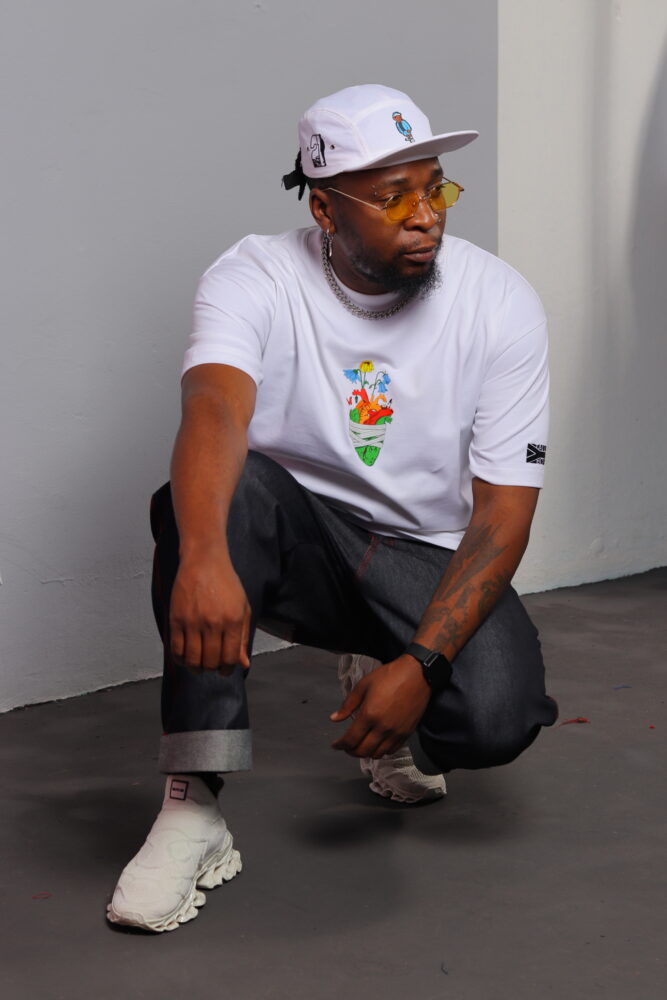
When you see Nkosinathi ‘Mr NT’ Ngwenya — dreads peeking out from under his funky cap, fresh sneakers and the whole outfit dialled in — you might just think he’s all about the latest trends.
I mean, the fella born in Soweto can be firmly described as a TikTok star with his 1.4 million followers. His work has caught the attention of US rapper Snoop Dogg, thanks to his trending dance videos.
However, there is more to the dancer than meets the eye.
Mr NT is the real deal, blending a powerful business mind with serious cultural authenticity that runs deeper than his style. And as of recently, he is a SuperSport Real World Champion – an initiative that celebrates ordinary South Africans doing extraordinary things to positively impact their community through sport and sport adjacent activities.
After spending a few hours with him on a Tuesday afternoon at Glenanda Village Shopping Centre in Johannesburg south, I was left with an appreciation that Mr NT is an idealist with a practical outlook on life.
“I’m a hustler dawg,” Mr NT avers as we unwind at Pizza Del Forno.
He is a hustler in a non-performative way. He uses what he has to get to his destination.
Ngwenya has worked as a kitchen manager at a Lebanese restaurant, he toiled as a character performer at Gold Reef City, has sold furniture on Facebook and learnt how to use the camera – all this as a way of making money when his passion wasn’t paying the bills.
During the COVID pandemic, when dance gigs had dried up, he took the little money he had and invested in selling furniture.
“I had to find ways of making money while doing my socials. I didn’t do TikTok [videos] expecting money, I’m doing TikTok because I love dance. But in real life, I need to make money because I have two kids now.”
The dancer saw an opportunity in using TikTok as a way of showcasing his dance moves.
“I remember I was still renting a backroom in Soweto and spoke to one of my friends about this TikTok thing.”
After posting the first video, there were some detractors who thought he should stop what he was doing. He didn’t listen; he kept to his ideals.
He then conceptualised a video, featuring one of his friends, where they danced over Busta Rhymes and Janet Jackson’s What’s It Gonna Be?!
“Bro, I think that video got to 500k likes. I was sleeping and when I woke up I saw Americans commenting and reacting to the video … a friend of mine called to say that I’m trending.”
After doing a few more videos using US songs, he began tapping into the growing Amapiano wave. The first video he did using an Amapiano ditty was in 2021, where he danced to VigroDeep and Sdala’s Celebration Day, which turned things up another notch.
With his videos trending and en route to drop off one of his kitchen units at a customer, Standard Bank reached out to him wanting to collaborate.
This was his biggest collaboration with a brand and from then he began working with other brands, whilst still competing in dance competitions with his crew, Nice Things.
Mr NT got into dance in the noughties while still a teen.
His face lights up and the pitch of his voice rises in excitement speaking about the time he got into dance when the street dance Isibhujwa was gaining popularity.
“We used to go to places like the jukebox, where people from different kasis (townships) would meet up for battles,” he says.
By ‘jukebox’ Mr NT refers to arcades where kids from Soweto would go to but they were actually there for the jukebox where they would slot in some coins and select songs to compete to.
He wasn’t the one contesting in the heated battles in those early days, but his fascination with dance was brewing, as he analysed some of the biggest dancers at the time.
“Master was good on the floor while B was with his upper moves,” says Mr NT, speaking about Soweto street dancers he looked up to at the time.
In his teens, he would travel with friends to places like Orange Farm and other parts of the province to watch battles or compete as part of a group.
“This was before social media. It was word of mouth, but we would know that there was a battle on a certain day.
“We were quite invested. I remember that I had piercings on my lips; I’d wear is’fazo [skinny jeans]. It was those days,” he reminisces.
A few years into his life as a dancer, he came across the film You Got Served that changed his outlook on dance.
“One day I’m chilling watching TV, this movie comes on, and it’s a Hip Hop movie where they’re really dancing. That’s where I saw that I’m not in love with Is’bhujwa, I’m in love with dance as a whole,” he says.
The first time he went to the cinema, it was to watch a dance movie, Step Up 2: The Streets, soon after Maponya Mall was opened in Soweto.
“We walked to go watch that film, that’s how much I was in love [with dance]. I had saved up the money.”
Soon after embracing his fervour for dance and being fascinated by Hip Hop dance styles, he began auditioning for Hip Hop dance crews outside of the township. He yearned for growth.
“Being in the hood for me was not good enough, because at the end of the day, we’re not going anywhere, and we’re limited, and for you to do this thing, you need to see more. I was limited to the TV. Things are happening [in dance], but they’re happening in the north, those kids are advanced.”
Through construction work, his father moved to Rosettenville, which placed the Soweto-born creative in proximity to life in the suburbs and the hip-hop dance crews he revered.
After joining one of the popular dance cliques, Buck Fam, he had the chance to appear on TV.
Buck Fam was invited to perform on SABC 1 dance show Turn It Out.
However, like in sport, you can get benched in dance if the group believes you aren’t ready for the big stage.
That was the case for Mr NT when his crew performed on Turn It Out.
But being the opportunist he is, he approached the judges and inquired about an open spot in the solo categories.
Lo and behold, one of the judges, media presenter Luthando ‘Loot Love’ Shosha, told the ambitious dancer that there’s a spot open.
He danced with infectious passion and walked away with the R5,000 cash prize. “That show played on TV and I remember I was using a Blackberry. I took a video of it.”
He says his father beamed with pride that his son had appeared on TV solely for dance. “I remember he took me to his friends, holding my hand to show me off to them.”
Mr NT has become one of the most recognised dancers in the country and as a way of giving back. He has established a kids’ dance league, Royal Nice Things.
The league sees kids from different townships who are as passionate about dance as he is, compete for the title of Dance Queen and Dance King.
Royal Nice Things is a dance league strictly for kids, to express themselves in the art form. The dance league moves around Gauteng, where dance contests are held for kids in different categories.
“Firstly, it’s safe and child-friendly. It’s a space where children can showcase their talent and skills,” says Charles De Kock, father of Royal Nice Things champion, 11-year-old Ciara-Lee De Kock.
The proud father describes Mr NT as a person with a heart of gold.
“His heart is in the right place, and everything that he does for the children comes from his heart. Since Ciara-Lee joined Royal Nice Things, she has grown in leaps and bounds. She was runner-up in four dancing competitions where she won trophies and medals,” says De Kock.
Like an older brother, Mr NT gives the kids advice about life and about dance.
He makes an example; in one of their recent shows, there wasn’t a good turnout; however, he encouraged the kids not to be put off by the low attendance.
“It’s something I always tell the young ones, that you can do an event and, say, only 10 people pitch up, don’t think about that moment, think about how many people are gonna see it.
“Now the video from that day is trending on every platform.”
He says he’d like to see the league collaborating with big brands and touring schools across the country.
Submit and get free exposure here: Showcase Your Business | Advertise Your Special Offers.
