Taken by storm: Why climate change makes transactional sex more common:
Trading sex for survival or a better life depends on supply and demand — and researchers think both sides of this coin will grow because of a rise in climate change-related droughts and floods.
Transactional sex — trading sex for food, money or luxury gifts — is different from sex work because the reward is implied rather than agreed upfront for a specific price, such as when someone sells sex as their job, and often comes with an expectation of care.
But transactional sex can be risky sex — especially because this type of relationship is commonly seen in (often rural) societies where men have more power than women when it comes to money and decision-making.
Because women in such communities frequently depend on men for money, food or other forms of support to live, such as accommodation or transport, in these arrangements, they have little power to negotiate the use of condoms or monogamous relationships for safer sex, for example.
Moreover, although women may regularly have sex with the same partner, men, because of having more power in their society, often have more partners than women, studies show.
Put together, it means women have a higher risk of getting a sexually transmitted infection such as HIV — and little recourse.
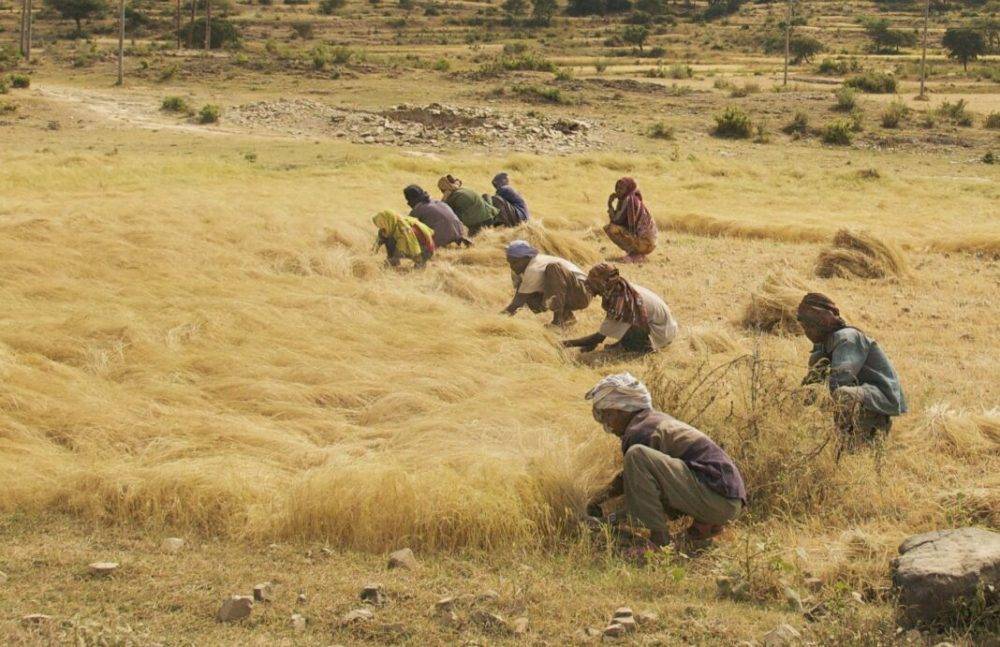
In impoverished, rural communities that depend on growing crops, rearing livestock or catching fish for food and earning income, people’s livelihoods can be threatened by climate disasters such as droughts, floods and storms. Research shows that during natural disasters like these, transactional sex becomes more common, because people have to resort to other means to get by when their crops or livelihoods have been destroyed.
And because of the link between transactional sex and risky behaviour, rates of infections such as HIV can increase.
For example, in Haiti, a poor country in the Caribbean, where women have little power and gender-based violence is rife, a 2020 study looked at how a devastating hurricane in 2016 affected transactional sex.
Results showed that women whose household income was badly affected because someone in their family had died or was injured during the storm, were almost 60% more likely to engage in transactional sex than those who were not hit as hard.
Interestingly, income loss or not having enough food not only led to higher rates of transactional sex, but also strengthened the link between trading sex and surviving, with women who are less able to buffer the financial shocks that come with extreme weather disasters being more vulnerable to sex-for-support exchanges.
Africa at risk
Scientists say that extreme weather events such as droughts and floods will happen more often — and are already on the increase — as Earth’s climate patterns change because of global warming. According to the World Bank, 42 countries in sub-Saharan Africa will be among the countries hardest hit by the effects of changing weather conditions.
This will be bad news for Africa, not only because of the direct impact these events will have on people’s livelihood, but also because of the hidden effects.
In Africa, small-scale farming supports about 60% of the population. Women often work the fields, harvest crops and fetch water, but generally do not own the land. When harvests are threatened, families’ livelihoods are too.
If getting by means having to engage in unsafe sex, as is often the case in sex-for-goods trades, a woman’s chance for getting HIV increases too. And with Africa representing about two-thirds of the global HIV burden, climate change — through a complex interaction of health and social factors — will keep the continent stuck in a loop of poverty and underdevelopment.
Supply and demand
Research from Malawi, where a large part of the population depends on small-scale, rain-fed farming, has looked closely at the link between transactional sex and survival. Over the past decade, the country has been hit by cycles of devastating floods and droughts, with crop failures between 2014 and 2016 leaving about 7 million people without enough food.
When such climate shocks threaten the size of a harvest, transactional sex increases.
For example, researchers found that in Malawi, for women working in agriculture, a six-month drought doubled their chances of practising transactional sex. Men who didn’t work in agriculture — and whose income was safer because they were not directly affected by the climate shock — were twice as likely to have a transactional relationship with a woman whose livelihood depends on farming because they had the material means to reward women who needed to survive.
The study also found that this effect was seen more with women who did not have an education and so had an even smaller chance of finding a job outside of agriculture.
Lindiwe Sibiya, a researcher from the Africa Health Research Institute, says they’ve seen how climate pressures can affect people’s views on trading sex for survival when they’re poor and have few prospects for finding jobs.
She works with communities in a rural part of northern KwaZulu-Natal, close to the iSimangaliso Wetland Park, where a long period of below-average rainfall about eight years ago meant that water was scarce, despite the area historically being known for a subtropical climate with fairly high rainfall.
“[Transactional sex relationships] don’t need any documentation or any level of education,” explains Sibiya. “So, [people might say]: ‘If I’m in dire need of water, for example, or an air conditioner or just a fan, and I don’t have the money to buy this stuff, and can engage in a relationship with someone who can provide these things for me, then why not?’”
Breaking the cycle
Although controversial, studies have shown that cash transfers — which is when aid organisations or governments give people an amount of money to help them survive — can help to ensure that people don’t have to turn to transactional sex to get by.
In a study from Kenya, for example, researchers found that in a programme in which schoolgirls received cash handouts or sexual health education, more stayed in school and fewer resorted to transactional sex as a way to improve their lives than those who didn’t get any formal financial support or sexual health education.
But cash transfers can be a contentious form of humanitarian help because the positive impacts might not last or they might drive young people to simply aspire to a more materially wealthy life, critics say. However, evidence from programmes where these money handouts are managed well, show they can support girls to stay in school, keep them safe from HIV and help them to have more say in their sexual health.
In some communities, this can set up a positive feedback loop, not only by lowering the number of financially driven relationships but also by improving education levels among girls and so empowering women to become better skilled and have a better chance of getting jobs, and so allowing them to break free of poverty.
“Personally, I believe drought and climate change promote sexual transactions and relationships based on expected gains,” says Sibiya. “Our community has very high rates of poverty, so selling sex [in some form] becomes the survival of the fittest.”
This story was produced by the Bhekisisa Centre for Health Journalism. Sign up for the newsletter.
The post Taken by storm: Why climate change makes transactional sex more common appeared first on The Mail & Guardian.
Is mobile money the answer to financial inclusion in Sub-Saharan Africa?:

The increased adoption of the latest digital technologies in developing countries has heightened speculation and optimism concerning bridging the gap between the relatively rich and the poor, who often live in underserved rural areas.
In Africa, where more than a third of the population lives in extreme poverty, and 36% are illiterate, opening a formal bank account has become a nightmare for the majority of the population. Many are unemployed and lack all the necessary requirements to open a bank account, including but not limited to a constant flow of income.
Financial exclusion and the “missing middle”
A study by Research ICT Africa, conducted in 2017, indicates that only 24% of the population in Sub-Saharan African countries is financially included, with the rest of the population in these countries lacking credit facilities to smooth consumption or an account to save and guard against future risk. The issue is even pertinent among the “missing middle” who often work in the informal sector.
Despite this group of people making enough money to save and finance their daily lives, their lack of required documentation often leads to their exclusion from the formal banking systems. In South Africa, for instance, a country with good security systems such as the government-subsidised housing scheme, the majority are termed not to be poor enough to receive government subsidies but too poor to qualify for credit from formal banking systems.
Digital software to the rescue
One platform which has the potential to expand access to financial services, promote financial inclusion, enhance risk management, promote savings, and facilitate access to credit is the mobile money platform. Mobile money software enables users to cash in, save, transfer, make local and international payments, payments for bills, and hotels and flights using a mobile account or app.
There are numerous studies cited in digital news and research journals that indicate the importance of mobile money in Sub-Saharan African countries. For instance, a study by Mothobi and Grzybowski (2017) shows that it can be considered an alternative to physical infrastructure, which benefits those who live in remote areas and who may be unable to access financial services.
However, Grzybowski, Lindlacher and Mothobi (2023) argue that the mobile money trend facilitates transactions between the wealthier and the poor which consequently allows younger migrant workers residing in urban areas to take care of their older or poor relatives in the rural areas.
Will mobile money fix the problem?
The question is, can mobile money spur the inclusion of the financially excluded poor, or is it just an illusion? Evidence shows that depending on political will, institutions, and regulatory framework, mobile money can indeed change the situation on the ground and provide all the necessary requirements for an individual to be financially included.
When the right systems are put in place, mobile money can integrate the informal sector into the formal sector by providing the necessary platform to track transactions and credit scores for those who are excluded from the formal banking system.
On the other hand, when systems are not right, mobile money is likely to fail. For instance, despite South Africa being regarded as one of the most unequal societies in the world and the majority being excluded from the formal banking systems, mobile money has failed to take shape. This is contrary to East African countries where mobile money has been successful. According to data collected by Research ICT Africa, more than 70% of the population in Kenya is financially included.
It appears that while mobile money is one answer to financial inclusion, it isn’t the panacea or silver bullet that many think it is. Some barriers are market related while others are structural. Where mobile network operators own their respective subscriber bases and split the market, there is little appetite to create a cross network mobile money platform. Similarly, technologies that facilitate inclusion remain the preserve of the same operators making agnostic solutions difficult to implement outside their proprietary core networks.
Dr. Onkokame Mothobi is a Postdoctoral Fellow at the Wits School of Governance and contributes to Tayarisha, an initiative on digital governance, established (2021) at the University of the Witwatersrand in Johannesburg. Mothobi specialises in industrial economics with an emphasis on telecommunication demand, competition and regulatory policies.
The post Is mobile money the answer to financial inclusion in Sub-Saharan Africa? appeared first on The Mail & Guardian.
Mozambique’s 2023 local elections: Elections against democracy:

On Sunday, 10 December, elections were rerun in parts of four small local municipalities in Mozambique, following the country’s constitutional court’s order on the municipal elections of last October. Once again, violence, intimidation, accusations of vote rigging and other irregularities dominated the elections. Preliminary vote counting point, once again, to Frelimo’s victory in all of the four municipalities, with the opposition parties rejecting again the results and independent observers complaining, once again, about major irregularities.
The elections and their aftermaths exemplify the events that are taking place in the country and that took place a few weeks ago: the scandalous role of the constitutional court, unprecedented post-electoral tensions, the main opposition party at risk of internal divisions, and a dominant ruling party ready to keep power at all costs.
Frelimo’s overwhelming victory in Mozambique’s recent local elections has been characterised by unprecedented levels of popular rejection, giving the false impression that Mozambicans are opposed to the consolidation of democracy through holding regular elections, in a country where liberal democracy has been established as the principal strategy for peace building and political stability. This most recent Pyrrhic victory further damages the image of the ruling party, the credibility of electoral bodies and courts, as well as may threaten Frelimo’s internal stability, less than a year before the next general elections. For the opposition party Renamo, too, despite having confirmed significant urban popular support, the election may have ended as a Pyrrhic victory with visible signs of internal frictions, as the 2024 general elections approach.
Meanwhile, many questions arise from what has recently transpired in Mozambique, including Frelimo’s apparent refusal to hand over power to the opposition and to consolidate peace and democracy in a country dominated by post-electoral violence; the reasons behind Mozambicans increasingly contesting Frelimo’s hegemony; as well as what could be the possible implications of pseudo elections for the future of country in so much need of peace and democracy.
A constitutional court in the service of the ruling party
On 24 November, Mozambique’s constitutional court largely confirmed what most analysts and observers had already anticipated. Once again, Frelimo, which has ruled the country since 1975, was proclaimed the winner of the sixth local elections held on 11 October. According to the constitutional court’s decision, Frelimo took 56 municipalities, Renamo took four, and the Democratic Movement of Mozambique (MDM) retained the rebellious city of Beira. Sixty-five municipalities were up for grabs in total. But voting had to be repeated on 10 December in four municipalities, including in Nacala-Porto, because of what the constitutional court considered to be major irregularities that affected the electoral results. Despite being the last court of appeal, the constitutional court’s decision itself has also been subject to contestation by the opposition and civil society, because of its lack of proper argumentation and the general perception that the ruling party controls the court.
In other major important municipalities where parallel vote counting by Renamo and most independent observers points to Renamo’s victory, such as the capital city of Maputo, the industrial municipality of Matola, and the city of Nampula, against all odds, the constitutional court confirmed Frelimo’s victory. Out of these three cities, only Nampula is to change hands from Renamo to Frelimo based on the results of these elections. The rest will remain under Frelimo’s control. But Frelimo’s victory has been under unprecedented popular rejection. Mozambique has never seen so many people on the streets and such strong public rejection of an electoral result.
Demonstration as a sign of dissatisfaction
Meanwhile, major urban municipalities such as Maputo, Nampula, and Quelimane have been experiencing regular demonstrations against Frelimo’s victory. According to reports, up to 2 000 people took part in an initial demonstration in Maputo. But this apparently small number should not be underestimated in view of the expected police reaction. In some cases the police used force against the people with human rights groups calling for investigations of police brutality. Because of the unprecedented amount of evidence of irregularities, civil society groups and the opposition have labelled these local elections as nothing but a “mega-fraud” without precedent in Mozambique’s electoral history.
Complaints about the local elections were already visible prior to voting day itself. For example, during the campaign, biassed coverage by the public broadcasters favoured the ruling party. Voter registration was marked by accusations of penalising opposition strongholds, including intimidation of potential opposition voters to prevent them from registering. Technical failures in voter card printers were also recorded, leading many to point to a clear strategy by Frelimo to interfere in the process. Added to this long list of irregularities is the fact that residents from areas without municipalities where said to have been brought to vote in municipal areas, where they clearly do not belong. Some observers have gone as far as to argue that Frelimo’s interference resulted in some 700 000 potential opposition voters being excluded from the election.
On Saturday, 11 November, and the days that followed, more irregularities were experienced during the voting and counting process. In some areas, people were found carrying ballot papers pre-stamped in favour of Frelimo. Opposition party observers were blocked from supervising both the voting and the counting processes. Ballot box stuffing in favour of Frelimo was recorded in some voting stations. Social media videos circulated showing people voting for the ruling party even after voting day. Moreover, strange and systematic power cuts were experienced at night, exactly at the time when the votes were being counted. Members of the polling stations refused to sign final voting reports when the counting gave advantage to the opposition parties. The police interfered with the process, in particular by blocking independent media and opposition observers from covering the counting of the votes.
The level of irregularities marking the election proved to be so shocking that it sent the people into the streets. The protests that followed were so embarrassing to the ruling party that some of its prominent members, such as Graça Machel, called for the leadership to respect the will of the people. More importantly, the appeal included the need for Frelimo to conduct an internal reflection on its relationship with the people of Mozambique.
What does it mean for Renamo and the 2024 election?
Machel’s invitation to her comrades must be taken seriously, especially considering that the next general presidential and parliamentary elections will take place next year and no clear candidate for the party seems to exist yet. While no major split can be expected in the party, the anger that is being publicly directed against Frelimo now will certainly be reflected in the 2024 elections. Something needs to be done by the party if it wishes to remain in power legitimately.
But, Renamo too has its own issues to worry about. Its internal stability may also be at risk as a result of this election. It is highly probable that the party will go to the next year’s elections with the current national leadership under contestation. During the ongoing demonstrations against the electoral results it was apparent that while the national leader, Ossufo Momade, preferred a more negotiated solution with Frelimo to overcome the electoral crisis, others such as Venâncio Mondlane (the party’s mayoral candidate for the city of Maputo) and Manuel de Araújo (the elected candidate for the city of Quelimane) adopted a more confrontational strategy. Their strategy was based on mass mobilisation and lobbying of diplomatic representations in Mozambique, such as the United States. Already perceived as a weak leader, in a context where the idea of strongmen dominates politics, Momade’s “weaknesses” were further exposed in this election, which may provide a perfect ground for internal contestants of its leadership to push for a different candidate for the 2024 elections. The future of Renamo will depend on how potential conflicts over its national leadership will be managed internally. A task that does not seem to be easy for Momade who has also been accused of being on Frelimo’s payroll.
For Frelimo, after 48 years in power, many other issues have played a role in this election. High levels of corruption involving party members, the failure of the government to pay public servants regularly and timely, high levels of criminality including kidnapping of members of the business community involving the police and some magistrates, persistent poverty, inequality and unemployment are among some of the issues driving popular anger towards the ruling party. More importantly, the inability of the ruling party to reinvent itself to address the problems the country is facing and its desire to remain in power at any costs have turned its relationship with Mozambicans into some sort of “coercive cohabitation”.
It is clear that the general sentiment and the evidence put forward by the opposition, observers, civil society and the independent media support the claim of mega-fraud. Coupled with the general belief that Frelimo controls the institutions responsible for organising, supervising and validating elections, this accusation ensures that the future of Mozambique will be marked by more violence, as its pseudo elections persistently fail to bring about the necessary political legitimacy to the ruler.
Fredson Guilengue works for the Rosa Luxemburg Stiftung in Johannesburg. Andreas Bohne heads the Africa Unit of the Rosa Luxemburg Foundation in Germany. He holds a master’s degree in African studies, geography and international agricultural sciences.
The post Mozambique’s 2023 local elections: Elections against democracy appeared first on The Mail & Guardian.
Submit and get free exposure here: Showcase Your Business | Advertise Your Special Offers.