
The ANC’s plan to cope with Zuma:

The ANC national leadership will deploy Jacob Zuma’s former wife Nkosazana Dlamini Zuma and one of his erstwhile close allies Zweli Mkhize to try to neutralise the former president’s breakaway party in KwaZulu-Natal in the lead-up to the 2024 elections.
Party insiders close to the talks said the election strategy expected to be adopted by the ANC’s top brass next year would be similar to that which was used to dismantle the Congress of the People (Cope).
They said a multi-pronged approach is under construction to deal with the Zuma problem and would include President Cyril Ramaphosa’s close allies in the province.
This approach, which the party used when ANC leaders broke away to form Cope in 2008, will include limited access to the elections strategy by the KwaZulu-Natal provincial executive committee (PEC) and regional executive committees.
ANC insiders who spoke to the Mail & Guardian say Zuma’s decision to become the face of the newly formed uMkhonto weSizwe party could potentially lead to large fallout in KwaZulu-Natal where he still enjoys support.
“The first thing we need to do is understand who will be going with him. There are some who are within the organisation, not only in KwaZulu-Natal but nationally, who will follow him but a big part of that will be in the province.
“The big threat is KwaZulu-Natal, so we need to understand KwaZulu-Natal and the level of anger there but also the level of mobilisation on the basis of the tribal cut,” a high ranking national executive committee (NEC) member said.
They added part of the problem they face going into the campaign season in the province is the population is divided along tribal lines.
“The population of KwaZulu-Natal naturally is very tribal and he [Zuma] knows about that so he will make it tough for President Ramaphosa to enjoy support. That is our big problem.
“We have to figure out how the national leadership will go there, stand up and unite and say, ‘No it’s not true that this is a Zulu thing.’”
Zuma’s announcement, which surprised most in the ANC, has also caused distrust among national and provincial leaders, another NEC insider said, adding while there had not been any indication by provincial and regional leaders that they would join Zuma, there was a fear this would happen in coming months.
“There are some who will not go immediately. How we dealt with Cope must be the same way in which we dismantle Zuma …
“Unfortunately, in that kind of an approach, there are strategies we have to take without some people knowing about it because, as it stands, who is going with him and who is not in the PEC and regional executive committees of KwaZulu-Natal we don’t know, meaning you can’t plan with all of those people because you may be planning with JZ,” the insider added.
Another difficulty foreseen by those close to Ramaphosa is their reliance on Dlamini Zuma and Mkhize to campaign against Zuma. They said although both party leaders were still highly regarded in the province, their “disdain” for Ramaphosa meant they could not be trusted.
“NDZ [Dlamini Zuma] is the mother of Zuma’s kids. How do you sit in a meeting and plot against him with NDZ around? How do you sit in a meeting and plot against JZ in order to favour Ramaphosa when there is Zweli who is very unhappy with Ramaphosa himself?
“How is that going to happen?” a third NEC member asked.
“Then we have the PEC, which has people like Super Zuma, who are his family. We have to keep quiet and act. We can’t tell them anything.”
Dlamini Zuma and Mkhize ran against Ramaphosa in the ANC’s elective conference at Nasrec in Gauteng last year and voted for an impeachment process to be instituted against him in parliament — contrary to the ruling party’s instruction.
A KwaZulu-Natal PEC member said the initial reaction by some was that Zuma should be disciplined but they had decided against it.
They said during this week’s PEC extended special meeting with its alliance partners it was decided that Senzo Mchunu, Mike Mabuyakhulu and Sipho Gcabashe, among others, must have discussions with stakeholders next month and show a united face.
“The only thing we can do is insult Zuma,” the provincial leader said.
The M&G understands that the initial plan was for provincial secretary Bheki Mtolo to go on the offensive, a decision said to have been sanctioned by ANC secretary general Fikile Mbalula. One NEC member said Mbalula’s decision had divided the committee, with some believing if the party sanctioned Mtolo to deal with Zuma’s announcement it would mean the problem was contained along tribal lines.
“Their plan was to go out on a massive insult and the PEC said no we can’t do that,” the NEC member said.
An insider linked to Zuma said the former president had indicated his frustration with Ramaphosa to NEC members and had said he was preparing to go months before his uMkhonto weSizwe party announcement.
The insider said Zuma had accused Ramaphosa of trying to destroy him, citing the halted funding for his court cases.
They added Zuma was running out of money and had tried to raise funds elsewhere in Africa. This had allegedly been blocked by Ramaphosa.
“He has allegations that, at some point when he went out of the country to fundraise, those whom he was lobbying were saying to him Ramaphosa had blocked him from fundraising.
“Those were some of his frustrations — that CR wants to destroy him. He [Ramaphosa] doesn’t want him to be supported by the state and he blocks him from fundraising. That accumulated to huge anger against Ramaphosa,” they said.
“We tried to convince him [Zuma] against it; we said there is no organisation that will take over from the ANC. Yes, you can bring us down but, for anyone to form a stable government, you still need us.”
They added Zuma had been lobbied to join the Economic Freedom Fighters (EFF) but decided against it at the eleventh hour, because of Julius Malema’s authoritarian leadership approach.
“It’s slightly better for us that he has not gone to the EFF but still we have lost because what would have been better would have been for him to be complaining inside the ANC.
“The problem for him is people who got him elected did not sustain the money beyond themselves. The other problem is this leadership in the province does not know how to navigate Zuma and Ramaphosa,” they added.
In an official statement, the ANC in KwaZulu-Natal said although it was “very disappointed” in Zuma, who had committed an act of “gross ill-discipline”, it would leave how the party dealt with him up to the national leadership.
Provincial chairperson Siboniso Duma told a briefing on Monday Zuma was “the property” of the NEC by virtue of being a former ANC president and the NEC, not the province, would decide the course of action.
His deputy Nomagugu Simelane-Zuma said any discussions with Zuma over a possible rapprochement with the leadership would be left to the NEC.
The South African National Civic Organisation (Sanco), of which Zuma is KwaZulu-Natal chairperson, will not act against him for supporting a rival to the ANC, its alliance partner.
Its KwaZulu-Natal leadership did not participate in the meeting convened by the ANC in Durban on Monday, or in the subsequent media briefing, and had met privately.
A senior Sanco leader told the M&G the organisation would not act against Zuma because it was not stipulated in its constitution that its members had to support, campaign or vote for the ANC.
“It would be unfair to act against JZ on this basis,” the leader said. “There are many Sanco members who support other parties and no action has been taken against anybody. Sanco is a civic movement, not a political party.”
On Wednesday, the Sanco provincial leadership said it would not be bullied by the ANC into firing Zuma.
Zuma is more likely to run into problems at Sanco over his repeated failure to attend meetings of its provincial office bearers and provincial executive committee. A source said a number of office bearers’ meetings had been held at Zuma’s home in Nkandla because he had missed meetings held elsewhere.
“We elected him in absentia and he has been absent since,” they said, adding Zuma had failed to attend to Sanco leaders when they arrived at his home last month for a meeting.
“The office bearers waited from 12 until 6pm and then left. He was busy with his other consultations and was not able to make time for Sanco. They stayed for the day waiting and then went home without getting to see him.”
The post The ANC’s plan to cope with Zuma appeared first on The Mail & Guardian.
Yes, we did win three soccer world cups:
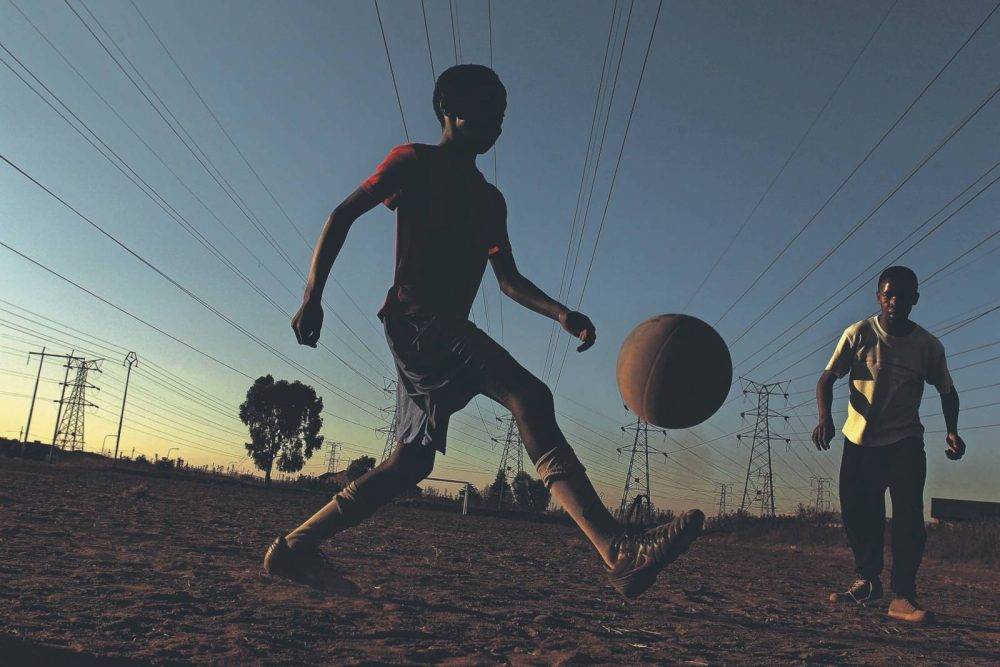
With the Springboks receiving plaudits for winning a fourth Rugby World Cup title in 2023, it’s easily missed that the country has won three world football championships in the past 30 years.
Yes — before choking on your morning hot beverage as if you’re the South African senior men’s cricket team playing a knockout match at a major international tournament — the country does boast three world football titles.
In 2003, 2007 and 2009, South Africa were crowned champions in the Danone Nations Cup Under 12 when they beat some of the best young players in the world.
It is a travesty that the country has not been able to come anywhere near replicating the boys’ achievements at senior level, having played a paltry three Fifa World Cups out of a possible eight since readmission to international sports in 1992.
Worse, only Kamohelo Mokotjo graduated through the ranks to play senior international football for South Africa from the nearly 40 players in the three successful under 12 tournaments.
This is mainly the fault of the failing South African Football Association (Safa).
It is no surprise that the bumbling men’s senior football team, Bafana Bafana, has been the country’s biggest disappointment in 30 years despite it being South Africa’s biggest sport by supporter numbers and monetary sponsorship.
Football is also the world’s most popular sport, with its governing body Fifa having more members than the United Nations.
A glimmer of hope shone in 1996, when Bafana Bafana won the African Cup of Nations — the continent’s flagship international tournament — in their maiden appearance at the event.
But that light quickly dimmed after a series of administrative blunders, starting with the axing of coach Clive Barker a year after he delivered Africa’s holy grail, steadily plunging the country’s football into darkness as if it was a state-owned electricity company.
The disappointment is illuminated by the fact that the women’s game, which is still largely amateur with no professional women’s football league after years of ANC-like broken promises, managed to become South Africa’s first senior football team to qualify for the knockout stages of a world cup.
This was after Banyana Banyana achieved the feat in 2023 at only its second-ever appearance at the global showpiece.
Banyana almost did not attain that commendable feat after payment disputes with Safa, which refused to add to the women’s contracts that they would receive their Fifa-guaranteed bonuses for all footballers depending on where in the tournament they reached.
For reaching the World Cup last 16, Banyana Banyana players — as of August’s dollar-rand exchange rate — will get more than R1.1??million each for making the knockout rounds. But first they had to boycott their final home warm-up game against Botswana in Ekurhuleni to bring their struggles with South African Football Association (Safa) president Danny Jordaan to the national fore.
All the gloom surrounding South Africa’s soccer scene should not detract from other sporting achievements the country has amassed over the past 30 years.
Who could forget coal miner Josia Thugwane’s celebratory waving of arms metres from the finish line and on his way to becoming South Africa’s first black athlete to win an Olympic gold medal when he clinched the marathon title at the 1996 Atlanta games?
What made Thugwane’s win more special was that, a year before his triumph, he was shot in the face and injured his back while jumping out of his moving car during a hijacking in his home province of Mpumalanga.
Acclaimed swimmer Penny Heyns — who won South Africa’s first two gold medals after readmission to the Atlanta games in the 100m and 200m breaststroke events — made waves for the country after her 1996 triumphs by breaking 11 world records in three months during the 1999 international season.
The sporting glory following the 1994 political breakthrough — including the Springboks’ 1995 World Cup win that was immortalised in a Hollywood blockbuster — ushered in hope for the country after decades of the repressive apartheid regime that relegated black people to second-class citizens in reservoirs of mental slavery and cheap labour known as townships and homelands.
That a boy who grew up in those horrid habitats and played cricket with no shoes until he was 15 eventually became the first and only South African bowler to take 10 Test wickets in a match at Lord’s cricket ground — the game’s spiritual home — in 2003 was testament to the sporting barriers the country was breaking after years of isolation.
The image of Makhaya Ntini from Mdingi in rural Eastern Cape kneeling to kiss the Lord’s pitch after his accomplishment is forever etched in the country’s memory as a lodestar to what is achievable in Africa’s southernmost land.
Or what about Jacob “Baby Jake” Matlala, who still holds the record as boxing’s shortest-ever world champion, having won four flyweight titles standing at his 1.47 metres and shattering the premium placed on arm reach in becoming successful in the sport.
There were many other sporting moments over 30 years worth celebrating, including hosting Africa’s first Football World Cup in 2010 — a tournament still spoken of highly as among the best organised of the 22 held since 1930.
But, besides the four rugby world titles, one cannot deny that South Africa has punched well below its weight over 30 years given the country’s love of sport that, to paraphrase Nelson Mandela, is more powerful in uniting people across demographics like nothing else.
With better administration in the next 30 years, one can hope that, along with more world records and achievements across sporting codes, the country will get its three football world cups — this time at men’s and women’s senior level.
The post Yes, we did win three soccer world cups appeared first on The Mail & Guardian.
Top cop faces investigation over ‘criminal activities’:

National police commissioner Fannie Masemola has instituted a wide-ranging misconduct and corruption inquiry into Mpumalanga police head Lieutenant General Semakaleng Manamela, who was recently suspended for showering herself with R2.1 million in state-funded gifts.
Several highly placed sources, all of whom spoke on condition of anonymity, gave details of the Masemola-commissioned inquiry against Manamela.
One of them showed the Mail & Guardian a list of 10 senior Mpu-malanga officers who had testified against Manamela during the inquiry and are apparently being victimised by their provincial boss.
Speaking on behalf of Masemola and Manamela, national police spokesperson Brigadier Athlenda Mathe confirmed the Mpumalanga head was being probed.
“The national commissioner has established a board of inquiry. The team is yet to conclude its work.”
The national police commissioner’s office did not respond to questions regarding a “leadership crisis” looming in Mpumalanga because of infighting among the province’s police top brass.
A Pretoria high court judgment in March noted how Masemola had bungled his initial suspension of Manamela, pending an inquiry, which stemmed from a forensic investigation in May last year into how the provincial commissioner allegedly used public funds amounting to R2.1 million to purchase furniture and other household items, among other things, to celebrate her July 2021 appointment.
The court judgment read: “[Masemola’s] notice [to suspend] was so devoid of any detail that it was impossible for [Manamela] to provide any substantive response.
“The notice failed to give any particularity, save to say that the applicant [Manamela] had received gifts and that she will be furnished with more particulars in future.”
The top cop has launched a fresh inquiry into Manamela’s fitness to hold office, with several generals and managers called to testify allegedly being victimised by her. The senior officers included Major General Lilly Lentsoane and Brigadier Lindani Ndlovu, who is a station commander in Vosman, eMalahleni.
The report from May last year further implicated Manamela in trying to remove Ndlovu “because he is seen as a threat in fighting illegal miners in the Vosman area”.
“Transferring him [Ndlovu] to Siyabuswa [and] disregarding his family amounts to an abuse of power,” reads the report.
A separate police dossier dated December 2023 claims Manamela “is being locked in a cage from disciplining those who serve under her as part of her authority to manage and apply disciplinary action to those who do misconduct”, including Lentsoane.
The dossier says that during a service delivery protest in eMalahleni, where residents hurled stones at then mayor Conny Nkalitshana for allegedly suggesting they did not need electricity as they did not own fridges, Lentsoane stopped the police from protecting the mayor.
“They [the Mpumalanga generals] are now instruments of political factions as police seniors are taking sides. If you go and investigate what happened on the day the mayor was attacked you will realise that the police pulled back,” the dossier reads.
The M&G ran a series of stories from June last year reporting on voice recordings from employees in Manamela’s office, where senior officers, including Middelburg police station commander Thandi Jiyane, spoke about taking money from Mpumalanga business people and forwarding it to Manamela’s “private people”.
These recordings form part of evidence that Manamela heads a money-laundering racket among police in Mpumalanga, sources said.
The M&G has established that the 10 generals who testified against Manamela at the inquiry have stopped taking orders from her.
She is also accused of purging officers who oppose the money-laundering scheme she allegedly heads.
Another insider said Vusi Shongwe, the community safety, security and liaison MEC in Mpumalanga, tried to mediate between Manamela and the senior officers, noting that the situation had become untenable.
“But these senior officers said they cannot go to the [mediation] meeting because they were the very same people who testified during the inquiry.
“And the outcome of the inquiry has not been released yet; it is akin to the sub judice rule in court,” said the insider, who is close to the upper echelons in Mpumalanga.
Describing how the inquiry had come about, another source said that the senior officers had gone to Masemola to ask for help regarding their alleged victimisation.
“Under normal circumstances, if I have done something wrong and am working under the provincial commissioner, I must subject myself to that disciplinary action,” said the source.
“But here, it is not just one person, it is [many] senior generals and managers in the SAPS. It cannot be correct for many people to say, ‘Something is really wrong here.’”
The information was confirmed by a senior officer close to Masemola’s office, who said Manamela had received a standing, verbal directive not to institute any disciplinary action against provincial police generals because of “the volume of complaints that have come against the Mpumalanga commissioner”.
Police spokesperson Mathe said Masemola’s responsibility was to ensure the “smooth running” of the police force.
“With this said, the [national police commissioner] maintains an open-door policy in which all provincial commissioners are at liberty to raise any concerns and issues relating to service delivery,” Mathe said.
“On that note, we are therefore not aware of any internal conflict — we are only aware that police in Mpumalanga are hard at work in heightening police visibility to prevent and combat crime this busy festive period and beyond.”
During Mpumalanga’s police excellence awards on 6 December, Manamela received public backing from Shongwe.
He lauded Manamela for her good work in rooting out police corruption, including the August arrest of three officers — sergeants Collen Nonyane, Sunday Mashego and Bhekinkosi Godi — for their alleged role in a cash-in-transit heist near the border with Mozambique.
The three were nabbed with explosives as well as AK-47 and R1 assault rifles and other weapons.
“It [the police arrest] did not come to Mpumalanga as a manna [from heaven] — it came out because there [was] a combination of the security cluster that worked in making sure that they intercepted those policemen,” Shongwe said.
The post Top cop faces investigation over ‘criminal activities’ appeared first on The Mail & Guardian.
Submit and get free exposure here: Showcase Your Business | Advertise Your Special Offers.
