The beautiful game stops at the border:
Last week, my fiancée was denied a visa to the US under the pretext that she is a “threat to the national interests of the United States of America”. She is not a terrorist. She is not a fraudster, a larcenist or a human trafficker. She is not violent and carries no hate in her heart.
She is not planning to disappear into the shadows of America to become a nuisance lurking in the corners of the welfare system. She is a telecoms consultant who has no interest in ever living in America but loves spending her money in outlet stores like the one in Deer Park, Long Island, near my mother’s house.
Her crime? She is from Zimbabwe.
In June 2025, President Donald Trump issued a presidential proclamation tied to Section 212(f) of the Immigration and Nationality Act banning citizens of 19 countries from entering the US. Zimbabwe was not among them but in December he added 20 more countries, including hers.
To be clear about this: more than three dozen countries are banned from entering the US in the year it is hosting the World Cup. Twenty-six of them are African. That’s half of Africa. The decision was not based on who she is, what she has done or whether she poses any risk. It was based entirely on the passport she carries and the country in which she was born.
Suddenly, the World Cup became very, very personal. Who am I going to watch the games with now?
There are four World Cup teams from countries that are banned. Two of them are from Africa.
Unfortunately, Zimbabwe is not in the tournament because it appears there are exemptions to the policy for some people from Côte d’Ivoire and Senegal, although these are mostly for players and other official visitors, not fans. It’s all a bit confusing and even Ivorian and Senegalese nationals with tickets to the games might arrive at the border to find themselves shut out.
Isn’t the entire point of the World Cup to bring the planet together?
The World Cup creates something close to temporary global citizenship. A Korea supporter in New York, an Argentine family in Mexico City, a Tunisian fan in Toronto — for a few weeks, people are supposed to belong not only to nations but to the tournament.
For a brief period every four years, the planet imagines itself as a single field. Rich nations and poor nations stand side by side.
Former colonies defeat empires: first-timers Senegal beat defending world champions France 1-0 in the opening match of the 2002 World Cup, for example and Algeria defeated France in multiple contests. Tiny populations like Iceland and Cape Verde challenge superpowers.
Sport is one of the few systems humanity has built where symbolic equality inside diversity feels possible. Football, with its minuscule scores and wide-open fields, perhaps most of all.
Unlike many global industries dominated almost entirely by wealth and power, football has historically allowed countries from the margins to matter. Morocco beating both Spain and Portugal to reach the semi-finals in 2022 mattered not just because they played brilliantly but because millions across Africa, the Arab world and the Global South saw themselves represented.
Ironically, football itself became global partly through empire.
British sailors, merchants, missionaries, colonial administrators, dockworkers and migrants carried the game across continents. The sport spread through trade routes, occupations, railways and imperial systems before eventually being reclaimed and reinvented by the very societies once dominated by those empires.
European football depends profoundly on African talent. African players fill the rosters of the Premier League, Ligue 1, Serie A and La Liga. They are welcomed as stars, scorers, defenders, entertainers and billion-dollar assets.
The World Cup does not erase inequality. It suspends it.
Yet last week, an African woman was made to feel less than other humans. African mobility itself often remains conditional, restricted and suspect. There is a difference between being welcomed for what you produce and being welcomed simply as a human being.
Modern football often celebrates Africans economically while filtering Africans bureaucratically.
“For the Game. For the World,” Fifa once declared. It doesn’t bother with the slogan any more. The contradiction is bigger than us.
Over the past year, I have been immersed in my book World Innovators Cup, a project that imagines history’s greatest innovators as football stars competing in the “beautiful game” of ideas. Leonardo da Vinci shoots goals at Frida Kahlo. Tesla takes on Edison. Wangari Maathai patrols Africa’s defence.
The book asks a simple question: What would happen if humanity celebrated innovators with the same emotional intensity we reserve for athletes?
In constructing the manuscript, I actively ensured that it included an equal number of African and Asian innovators alongside Europeans and Americans.
For while the story of innovation is usually dominated by majority cultures, that does not reflect reality. Creativity and human possibility do not belong to a handful of wealthy nations. They emerge from privilege and struggle alike.
Innovation is global. So is football. Visas to America, apparently, are not. Because deep beneath the Fifa spectacle, beneath the sponsorships and slogans about unity, the modern world is becoming increasingly conflicted about movement, borders and belonging.
We live in a strange era. Information travels freely. Capital moves instantly. Brands become global overnight. A football highlight can circle the planet in seconds.
An idea can spread from Lagos to London to Los Angeles before breakfast. But human beings do not move so easily. Passports have become invisible hierarchies. Some — like Singapore’s — are like golden tickets. Others — like Zimbabwe’s in the US today — are warnings.
Two people might possess equal intelligence, kindness, integrity and love for the game but the accident of birthplace determines how freely they can cross the world and attend their team’s games.
The World Cup depends on movement. There are 16 host cities for the 2026 World Cup across North America, 11 of them in the US. Bouncing around among these metropolises will be not only players but also fans, journalists, performers, businesspeople and couples like myself and my future wife.
Fans are not decorative extras added around the edges of football. They are the sound, emotion, tension, memory, mythology and atmosphere of the game.
Increasingly, even attendance is becoming unequal. Flights, accommodation, internal travel between host cities and now, in some cases, visa bonds running into thousands of dollars, mean the modern World Cup is becoming financially inaccessible to many supporters long before politics enters the picture.
A train to the stadium in New Jersey, for instance, usually $ 15 (R245) for a round trip, is now going for more than $ 100. Never mind game tickets, which are selling for thousands.
A World Cup without global fans is not fully a World Cup. It becomes TV content rather than culture. Stadiums without invested supporters are bereft.
The modern World Cup is not merely a tournament. It is a giant temporary migration. Entire populations travel physically and psychologically in one shared global experience. At least, that is the promise.
But what happens when large groups of people feel unwelcome before they even arrive?
For immigrant and diaspora communities especially, the World Cup is deeper than sport. It is reunion, memory, identity, homesickness, pride and belonging compressed into 90 minutes. Entire generations gather around matches to reconnect with countries they might no longer physically live in but still emotionally carry.
The US has the sovereign right to manage its borders, sure. Every country does.
Governments make decisions based on complex political calculations, data, fears, risks and national priorities that citizens don’t see or understand.
But symbolism matters. The symbolism of hosting the world while banning 20% of its countries and population cannot be ignored.
America has long understood the power of spectacle. Hollywood, music, technology and sport — these are forms of soft power as influential as military strength. The World Cup is part of that machinery that America doesn’t usually leverage. Now it has the opportunity and this is how it uses it?
Hosting the World Cup is supposed to announce: the world gathers here. But a fifth of the world is not invited. For no clear reason either. Why Zimbabwe and not, for example, the Democratic Republic of Congo, a country that seems less desirable given its years of civil war and human rights violations?
According to the proclamation itself, Zimbabwe’s cited B-1/B-2 visa overstay rate was nearly 8%, with student and exchange visa overstay rates listed at more than 15%. This seems to have something to do with it — individual misbehaviour, not government policy. Hello, racial and national profiling.
The policies are not abstract. Behind every proclamation, regulation, restriction or denial is a human story. I don’t get to experience the World Cup with my partner. She is not a geopolitical theory. She was told no, not because of her character but because of her geography.
The contradiction becomes even sharper when one remembers that the 2026 tournament was expanded from 32 teams to 48 partly in the name of inclusion and global representation. Fifa widened the field at the exact historical moment America is shutting countries out.
We thought Fifa was in charge. We thought Fifa owned the planet. But I guess it’s nation-states or at least the one whose president won Fifa’s Peace Prize. It’s somehow nice to know there are greater forces than Fifa. It’s just too bad they are also uglier. Today, even the world’s most global sport stops at the border checkpoint.
It’s not just football. In two years, in Los Angeles, the Olympics are coming. An event even more focused on world peace and harmony than the World Cup. Every banned country will be participating — all 39, not just four. Will 20% of the planet be banned from coming to cheer on their national heroes? Including half of Africa?
Michael Brian Lee is the Mail & Guardian’s US correspondent in New York.
Why the media should stop calling white South Africans ‘refugees’:
With the Trump administration planning to expand its assistance to Afrikaners, raising the limit to 17 500 from 7 500 and declaring an “emergency refugee situation”, the term “refugee” is being used once again. There is a difference between leaving and fleeing. The media should know that.
The increasing numbers of white South Africans relocating to the United States and elsewhere are being described in headlines, interviews and commentary as “refugees”.
The term is emotionally powerful. It evokes images of desperation, persecution and survival. But it is also a legal and historical category and its careless use matters.
According to the United Nations Refugee Convention, a refugee is someone unable or unwilling to return to their country owing to a well-founded fear of persecution based on race, religion, nationality, political opinion or membership of a particular social group.
Historically, the term has been associated with people escaping war, ethnic cleansing, authoritarian violence and state collapse.
South Africa is many things: unequal, violent, frustrated, politically volatile and economically strained. But it is not a war zone. Dissatisfaction with governance, fears about crime, frustration with taxation or discomfort with transformation policies do not automatically amount to persecution.
People have every right to emigrate. The issue is not that white South Africans are leaving. The issue is how parts of the media ecosystem narrate that departure.
This is not about all white South Africans. Many remain deeply invested in the country and its future. The critique is directed at a growing narrative ecosystem that reframes privileged migration as humanitarian displacement while erasing the structural realities that continue to shape South African life.
Complex societies are weakened when entire groups are reduced to singular political identities, whether through race, religion, nationality or ideology. Too often, the framing relies on an uncritical politics of white vulnerability. It presents white South Africans as uniquely endangered while ignoring the broader historical and structural realities of the country.
Crime becomes racialised through selective storytelling. Structural inequality becomes background noise. The enduring concentration of wealth and opportunity inherited from apartheid quietly disappears from the frame. And yet there is another irony beneath this narrative.
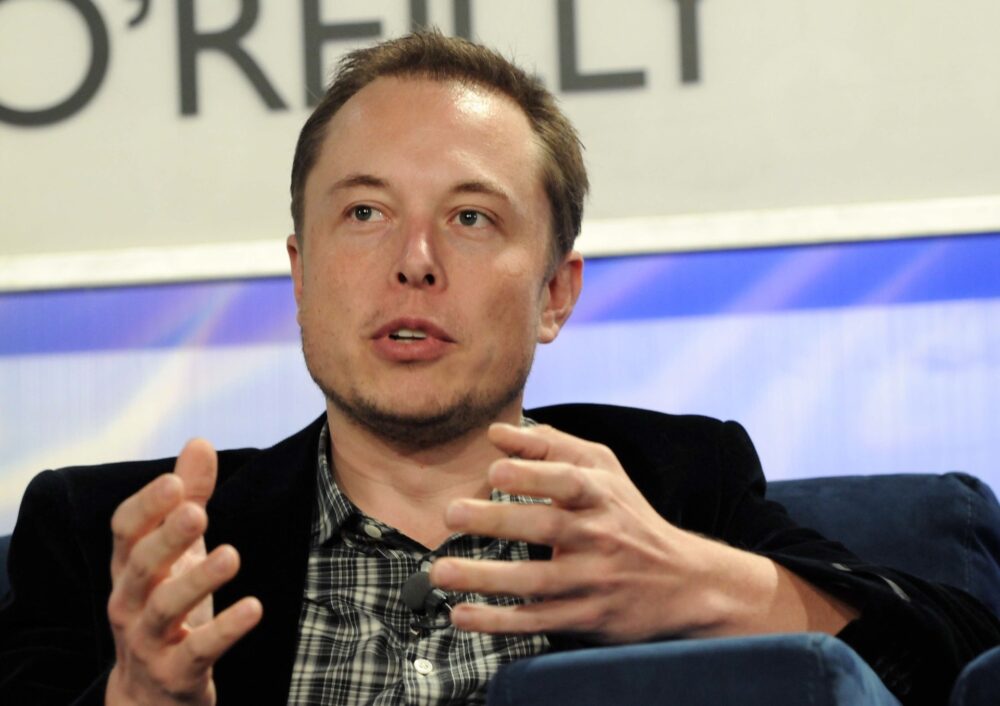
At the same time that some voices describe South Africa as a collapsing democracy from which people must “flee”, even billionaires such as Elon Musk continue to pursue commercial expansion into the country through ventures such as Starlink. That contradiction deserves scrutiny.
If South Africa is truly beyond redemption, governed only by violence and instability, then why the continued commercial interest?
Why pursue market access, infrastructure partnerships and long-term investment opportunities in a supposedly unviable state?
We know the answer is not patriotism. It is because, beneath the noise, South Africa remains economically significant, strategically positioned and commercially valuable. Investors understand this complexity better than ideology often allows.
They recognise risk but they also recognise opportunity. That is precisely what parts of the public discourse miss. South Africa is not reducible to either utopia or collapse. It is a deeply unequal democracy wrestling with the unfinished business of history while simultaneously remaining one of the most influential economies on the African continent.
But do not forget that South Africa’s inequality is structurally produced through generations of land dispossession, exclusion and concentrated economic opportunity. Our democracy inherited those fractures; it did not invent them.
The refugee narrative conveniently avoids this complexity. It transforms structural tension into personalised victimhood. It allows emigration to be framed not as mobility, preference or opportunity-seeking but as moral escape from an irredeemable society.
But most white South Africans emigrating to the United States are not arriving from refugee camps. They are not stateless. They are not crossing borders on foot after escaping civil war. Many leave with educational qualifications, financial resources, professional networks and access to mobility systems unavailable to much of the Global South.
That does not invalidate their experiences. But it places those experiences in a fundamentally different category from refugeehood. A deeper issue here is leadership.
Political leadership in South Africa has too often failed to build public trust, meaningfully reduce inequality or create a sense of collective national direction. Corruption, performative politics and institutional decay have hollowed out confidence across racial and class lines. But business leadership must also confront its own role in shaping the country’s trajectory.
Too often, corporate South Africa speaks the language of concern while operating through the logic of distance. Wealth is extracted from communities without meaningful reinvestment in social cohesion, education, dignity or long-term inclusion. The leadership we see is transactional rather than societal.
People will always move in search of opportunity, safety and alignment. But we should ask what influential sectors of society are willing to build, repair and contribute before concluding that withdrawal is the only rational response. Because nations are not sustained by markets alone. They are sustained by whether those with power, capital and influence still believe they have obligations beyond themselves.
Words matter because they shape public consciousness. And when the media casually labels relatively privileged emigrants as “refugees”, it weakens public understanding of what refugeehood actually means while distorting the realities of both South Africa and those facing genuine humanitarian displacement around the world. The media should stop using the word carelessly.
Professor Armand Bam is the Head of Social Impact and PGDip NPO Leadership Development at Stellenbosch Business School.
Denying SA is xenophobic: sounds like Trump’s Maga:
In a report published in December 2021 by Xenowatch, a project at the African Centre for Migration & Society at the University of the Witwatersrand, xenophobic violence was defined as acts explicitly targeting foreign nationals or “outsiders” because they are perceived as strangers.
It is categorised as a hate crime with the primary motive of driving foreign populations out of communities. While it primarily targets non-nationals, South African citizens from other provinces have occasionally been targeted as well. Xenophobic violence has also been orchestrated by leaders to further their own interests.
Xenophobic violence has been recorded every year since South Africa’s transition to democracy in 1994. The violence peaked in 2008, with at least 150 recorded incidents. Gauteng, the Western Cape, KwaZulu-Natal and the Eastern Cape were the worst affected.
Between 1994 and November 2021, Xenowatch identified 873 incidents of victimisation, which included 612 deaths, 1 184 physical assaults, 122 298 people displaced and 6 306 shops or properties looted or damaged. These are only the recorded incidents.
South Africa has moved from sporadic mob violence to an organised political entity of xenophobia.
Operation Dudula is a registered political party, which the high court described as “one of the most visible and violent proponents of xenophobia”. It has been interdicted from blocking “foreigners” from accessing healthcare and schools but the mentality persists.
Organisations such as Operation Dudula have used an online ecosystem to launch coordinated campaigns that call for support, protests and demonstrations, often framed as community-led actions to reclaim jobs, businesses or homes owned by foreign nationals.
But the actions often end in violence, illegal activism and vigilantism. The hostility towards African migrants is amplified by a heavy social media presence, as seen in trending hashtags such as #abahambe, #OperationDudula and #MassDeportationNow.
In doing so, the spaces have evolved into fertile environments for the reproduction of xenophobic attitudes among South Africans, producing an observable online culture of exclusion and hostility.
The hashtag #PutSouthAfricaFirst called for the prioritisation of South African citizens in employment and service delivery and gave Dudula significant visibility.
Since the group emerged, it has used vigilante violence to harass migrants and target their businesses. In 2022, such raids resulted in the killing of Elvis Nyathi.
The mob is not only in the streets; it is also present in racist and xenophobic speech, harassment and intimidation on social media, reflecting patterns of behaviour associated with groups such as Dudula and the Patriotic Alliance.
In November 2023, PA leader Gayton McKenzie said: “After we have been sworn in, I am going straight to the Rahima Moosa Hospital, where we are going to switch off the oxygen of illegal foreigners.” The hateful words validate the terror associated with the repulsive violence against immigrants and citizens.
Social media has become a field of mobilisation. In just four-and-a-half months, between March and July 2025, xenophobic posts on X reached 32 million people. Posts calling for “South Africa for South Africans”, defending Operation Dudula, demanding deportation and using slurs such as kwerekwere and abahambe (go away) were mentioned 5 656 times and viewed more than 1.2 million times.
The hate peaked on 27 April, 18 May and 12 June 2025, the last of which came just two days after a court hearing against Operation Dudula.
What triggered the spikes?
A post questioning foreign academics at the University of Pretoria. A call for mass deportation. And a post celebrating the eviction of foreign nationals from abandoned buildings.
This was followed by claims that foreign nationals dominate senior academic positions at the University of Fort Hare. The university issued a clear rebuttal supported by data.
The list circulated online included people who no longer worked there, never worked there or had retired years ago. In reality, Fort Hare’s 2024 recruitment process saw all 37 appointment letters go to South African scholars.
Minister of Higher Education Buti Manamela later confirmed that foreign nationals constituted 12% or so of permanent academic staff at South African public universities, a figure that has remained stable for years. There was no systematic displacement of South Africans in permanent academic posts. The data does not matter to the mob.
Why persist with a lie?
As researcher and educator Leroy Maisiri stated in a Mail & Guardian article on 21 May 2025, the xenophobic attack on Fort Hare was never about protecting jobs or fixing unemployment. It was a panic that distracted from the real failures: a dysfunctional home affairs visa system, deindustrialisation and decades of neoliberal policy that abandoned job creation.
Professor Sioux McKenna, the director of the Centre for Postgraduate Studies at Rhodes University, argued that the question parliament should be asking is not why universities employ foreign nationals but why South Africa is receiving fewer international students than before and why the government’s systems make it so difficult to attract more.
But the xenophobes are not asking those questions. They are on X. They are in the comments. They are chanting Mabahambe. And they are reaching 32 million people with lies dressed as patriotism.
Xenophobic violence is caused by a complex interplay of factors.
Long-term structural conditions in poor South African communities create a climate of discontent, usually following a smearing campaign against immigrants.
In informal settlements and townships, where people compete for scarce resources such as jobs, housing and healthcare, immigrants are perceived as “winning” and become the first targets.
Similarly, in Eastern Europe and the Russian Empire during the 19th and 20th centuries, Jewish communities were targeted during periods of economic hardship, political instability and unemployment. Jews were blamed for social problems, seen as competition and used as scapegoats. Governments also encouraged and tolerated anti-Semitic violence to redirect public anger away from the state.
In the South African context, resentment has evolved into hate-filled nationalism. Many people are angry about poverty and instead of blaming the system that impoverished them, they blame immigrants. Instead of confronting the state and the system of white monopoly capital that continues to shape inequality, many direct their frustration at migrants, who are easy targets.
The xenophobic attitudes are not limited to poor or uneducated South Africans; they cut across race, class, gender, age and religion.
Xenophobic violence is not spontaneous, just as political violence is not random. When democracy declines, societies become divided by race, religion and ethnicity, political leaders tolerate or encourage violence. As elections approach, violence tends to increase.
In the US, Donald Trump and other Maga leaders have relied on threats and intimidation to create and sustain fear. Political figures such as Gayton McKenzie send a similar message to citizens who support anti-immigrant rhetoric: that “we are not xenophobic”.
This erodes public understanding of what a healthy democracy should look like.
In 2008, former president Thabo Mbeki suggested that the xenophobic attacks were not spontaneous acts of hatred but a planned political operation intended to drive Zimbabweans back to Zimbabwe to vote for Robert Mugabe. If xenophobic attacks can be used as a political weapon, they can be deployed repeatedly.
If there are names in the report Mbeki referred to, why are South African community leaders and organisers protected?
Why has the country not been told who organised the killing of 62 human beings?
Xenophobic marches are organised by people who benefit politically, socially and economically. The far right has learnt that the strategy works.
The government’s denialism, by labelling xenophobic violence as mere crime rather than xenophobia, demonstrates a lack of political will and a failure to combat racism and xenophobia. The South African Police Service has failed to stop xenophobic protests because of ineffective and biased responses.
This is not a march; it is a pattern and impunity remains. Xenophobic violence is a long-standing feature of democratic South Africa, with incidents recorded since 1994. The violence extends far beyond the targeted groups, carrying severe socioeconomic, political and security implications for all South Africans.
An attack on immigrants is an attack on the entire country. People who do not see the political system as responsive to them are more likely to channel their grievances into support for violence.

South African xenophobia and Trump’s Maga movement are a distorted mirror of one another.
Former rector of the University of the Free State Professor Jonathan Jansen made this connection in a December 2025 op-ed: “The agitators, I’m afraid to say, are our black, homespun version of American Magas who will vote against their own best interests so long as the foreign national does not benefit from their labours on behalf of our children.”
The Nazis never saw themselves as fascists; they saw themselves as National Socialists. Yet by the 1930s, Nazi Germany and Fascist Italy were allies. South Africa’s far-right movements and Maga politics share the same xenophobic foundations.
Ncebakazi Makwetu is a lecturer in the department of liberation studies, faculty of social sciences and humanities at the University of Fort Hare.
Submit and get free exposure here: Showcase Your Business | Advertise Your Special Offers.