
The Last Afternoon in the Garden | Episode 4 – What about a conviction?:
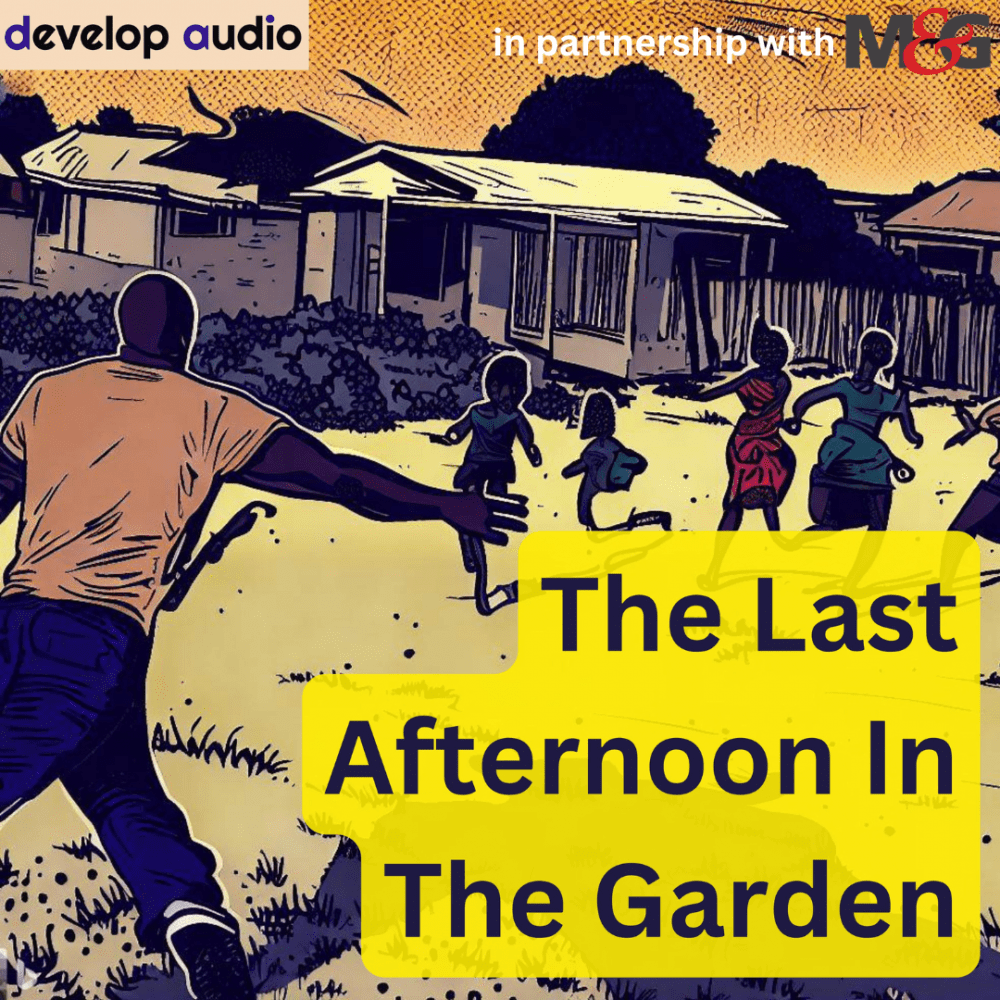
In this fourth and last episode of The Last Afternoon in the Garden we go back to the communal garden one last time to reflect on everything that has happened. We seek out experts to try and explain the violence and confront a person from the past who has a different version of events. We uncover new theories on what has been driving these killings and we hopefully move steadily closer to a conviction.
LISTEN TO EPISODE 4 – What about a conviction?
Ayanda Ngila was assassinated in the Ekhenana communal garden in Durban, South Africa, on the 8th of March, 2022. Ayanda was 30 years old and shot in broad daylight in the middle of the afternoon. He was fixing a water pipe in front of women and children and as he went down he yelled for people to take photos of the scene so the truth of his death could be known. Those are the words of a man who was expecting to be killed and was clearly at the center of a conflict that he imagined would end in his death.
Ayanda was a land activist and part of the organization Abahlali baseMjondolo, who have spent almost two decades fighting for the rights of the poor in South Africa. This story is about an assassination, but also about the violence you can face when you fight for your basic human rights like food, water and shelter.
This is a four-part podcast series produced and presented by Paul McNally for Develop Audio. Visit their website at https://developaudio.co.za/
Listen to the first episode here.
Listen to the second episode here.
Listen to the third episode here.
Music was composed by John Bartmann.
Mixing and Mastering by Danny Booysen.
This series was made possible with the support of The Henry Nxumalo Foundation. Check out their work at https://henrynxumalofoundation.co.za/
The post The Last Afternoon in the Garden | Episode 4 – What about a conviction? appeared first on The Mail & Guardian.

23D Drive miles back carrying fruit (4)
The post Cryptic Crossword 402 appeared first on The Mail & Guardian.
World Bank loan will support South Africa’s energy transition:

The World Bank’s $ 1 billion loan to bolster South Africa’s energy transition will provide much-needed fiscal and technical support, the treasury’s deputy director general for asset and liability management, Mmakgoshi Lekhethe said.
In a statement, Lekhethe said the loan would help the country ease its electricity crisis in the long term, “stimulating private sector engagement and creating jobs in the renewables space”.
Announcing the loan on Wednesday, the World Bank said it was aimed at helping to facilitate the “restructuring of the power sector” through the unbundling of state-owned utility Eskom.
“It supports the opening of the power market and aims at improving Eskom’s efficiency by redirecting its resources toward investments in transmission and maintenance of existing power plants,” the bank said.
It added that the loan would also boost the low carbon transition “by encouraging private investment in renewable energy … and strengthening carbon pricing instruments” and would support poor households and businesses — particularly women- and black women-owned businesses — through access to credit from commercial banks to enable them to invest in solar technology.
The loan — a collaborative effort between the World Bank, the African Development Bank, German development bank KfW and the government of Canada — comes as South Africa grapples with its worst-ever year of load-shedding which has severely undermined growth and confidence.
It will see the government receive technical assistance to identify reforms necessary to manage the social costs associated with the decommissioning of coal-fired power stations.
“We are pleased to support SA’s government, which has taken decisive reforms to address the challenges posed by the energy crisis,” said World Bank country director for South Africa Marie Francoise Marie-Nelly.
“These reforms will benefit the people of South Africa — particularly the most vulnerable households — the economy, the environment and advance the energy transition.”
The loan is the third policy loan pledged to the country since the conclusion of a Just Energy Transition Partnership with several developed countries, with KfW, and French development bank AFD, having extended €300 million in November last year.
To support South Africa in its quest to move away from fossil fuels, the EU, Germany, France, the US and UK pledged $ 8.5 billion (R161.78 billion) in finance.
Last month, the treasury announced that the Netherlands and Denmark had joined the Just Energy Transition Partnership, pushing South Africa’s just energy transition funding to $ 11.9 billion.
Neil Cole, financing manager of the Just Energy Transition Investment Plan’s project management unit, previously told the Mail & Guardian that the treasury had thus far received €600 million (about $ 640 million) of the pledges.
“We now have pledges of $ 11.9 billion, but it’s still a long way from the just under $ 90 billion [about R1.5 trillion] that will be required over the next five years,” Cole said.
At the recent Africa Climate Summit in Kenya, Environment Minister Barbara Creecy stressed the importance of African countries developing a new financing model that will not increase debt and worsen their fiscal positions.
The post World Bank loan will support South Africa’s energy transition appeared first on The Mail & Guardian.
Submit and get free exposure here: Showcase Your Business | Advertise Your Special Offers.
