
The need for ethical leadership in South Africa: 30 years after democracy:
GGA webinar unpacks what ethical leadership entails
Ethical leadership is what South Africa needs perhaps more than anything else at this stage in its journey, yet it seems to be in short supply, and not just in politics, but in many levels including business, which was revealed clearly by the Zondo Commission. Ethics can be taught, but this won’t necessarily make a person ethical. The best way to instil ethics is to do it early, through the family and school, so that doing the right thing becomes second nature. Ethical leadership comprises having courage, being able to speak the truth, standing up to power, having strong morals and ethics, competence and integrity.
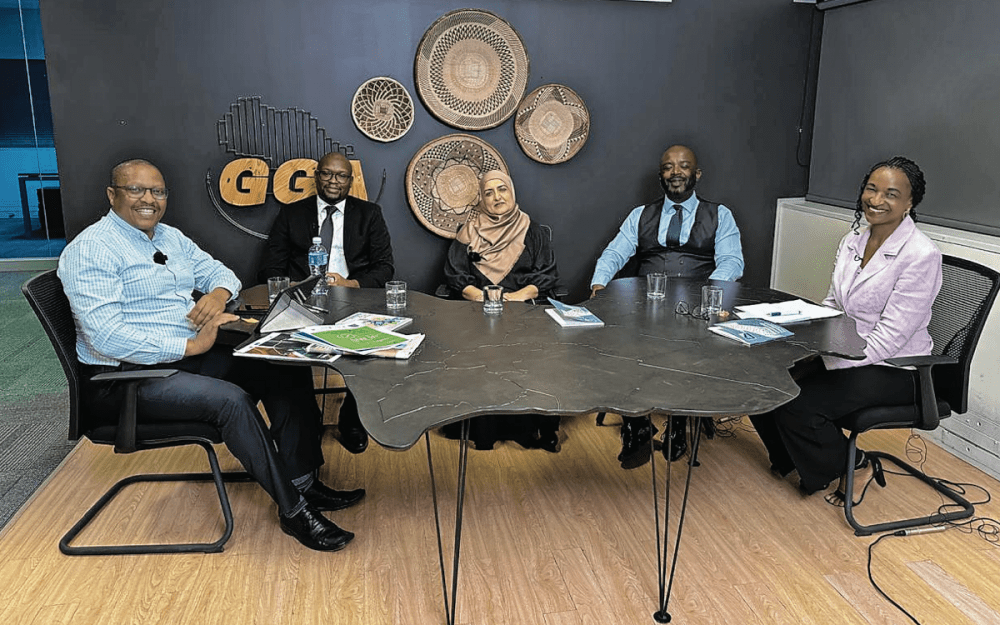
These themes, and many others, emerged in a webinar titled “The Need for Ethical Leadership in South Africa: 30 Years After Democracy”, hosted by Good Governance Africa (GGA) in partnership with the Mail & Guardian. Building on the insightful groundwork laid during the first webinar of the series, it focused on the critical role leadership has to play in influencing the nation’s trajectory and addressing its governance challenges.
Moderator Patrick Kulati, CEO of GGA, introduced the debate and recalled the SA2020 Scenarios debate that happened in 2002 and 2003, where four scenarios were envisioned. He then introduced the panellists.
Ronny Mkhwanazi, founder of Mkhwanazi Incorporated, said the best scenario, called “All Aboard the Dual Carriageway”, was about everything the people concerned were hoping for, but the conditions required for this to happen included having ethical leadership.
Kulati asked Fatima Rawat, senior subject matter expert at The Ethics Institute, what does ethical leadership mean? She said “ethics” means doing what is right for both oneself and for others, and “here the concept of balance is crucial”. If one is a leader in an organisation, the concept of “organisational ethics” comes into play, where the values of the organisation must be borne in mind regarding what actions the company or organisation takes, and the impact they will have on others. “An ethical leader will ensure the organisation fulfils its mandate in a way that it is easy to do the right thing.” There are many leaders at different levels in any large organisation, she said. The code of King IV is all about how ethics, competence and integrity can combine.
“An ethical leader will ensure the organisation fulfils its mandate in a way that it is easy to do the right thing.”
Bafedile Bopape, author and former government executive, said that the title of her recent book says a lot: A Government on Life Support. She asked, how did South Africa end up in the ICU? The citizens of any country must ensure that the state is protected from politics. When it comes to service delivery, it must be clear who is responsible for it. The government will talk about their manifestos and agendas, but it is the public servants who must implement these. “We need a dialogue about the role of public servants, because the current government has politicised the state,” she said. Kulati asked if a clear line must be drawn between the two, which Bopape confirmed.
What support systems are there for public servants who are actually committed, asked Kulati? Bopape replied that we tend to paint everyone with the same brush of corruption, which can be demoralising. She said that there were few complaints about service delivery during the first two administrations, but around 2009 that all began to change, and that “30 years into democracy, we are still searching for a democratic ideal”.
Asked whether he thought that there is still a glimmer of hope for South Africa, Mkhwanazi pointed out that there has been poor leadership in many sectors, including civil society. Crucially, there is still a very poor relationship between the state and business; this is detrimental because business creates jobs, while in return the state must provide conditions for doing good business. “It’s become a standoff, where everyone is waiting to see what will happen; there is no collective ownership,” and perhaps there is indeed a “collusion of the elite” who live behind electric fences.
Fortunately, there are still very strong government frameworks in place, with codes such as King IV. This meant that during state capture, one could not bend the rules, so instead those involved in it removed the people who were custodians of the law, who were stumbling blocks to their ambitions. Mkhwanazi said he feels for the public servants who are working hard but are perceived as being corrupt, when in fact it is the leaders in the boardrooms who are corrupt: the fish rots from the head.
Rawat said the Ethics Institute is working on a collective action project called The Local Government Ethical Leadership Initiative, together with COGTA, SALGA and the Moral Regeneration Movement (MRM). Essentially the project is not about creating more rules and laws; it is about creating the right ethics. Critical to the sustainability of the project is to have a strong advisory council, which is made up of civil society leaders; it is chaired by Father Smangaliso Mkhatshwa from the MRM. In examining what ethical leadership comprises, these qualities emerged: having courage, being able to speak the truth, standing up to power, and having strong morals and ethics, competence, integrity and good governance.
The politicisation of the state is what interferes the most when it comes to ethical leadership. Inappropriate deployment is another big problem, because deployment is very different in theory to practise. You get issues like somebody who is placed low down in administration at local government level, but who is politically senior to his or her boss. This creates webs of complexity that detract from or prevent efficient administration.
“Public servants are unanimous that ethical leadership is what is most required for better service delivery, followed by accountability.”
The Ethics Institute with its partners conducted the Public Sector Ethics Survey in 2015, 2018 and 2022, so we now have some comparative data, said Rawat, and the language of ethics is becoming more familiar. “Public servants are unanimous that ethical leadership is what is most required for better service delivery, followed by accountability.”
Kulati said the Zondo Commission revealed that many institutions we used to trust had let us down. Many people in professions that were trusted have been exposed to be corrupt, from religious leaders to heads of auditing and consulting firms. What can be done to reverse this?
Review the selection process for public servants
Bopape said in politics, being a leader is not child’s play. It is not about you, it is about others. When a politician prays, he must ask, like Solomon, for wisdom, to make sound decisions and judgements, which have a good outcome — and not just for you. “We also need to review our selection processes. Public servants are servants of the people. We need to determine if someone has this quality in our review process,” she said.
Our value systems are influenced by our upbringing, parents and education. For instance, a newly appointed CEO or DG, when he or she first sees a pile of money, may think that it is for themselves if their value system is poor.
Mkhwanazi concurred, and said ethical leadership relates to our education; we are creatures of our environment. Countries that invest in ethical training reap the rewards, and this needs to be an ongoing process. Regarding those professions that were caught out as being corrupt, it was usually a clique or an elite that was involved, that realised that they could do things under the table, but most employees in those institutions are highly ethical.
Rawat said that every profession has a code of ethics, but the Zondo Commission created a loss of trust in many businesses, and they in turn lost a lot of business as a result. South Africa rates lower on the Trust Barometer than the rest of the world regarding how much trust citizens have in their government, but it is only marginally lower regarding their trust in business. To restore trust is a basic issue of restoring integrity.
Comment from the audience
Luke Feltham, M&G editor-in-chief, asked: “South Africa has always been far too comfortable with its inequalities, or at least for those among us who thrive in it — what does that say about our ethical compass? Are we too immoral to redress the imbalances?”
Rawat said that you can teach someone ethics, but it won’t necessarily make them ethical. Actions speak louder than words — schools must become moral communities, so that children can see ethical leadership in action. There are also initiatives taking place that bring constitutional values into the curriculum.
Monde Lot Ndlovu, managing director of the Black Management Forum, joined the panel halfway through the webinar. He said the BMF was premised on developing and supporting black leaders, and also creating an ethical “soil” or environment. He said your conduct is a reflection of your personal value system and principles; “we are not ethical in order to transform, we are ethical because it is the right thing to do”. We are all accountable, from small business leaders to those who run large corporations, because our actions influence our peers, our family and our communities. The late Dr Samuel Motsuenyane was a good example of an ethical leader. “Ethics are the bedrock of sustainability, for you, and for your successors — even when nobody’s watching, always do the right thing.”
Bopape said we need citizens and communities that are ethical, and leaders who are ethical need support from them; people watch leaders to see how ethical they are. Rawat said that the code for ethical leadership is about making decisions that benefit people in the long run, and to act in that spirit. The code has seven core principles, such as creating an ethical culture in which it is easy to act with integrity. Well-functioning institutes create trust because they deliver the services they are supposed to provide. This creates stability, which is good for business, which is in turn good for the taxpayer.
Mkhwanazi pointed out that ethical leaders have humility, because to listen to people requires tolerance, and this quality is slipping away from us — we have lost the ability to disagree, to have uncomfortable conversations. Integrity is, for the man on the street, when what politicians say is what they mean: if we are told there will be water in the taps, then there will be. You cannot improve if you cannot listen. We should want to be better people than we were yesterday. We cannot legislate a person to become ethical; we can only have the dialogue, then people can make an informed decision.
Ndlovu said the deep systemic issue that still influences business today is the “old order”. There has been B-BBEE fronting, because that is old order thinking. We have to change the structure of the economy, which is dominated by too few players, to create the right conditions for ethical leadership. We need to “wag a bietjie”, and work on changing the systemic issues. He said that we need to change these systemic issues, or we are vulnerable to a revolution. “We need to address our historical backlog.”
Closing remarks
“There is a prevalent ethos in the youth that “someone else is going to sort out our problems, but unfortunately this is not true.”
Rawat said that leaders don’t exist in isolation; ethics is everybody’s business. We need to hold each other to account. Leaders are not born, they have to be grown, so that they can become competent. “We must debunk the myths around ethics and implement them.”
Bopape said there is a need for an intervention at an educational level. Ethics cut across business, government and public service. There are pockets of public servants who are actually doing their best. We should capitalise on our strengths, and encourage them to carry on doing well.
Mkhwanazi said ethics have to start in the home, but schools and businesses must have these conversations too. “There is a prevalent ethos in the youth that “someone else is going to sort out our problems, but unfortunately this is not true.”
Ndlovu said that leaders need to think carefully before they act and make critical decisions that impact society, sometimes for years to come. We need to make annual goals to address the triple challenges that South Africa faces of unemployment, inequality and poverty, by X amount, to help focus our efforts. The ESD programmes of companies must be expanded to become truly effective.
Kulati concluded by saying this conversation is part two of a GGA series held in partnership with the Mail & Guardian. The next one, in two weeks’ time, will focus on the youth.
Unilever South Africa: Committed to enhancing the lives of the people of South Africa:
Predicted spend over 2024 with mostly black-owned suppliers, including those that are small, medium and micro, is R3.2 billion
Unilever South Africa prides itself as a responsible corporate citizen. We are committed to enhancing the lives of the people of South Africa through meaningful and active corporate citizenship. We see BBBEE as a strategic and competitive advantage, as well as a moral and legal requirement.
Adopting BBBEE not only helps to uplift and change our country for the better, it strengthens our stakeholder partnerships, market opportunities and innovation. Investment by Unilever South Africa in businesses owned by previously disadvantaged groups encourages job creation, creates profitable and sustainable black-owned businesses and contributes to economic growth for the good of all South Africans, helping to close the wide economic disparities that persist.
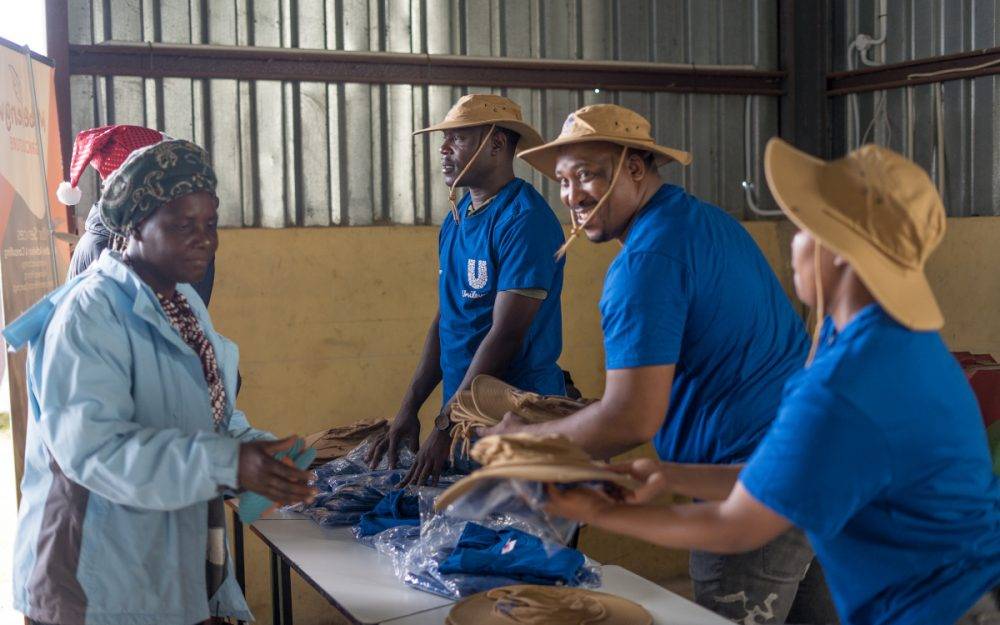
Our predicted spend over 2024 with mostly black-owned suppliers, including those that are small, medium and micro, is R3.2 billion. This total spend represents an increase of over 20% year on year. Spend directly with QSEs (qualifying small enterprises) and EMEs (exempt micro enterprises) is R341 and R253 million respectively. We continue to drive investment support and spend with majority black-owned businesses, and look to further increase spend by R400 million in the current financial year.
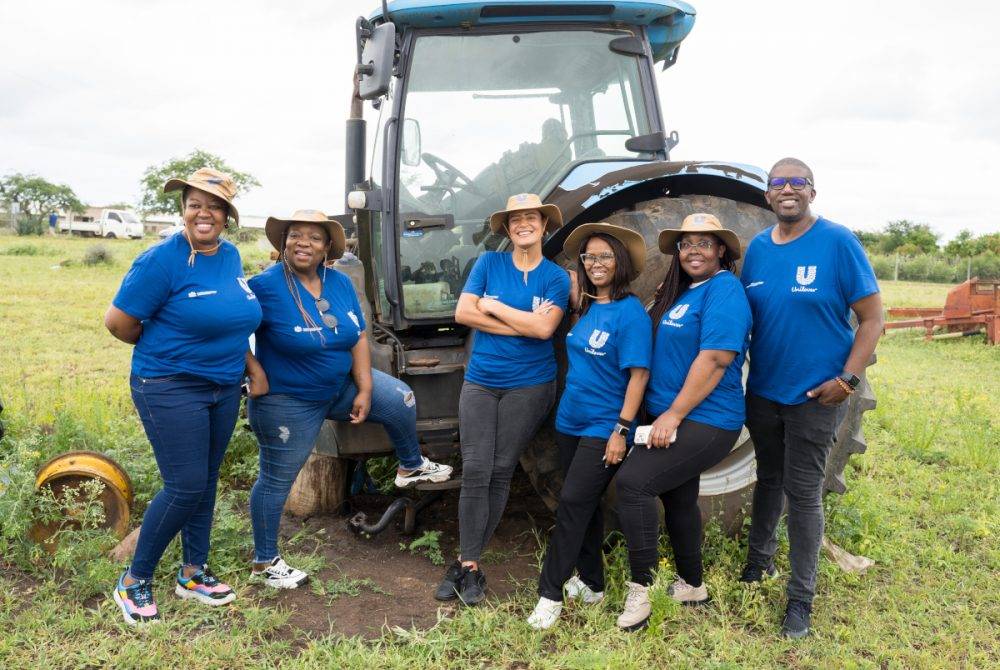
We have established an enterprise and supplier development fund that supports the development of qualifying majority black-owned businesses by providing interest-free finance. This solves two core issues facing small businesses: their inability to access finance, and their ability to secure work from Unilever or get support to secure such work in the future.
The fund will provide R40 million worth of loans over a three-year period to approved enterprise and supplier partners, with the ultimate objective of creating sustainable black-owned businesses that provide growth, employ more South Africans and develop local initiatives which would otherwise not happen.
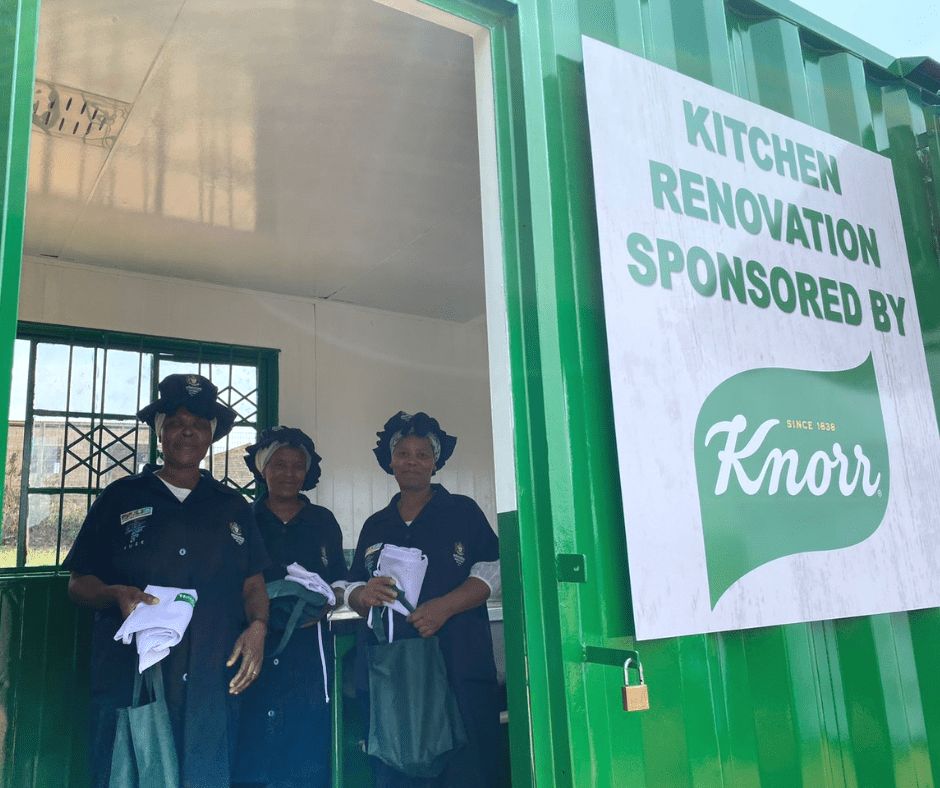
Our partnership with the Department for Basic Education has also been renewed. We will give R3 million worth of hygiene, disinfectant and oral products to public schools for five years.
Through these and other initiatives, Unilever South Africa aims to create a positive impact on society and the environment, while delivering value for our customers, consumers, employees, shareholders and other stakeholders.
The power’s back on, but at what cost?:
We’ve all seen the memes: posts bracing for the load-shedding that will surely return after the May elections.
This week the country hit a significant milestone: 40 days without blackouts — an anomaly these days. Many cynics suspect a quiet directive might have been issued to Eskom to keep the power on at all costs in an election year.
But listen to Electricity Minister Kgosientsho Ramokgopa in his bi-weekly energy action updates and you’ll hear him talk about maintenance. An emphasis on maintenance late last year is why we have more generation capacity now, he claims.
It does help that units at stations such as Kusile have come back online, adding megawatts to the grid.
Independent analysts are divided. Some believe there is lower demand during peak hours. Others believe the increase of renewable energy sources such as solar have eased the reliance on Eskom.
Yet others say it’s diesel, and that our newfound power is thanks to burning a lot of it. Diesel is primarily used to run the open cycle gas turbines — a costly contingency ordinarily reserved for emergencies.
Public Enterprises Minister Pravin Gordhan said this week that R5.8 billion was spent on diesel in 2019-20, R5.75 billion in 2020-2021 and R8.6?billion in 2021-22. Eskom burnt diesel worth R21.25 billion in 2022?23 and R23.38 billion in 2023?24. The last two years’ figures are obscenely higher than before.
Our coverage this week quotes some experts who believe it is more cost-effective to spend these amounts on diesel than to deal with higher levels of load-shedding, which severely affect the economy.
Nersa, which determines what money Eskom can spend when it receives treasury funds, says Eskom is spending much more on diesel, and that half of its diesel budget for this quarter was spent in one month. The diesel budget will be blown sooner, which will inevitably mean a tariff hike for us hapless consumers.
South Africa’s leaders, Eskom, and the general mismanagement in the country have turned most of us into cynics. So when we see no load-shedding our suspicions are raised.
We don’t believe the notion that a badly run enterprise like Eskom suddenly did effective maintenance last year. We struggle to be convinced that the winter outlook Eskom released, which anticipates stage two load-shedding, will come through.
At least Ramokgopa and Eskom’s new chief executive Dan Marokane speak with some semblance of truth when they admit no one is under any illusions that load-shedding has come to an end — blackouts will still hit us in the future.
How often, remains to be seen. How much we spend on diesel this year will ultimately tell us whether this reprieve in load-shedding is due to diesel use or actual change at the power stations and in the running of the power utility. Justified cynicism and scepticism remain the order of the day.
Submit and get free exposure here: Showcase Your Business | Advertise Your Special Offers.
