
The new Renault Captur(s) an audience:
As we navigate our daily lives, the lingering effect of the pandemic remains palpable despite our relatively unscathed emergence from it. But the vehicle industry has faced its own difficulties, with semiconductor shortages causing significant delays in releasing new car models worldwide.
Among these models is the much-awaited second-generation Renault Captur, which was initially scheduled for local launch in 2020. Now, finally making its debut in South Africa, we delve deeper into this latest offering from Renault. I spent time sampling it in the ever-stunning province of KwaZulu-Natal.
The Renault Captur is available in two variants — Zen and Intens — both of which feature a design that hits all the right notes. The brand has taken a mature approach, mirroring the style of its Clio and Koleos models. This maturity is reflected in the enhanced styling cues, such as the C-shaped rear and front headlights, front and rear protection skid plates and protective moulding.
With a ground clearance of 174mm, the Zen model comes with 17” steel wheels with stylish covers, while the top-of-the-range Intens is equipped with Bahamas black diamond-cut alloys of the same size. Both variants come in six colours: ivory white, marine blue, mercury silver, oyster grey, passion red and ocean blue. The Intens model adds an extra touch of appeal with a unique bi-tone shade.
The maturity of the new Renault Captur is also provided for by the increased dimensions compared with the outgoing model. Its overall length has been stretched by 107mm to 4?228mm, its height by 7mm to 1?573mm, and the wheelbase has seen an increase of 62mm to 714mm. All the gains in dimensions have resulted in enhanced interior space.
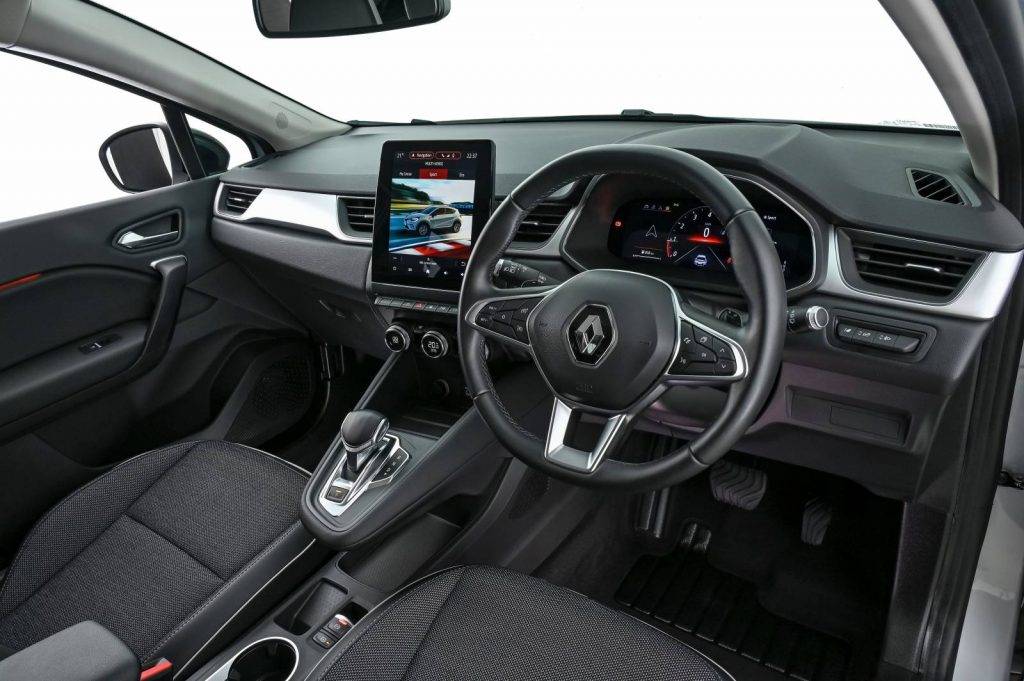
On entering the Renault Captur, there is a sense of familiarity, particularly if you’re acquainted with the Clio. But there is a noticeable increase in the level of sophistication and quality compared to the previous model.
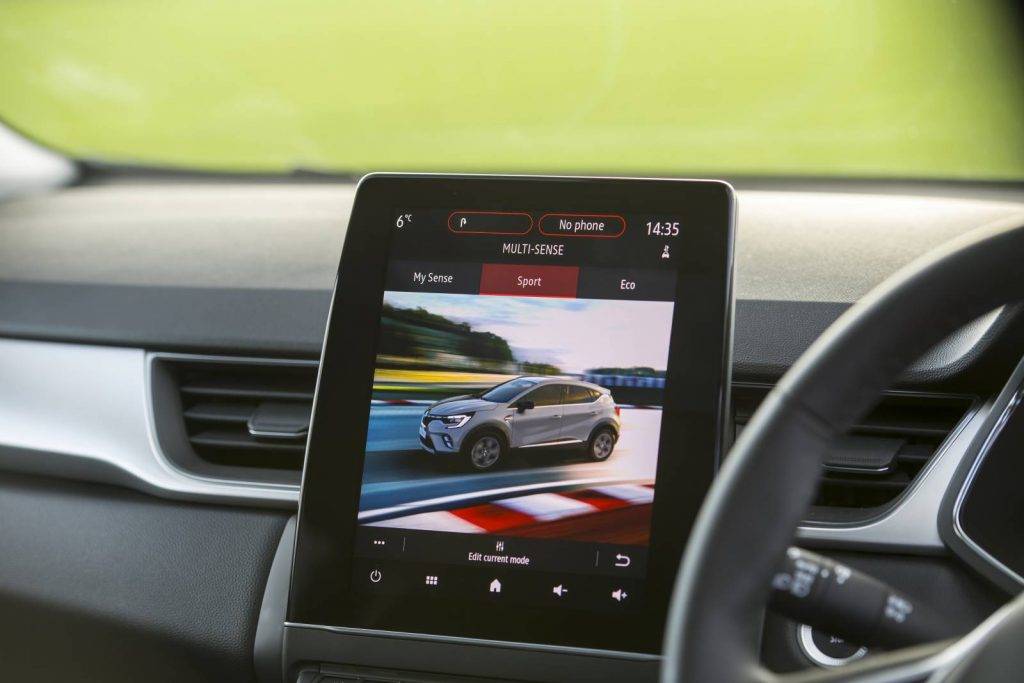
The Zen variant comes with a 7” touchscreen, while the range-topping Intens model boasts a larger 9.3” display. Both systems support two USB ports, Apple CarPlay, Android Auto, radio and navigation. The Intens also features an Arkamys Auditorium system for a premium audio experience.
Moving on to the interior specifications, the entry-level Zen is outfitted with cloth seats, a foam steering wheel, a reverse camera with front and rear sensors, and keyless entry. Meanwhile, the Intens model, which we tested at the launch, comes equipped with an E-shifter, wireless phone charger, blind spot detection, electronic parking brake with hold assist, rear privacy glass, digital instrument cluster, heated leather steering wheel, black TEP with black velvet mosaic motif, and premium seat foam.
The Intens model also offers four USB ports (two in the front and two at the back).
There is enough room for five grown-ups to sit comfortably, further complemented by a sizable boot space rated at 404 litres that most families will find helpful. An additional 536 litres is available by sliding the rear bench 16cm forward.
Looking at the Captur’s closest competitors, the Volkswagen T-Cross, Haval Jolion and Hyundai Venue; these come with 455 litres, 430 litres and 343 litres, respectively.
Under the bonnet, the Zen and Intens models are powered by a sprightly 1.3-litre four-cylinder turbocharged petrol engine that puts out 113kW and 270Nm of torque. Although these figures may seem modest on paper, the engine provides ample power on the road, delivering impressive acceleration from the get-go.
The precise steering, well-damped ride quality and generous levels of refinement make for a confident driving experience. Some wind noise creeps into the cabin at highway speeds, but this is hardly a dealbreaker.
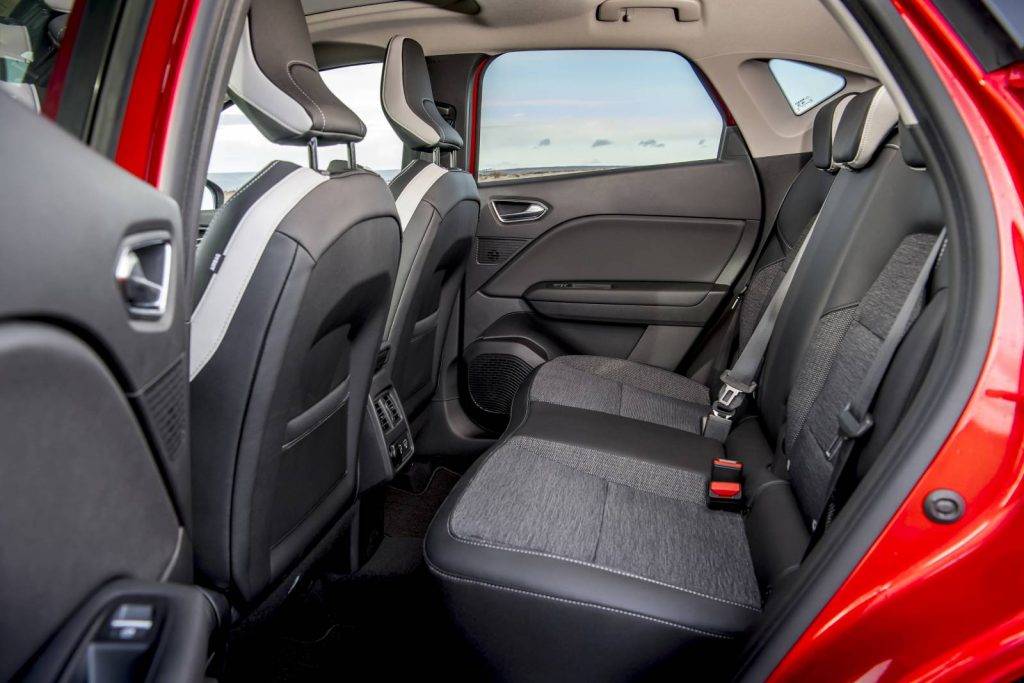
Regarding safety features, the Captur scored a five star Euro NCAP safety rating and is equipped with six airbags, EBA, ABS, EBD, Hill Start Assist, and Isofix three-point child seat attachments. The Intens variant also offers Lane Departure Warning and Blind Spot Assist for added safety.
The new Renault Captur is a noteworthy addition to the brand’s lineup, offering a well-crafted product that represents a significant step up from the previous model. Its striking design, improved interior, and impressive range of tech features should make it an attractive choice for motorists in the market for a compact SUV — even if it’s somewhat late to arrive at the party.
Prices
• Renault Captur 1.3L Turbo EDC Zen: R454?999
• Renault Captur 1.3L Turbo EDC Intens R499?999
The prices include a five-year or 150?000km mechanical warranty, a three-year or 45?000km service plan, and a six-year anti-corrosion warranty. The service interval is at 15?000km or every 12 months.
Steenhuisen goes for the jugular in acceptance speech as DA leader:
John Steenhuisen was re-elected Democratic Alliance leader at the culmination of the official opposition’s elective congress on Sunday.
Steenhuisen, flanked by his daughters and wife, took to the stage to deliver an impassioned speech, during which he called the EFF the party’s “number one enemy”.
Steenhuisen was contested by Mpho Phalatse for the position of party leader.
Steenhuisen went in guns blazing against an ANC/EFF coalition in the 2024 elections, vowing to do all he could to ensure that a coalition between those parties was not realised.
He said he believed that 2024 was going to be the DA’s “moonshot election”.
“While the term ‘moonshot’ originally meant long shot, it’s increasingly being used to describe a monumental effort and a lofty goal — in other words, a giant leap forward. A leap like ensuring that the DA leads the national government in 2024. And, like the original mission to take humans to the moon, we take this shot to defeat the ANC and keep the EFF out, not because it is easy, but because it is hard,” said Steenhuisen, playing on the words used by former US president John F Kennedy in his famous “moon speech”.
Steenhuisen — who was elected interim DA leader in 2019 and official party leader a year later — said that during his term, he had stabilised the party in an effort to return it to “winning ways”.
“As we look back to 2019 today, I can confidently say that this phase was a success.”
He said that the realistic prospect of the ANC being dragged below 50% in next year’s national election presented a moment to radically reshape South African politics.
The “threat” facing the country though, he said, was the prospect of an alliance between the ANC and the EFF.
“Given the fact that the ANC now officially co-governs with the EFF in parts of Gauteng, we need to start taking the threat of these parties ganging up to destroy our country in 2024 very, very seriously.
“I want to be unequivocal about the DA’s view on this: the day that an ANC-EFF government takes over will be doomsday for South Africa. An EFF doomsday will make the collapse of Zimbabwe look like a dress rehearsal, and will leave all South Africans destitute — black, coloured, white and Indian,” he said.
An ANC-EFF “doomsday coalition” would venture towards expropriating property without compensation, abolishing private property rights, nationalisation, destroying foreign investment, businesses, banks and mines, and “plunge this country into ethnic and racial conflict the likes of which it has never witnessed before”, he said.
Steenhuisen said his next move would be to initiate an opposition alternative formation with a pre-election “moonshot pact” that included “like-minded political parties”, and civil and civic society organisations to defeat the ANC and keep the ANC-EFF out of power.
He invited political leaders who were against an EFF-ANC coalition to join the formation.
The formation, therefore, would exclude “all parties and organisations who’ve tethered themselves to the ANC”.
“The purpose of this pact will be to forge coordination and unity of purpose between all organisations that want to defeat the ANC and keep the EFF out. To achieve the moonshot, we need a whole-of-society approach that builds a new ecosystem of change.
“The pact’s purpose will also be to sit around the table to agree on rules of engagement that will enable different organisations to retain their own identities while bringing an end to the petty squabbles and division that only benefits the ANC.”
Political parties within this new formation of an alternative opposition will work towards a 51% voter result in the 2024 elections.
He said a convention of political leaders would be convened to discuss the way forward.
“There can be no job more important for any opposition leader in South Africa at this time, than the mission of the moonshot pact.”
While Steenhuisen revealed his ambitious plan, he will still have to contend with the question of race in the party.
Only three elected party leaders are black, while the eight other victorious leaders are white.
Helen Zille was re-elected as federal council chair, Ivan Meyer as federal chairperson, and Dion George as the federal finance chairperson.
Party spokesperson Solly Malasti was elected as deputy federal chairperson along with JP Smith and Anton Bredell.
The three deputy chairpersons of the federal council are Ashor Sarupen, Annelie Lotriet and Thomas Walters.
Submit and get free exposure here: Showcase Your Business | Advertise Your Special Offers.
