The triumph of Tshepiso Mazibuko: The essence of a generation:
It is hard not to notice a certain irony in the title of the exhibition that won South African documentary photographer Tshepiso Mazibuko two major prizes in France recently.
She walked away with both the Discovery Award (public vote/people’s choice for the main Discovery Louis Roederer Foundation Award) and the Madame Figaro Photo Award at the Rencontres d’Arles festival in Arles last month.
They were for her exhibition Ho Tshepa Ntshepedi Ya Bontshepe — Sesotho for “to believe in something that will never happen”. But the recognition did happen.
After finding out that I had been battling to track her down through a third person, she made contact with me directly — my kind of girl.
“I have been trying to make the most of this trip; please send some questions and I will respond as soon as I can,” she replies after I suggest sending her questions via WhatsApp.
I could tell she was happy and thoroughly enjoying her time in France. But I was on deadline — that’s when I started lining up my prayers because, while I could understand her perspective, I also needed to do my job.
Back home, teaching her classes at the Market Photo Workshop in Johannesburg, the buzz has only slightly worn off.
“To be quite honest, I was quite surprised,” the 29-year-old tells me of her experience in France. “I wasn’t really expecting much; I was just grateful to be invited.
“When I realised I had won two consecutive nights, it was a very humbling moment for me. Just to thank God because I have been through so many trials — a win for me actually felt quite nice.”
Mazibuko says the awards were endorsed by the fact that people came up to her during the festival to congratulate her on her work.
“I realised that it is genuinely the public that vote for you.
“For me, the most important prize was the public prize — just having validation from a community that doesn’t even understand the issues that I was speaking about — instead they understood the emotion.”
She says the human connection came through from her work and it made her very happy that so many people related to it.
Mazibuko chuckles as she shares that she will not be in survival mode financially for some time.
![Tshepiso Mazibuko11[43] 2](https://mg.co.za/wp-content/uploads/2024/08/tshepiso-mazibuko1143-2-1000x667.jpg)
“What these prizes do is buy me some time to tap into my artistic genius without having to hustle.”
Ho Tshepa Ntshepedi Ya Bontshepe is work about self and peeling back each layer of herself. To believe, as the title says.
She has always been a documentary photographer, telling other people’s stories, and now she has created a project to tell her own story.
“I wanted to make sure the work was really in tune with what I believed in and the first thing was to have a vernacular title to spark relatability because it was work produced for the people of South Africa,” she says.
Mazibuko’s project examines the impact of the political label “born-free” on the generation of black South Africans who came into this world after 1994.
“It was from a point of frustration that I started these works.
“I felt like I was living a double life where, at home, I was celebrated and expected to make something of myself — but when you go out into the world you realise that it is not as easy as it looks.
“By virtue of being a born-free, some systematic hardships are still there and you have to prove yourself beyond the colour of your skin.
“Also there is an element of question about whether you deserve things or are they just giveaways, so it’s those eternal thoughts I wrestle with,” she says.
Mazibuko, who is from Thokoza on the East Rand, began her photography journey in 2012 when she joined the Of Soul and Joy programme, an NGO that provides young photographers with training.
She had observed how many dreams had been shattered and how the township can be demoralising and demotivating, how everyone is fighting to get out every day.
“You see ads where they are celebrating the born-frees — we were sold a dream and we quickly realised that things do not pan out that easily for us.
“The main purpose of the work is to portray shared stories and narratives, and also hope, in a place that is not really hopeful.”
The works on Ho Tshepa Ntshepedi Ya Bontshepe date from 2017 and, if you know anything about the township — the more things change, the more they stubbornly stay the same.
Mazibuko feels the work might need to continue because the born-frees in the townships are still facing real problems that cage them every day, and from those problems, more problems surface.
“When I look at the reality of the township youth, it really breaks my heart,” the photographer says.
“I am wondering if I should have a continuation of the work.
“I feel I did not even touch on half the issues that affect the township youth,” she says.
For those who have no connection to the township, these stories might be unimportant. However, for those who live them, there is nothing more essential than an outlet because the big beast that is the township is always ready to eat them up.
For photographers who aspire to achieve recognition in their careers, Mazibuko says: “Stay true to yourself, don’t follow what you think sells and change your own story.
“With hard work, everything will come through for you.”
A 5km walk with buckets on their heads — and the risk of being attacked by crocodiles while bathing or collecting water — are among the difficulties the people of Tshaulu Tshihalwe village in Limpopo have to face daily to survive.
Despite a series of official launches for water schemes feeding off the Xikundu dam since 2004, residents of the village still do not have piped water and have no choice but to draw water from the weir.
The village falls under the Thulamela local municipality in the Vhembe district municipality.
Thulamela is one of the municipalities in Limpopo that illegally invested in the now defunct VBS Mutual Bank, losing millions of rand that should have been spent on services for residents.
Former municipal manager Hlengani Emmanuel Maluleke was sentenced to five years in jail last October — suspended for the same period — for his role in the approval of an unlawful investment of R30?million in VBS.
According to the National Prosecuting Authority, the investment matured and yielded interest amounting to R735?542.50, which was paid back to the municipality.
ANC Limpopo deputy chairperson Florence Radzilani — now the MEC for social development — is accused of having R300?000 illegally channelled to her for investing in VBS during her tenure as the Vhembe district mayor.
The backlog in provision of water, sanitation and roads in the area in the aftermath of the VBS scandal — which gutted municipalities across the province — is apparent.
When the Mail & Guardian visited the area last week, a man in his late 60s was bathing in the Xikundu dam. The man, who asked not to be named, said he bathed there rather than at home because it would be a “waste” to use water that he had to carry for 5km for that purpose.
Not far from where he was bathing, the remains of two cows that had been eaten by crocodiles floated in the water, a stark reminder of the danger faced by locals and their livestock on a daily basis.
The area at the side of the dam is covered with the remains of fires. Locals said they prefered to cook near the dam because it is easier than carrying water all the way home in a bucket.
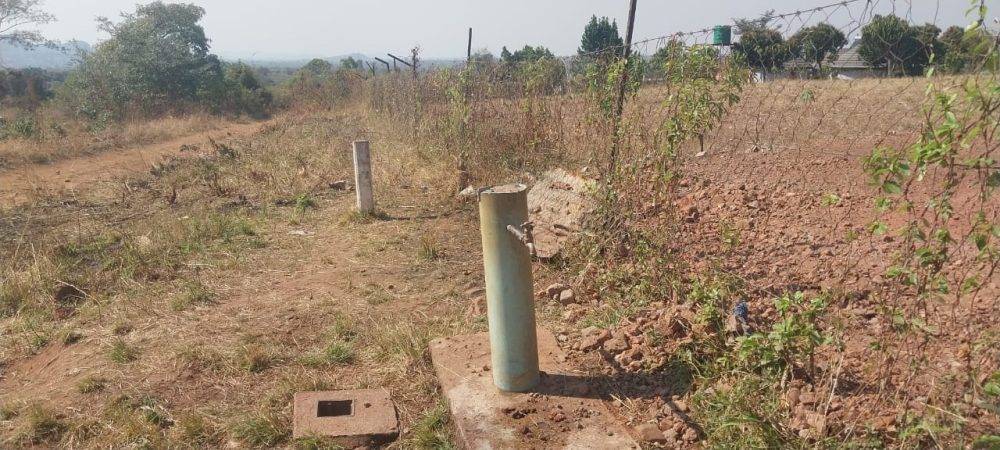
Tshaulu Tshihalwe and other villages in the area have dirt roads, along with pit toilets and taps that run dry.
Villagers said they could only get tap water for three hours on Tuesdays and Saturdays but this was not guaranteed.
In some of the villages, residents have had to connect themselves to the water supply.
A resident of Tshihalwe village, who introduced himself as Mukwevho, said the Xikundu dam was unsafe but was the only source of water in the area.
He related the stories of a man killed by a crocodile while bathing and another who drowned.
“The guy who was killed by a crocodile in 2022 was bathing when it happened. It pushed him into the water from behind and then started rolling with him in the water. We tried to block the dam with trees so that it could not drag him deeper into the water,” Mukwevho said.
“Emergency services were called but when they arrived, he was already dead. The other guy drowned in the dam.”
Mukwevho said villagers also had to grapple with their livestock being killed by crocodiles.
“You’ll find that the cows are drinking water and then all of a sudden the crocodiles drag it inside the water and kill it. You just watch it happen because there’s nothing you can do once they grab it into the water. A cow is a huge investment here and to lose it like that is not easy,” he said.
Mukwevho also complained about inconsistent access to tap water, telling the M&G: “The government is failing just to put in pipes for us, so we can get water. The water is there in the dam.”
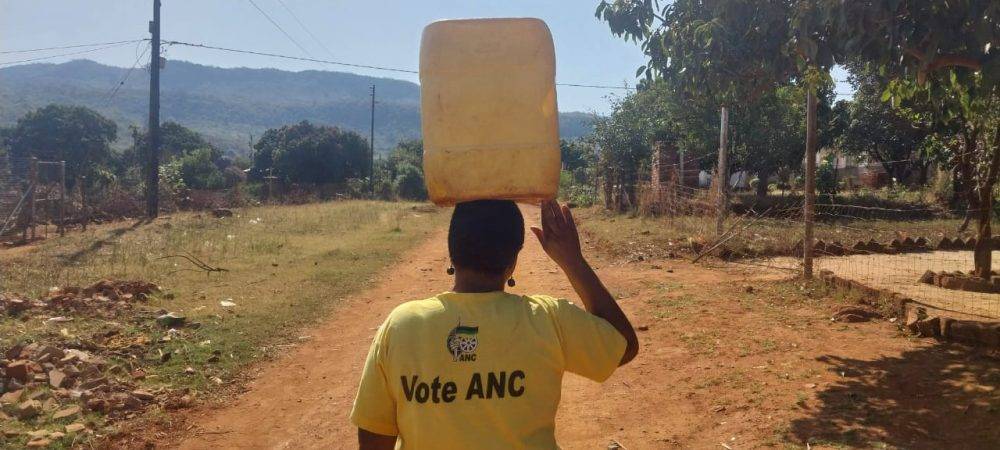
“They have told us for a long time that they would sort these issues out. During the [election] campaign, they told us that they would resolve the water issues but it doesn’t look like it’s going to happen.”
For those trying to eke a living out of fishing, there is the constant threat of crocodile attacks.
“We have been doing this for many years; we have had a lot of encounters with crocodiles. In some instances, they will disappear when they see us fishing but in some instances, they will come towards the boat to try and capsize it,” said one man, who declined to be named.
A second man said he had to swim out of the dam after a crocodile overturned the small boat he was in, knocking him into the water. But despite the scary experience, he was still fishing for a living because he had no other option.
“If I get eaten by a crocodile while fishing, so I can get fish to sell and then feed my family, then it’s okay because I would have died trying to feed my family,” he said.
“There are no jobs, the R350 [government] grant is not enough, so there’s nothing else to do.”
“We also can’t vote out the ANC because it’s better voting for people you know than voting for another party which might make things worse. Any party that can fix the water issues here, all the people will vote for it. I don’t care even if it’s uMkhonto weSizwe from KwaZulu-Natal,” the man added.
Most of the people in the village voted for the ANC despite accusing it of causing them pain and suffering. The party garnered more than 74% of the vote in Limpopo on 29 May and notched up similar results across the Vhembe district municipality.
At Tshitumbe village, which also falls under the Thulamela local municipality, the only source of water is a spring that runs from a nearby mountain.
As was the case in Tshihalwe, Tshitumbe, villagers had to illegally connect themselves to a water pipeline running through the area. But the taps ran dry years ago and they now have to collect water from the spring, which is in a bushy area.
Josephine Khomola was among the residents queuing to collect water when the M&G arrived. She said the failure to provide water to villagers was the fault of those in local government and not the ANC as a whole.
Khomola said she would therefore not stop voting for the ANC because it had done a lot for South Africa.
“The old man [Nelson Mandela] went to prison for many years for us and we can’t abandon this organisation now. The people who [President] Cyril] Ramaphosa has sent to provide us water are the ones failing us, not the ANC,” she said.
Khalishi Khumbudzo, who also came to fetch water at the spring, said this was the only source of clean water for the villagers.
“We have given up on receiving tap water. All the taps in this village don’t have water. Despite this place having snakes, we have no other way but to come and get water here.”
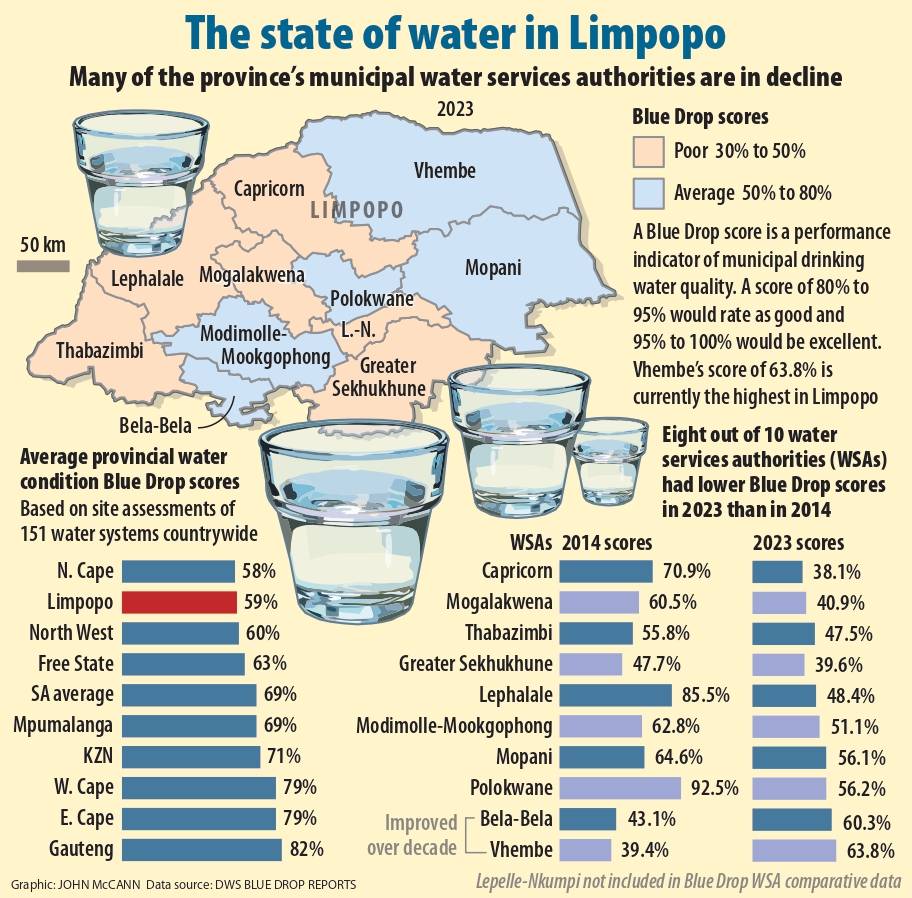
Speaking to the M&G after meeting local chiefs in Giyani, Limpopo Premier Phophi Ramathuba said the biggest problem was district municipalities and the national government were the water authorities, rather than the provincial government.
She had told the minister of water and sanitation, the executive mayor and municipal managers that “this is Limpopo and when people are complaining about water, they complain to me, so all of you will account to me in terms of the water”.
“You are not going to tell me that you are accounting to the minister and the president when people want water from me. Even if they don’t report directly to me, I want those reports on a weekly basis,” Ramathuba said.
She said the Vembe and Giyani municipalities had given the ANC 80% of votes and therefore she would not “sleep” or allow anyone to tell her the water issues were not her mandate.
“If you don’t want me in your space, deliver water. If you don’t deliver water, I’ll be in your space,” she said. “Give us space; we are here.
“We know that the people love the ANC and voted for us and that is why we are going to make sure our people do not regret their votes.
“We can never take the votes for our people for granted.”
Asked about the state of roads in the province, Ramathuba said 13?400km out of 20?000 km were neither tarred nor paved.
Residents were frustrated at the “unacceptable” lack of maintenance, she said. Even if the government was to just properly maintain the gravel roads, residents would be happy enough, she said.
“The problem is that, even when people go and protest for roads, you just give them a letter of commitment when you know … there’s no money. We’ve seen this happening and some of the officials are still doing that.
“We are going to fight them on that,” Ramathuba said.
“When you are doing work and you are listening to your people and they see you re-gravelling the road, they don’t get angry as [they do] when you are not there talking to them.
“That’s why I know the anger of the people because of VBS, the anger of our people because of roads or because of water. I am here and (not sitting) in the office … because the voters are not in the office.”
Artist puts the ease back into black portraiture:
Playing pool is more than just a weekly way to unwind for artist Stephen Langa — it also features prominently in his exhibition titled Inceptions of Black Serenity, which opens this weekend at David Krut Projects in Johannesburg.
Last year in May, Langa’s dad came to visit him from Limpopo. It was his old man’s first visit to Johannesburg in 10 years and also his birthday, so Langa took him to play pool at his regular haunt in Maboneng, at the Curiosity Backpackers Hotel.
That’s when Langa decided to include people playing pool in his work as it reminded him of growing up in Mokopane in Limpopo and also beyond.
“Pool … it speaks about gathering, you know, a black cultural experience where people gather together, they talk stories around, there’s humanity, especially in the township,” he says, “so it’s just explaining those township experiences, because I also grew up where my dad used to take me to those taverns when I was a kid.
“I would stay there with them playing pool with his friends.”
We are having a coffee at the Blue House, as the David Krut Gallery in Parkwood is dubbed and the 29-year-old Langa is explaining his passion for snooker.
For Langa, pool serves as a powerful metaphor within black culture, embodying perseverance, community spirit and the breaking down of racial barriers.
His work is inspired by the African American artist Ernie Barnes, who created a pool series back in the 1970s, Langa says.
“I think he’s the only American artist that created that and I think I’m the only South African who also created this.”
Langa’s pieces delve into real-life situations featuring numerous elements of South African iconography such as the local tavern, snooker games and a sense of style seen in the shoes and hats worn by his figures.
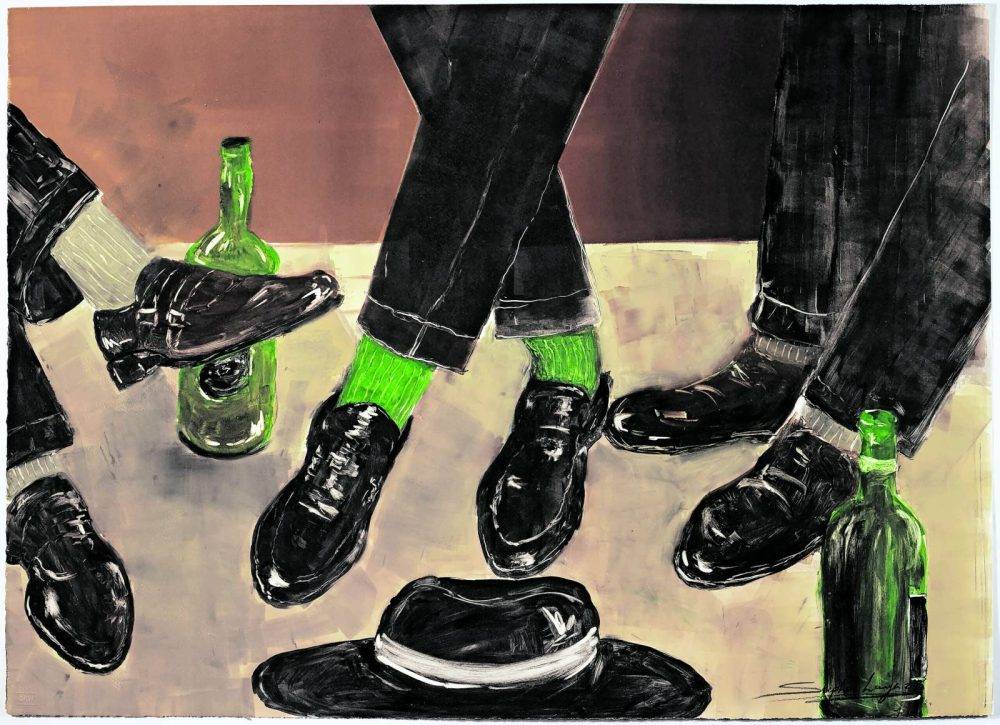
Langa highlights the sartorial styles as historical markers of identity and status. In black culture, these elements often symbolise personal expression, cultural heritage, and social standing.
“There is a certain black pride. We just never had the opportunities to portray such intimate stories.”
While walking around Keyes Art Mile earlier this year, David Krut spied Langa’s work on display at BKhz Gallery. He invited Langa to work at the Printing Workshop in Maboneng, which resulted in this upcoming solo exhibition.
“I felt really appreciated when David contacted me — that he believes in my craft,” says Langa.
His work records life, being and history, inserting a celebration of ease into the canon of black portraiture.
His pieces are intimate, unposed and non-performative, capturing the artist’s personal experience. The images simply are what they are — they illustrate the sensitivities, the joys, the quiet, the personal and the communal.
Langa enhances this with a sensitive use of light and colour.
“I enjoy using yellow and brown,” he tells me as we look at the works being prepared for the exhibition. “Brown is the colour I use the most. It’s nature, it’s part of history, it’s part of my identity as a black person also.”
Above all other qualities, Langa’s work captures the essence of just being.
We are looking at a self-portrait taken in the studio. “It was on a rainy day, so just having my glass of wine, just thinking and just embracing the journey of being an artist, you know.”
Submit and get free exposure here: Showcase Your Business | Advertise Your Special Offers.