
The ultimate expression of progress: Audi South Africa unveils the one-of-a-kind RS 6 Avant GT:
The vehicle will be sold through an exclusive live auction, offering a rare opportunity for a discerning buyer to own a piece of living automotive history
In 2002, Audi Sport introduced a model that would quickly become a cult icon: the RS 6. Over the past two decades, this luxurious touring car has redefined the supercar landscape, capturing the hearts of motoring enthusiasts worldwide.
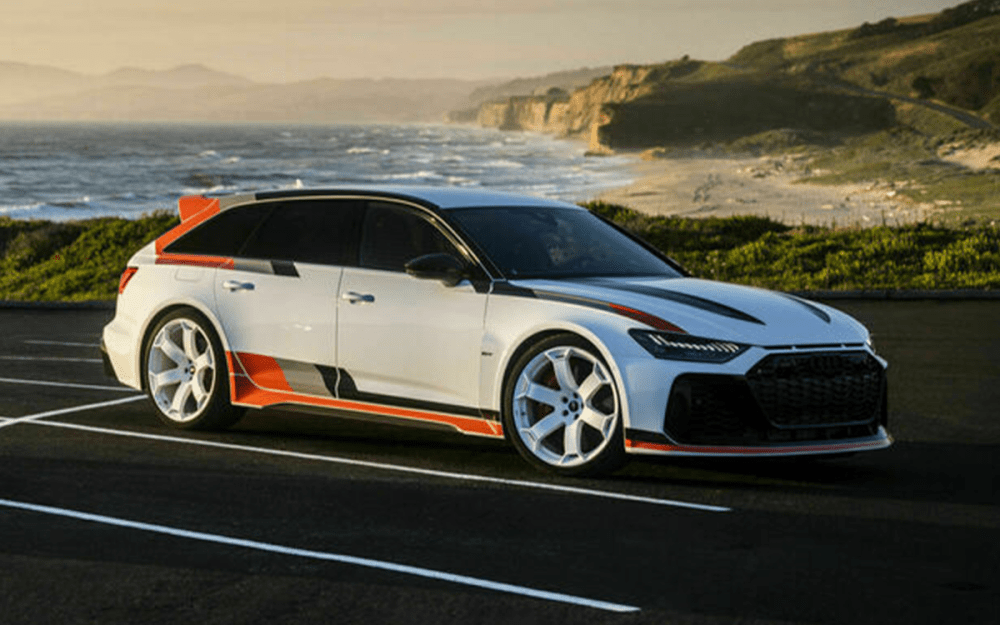
Now, 22 years later, we are thrilled to present the final edition of this performance legend: the Audi RS 6 Avant GT. Limited to just 660 units globally, with one exclusive unit available to South African motoring fans, this vehicle is the ultimate expression of progress and the culmination of relentless innovation and passion.
A tribute to performance and legacy
The RS 6 Avant GT is the epitome of Audi’s relentless pursuit of performance and innovation. This model, equipped with a twin-turbocharged 4.0-litre V8 engine, delivers a staggering 463kW with 850Nm of torque, propelling it from 0 to 100km/h in a mere 3.3 seconds. With a top speed of 305km/h, it stands as a modern testament to Audi’s engineering prowess and the exhilarating driving experience that has defined the RS range.
Handcrafted excellence
Every detail of the RS 6 Avant GT speaks to its exclusivity and craftsmanship. Assembled meticulously by hand at Böllinger Höfe in Germany, each unit is a masterpiece crafted by a dedicated team of professionals.
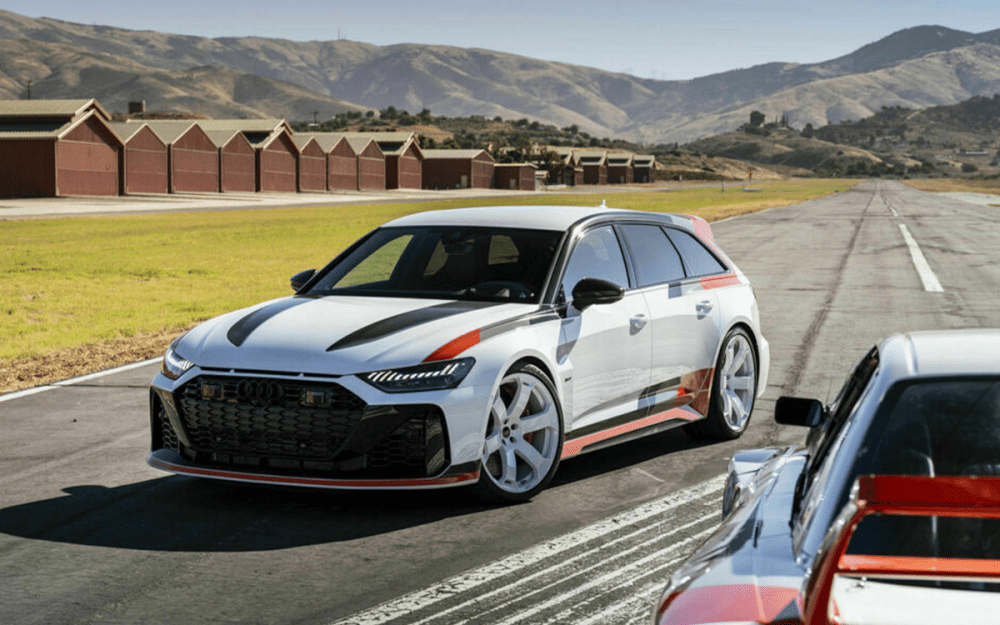
Drawing inspiration from the iconic 1989 Audi 90 Quattro IMSA GTO race car, the RS 6 Avant GT features distinctive black, red, and white decals that honour Audi Sport’s rich heritage. It boasts a redesigned carbon fibre bonnet and fenders, 22-inch wheels, a functional diffuser, double wing, and flatter roof rails, making it a design marvel.
A South African rarity
South African automotive enthusiasts are in for a treat with the arrival of the RS 6 Avant GT. This single unit not only highlights the country’s enduring love for the Audi brand, but also underscores its continued significance in the global market. The vehicle will be sold through an exclusive live auction, offering a rare opportunity for one discerning buyer to own a piece of living automotive history.
A design like no other
The RS 6 Avant GT’s aesthetic is both striking and functional. It comes in five captivating colours, including Arkona White, complemented by traditional Audi Sport hues of black, grey, and red, with the front and rear model badges also available in these colours. The high-gloss white wheels and black RS 6 GT lettering further enhance its unique appearance.
Inside, the car is adorned with bespoke elements such as RS 6 GT stitching on the steering wheel and RS bucket seats, along with luxurious red honeycomb stitching and leather-Dinamica-combination upholstery.
Unmatched performance and innovation
Beneath its stunning exterior, the RS 6 Avant GT is equipped with advanced features designed for superior performance. The adjustable coil-over suspension lowers the ride height by 10mm compared to the normal RS 6 Avant, while options like the RS sport suspension plus Dynamic Ride Control (DRC) and RS adaptive air suspension offer unparalleled agility and control. The RS ceramic brake system ensures remarkable stopping power, making the RS 6 Avant GT as safe as it is thrilling.
A legacy of motorsport excellence
Audi’s commitment to motorsport excellence is ingrained in every RS model. The RS 6 Avant GT embodies this legacy, combining cutting-edge technology with the emotional thrill of racing. For over 40 years, Audi Sport has driven innovation on and off the track, creating vehicles that not only perform but also inspire. The RS 6 Avant GT is a celebration of this enduring legacy, bridging the gap between the brand’s storied past and its exciting future.
The ultimate expression of progress
The Audi RS 6 Avant GT is a true one-of-a-kind masterpiece, a culmination of over two decades of relentless innovation and passion. It is the last of its kind, a symbol of Audi’s unwavering dedication to performance and design. As we bid farewell to the internal-combustion engine era of the RS 6 Avant, we invite you to experience the pinnacle of automotive excellence. Join us in celebrating this iconic model and embrace the progress you can feel.
Zimbabwean artist Gresham Tapiwa Nyaude wins 2024 FNB Art Prize:
In a time of global xenophobia and division, the judges of the annual FNB Art Prize have recognised and celebrated that art ignores borders with their selection of its latest winner: Zimbabwean-born and Harare-based painter Gresham Tapiwa Nyaude is the 2024 winner of the respected prize.
“I never dreamed that one day I will receive this award – this is a big deal for me, I’m so happy, I’m so honoured,” an elated Nyaude said at a function in Johannesburg upon receiving the award on Tuesday. “I’m doing the right thing, I’m in the right lane of my life… receiving this most prestigious art award in Africa.”

The prize forms part of the FNB Art Fair, which is Africa’s longest running contemporary art fair. It will take place between 6 and 8 September at the Sandton Convention Centre for its 17th edition.
As the winner of the 2024 prize, Nyaude’s work will be displayed at the fair. In addition to that he will receive a cash prize and also have a solo exhibition at the Johannesburg Art Gallery.
“There is a compelling balance between hope and political resistance in Gresham’s work,” the jury said. “His adept use of satire allows him to navigate and illuminate complex, often contentious, topics with a nuanced approach that invites viewers to engage critically.
“Additionally, his commitment to the medium is evident in his technique and his sophisticated use of colour. This control over brushwork not only showcases his technical skills but also enhances the expressive power of his work.”
By winning the FNB Art Prize, Nyaude joins previous winners Lindokuhle Sobekwa, Dada Khanyisa, Wycliffe Mundopa, Lady Skollie, Bronwyn Katz, Haroon Gunn-Salie, Peju Alatise, Nolan Oswald Dennis, Turiya Magadlela, Portia Zvavahera, Nelisiwe Xaba, Mocke J van Veuren, Kudzanai Chiurai, and Cedric Nunn.
“When you look back at the calibre of artists who have won this prize, they are awe-inspiring to the public and their peers. They find new ways to use existing materials to interrogate important issues,” said FNB Art Joburg’s Managing Director, Mandla Sibeko. “Gresham is no different. The way he approaches the canvas with paint continues the reflective, conscious, and delicate legacies that the medium has offered through previous winners.”
The FNB Art Fair will continue with its aim of being a truly African art fair – this year there will be 14 African countries represented by 41 exhibitors with the work of more 100 African artists on display.
Nyaude is the third Zimbabwean winner of the annual prize, following in the footsteps of Mundopa, Zvavahera and Chiurai.
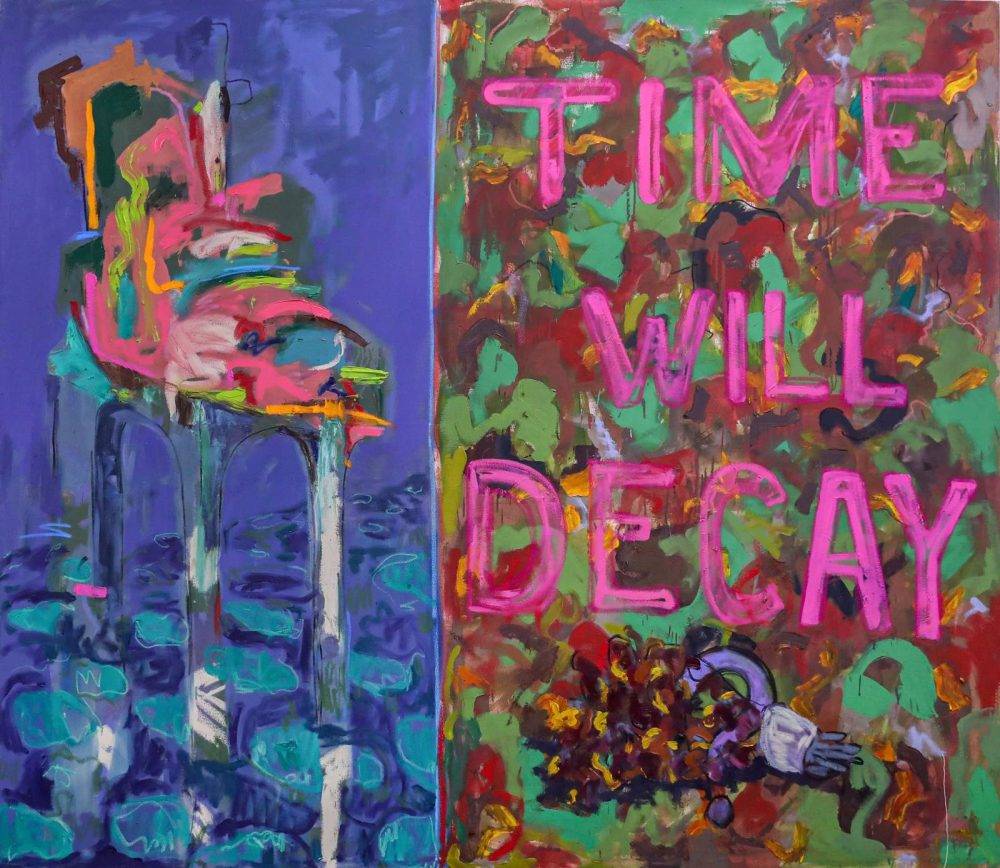
His biography on the international Kristin Hjellegjerde Gallery’s website says the 36-year-old Nyaude “works against the sweeping identity that has been defined by the voice of the [Zimbabwean] state. His images oscillate between figuration, abstraction and hallucination, drawing from the restless energy of his home town.”
Spanning 16 years, Nyaude’s work has achieved international acclaim and collector recognition. In 2018 he presented a major body of work in the US as part of Songs for Sabotage at the New Museum Triennial.
His work also sits in the Smithsonian National Museum of African Art, Museum of Contemporary African Art Al Maaden (Macaal), Rubell Family Collection, Jorge Perez personal collection and numerous notable private collections.
Ramaphosa: Less bling, more work needed for ANC to survive:
President Cyril Ramaphosa has urged ANC public figures to stop displaying a lavish lifestyle in the face of rampant poverty and to desist from occupying news headlines for all the wrong reasons.
Ramaphosa used his closing speech at the party’s three-day lekgotla in Johannesburg to call on the party’s public officials and members of its national executive committee (NEC) to lead by example and stop displays of conspicuous consumption.
“The renewal of the ANC must be reflected in our everyday behaviour on how we conduct ourselves on public platforms and what we post on social media,” he said.
“Let us be known for excellence and competence. Every national executive committee member, every public representative, every employee of the ANC and every cadre must consider themselves as communicators.”
The opulent lifestyles of ANC leaders have come under scrutiny during past campaign seasons, particularly their displays of wealth and expensive clothing and luxury vehicles while in poor communities.
In May during the elections ANC secretary general Fikile Mbalula arrived in a G63 Mercedes — worth about R4 million — for a door-to-door campaign in Inanda in KwaZulu-Natal where the majority of residents live in abject poverty.
“If we are divided, if we tolerate acts of corruption and patronage, if we live lavish lifestyles through which we show ourselves to be better than our people and appear to only look after our own, then not even the best communication strategy will be able to improve our standing among our people,” Ramaphosa said this week.
He said the lekgotla had reaffirmed the developmental importance of a professionalised public service, with robust mechanisms for capacity-building, which will involve regular training for public servants.
Ramaphosa said the NEC had agreed that performance management of its public officials to enforce accountability would now be implemented.
The party should not limit its understanding of a capable state to the executive because parliament and the legislatures are vital to ensuring that the state is both efficient and accountable, he added.
“As the movement, we need to give equal attention to the work of parliament and the legislatures, ensure that we deploy capable and committed people to these institutions, and that they have the resources and capabilities to advance our movement’s electoral mandate,” Ramaphosa said.
As part of this, there would now be a focus on fixing local government.
The ANC has identified the failure of governance in metros such as Johannesburg, eThekwini and Buffalo City as contributing to its electoral decline in the 29 May national and provincial elections. The party said local governance required attention, given that municipalities were critical to delivering infrastructure and basic services to people.
To address this the ANC has set up a special task team to deal with service delivery problems in local government. It will be led by Trade, Industry and Competition Minister Parks Tau, who was previously the deputy minister of cooperative governance and Johannesburg’s mayor from 2011 to 2016.
Ramaphosa said the party’s analysis showed that the ANC recorded the greatest decline in its share of votes in the metros.
“The instability, dysfunction and poor performance of metros like Johannesburg, Tshwane, Ekurhuleni, eThekwini and Buffalo city are clearly reflected in the election result,” he said.
“We therefore need decisive intervention in these metros. This is necessary not simply for the ANC’s electoral prospects, but for the sake of engendering inclusive growth, ensuring that there is job creation and poverty reduction.”
Ramaphosa also addressed the concerns of the ANC’s alliance partner, the South African Communist Party’s (SACP) over the formation of a government of national unity (GNU) with the Democratic Alliance (DA).
SACP secretary general Solly Mapaila has accused the ANC of selling out by working with the DA in the government of national unity rather than working with the breakaway uMkhonto weSizwe (MK) party and the Economic Freedom Fighters.
Ramaphosa said the ANC would continue to talk with its alliance partners on the GNU and welcomed the SACP’s “critical but non-oppositionist” stance over the tactical move.
He said his party viewed the unity government as its best tactical option, but that it was “fully aware” of the risks and potential threats of working with its ideological opponents.
“We have noted the statement of the South African Communist Party on the occasion of its 103rd anniversary that the party ‘takes a critical but non-oppositionist stance’ towards the GNU. We welcome this,” Ramaphosa said.
“We agree with the statement by the SACP that: “We must ensure that our participation [in the GNU] does not undermine our core principles and goals but serves as a platform to defend and advance working-class interests.”
He said it was necessary that the alliance, which includes labour federation Cosatu, must discuss how to handle all the pressing political, strategic, tactical and organisational questions, and that it would emerge stronger from the current strategic setback if members were united and worked together as comrades who did not personalise political issues.
On the sidelines of the lekgotla, the head of the ANC’s political school, David Makhura, said loss of its majority in the 29 May general elections was a strategic setback, adding that the need for the party to renew itself had now become a “do or die” priority.
He said the unity government formed by Ramaphosa after the party’s support fell below 50% on 29 May was the best option for it to remain in power and ensure that its manifesto was implemented.
The electoral setback meant the ANC also had to push harder with its renewal programme, Makhura said, telling a media briefing: “We have to renew or we will perish.”
The party has faced criticism for failing to act decisively against some of its members who have been implicated in corruption.
“A party that loses enormous electoral support is forced to step back, we don’t have the luxury we had before,” Makhura warned. “There’s a difference talking about renewal before now because then it was really about the moral, ethical and political necessity. Now it is driven by the need for the movement to survive.”
Despite the involvement of opponents of the National Health Insurance (NHI) in government, the ANC — and government — will proceed with its implementation.
Ramaphosa said the state would invest in health infrastructure, the training of health personnel and improve the quality of care in both the public and private health sectors.
“It is essential that we undertake this work so that South Africans can live longer and healthier lives. This will enable our people to be more productive so that they can be lifted out of poverty,” he said.
Health Minister Aaron Motsoaledi told a briefing on the sidelines of the lekgotla that it was difficult to tell when NHI would be fully implemented, as this was a process and not a single event.
“It might take up to 15 years till we arrive there while we are still implementing. Even countries around the world who started a long time ago are still implementing certain parts,” Motsoaledi said.
He noted that the president had already signed the Act and said the NHI was in phase one, but regulations were still being developed for implementation.
Motsoaledi said the critics of the NHI were people who were “using medical aid” and that the people who stood to benefit from it had not been given a voice in public discourse.
“What you are seeing is people who are beneficiaries of the oppressive system at the ones who were speaking about the bill. The real poor who stand to benefit have not spoken,” the health minister said, adding that the department would hold roadshows about the NHI to explain it to the public and “popularise” it among potential beneficiaries.
“Nobody is carrying their voice, my going out there is to give them a voice. I have met many people who have said, ‘Please come and we want to understand more about the NHI’,” Motsoaledi said.
Submit and get free exposure here: Showcase Your Business | Advertise Your Special Offers.
