
Tshwane, government departments must work together for Hammanskraal water – Public Protector:

A report by public protector Kholeka Gcaleka has found that Hammanskraal residents are not receiving water that is suitable for human consumption because of the dysfunctional state of the Rooiwal wastewater treatment works.
Rooiwal has been linked to the outbreak of cholera in Hammanskraal, which killed about 30 people in the large semi-rural area earlier this year. But an independent analysis by the Water Research Commission did not find any presence of a cholera strain from water sources used for domestic purposes.
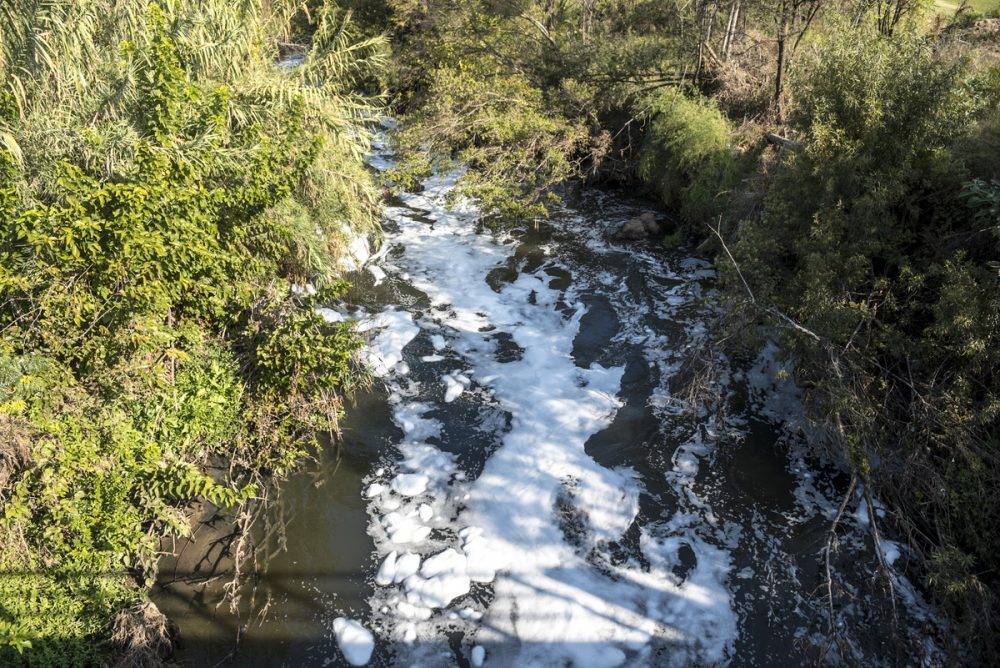
Rooiwal lacks adequate and optimum functional capacity in respect of its original design to treat the inflow of wastewater, Gcaleka’s report found. As a result, “it has a problem of cleaning organic and solid waste” as well as other water pollutants it receives from its increased catchment areas, such as households and factories.
According to the City of Tshwane metropolitan municipality, the amount of water coming into the Rooiwal plant to be treated is about 130 million litres a day and the plant experiences an 18% overload. It was designed to treat only 110 million litres a day.
“As a result of this hydraulic overload and recurring mechanical breakdowns of machinery as indicated in the evidence, the final treated wastewater discharged from the Rooiwal plant into the Apies River does not comply with the quality standards set, which is a serious non-compliance issue.”
Poor raw water quality
Ultimately, wastewater from Rooiwal pollutes the Apies River and Leeuwkraal Dam, which is a source of drinking water to Hammanskraal and surrounding areas, the report said.
“The Temba Water Treatment Works (TWTW) is not mechanically designed to treat raw sewage and sludge, since it is not a wastewater plant, but a water purification plant, the report said.
As a result, the city has noted from its periodic water tests quality failures of the following parameters from the Temba purification plant: ammonia, phosphate, nitrites-nitrate and colour, taste and odour.
These indicated parameters are “as a result of the poor raw water quality at the Leeuwkraal Dam, resultant from the effluent discharged from the Rooiwal plant, which the City of Tshwane, has unduly delayed and/or failed to address over the years”.
This delay by the city “exposes a health risk” to the people of Hammanskraal and remains incompatible with obligations imposed on the city by sections of the Constitution.
The conduct of the city is also “at variance” with the obligations imposed on the municipality by sections of the Local Government Municipal Systems Act and is further irreconcilable with the provisions of sections of the National Water Act, and of the Water Services Act.
Poor intergovernmental relations
The city is the authority with direct jurisdiction on water related services in Hammanskraal but the poor quality of water is a reflection of poor intergovernmental relations on all affected spheres of government.
“For this reason, this matter should be treated as an emergency, which requires the buy-in of other affected organs of state and mutual recognition of the pressing need to address water problems in the area.”
This calls for “proper co-operation and the necessary support” to the city by other spheres of government, such as the water and sanitation department, the cooperative governance and traditional affairs department, the human settlements department and the treasury “to find long-term and lasting solutions to the water challenges in Hammanskraal”, Gcaleka said.
Remedial action
The city’s municipal manager must within 60 calendar days, develop an implementation plan setting out the measures, including prioritisation of capital funding within its available resources, to be undertaken to upgrade and refurbish Rooiwal to address ongoing water quality failures at the Temba water treatment works.
Tshwane mayor Cilliers Brink has been given 60 days to table a copy of the report, consider the implementation plan developed by the municipal manager and set out measures to be taken to address deficiencies and shortcomings at the Rooiwal plant.
This includes “taking appropriate steps or measures as he may deem necessary to work collaboratively with the City of Tshwane in addressing the water challenges in Hammanskraal to eradicate the situation that contributes to the poor quality of water at the TWTW.”
The water and sanitation minister must within 60 calendar days, “take measures as he may deem necessary to work collaboratively with the City of Tshwane in addressing the water challenges in Hammanskraal in order to eradicate the situation that contributes to the poor quality of water at TWTW, as highlighted in this report, in line with the principles of cooperative governance” envisaged in the Constitution.
‘Stain on the conscience of the city’
In a statement on Wednesday, Brink welcomed the public protector’s report and committed to the remedial actions that have been ordered.
“As I have said at the outset of my term of office, the dysfunctionality of Rooiwal wastewater treatment plant is a stain on the conscience of the city, including various administrations,” he said.
Rooiwal is hydraulically and organically overloaded, so it pollutes the Apies River and the downstream water supply. “If the plant had been upgraded in the first decade of this century, as the city’s master plan recommended in 2004, then enormous expense and suffering might have been avoided,” he said.
“While the city cannot change what happened in the past, we can learn from it and take responsibility for redressing the problem. The remedial actions ordered by the public protector accords with what the city has already undertaken in partnership with the department of water and sanitation.”
That partnership agreement is being monitored by the mayoral committee and a full report in compliance with the public protector’s remedial actions will be tabled at the municipal council before the end of this month.
Corruption
The city has allocated R450 million towards upgrading Rooiwal over a three-year period. Priority will be given to finalise phase one upgrades and to initiate phase two upgrades.
“Our partnership with the [water and sanitation department] will be essential to our success, as will the continued funding of capital projects by the national government.
“As previously communicated, the Development Bank of South Africa will act as an independent implementing agent and on our part as the city, we maintain that no companies implicated in corruption or in state capture are awarded any tenders.”
The Mail & Guardianreported in September that President Cyril Ramaphosa has given the Special Investigating Unit the green light to investigate allegations of maladministration and corruption at the city and its refurbishment project at Rooiwal, valued at just over R290 million.
The post Tshwane, government departments must work together for Hammanskraal water – Public Protector appeared first on The Mail & Guardian.
UN report: Funding gap for adaptation much wider than anticipated:

Many developing countries will continue to bear the brunt of climate change-related disaster costs, according to a new United Nations Environment Programme (UNEP) report.
The report, released on Thursday, found that financing for climate-related disasters has stopped flowing and that there is a gap of about 50% higher than estimated.
“Over the last two decades, the 55 most climate-vulnerable countries have seen damages worth more than $ 500 billion, an amount that will only increase in future without adequate support,” it said.
The report estimates a need of $ 194 billion to $ 366 billion annually, which, if not met by developed countries, will lead to huge loss and damage for the world’s most vulnerable economies.
“If $ 16 billion was invested each year in agriculture, for example, it would save around 78 million people from starving or chronic hunger because of climate impacts, with funding coming from public and private finances,” the UN said.
More than 30 heads of state will meet to discuss climate change and issues such as the financial burden felt by developing countries at the UN Climate Change Conference, COP28, in Dubai, United Arab Emirates, from 30 November to 12 December.
The conferences align with the Paris Agreement, an international treaty that aims to limit global warming to 1.5°C. The agreement also aims to strengthen countries’ ability to deal with climate change.
In 2009 at the UN summit in Copenhagen, wealthy countries pledged to provide $ 100 billion a year in climate finance to developing nations to help them address costs related to natural disasters and adapt to rising temperatures and sea levels. But wealthy countries have not been able to meet the target.
The report added that climate-related costs will rise steeply in the coming decades, particularly without mitigation and adaptation plans in place and implemented.
Last week, Forestry, Fisheries, and Environment Minister Barbara Creecy, addressing the national stakeholder consultations ahead of COP28, said South Africa will continue to push for clear targets for adaptation and resilience to climate change.
“As with all COPs, the question of finance is going to remain very central to the agenda. What we are going to see is renewed pressure from developing countries that historical pledges by developed countries must be met,” she said.
“We are saying that just as you have clear targets for reducing emissions, the world must have clear targets for building climate resilience. We are arguing for 50% resilience by 2030 and 90% by 2050,” Creecy said.
At COP27, in Egypt, last year, South Africa’s delegation, together with the African continent, put forward a proposal to include the unique needs and circumstances of the continent on the conference agenda, but this did not enjoy consensus, she said.
COP28 will also see discussions about establishing a loss and damage fund, which will allow nations most vulnerable to the severe effect of climate change to have access to funding. But the details of how the fund will work and who will benefit will only take place during the conference.
“Exactly how it will be financed, where the finance will come from, what the form of finance will be, who will qualify to receive that financial support — those are issues that will still be important agenda items at COP28,” said Creecy.
During Africa Climate Week in Kenya earlier this year, many African leaders called on wealthy countries to honour their pledges because extreme weather and disruption from drought, flooding, and conflicts over natural resources disproportionately affect developing countries.
A World Meteorological Organisation report in September said that Africa is responsible for less than 10% of global greenhouse gas emissions. But it is the continent which is the least able to cope with the harm caused by climate change.
Finance Minister Enoch Godongwana on Wednesday announced that he was adding funds to the municipal disaster relief and recovery grants to mitigate the effects of climate change.
“In this regard, R372 million has been added to the Municipal Disaster Response Grant, while R1.2 billion has been added to cover the repair and rehabilitation of infrastructure damaged by flooding in February and March 2023,” Godongwana said.
“Mitigating the environmental risks posed by climate change must go hand in hand with addressing the financial and economic risks also posed by climate change. The national treasury is making progress towards developing a disaster risk financing strategy, which will among others, enhance existing risk financing instruments.”
Municipal disaster relief and recovery grants were introduced in 2011 and 2013, respectively, for municipalities to respond to infrastructure damage and to disperse relief funds.
Speaking during the UNEP report launch on Thursday, Eindhoven University of Technology author Pieter Pauw said that while financing for mitigation projects such as renewable energy has increased, mobilising adaptation funds has proven difficult.
“The numbers are not that big: if you compare the $ 100 billion to the money that the United States spends on its military, and that was spent on Covid or to save its banks, this is peanuts,” said Pauw. “We have a world to win here … It is time for developed countries to step up and provide more.”
The report identifies seven ways to increase financing, including domestic expenditure and international and private sector finance.
UNEP’s executive director, Inger Andersen, said that in 2023, weather events became more disruptive and deadly. Temperature records toppled, while storms, floods, heatwaves and wildfires caused devastation.
“These intensifying impacts tell us that the world must urgently cut greenhouse gas emissions and increase adaptation efforts to protect vulnerable populations. Neither is happening.”
Andersen said that even if the international community were to stop emitting all greenhouse gases today, climate disruption would take decades to dissipate.
The UNEP said investing in climate adaptation reduces costs further down the line, with every billion invested in coastal flooding preventing $ 14 billion of economic damage.
Last week, during a media briefing, Maesela Kekana, South Africa’s chief negotiator on climate change, said adaptation is a key priority not only for South Africa but for the African continent.
“We are busy working under the Glasgow-Sharm El-Sheik work programme on the global goal for adaptation, and we want to see tangible outcomes.”
“We do not have a target, believe it or not, for adaptation or adapting to these impacts of climate change. We do not have agreed indicators, so that will be a big task for us during the COP.”
The post UN report: Funding gap for adaptation much wider than anticipated appeared first on The Mail & Guardian.
US eyes Africa’s industrialisation to grow superpower’s might:

The United States has indicated its willingness to support the continent’s industrialisation, which is viewed as a missing element in the advancement of trade under the African Growth and Opportunity Act (Agoa).
Africa’s industrialisation is a priority for the US, as the economic superpower endeavours to grow the continent’s middle class and thus the consumer base for American products, US deputy secretary of commerce Don Graves told a virtual media briefing during the second day of the 20th Agoa forum in Johannesburg.
In the lead-up to the forum — during which stakeholders will discuss Agoa’s renewal, as well as efforts to enhance it — South Africa’s Minister of Trade, Industry and Competition Ebrahim Patel said beneficiary countries would like to see the trade programme complemented by investment.
“We’ve had great conversations with our partners all across the continent, recognising that not every country is in the same place in terms of their industrial development and especially their manufacturing capacity,” Graves noted.
He said efforts to expand Africa’s manufacturing capacity included connecting US businesses with those on the continent.
“So we certainly have talked about the potential of bringing US know-how — really the supplier and partner of choice across the continent — bringing our companies and our know how to bear in building additional capacity, ensuring that we’re building the type of workforce that is able to make processed or finished products so that those then can be sold across the world,” Graves added.
“Why is this important? Because the US believes that we should be investing in these markets and building a stronger middle class across the continent, because then they will be able to buy more American products. So it’s in our best interest to invest in and support the growth and development of these economies and help them in their industrial development, so that they can be better partners.”
Graves said he was excited about the African Continental Free Trade Area, which would allow US companies to invest in one part of Africa and tap into suppliers all across the continent.
While talks are underway at the Agoa forum, the US congress will ultimately decide whether the legislation is renewed — and what form it will take — beyond its September 2025 expiry.
Graves emphasised that Agoa’s renewal had strong bipartisan support in the US. Earlier this week, President Joe Biden endorsed an extension of the trade pact, which he said “has formed a bedrock for US trade with sub-Saharan Africa for more than two decades”.
Graves said: “We believe strongly that … we will get Agoa passed and that it’s critical for the US economy to renew.
“And there is strong bipartisan support on the hill … And they’ll do it because they know that it’s good, not just for Africa, but it’s good for the American economy and for American workers.”
The post US eyes Africa’s industrialisation to grow superpower’s might appeared first on The Mail & Guardian.
Submit and get free exposure here: Showcase Your Business | Advertise Your Special Offers.
