
Two KwaZulu-Natal businesses rise from the ashes in a show of the province’s resilience:
Two KwaZulu-Natal enterprises have risen phoenix-like from the ashes of disasters, in an apt illustration of the resilience that businesses in the province have displayed in the face of both natural and man-made calamities in recent years.
Hajira Khalid, founder of Mac Plastics, a recycling company in Isithebe in the northern part of the province, has endured more than the triple beating of the Covid-19 pandemic, the July 2021 riots and the April 2022 floods.
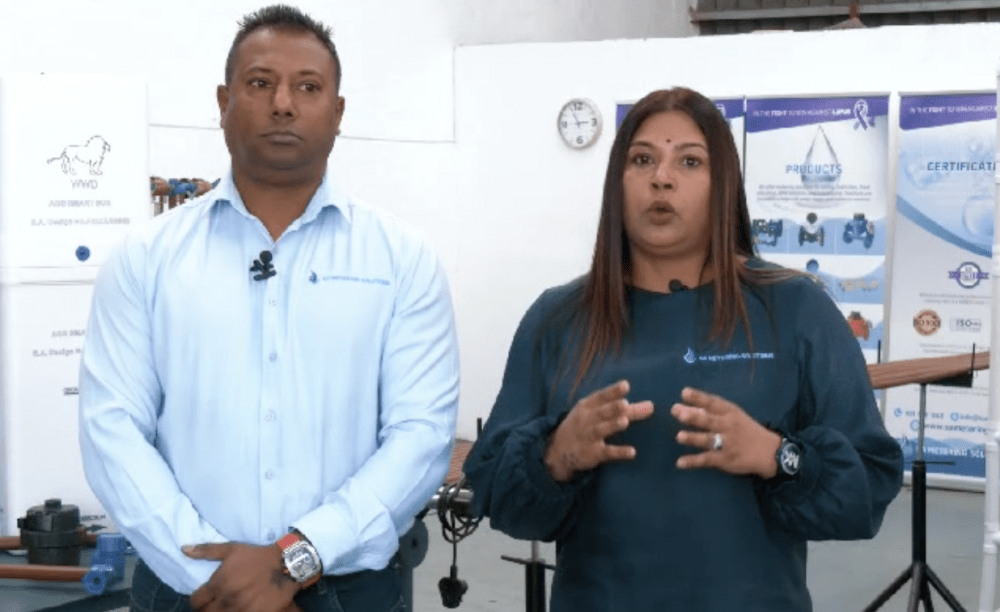
Similarly Elaine Muthusamy, the founder of SA Metering Solutions, who was diagnosed with lupus and given six months to live, has defeated death and the trio of disasters that struck the province.
Khalid also endured the hijacking and shooting of her husband and her factory being burnt to the ground three times, in 2016, 2018 and 2019. Yet she has rebuilt the business, which is to relaunch with a state-of-the-art recycling plant, at new premises in March 2025.
Khalid’s story started in the Eastern Cape, where she and her husband ran seven general stores before he was hijacked and shot in 2001, leading to the couple moving to the UK. They returned to South Africa in 2006 and explored new business opportunities.
A friend of Khalid’s husband invited him to visit his injection-moulding company in Namibia, which was struggling to source recycled plastic for its production line to make chairs, basins and buckets.
“My husband asked me to research different plastics to see if we could supply Fatima Plastics, but in South Africa in 2006, plastic recycling hadn’t really taken off. It was on a very small scale,” Khalid said.
“There weren’t many people that could supply what we needed — about 34 tonnes a week, sometimes 68 tonnes, to send to Namibia.”
Khalid set up the business with 50 staff in rented premises in Isithebe and imported machinery from China. The enterprise started getting orders to supply recycled plastic to local companies.
“The next year, we purchased more machinery. And because we were expanding, the property we were on was too small. We approached [financial services provider] Ithala and took the premises from them. And then eventually, over the years, we built ourselves up and we had 200 staff,” she said.
“We were exporting and supplying locally and we were importing because the demand was so high. We ended up opening a plant in Saudi Arabia that is still going.
“While there, we picked up on a new technology — recycling reject diaper offcuts from the production line. We then put it through a separation system and each product is then recycled into different streams.”
The company later introduced the same line to South Africa.
“In 2016, we had the first unrest. They had an issue with the mayor; they wanted the mayor removed. We managed to put out the fire from the outside, although they had petrol-bombed us. It took us about two days … but we managed to save the warehouse and the production plant,” Khalid said.
In 2018, her business was again a victim of civil unrest and fire.
“We lost that whole premises, with all the stock and machinery. I had to let about 80 of my 120 staff go. And then when quite a lot of businesses got torched in 2019, that’s when we lost everything,” Khalid said.
With support from Trade and Investment KwaZulu-Natal, Khalid approached Ithala for financial assistance. The company, however, offered her a loan, which she declined because she would not be able to start repaying it until production was running.
“So, we started with having just our contracts in place for waste collection and we then found little recycling companies that were closing after Covid-19. We gave our work to them to service on their manufacturing lines and carried on supplying our customers. And from there is how we built up our business,” she said.
“We are currently exporting to Mozambique, Swaziland and India.”
Khalid recently acquired a R20 million state-of-the-art energy and water efficient recycling plant to produce hygiene and food-grade products that will be launched in March. She plans to open the new facility in a secure business park such as the Dube Trade Port
or Whetstone Business Park.
Muthusamy was diagnosed with lupus, an immune system disease, in 2007 but, despite a long battle with the severe illness — which she eventually overcame — she continued working.
She had moved to Cape Town in 2001, where she worked in administration for a plumbing company, and later co-owned a plumbing shop with her husband, launching her career in water-related businesses.
She joined water metering company Huile Africa in 2016 where she dealt with suppliers in China and handled invoicing and deliveries. But she lost her job when the business closed two years later.
In March 2019, she registered the Amanzimtoti-based SA Metering Solutions, leveraging her knowledge in the industry and relationships with the Chinese suppliers. She started the business at her desk in her lounge at home.
“I used that year to set up the company, because water meters must be certified by the NRCS [National Regulator for Compulsory Specifications] before you can sell. I received my first shipment from China in February 2020,” she said.
But then Covid-19 hit and business slowed.
“The entire world was in lockdown but I had faith that something was going to happen. And because it is water meters, business was continuing — the business did not come to a standstill. But it was slow,” she said.
Her husband quit his job in August 2020 and joined her to handle sales and marketing.
“In 2021, the week before the looting, we received a 40-foot container with stock, and I had it in temporary premises,” she said.
As the looters rampaged in July 2021, Muthusamy was “sitting at home and thinking, ‘My God, the walls were closing down on me again for the second time.”
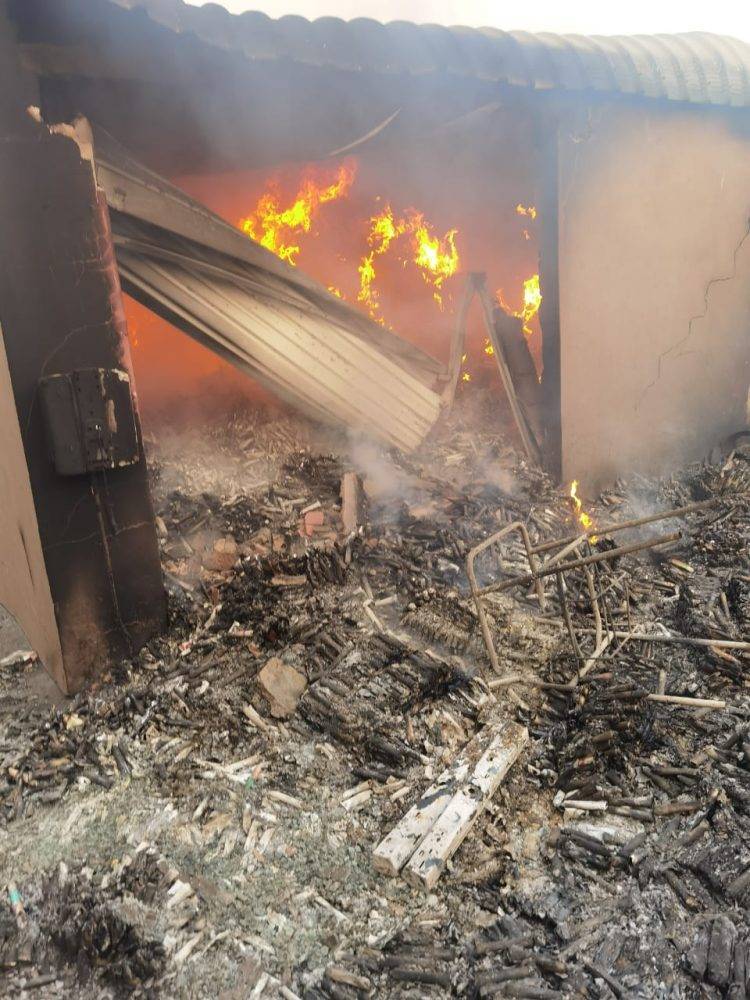
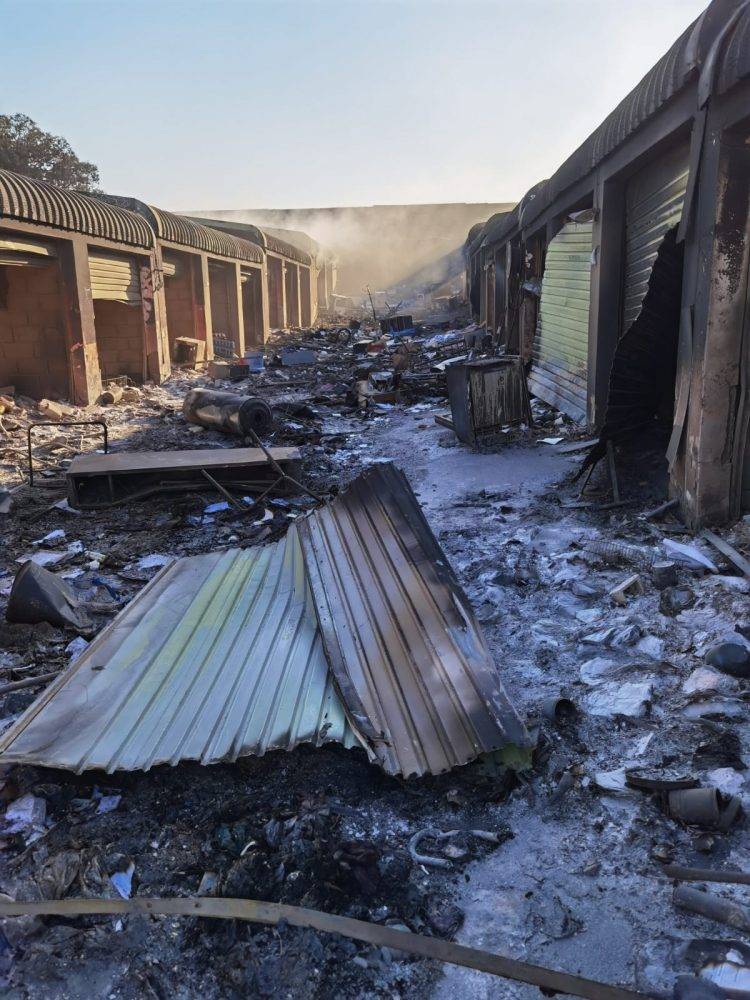
The looters had initially stormed the premises and stolen some stock on the morning of 21 July but most of it was too heavy to move. But they came back at night and torched the premises.
“I was thinking about 2008, when my life took a turn for the worse and was thinking, ‘Not again!’ Everything was burnt to the ground that night, on 21 July at 11pm,” she said.
She visited the premises later that week.
“I looked at everything … all of my hard work, my sacrifices, had burned to the ground, and three days later, we had to still be careful walking, because underneath there was still fire.
“I looked at it and I cried, because I know what it feels like to lose everything, and I was just building up my life,” she said.
“Someone who has defeated death has a different kind of inner power. Nothing is bigger than that. You can overcome anything else.
“I prayed, and I said, ‘You know what? I don’t know what the reason is for this to happen but I know that there is a reason and there’s a bigger purpose,’” she recalled.
Muthusamy, who lost R3.5 million worth of stock in the arson attack, was selected on an East Coast Radio show for a R20 000 award to help her build up her business.
She contacted a handful of her customers who agreed to hold onto their orders until she could get new stock from her suppliers who undertook to send meters on three months’ credit.
“That was enough for me to trade out of my situation,” Muthusamy said.
She contacted the Small Enterprise Development Agency and the Small Enterprise Finance Agency, which gave her a loan and a grant.
She managed to get her business operational and started supplying distributors with bulk commercial and domestic meters in KwaZulu-Natal, the Western Cape, Eastern Cape Gauteng and the Free State.
But sourcing domestic meters and the white boxes that house them from local manufactures soon became difficult due to rising prices.
“I made a decision to go into manufacturing. We invested in moulds. It was cheaper for me to make my moulds in China, ship the completed product and assemble it here in our warehouse,” Muthusamy said.
She said an SA National Accreditation System (Sanas) approved laboratory has been testing her meters but this has driven up costs. Muthusamy recently decided to establish an inhouse Sanas-approved laboratory, which she is in the process of finalising, to take her business to the next stage.
“Once you have a Sanas-accredited laboratory, you are considered one of the big boys,” she said.
“SA Metering Solutions is only five years old … and currently I am at that stage where I am taking the final step to be on a level playing field with companies that have been in this industry for 40 to 50 years.”
The dark underbelly of immigration fraud in state institutions:
The Constitution establishes a clear mandate for the government to protect the human rights of all residents, including foreign nationals. The department of home affairs is central to this mission, charged with creating immigration processes that safeguard the vulnerable and facilitate their integration into society.
But a troubling reality has emerged: systemic corruption has infiltrated state institutions, including the department, leaving asylum seekers, refugees and foreign nationals vulnerable to exploitation and injustice. The bribery and embezzlement that plague those seeking legitimate documentation signal a financial crime embedded in South Africa’s immigration system.
The main issues concerning the department and immigration system are extensive backlogs, exploitation of undocumented migrants, and corruption. The department’s own investigations have confirmed that it is plagued by corruption, including the approval of permits based on false documentation and bribery to bypass legal processes. One result is that many foreign nationals with expired or non-existent permits are left without legal protections and at the mercy of unscrupulous employers.
The Refugees Act mandates that asylum seekers report to a Refugee Reception Office within five days of their arrival in South Africa. Failure to do so may result in their exclusion from refugee status. Owing to the shortened application period and administrative inefficiencies with the department many asylum seekers resort to bribing department officials to secure refugee status. This also means they avoid being processed through the asylum system, which is highly flawed with 90% of asylum applications being denied.
Apart from violating the human rights of foreign nationals who are truly fleeing persecution and war back home, corruption in the immigration process creates a breeding ground for criminal syndicates around immigration. These syndicates include department officials, police and the asylum seekers’ employers. In 2021, parliament acknowledged the significant effect of Operation Bvisa Masina. The inter-agency response, which included officials from home affairs, the State Security Agency, the Hawks, and the South African Revenue Service, led to 285 arrests, among them 123 home affairs officials, 84 syndicate members and eight police members.
In 2022, the Lubisi Report — the result of an investigation by a ministerial committee appointed by the then home affairs minister, Aaron Motsoaledi — shed light on theft, fraud and corruption in the department. Their conduct includes the approval of permits with false supporting documentation; bribes to reverse stamp dates at ports of entry and avoid long lines (mostly at refugee centres); and department officials aiding and abetting these illegal activities in the immigration system such as approving fraudulent permits or facilitating bribes. Passports stamped without the holder being present, foreign nationals awaiting deportation released without official approval, bribes paid to avoid paying fines for overstay, and permits extended without the Refugee Board’s approval were the most frequent offences in the immigration field.
In June 2024, authorities arrested a foreign national in Krugersdorp who had been using a home affairs office after hours for illicit activities, having gained unrestricted access to the premises. Although the conviction and sentencing of this individual are positive developments, they underscore the pervasive corruption within the department. The connections some officials have with criminal syndicates raise doubts about the integrity of our immigration system. Additionally, it exposes the vulnerability of home affairs officials to exploitation, emphasising the need for comprehensive reforms to ensure accountability and restore public trust in our immigration processes.
Undocumented migrants are among the most exploited and vulnerable workers in the country, often forced to accept inadequate pay and harsh working conditions. Many go months without receiving their wages, and those who voice concerns risk being reported to the police, arrested and deported. In some cases, law enforcement officials have escorted migrants without proper documentation to an ATM to withdraw funds for a bribe.
The dysfunctional asylum and documentation system that results in many people holding expired or fake permits, allows for such exploitation by law enforcement officials. Reports suggest that officials from the home affairs department at detention centres are soliciting bribes for the release of detainees, even when they have valid proof of their legal status and so should be released unconditionally. This issue extends beyond the police and home affairs officials; an investigation by M-Net’s Carte Blanche uncovered that soldiers stationed at the Beitbridge port of entry are also involved in corrupt activities around immigration, accepting bribes to allow smugglers to operate freely, transporting goods and illegal immigrants without consequence. Such widespread corruption not only erodes public trust but also endangers the lives of the most vulnerable.
There has been a lot of public attention on the perceived socio-economic effect of foreign nationals on working class South African citizens, even though there is generally no evidence provided to support these claims. In that discussion, the focus has shifted away from the hardships and mistreatment endured by vulnerable foreign nationals affected by government policies and prejudiced mindsets. It is crucial for the law to establish explicit safeguards against unjustified arrests, searches and seizures of undocumented migrants, including outlining protocols for police and immigration officers that ensure that foreign nationals’ rights remain protected while South Africa works to secure its borders.
South Africa’s constitutional values of dignity, equality and inclusion require the government to protect the rights of all residents. The home affairs department must ensure immigration policies and practices reflect these principles, safeguarding the vulnerable and promoting social cohesion and constitutional values.
Afua Duah is an investigative intern at Open Secrets.
Russia looking to strengthen Africa presence:
Earlier in December a statue of the late leader of Russia’s mercenary Wagner Group, Yevgeny Prigozhin, and co-founder and commander, Dmitru Utkin, was unveiled in front of the Russian cultural centre in Bangui, the capital of the Central African Republic (CAR).
They were killed last year in a plane crash in Russia, having just returned from Africa.
The unveiling of this statue was attended by the CAR army chief of staff, Zéphirin Mamadou, and Defence Minister Claude Rameau Bireaux in a ceremony alongside Dmitri Sytyi, the current boss of Wagner (now part of the Africa Corps) in the CAR, and his head of military affairs, Denis Suprunov.
The unveiling is part of Russian countermeasures to shore up its support in the CAR as French efforts to improve its diplomatic relations with that country seem to be bearing fruit, including the resumption of direct budgetary support.
Fighters from the Wagner Group have been in the CAR since 2018, when they were invited by President Faustin-Archange Touadéra to help tackle rebel groups and their numbers have been recently bolstered.
Central Africa is becoming of increased Russian focus. Up to 800 Russian security personnel have now been deployed to Equatorial Guinea to protect the presidency of Teodoro Obiang Nguema Mbasogo, up from 200 in September.
Obiang, now 82 years old, has ruled Equatorial Guinea since 1979 and is the second-longest consecutively serving non-royal national leader in the world. His heir apparent is his son, Vice-President Teodoro Nguema Obiang, more commonly known as Teodorín.
He has been consolidating his power base and leading an arbitrary “anti-corruption” drive that has targeted his rivals, including family members, and heightened worries of another coup attempt, the most recent in December 2017.
With increasing Western political and economic disengagement caused by governance issues, Equatorial Guinea has sought a variety of security providers with mixed results: Russia is the latest. Moscow has been marketing its praetorian guard package for regime protection for some years in African states that many international partners, particularly Western ones, increasingly chose to avoid.
During a visit to Moscow in September, Obiang thanked President Vladimir Putin for sending these “instructors” to Equatorial Guinea and in a speech before the Lower House of the Russian parliament, the Duma stated: “Russia has always been a true friend of both Equatorial Guinea and the entire African continent, so I take this opportunity to express special thanks to the Russian people and government for the important work they have done for countries that suffered colonisation and apartheid, when certain nations dictated their own rules.”
Obiang also invited Russia to hold its next Africa summit in Equatorial Guinea, boasting that Malabo does not recognise the International Criminal Court, which has an arrest warrant out for Putin.
Russia’s deepening involvement in Equatorial Guinea is part of a pattern. Moscow has found a market niche supporting warlords, juntas and despots that the West has sanctioned or isolated because of staging coups, governance or human rights concerns.
Russia’s security deployments remain most significant in the CAR where up to 2 000 men have helped foil a coup, provided security and training and developed business interests, including gold mining and weapons deals.
The Africa Corps, the Wagner Group’s successor, has perhaps 1 000 men in Mali, up to 1 500 in Libya, less than a hundred in Burkina Faso and an unclear number in Niger and Sudan.
Putin claimed last month that Russia had “never exploited African peoples, nor been engaged in anything inhumane on the African continent”. His statement is part of broader Russian strategy of conducting hybrid warfare in Africa through disinformation aimed at expanding Moscow’s influence by portraying its engagement as benign compared with the West, especially France.
Trade between Russia and African countries is also slowly increasing, up to $ 24.5 billion in 2023. Russian business and African diplomats have however noted that Russia’s economy lacks the finances to pursue serious investment prospects beyond security, and limited mining and nuclear deals.
Russia’s main trading partners remain concentrated in North Africa with Egypt alone accounting for 28% of Russia’s total exports to the continent. The Russian Export Center records these key exports to Africa as machinery, grain, and hydrocarbon fuels although defence equipment is still a key export. Russian foreign direct investment contributes just one per cent of Africa’s total and its overall trade.
Russia’s political focus though is a lot broader, across the continent seeking votes or abstentions in international fora, such as at the United Nations General Assembly. Many African states do not wish to be sucked into a new Cold War and seek to maintain cordial relations with both Russia and the West. Several African states such as Angola and Mozambique were closer to Russia in the past but have become more circumspect.
The CAR’s Touadéra may also have concluded that too tight an embrace with Russia is not in his interest and the Mali junta is reflecting whether the bringing of Africa Corps fully under the jurisdiction of the Russia Ministry Defence aligns with Mali’s strategic vision.
Similarly, the Niger junta has not welcomed a large Russian security footprint and has continued to welcome the deployment of 250 troops of the bilateral Italian mission, MISIN.
Meanwhile the United States and Chad in September reached an understanding on the return of a limited number of Special Forces personnel, while Chad also announced on 28 November that French forces would no longer be welcome to be stationed in the country and have already started their withdrawal.
President Mahamat Idriss Déby visited Putin in the Kremlin in January and Russia’s Foreign Minister Sergei Lavrov was in Chad’s capital N’Djamena in June to continue the dialogue.
Late last week, a delegation from the Russian defence ministry travelled to Bangui and was to meet with Déby, but this meeting was then delayed till January 2025.
For some states like Chad and Niger, playing off Russia against past traditional Western partners is multipolarity in action as unlike Equatorial Guinea, Western nations retain an appetite to engage for strategic and economic reasons.
Many African governments wish to avoid Cold War style binary alliances but wish to embrace multipolarity — Russia included. Moscow currently punches above its weight, as its corporate penetration is thin, and its defence sales significantly down, losing market share especially to China and Turkey.
If there is a cessation of Russian hostilities in Ukraine in 2025, this could result in a flood of discounted Russian military material and battle-hardened personnel offered to the African security market beyond the Africa Corps.
2025 will see an uptick of the Russian security offer and more aggressive diplomacy in Africa seeking new markets and partnerships.
Alex Vines directs the Africa Programme at the Chatham House think tank.
Submit and get free exposure here: Showcase Your Business | Advertise Your Special Offers.
