
Umgeni Water board challenges its disbandment:
The former members have said that an interim board has been appointed illegally and without being vetted
How much do state nurses, porters and cleaners earn?:
If unions accept the government’s latest pay deal, nurses, cleaners and porters at state hospitals will have less money to take home than last year — as was the case for the 2022 and 2020 financial years, according to analysis of data from the department of public services and administration.
In the state’s final offer these workers will get a 3.3% increase compared with what their salaries were in the 2022/2023 financial year (which ends on 31 March), says Oomang Parag, the spokesperson for the Public Service Coordinating Bargaining Council.
Inflation was 7% in February, according to Statistics South Africa.
Public servants have also been getting a R1 000 cash allowance (after tax) from the government since 2021. Until now, this cash payment wasn’t added to the figure that the state uses when it calculates how much to pay into people’s pension funds (which is usually 13% of someone’s “pensionable” salary, on top of the 7.5% that workers contribute each month themselves).
But the new deal says that from 1 April, this amount will be part of the maths, which will translate into a bigger pension contribution from the state. It will also create a higher starting point for future negotiations, says the public services department.
On average, the cash payout represents 4.2% of public servants’ salaries. Since that’s now being added to the 3.3% increase to their baseline salary, the government says workers are getting a pay increase of 7.5% in total.
“Death strike”
The negotiations about the pay in the next financial year (1 April 2023 to 31 March 2024) are unfolding against a tense backdrop.
In March, members of the National Education, Health and Allied Workers’ Union (Nehawu) led a strike over the salaries for the current financial year, which ends on 31 March. They wanted a 10% salary hike for 2022/2023, but the government offered just 3%.
The strike cost four people their lives according to the government, but the chaos didn’t result in a salary bump. Strikers’ pay will also be docked for every day they weren’t at work between 6 and 17 March under a “no work, no pay” agreement between the government and unions.
In the end, even the promise that ended the strike (that the state would keep talking to Nehawu about its demands) fell through, according to the union’s spokesperson Lwazi Nkolonzi.
He says: “The government has reneged on the settlement agreement of the strike about 2022/2023 pay.”
Why was the state hesitant?
South Africa just can’t afford the pay unions want.
The government is working to rein in its massive public sector wage bill.
In relation to the size of its economy, South Africa spends more on paying public sector workers than most other countries. In 2021, the combined cost of government worker salaries was equal to 14.8% of the value of all the goods and services that were produced in the country in that year (the gross domestic product, or GDP).
Other middle-income countries such as Mexico, India and Russia had a public sector wage bill of less than 10% of GDP.
So what do nurses, porters and cleaners earn at South Africa’s state hospitals? We look at the government’s salary data to see how their pay has changed over the years.
Nurses earnings
Among full-time professional nurses working at government hospitals, those doing their year of community service are paid the least.
Professional nurses study for four years and then have to do a year’s compulsory community service after graduating. There are also three other categories of nurses that work at government hospitals and clinics — specialist nurses, staff nurses and nursing assistants. Specialist nurses are professional nurses who have a postgraduate degree in a particular specialty, such as cancer treatment or psychiatric care. Staff nurses and nursing assistants work under the supervision of a professional nurse.
Staff nurses are qualified to do more complicated tasks than nursing assistants. They can treat fractures, for instance, something nursing assistants aren’t allowed to do.
At the moment, the government pays professional nurses doing community service R220 347 a year (which works out to R18 362.25 a month), according to data from the department of public services and administration, and nursing managers at tertiary hospitals, the best paid position, R1 117 236 a year (which is R93 103 a month).
According to Moses Mushi, the spokesperson for the department of public services and administration, this figure includes benefits like medical aid and housing, so the basic salary they take home is less than this.
However, all workers also get a stipend of R1 000 per month (after tax), which is not included in the annual salary figures according to Mushi.
Salary ranges for staff nurses and nursing assistants are lower. A staff nurse, who studies towards a two-year diploma, will get between R179 172 and R311 361 a year from the government, while a nursing assistant, who has a one-year qualification, will get between R138 549 and R240 777. Once again, these workers also get the R1 000 monthly allowance.
Although there is a wide gulf between the salaries of different categories of nurses, what’s common to them is that when accounting for inflation, these workers will have earned less than the previous year for two out of the last three financial years. That will become three out of four if unions accept the government’s current offer.
Broken promise
In 2018, the treasury announced a three-year wage agreement for a large group of civil servants that included nurses, state lawyers and engineers.
Government stuck to the agreement for the first two years, but then backtracked in the third year. This infuriated unions, including Nehawu, who accused the state of lying to them.
The deal said that from April 2018, top-earning public service workers would get a 6% wage increase, while the lowest earners would receive 7%. This was above expected inflation of 5.5% and well above what inflation actually ended up being (standing at 4.5% that month).
For the next two years (2019 and 2020), more senior workers (such as middle managers) would receive an annual salary increase in line with inflation, while less senior staff (such as nurses who aren’t in managerial positions) were to get 1% above inflation, treasury’s statement said.
Wages increased by the promised amounts in 2018, the first year of the agreement. For instance, community service nurses had a pre-tax annual income of R185 478 in 2017, which jumped by 7% to R198 462 in 2018.
Things continued smoothly in 2019. For example, community service nurses saw their annual salaries climb by 6.2% to R210 768 (other lower-paid nurses saw their salaries increase by the same percentage).
The cost of products and services had increased by 4.4% at that time compared with the previous year (this is called consumer price inflation). It had been expected to increase by 5.3%.
That means the wage increase for this group was 1.8 percentage points higher than actual inflation for April.
But things took a sour turn in 2020, the final year of the agreement.
In the midst of the financially crippling COVID pandemic, the government was unable to stick to its promises, and failed to raise wages at all (the government did say that workers would receive increased medical and housing allowances, though the government’s salary data doesn’t show this). This is despite the fact that inflation was 3%.
For some nurses, their salaries continued to buy them less every year.
In July 2021, they got a 1.5% wage hike, as well as a monthly stipend (that isn’t subject to pension deductions) of between R1 220 and R1 695, depending on their salary level. According to Mushi, the stipend equals R1 000 a month after tax for everyone.
Since community service nurses earned R210 768 a year in 2020, and received a monthly stipend of R1 220, the stipend represented a roughly 7% increase. Combined with the baseline increase, they received a 8.5% wage hike overall. This was far more than inflation at the time, which stood at 4.6%.
By contrast, higher-paid nurses such as nursing managers at tertiary hospitals got less than inflation for that year.
They would have been earning at least R949 482 a year in 2020 and would have received a monthly allowance of R1 450 for 2021, meaning their stipend represented a 1.8% increase. Together with the pensionable 1.5% raise, they got a 3.3% wage hike — lower than inflation.
In October 2022, things changed again as the government increased the pensionable wages by 3%, below the rate at which consumer prices had increased (7.6%). The state also extended the stipend (which was initially only planned for 2020/2021), which remained at R1 000 after tax.
Porters and cleaners
Government-employed porters and cleaners have had a similar experience as nurses.
Job adverts for hospital porters and cleaners (who are employed across government-run offices) usually class these positions as “salary level 2” roles in the category of “non-occupation specific dispensation (OSD) workers”.
The OSD was set up to keep skilled professionals in the government service by making sure they get salary increases that line up with their specific field of expertise and experience. This system is supposed to make sure people can plot a career path working for the state, and to ensure they can earn well even if they don’t go into management.
Non-OSD workers, such as porters and cleaners, qualify for annual increases to keep up with inflation and bonuses, but they have to work for a set amount of time (at least 12 years) before they can be promoted to the next salary bracket.
How much can people on level two non-OSD salaries earn?
Department of service and administration data show that salaries at this level range between R107 196 and R126 270 before any tax is paid (supervisors and foremen are on a higher salary grade and so earn more). On top of this, they also get the R1 000 a month post-tax stipend.
Job adverts usually offer the minimum amount.
For instance, there is currently a vacancy for a porter at the Red Cross War Memorial Children’s Hospital in Cape Town, which is being advertised at R107 196 per year pre-tax.
Someone at the lowest pay level in this position would therefore get R8 933 a month plus the R1 000 cash payment from the government, with their salary also including benefits such as a pension contribution, medical aid and a housing allowance.
Over the past three years, job adverts show that porters and cleaners have experienced similar wage changes to nurses — they didn’t get a salary increase in 2020. (For instance, job announcements published by the government show that porters were earning the same amount in the 2020/2021 financial year as in 2019/2020 — namely, R102 534 per year before tax.)
But in 2021, they got a 1.5% increase, along with the additional non-pensionable allowance. Since their wages stood at R102 534 a year for 2020, a stipend of R1 220 a month increased their salaries by 14.3%. Combined with the baseline increase, they thus got a 15.8% increase overall.
Like other public sector workers, they then got a 3% increase in their pensionable wage in 2022, along with the continuation of the stipend.
In the 2021/2022 financial year, adverts showed their pensionable salaries bumped up to R104 073 (a 1.5% increase), though they would also have received an additional R1 220 stipend at this point. In the following year it went up by 3% to R107 196.
In short, just like nurses, people doing these jobs also saw cuts in their wage for two out of the past three years.
This story was produced by the Bhekisisa Centre for Health Journalism. Sign up for the newsletter.
The good, the bad and the ugly: Leaders have a choice:
I spent some time over the holidays delving into the traits of both highly conscious and the most diabolic of leaders through the centuries. The qualities of an exemplary leader is the litmus test for the performance of a country or company.
Outstanding epochs in the history of an organisation or nation were made legendary by conscious leaders who had understood the powerful propensities of their actions and worked with purpose and resolve as well as prioritising humanity.
My research took me to the heights and depths of the spectacle of leadership behaviour. From the stoic Marcus Aurelius to Genghis Khan, one of the most brutal military conquerors of all time, from strong-willed, fearless and often cruel but also just Akbar the Great to Alexander the Great, whose narcissistic leadership style served his own passions despite being one of the most successful commanders in history. From Hitler to Jacob Zuma, Mandela to Booker T Washington, and business leaders such as Bernie Madoff, Elon Musk, Tim Cook and John Mackay, there are traits that differentiate the conscious leader from the self-interested rogues.
No one human being is perfect, but the glaring differences — where the humanity of one is at the polar opposite to the glib villain — is why we have a global leadership crisis. This is an era of malevolence in which the good has little chance to triumph. Millions would rather follow an expressive psychopathic leader, whose contentious clamour ultimately leads to destruction, than an inspired, gentle and humane one.
In 1934, Time magazine named Hitler “Man of the Year”. In 2016, Americans elected Donald Trump as their president. Hitler held the world stage and slashed at his countryman. So did Idi Amin and Muammar Gaddafi.
The deeper lessons of history are echoed here in modern day business, when leaders driven by a façade of grandiosity, consider personal profit and material gain as all-important considerations.
Morally mature, conscious, ethical leaders, whose actions manifest greater good for all are not born remarkable or extraordinary, neither are they perfect. They have learnt the skills to manage their own existence, fully cognisant of who they are. It is evident that when men and women capable of great leadership appear on the scene, they come to possess an influence commensurate with their greatness.
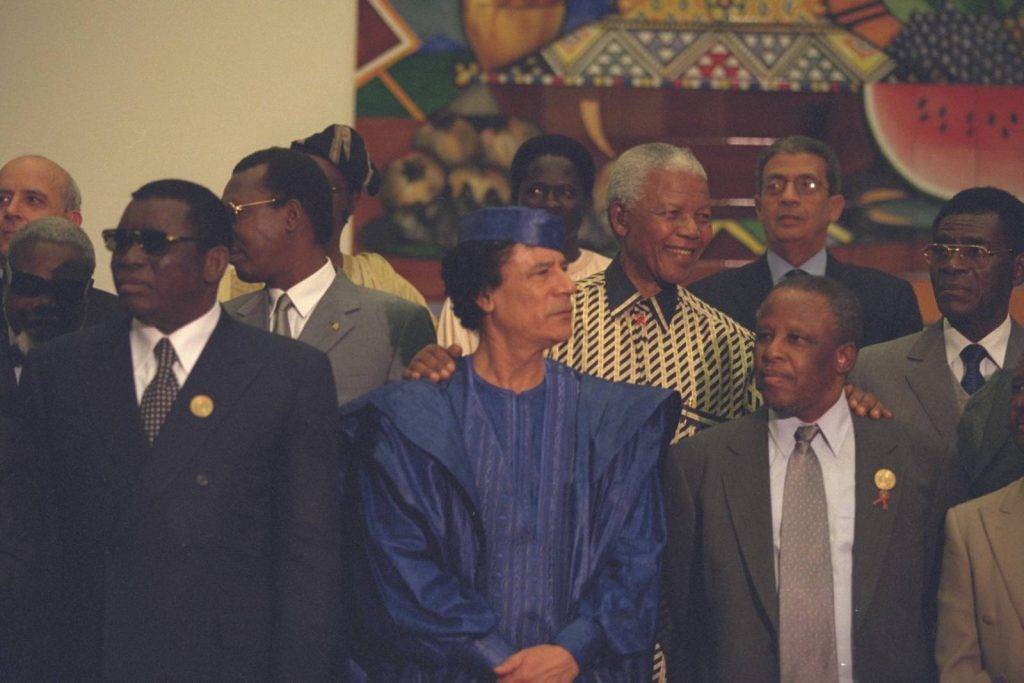
To recognise a great leader, we need look no further than Nelson Mandela. Though not perfect, history is peppered with great leaders such as Mahatma Gandhi, Winston Churchill, Martin Luther King and George Washington. A leader who was unparalleled in the 16th century as a man for all seasons was Sir Thomas More, who refused to compromise his morals, ethics and principals for anything, even death. He chose to die rather than compromise who he was.
We live in extraordinary times plagued with uncertainty and pressure. But there is an opportunity to change the course of a nation or business by changing the shape, character and consciousness of its leadership. This leads us to the Conscious leadership and Ethics Summit on 11 May, where the spotlight on business leaders, both ethical and not so ethical, is the context of this crossroad in our corporate evolution.
The cyclical character of business demands that we do things differently, hence the quest for conscious leadership amid the complex maze of corporate activity, compliance, pressure, performance, productivity and the economic necessities of flowcharts, the bottom line and delivery. It is easy in the chaos of this corporate machinery for an organisation to lose sight of its meaning and purpose beyond profiteering.
Consider the social context facing most leaders and employees in the world of work where power struggles, self-interest and fear are the motivating forces behind some of the unconscious actions that scream at us from media headlines. In a society where need, not achievement, is a source of rights and entitlement, it provides fertile ground for moochers, looters and cheaters.
Conscious leaders shine by example whereas insecure and incompetent leaders hide behind sycophantic followers. In business, Apple chief executive Tim Cook is a far cry from Tom Hayward, the former head of BP. I knew a chief executive who, in less than a year, destroyed the shareholder value of the company she was entrusted to lead by an estimated 75%. This did not deter her. Her egocentric leadership style was a toxic challenge for her executives. She continues to sit on several boards.
The culture of excessive materialism, dishonest dealings and blind disregard for corporate governance aside, we still look to leaders to display courage and vision. When corporate culture takes its cue from its leadership, it plays out in its reputation, performance, profit and the perception of its corporate brand. The tone, manner, attitude and character of an ethical leader cannot be separated from the company they represent. Found in the hidden strata of their beings, is a morally untainted view of “doing the right thing” and building the firmest possible foundation upon which the organisation rests.
In expanding one’s consciousness and ethical behaviour, the conscious leader guides the company to prosper while placing a premium on people, community, culture and the environment beyond the bottom line. It is the essential understanding of values and ethics, reason and justice, meaning and purpose and a reason for being that sets the organisation apart.
It is a conscious leader who, refusing to compromise on morals and principles, instils an enduring culture of help and service to others in harmony and cooperation. This gives a breadth and depth to the company’s idea of itself more than anything the bottom line can achieve. It is deeply fulfilling for people to be part of a conscious company with an ethical, value-based leadership. Customers and stakeholders feel valued and served and employees feel safe and have a sense of belonging beyond the pay cheque.
In the absence of this consciousness, the leadership of a company or a country that is socially irresponsible and environmentally destructive, breeds an unpleasant chaos, where insecurity permeates the very soul of a nation or the culture of a company. We have a choice. Operating in consciousness is a choice for leaders and given the ethical and moral agitations of our age and the country, it is a critical time to choose.
Brenda Kali is the Founder of Conscious Companies and the chief executive of the Conscious Leadership and Ethics Institute. The Mail & Guardian is the partner of the Conscious Leadership and Ethics Summit on 11 May at the Venue in Melrose Arch.
Submit and get free exposure here: Showcase Your Business | Advertise Your Special Offers.
