
Under-fire Kenya govt to review state salary hikes:
The Kenyan presidency said on Wednesday it had ordered a review of salary increases for public servants in an apparent move to defuse tensions after a wave of sometimes deadly anti-government protests.
Public anger is running high over what protesters see as rampant government extravagance in the face of the economic hardships and high cost of living confronting most Kenyans.
Demonstrations led mainly by Gen-Z Kenyans over proposed tax increases have spiralled into a wider campaign demanding President William Ruto’s resignation and action against perceived corruption and profligate spending by his administration.
Dozens of people have been killed since the initially peaceful rallies began more than two weeks ago, with the police accused of using excessive force against protesters.
It is the most serious crisis facing Ruto since he took office in September 2022 in Kenya, which is often touted as a beacon of stability in a turbulent region.
The latest demonstrations on Tuesday again descended into mayhem, with police firing tear gas at rock-throwing crowds.
There were reports of widespread looting and property damage, particularly in the capital Nairobi and the port city of Mombasa, an opposition stronghold.
Ruto’s spokesperson, Hussein Mohamed, said in a statement on X that the presidency has ordered the treasury to review pay and benefits for state officials and MPs.
The move follows Ruto’s decision last week to withdraw the finance bill containing the deeply unpopular tax hikes after the deadliest day of violence on 25 June that saw crowds ransack parliament as police fired live bullets at protesters.
“The president has emphasised that this is a time, more than ever before, for the executive and all arms of government to live within their means,” Mohamed said.
Ruto has also pledged to scrap allowances for the office of the first lady and the deputy president’s wife, a move media reports said would save 1.2 billion shillings ($ 9.3??million). The new salary structure for national and county public officers was scheduled to take effect on 1??July but details of the increases were not immediately available.
“It is not sustainable to have 900??000 public servants from both levels of government consume 1.1??trillion shillings ($ 8.5??billion) annually,” Public Service Minister Moses Kuria said in a statement.
He said this was equivalent to 47% of national revenues, “leaving the rest of 54 million Kenyans with 53%, with debt servicing and development to cater for, among other expenditure”.
Under legislation adopted in 2012, the public wage bill should not exceed 35% of the national budget, Kuria said.
“This is more of a moral and ethical issue than an economic issue,” he added.

Activists using the hashtag “RutoMustGo” called for more rallies, although it was not clear how widely their calls would be followed. Some protesters have alleged the violence was stoked by “goons” who hijacked the demonstrations.
Police said they had arrested more than 270 people masquerading as protesters who went on a criminal rampage on Tuesday.
“Security forces across the country singled out suspects found engaging in criminal activities in the guise of protesting, and took them to custody,” the Directorate of Criminal Investigations said in a statement posted on X late on Tuesday.
It said a total of 204 suspects were arrested in the Nairobi area and another 68 in other parts of the country.
The police themselves have been accused by the Kenya National Commission on Human Rights (KNCHR) of using “excessive and disproportionate” force against the protesters.
On Monday, KNCHR said that 39 people had been killed and 361 injured during two weeks of rallies but has not given an updated toll since then.
The bloodshed has further angered the demonstrators, who have not been mollified by Ruto’s U-turn on the tax hikes or his call for dialogue with young Kenyans.
Ruto has insisted that the financial measures taken by his administration were vital to keep the wheels of government rolling and to service a huge public debt of some 10??trillion shillings ($ 78??billion), or about 70% of GDP.
Ruto’s likening some of the demonstrators to “criminals”, while praising the police for having “done the best they could” inflamed the situation, analysts said.
“There is a general feeling that Ruto is tone deaf to both public concern and the magnitude of this crisis,” said Declan Galvin, the managing director of Exigent Risk Advisory.
“Without a change in course in the coming days, Ruto’s spectacular rise and political career could be derailed.”
— AFP
Okay, I’ll admit it. Growing up I never really “got” poetry. For most of my life it didn’t appeal to me and I didn’t think my life of any lesser value for neither understanding nor appreciating poetry. I always thought that poetry was the art of placing a series of fancy and unrelated words together, just like some music groups do in their names.
In fact, while we were growing up, my brother Karl and I once made a pact that, in the unlikely event that we ever formed a band, its name would be Frog Adoption, because it sounded “poetic”.
Frog Adoption might not have been the most poetic name but someone who could certainly put words together rather poetically was my father Chris.
In mid-2020, nearly six years after my father’s passing, Karl and I thankfully didn’t form a band, but we did collaborate on publishing an anthology of my father’s poetry with the help of one of my father’s closest friends, Ivan Vladislavic, and the publisher Robert Berold. Both Ivan and Robert are fellow writers who were keen to assist us in preserving my father’s legacy.
The anthology, titled My Mother’s Laughter, brought together a collection of my father’s poetry he had written between 1975 and 1996. A number of the poems were previously published in my father’s first and only prior poetry collection, It Is Time to Go Home, which had long been out of print. The new collection also included a significant number of his uncollected poems, some of which I had never seen before. We found these poems on random sheets of paper, some handwritten and others on (ancient) stiffy disks.
As I trawled through the poems, I read them with a perspective through which I had not considered his poetry before. Whether it was due to my experience of being alive for nearly four decades or the fact that I was reading words written by my now deceased father, the poetry suddenly took on a greater degree of significance for me. It took me back and made me contemplate my own journey in trying to make sense of the art form that is poetry.
When I was growing up and beginning to better understand my father’s profession as a writer, his poetry-writing days were largely behind him; he concentrated more of his efforts on short stories, novels and children’s books. But despite his branching out into other forms of writing, many people in the literary community still defined him as a poet, primarily for that seminal work of poetry published in 1979,
It Is Time To Go Home.
One evening when I was about 11 years old, I made a pit-stop at my father’s study where he was doing some work on his PC. I asked him a question that made his eyes light up more than usual.
“Daddy, what’s your favourite poem of all time?”
Before he even answered, he sprang up enthusiastically from his chair and shuffled around the perimeter of his large desk to reach his massive wall-to-wall bookshelf where he started scouring the titles with his nose almost touching the spines of his books. In less than a minute he pulled a book from the shelf and displayed it to me with a triumphant swagger.
“I don’t know if I have a favourite poem,” he said, “but this is my favourite poet without a shadow of doubt.”
The book was a collection of poems by Pablo Neruda, the distinguished Chilean poet and Nobel laureate. My father leafed through the pages before settling on one.
“Listen to this, Kevs …” he said.
The poem he read aloud was Tonight I Can Write The Saddest Lines, a poem about a lost love. By the emotive manner in which my father recited it, you would’ve thought that my mother had just filed for divorce. At one point he read a line and looked at me. “How beautiful is that?” he said. “I can feel his hurt — it’s like we’re attached together by an umbilical cord!”
My father was never prone to sentimentality but that was hands down the cheesiest thing he’d ever uttered to me. I could tell that poetry meant a lot more to him than I realised.
Even though I grew up not fully appreciating my father’s ability as a poet, every now and again he’d say something or explain a concept that, without me even knowing it, was slowly but surely helping me better understand the immense beauty and value of poetry.
One day he was listening to a song on the radio by one of his favourite musicians, Paul Simon. He looked at me as he digested the lyrics of The Boy in the Bubble and remarked: “This Paul Simon is an exceptional poet.”
I had never equated poetry with music before, but that was the day that reality was planted in my mind.
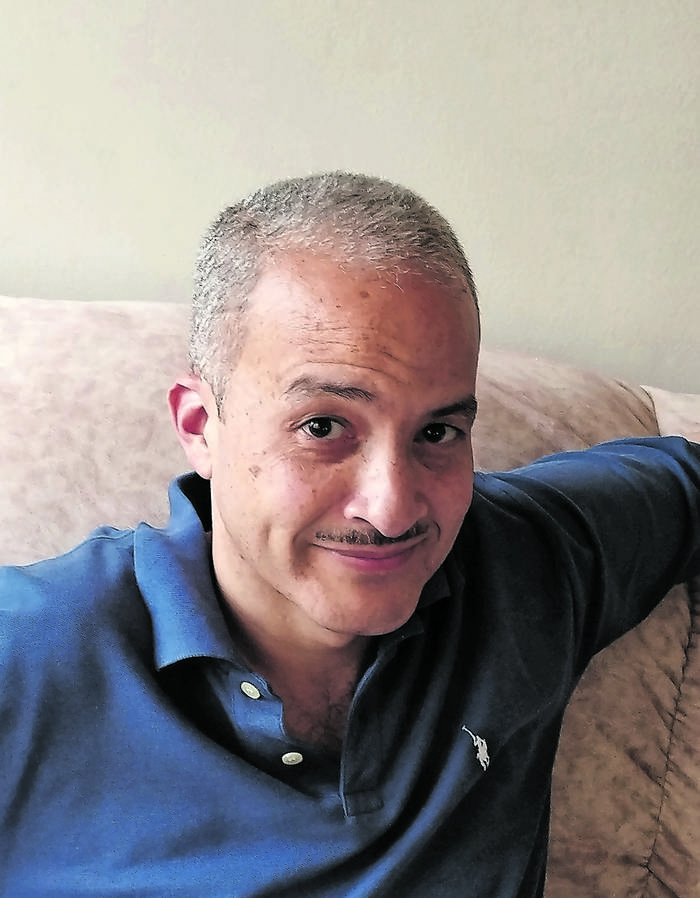
In my mid-teens I arrived home from school one day to find a television crew leaving our home. The producer was a friendly white lady who greeted me warmly as they were making their way back to their car parked outside our yard.
As the rest of the production crew — they always seemed to be white guys with ponytails and African guys with dreadlocks — packed the camera and tripods into the back of their little van, the lady struck up a conversation with me.
“You must be Kevin?” she asked. I nodded and gave her a shy smile. “You know something, Kevin … your dad is a very clever man.”
“I know,” I said cheekily, hoping my smile masked some of my boastfulness.
“That’s brilliant!” she responded with a delighted laugh.
After a few more pleasantries she left along with the rest of her crew. My father and I stood in the front yard watching them drive away.
“So what was that about, Daddy?” I asked.
“It was an interview about my poetry,” he told me. “They asked me about my early days as a poet and I read out a few poems for them. It went well. They’ll let me know when it’s going to air on TV.”
A couple of weeks later my father’s interview aired on an afternoon programme aimed at schoolkids. Karl and I sat and watched as my father was propped up onto our kitchen counter explaining to the youth of South Africa the immense beauty and value of poetry.
“In teaching poetry or in teaching literature, they should just throw down the shackles and burdens of the old style. There is poetry all around us: the wonderful things that people say, that kids say to each other, the skipping rope songs, the chanting in the streets … so if they want to teach poetry in the classroom, they shouldn’t exclude the wonderful wide world happening outside the classroom because that’s where poetry comes [from], that’s where poetry happens.”
In the 1990s as the country was rapidly evolving, my father’s poetry, once vilified by the government, was being taught to many a youngster across the country.
I lost count of how many school students came through our front door over the years to visit my father and ask for help with one or two of his poems.
When Karl was about nine years old, he and my father would have long discussions about the books he was reading at school, as his burgeoning love for literature started showing promise. Believe it or not, in all of my 12 years of schooling, I only ever asked my father to explain some poems to me at the very end of my school career; literally the night before my final English literature exam in matric. I had never before harnessed his poetic insights but, for some reason, I thought I’d give it a shot right at the very last opportunity.
When I asked him to help me, he was a bit surprised, but mightily pleased all the same. We sat at our dining room table and I pulled out a stack of papers which contained the 10 poems I needed to know.
I do not remember all the poems we went through except for the very first one on the pile because that happened to be the poem which appeared in the exam the following day.
The poem was Hawk Roosting by Ted Hughes. Before Chris explained the poem to me, he first read through it on his own to grasp what it was all about. As he read through the poem silently, he occasionally shook his head in amazement and kept repeating: “Wow, this poem is beautiful.”
It’s a relatively simple poem about a hawk perched up in the trees surveying the earth below and contemplating its next kill, with an air of noble arrogance that is exceptionally conveyed to the reader in six short stanzas.
I remember silently thinking to myself, Wow, he actually does seem to know this poetry stuff after all.
Needless to say, I passed the exam, thanks in part to my father. But more than that, it helped me garner more of an appreciation of how the most condensed form of writing can be used creatively to tell a story and evoke one’s emotions.
Chris van Wyk — Irascible Genius: A Son’s Memoir is published by Pan Macmillan.
Clash of the ages on Saturday at Durban July as 3-year-olds take on seniors:
Greyville Racecourse has been a hive of activity this week in preparation for Africa’s premier horse racing event, the Hollywoodbets Durban July 2024, which is taking place on Saturday and is expected to draw some 65 000 visitors to the city and contribute an estimated R670 million to its GDP.
eThekwini Metro’s Economic Development and Planning Unit chairperson, Thembo Nthuli, said the event would attract more than 45 000 punters, fashionistas and guests, while a further 20 000 people would attend the many side events across the city this weekend.
“The direct spend is estimated at R271 million, with a total of R670 million contribution to the eThekwini GDP, and a total number of 5 000 jobs will be created,” Ntuli said.
He said safety measures have been implemented and metro police, South African Police Service and public order policing units were on high alert to ensure the safety and security of visitors to the city.
“Metro Police officers will be deployed around the Greyville area, working with other law-enforcement agencies. All intersections will be managed for traffic control, with some road closures,” Ntuli said.
Gold Circle marketing and sponsorships executive Steven Marshall said the theme for the event Ride the Wave referred not only to the rolling waves of the Indian Ocean, but also highlighted the “resilience” of the people of Durban and KwaZulu-Natal who had faced the April 2022 floods and the June 2024 tornado in Tongaat.
Marshall said last year the event had been hit by the setback of a power outage that forced the last three races to be cancelled.
“This year, the event organisation team has forged a close collaborative relationship with the green electricity unit, and together, we’ve created an in-depth plan to mitigate what happened last year with multiple backup options in case of any unforeseen circumstances,” Marshall said.
He said fashion was a core pillar of the event, along with hospitality and entertainment.
“It’s fashion that maintains the event’s relevance and keeps it fresh. Every single year, our extensive Hollywoodbets Durban July Fashion Experience, presented by Durban Fashion Fair, features Young Designer Awards, the DFF Rising Stars and our Hollywoodbets Durban July-invited designer showcase,” Marshall said.
Turning to the main horse racing event of the day, Marshall said there would be a return match between last year’s winner Winchester Mansion, with Kabela Matsunyane aboard, and runner-up See it Again, who he beat by a nose.
“See it Again is joined by Royal Victory, as two of our KZN contingent, with a very good chance for a local win. We have very exciting three-year-olds this year and Green with Envy is our ruling favourite for July with our sponsor, Hollywoodbets,” he said.
“Purple Pitcher and Flag Man join him as very good three-year-olds and Oriental Charm, who many feel is a dark horse this year, has also got a very good chance,” Marshall said.
Rachel Venniker will be the first female jockey riding in the event, aboard trainer Justin Snaith’s horse, Without Question.
“We also have our record-breaking jockey, Richard Fourie, who recently beat the South African record for the number of wins in a single season, and he’s riding Future Swings — so don’t discount that horse either,” Marshall said.
Hollywoodbets Brand and Communications manager, Devin Heffer, said this year’s event was the 128th running of the race.
“It’s one of the only sporting events in the world that’s run uninterrupted over that period. It survived pandemics. It survived world wars. It even survived the Soccer World Cup, when we got moved to the end Saturday of July.
“But this race carries on its incredible legacy — as we know, it’s Africa’s greatest horse racing event,” Heffer said.
He said Mango Groove would perform the national anthem before the running of the main race at 4pm, while a variety of artists and DJ’s would entertain guests throughout the day.
Ntuli said the event is the latest in a string of events hosted in the city recently, including the Comrades Marathon, the House and Garden Show and the Isuzu Ironman.
“Winter-season events hosted in Durban bring much needed economic spin-offs, specifically for the local tourism and hospitality sectors, as well as related value chains,” Ntuli said.
He said a series of township experiences and activations are also lined-up for the July weekend. These include Fact Durban Rocks, eKasi Durban July, Mojo’s July Weekend, eThekwini Jazz Jam, Artizen Durban July and the White Party Lifestyle Excursion.
Submit and get free exposure here: Showcase Your Business | Advertise Your Special Offers.
