

One of the ugliest features of human society, racism, is also among its most resilient.
When the African American scholar WEB du Bois wrote at the very beginning of that century that the “problem of the twentieth century is the problem of the colour line”, he summed up a core reality of the next hundred years. But perhaps not even he could have imagined that, two decades into the 21st century, it too was on its way to becoming a century of “the colour line”.
Du Bois was also focused on the “relation of the darker to the lighter races” and so he could not have expected that the worst racially motivated slaughter during the century would be visited by whites not on people of a darker complexion but on other white people — the Nazi genocide which slaughtered six million Jews, and eight to 10 million Slavs simply because they had been born into the “wrong” ethnic group. (If we calculate deaths as a proportion of population size, the most brutal mass murder of the modern era was that of 10 million Congolese people at around the time that du Bois’ observation appeared in print, but of course the sheer number of Nazi victims was greater).
While the Nazis slaughtered Slavs and Roma people too, racism directed at Jews was a core element in their ideology of the Aryan “master race”. The prejudice was not new — active hostility to Jews stretches back to the founding of Christianity and was hardened by the emergence of absolutist states in the late Middle Ages. But Jewish identity is complicated by the fact that Jews are both adherents of a religion and members of an ethnic group. This is not unique — Sikhs are another well-known example of a religious group which is also an ethnic group. But it is unusual.
Until the French Revolution and the Enlightenment, these two identities were fused — all Jews were then forced in effect to adhere to their religion by the reigning authorities. When Jews were allowed to choose whether to practise their religion, those who did not were still ethnically Jewish.
This made Jewish identity more complicated than that of most other religious or ethnic groups. It is possible to choose to be Jewish by converting to the religion but the various strains of Jewish religious expression have different requirements for conversion; those with stricter requirements do not recognise the converts of the more lenient streams and so not everyone who considers themselves to be Jewish is accepted as such by the entire Jewish community.
Since Jews are also an ethnic group, those who abandoned the religion are still regarded as Jewish although the status of Jews who join another religion has been controversial. There are enough grey areas on the borders of Jewish identity to ensure that who is Jewish and who is not is still hotly debated within the Jewish fold.
What matters for our purpose is that, when restrictions on Jews in Europe began to ease, religious hostility to them as a group became less tenable — in theory at least, Jews could choose not to be Jewish by converting to Christianity, as more than a few did. But bigotry is not that easily ended.
Those who were prejudiced against Jews, presumably alarmed that they could now integrate into society, focused not on religion but on accidents of birth — they began to insist that Jews were a separate and dangerous race. It is no accident that this ideology emerged only in the 19th Century, after the Enlightenment.
The ideologues of this new racism called it anti-Semitism. The term has stuck even though it is inaccurate since Arabs are Semites too, while anti-Jewish racists often despise Arabs as well, the term was used to describe a prejudice against Jews alone.
The bigotry of which Du Bois wrote — against black and Asian people — is also very old: it can be traced back at least to the Atlantic slave trade and the British colonisation of parts of Asia and Africa. But the term “racism” which we use today was originally coined to describe racial prejudice against Jews only. While prejudice against “the darker races” dominates today, anti-Semitism has not disappeared, as the murder of Jews at synagogues in the United States in 2018, and Germany in 2019 demonstrates.
These two prejudices obviously have differing targets, but, for decades after Du Bois’ prophecy, they have been linked — as the anti-colonial theorist Frantz Fanon pointed out, anti-Jewish racism and prejudice against black people (and Arabs and Asians) usually formed part of a package of bigotries which went together: anti-Semitism was, in the view of some scholars, a form of white supremacy. But this is now less so than it once was.

One reason is that the fight against racism has, justifiably, centred on the relationship between the “lighter” and “darker” races of which du Bois wrote. While prejudices against groups considered “white” survive (and, like some other groups regarded as “white” today, such as Irish and Italian immigrants to the United States Jews were not always seen as “white” by the dominant culture), today they rarely if ever enable the domination of these groups.
By contrast, deeply racist attitudes to “darker” people which were notoriously on display in reactions to the 2022 Russian invasion of Ukraine, do enable domination and the denial of rights. An obvious example is the constant attempt to deny “darker” people access to countries which enthusiastically welcome white Ukrainians.
But there is another reason why a wedge has been driven into discussions of anti-Jewish racism on the one hand, that directed at “black, brown and yellow” people on the other. The Israeli state and its supporters have turned “anti-Semitism” from a description of anti-Jewish racism into a weapon against critics, including many who happen to be Jews, who believe that its attitudes and practices are racist.
In effect, an allegation of racism has been turned into a weapon against anti-racists. This is accompanied by another turnaround — they seek to turn the campaign against anti-Semitism from a rebellion against white supremacy into an endorsement of white Europeanness. This book discusses how this happened and what it means both for Jewish identity and for our understandings of anti-Jewish racism, real and imagined. It also discusses how its lessons apply more generally to current developments in South Africa and the world.
Much has been written about the Israeli state’s impact on the lives and rights of the Palestinian people. The domination of Palestinians is by far the most insidious effect of the establishment of the Israeli state as an authority serving one ethnic group only on territory inhabited by other groups too.
But a less obvious impact of the Israeli state’s role is what it has done to Jews and to Jewish identity. This is the subject of this book. Its focus does not suggest that the distortions of Jewish identity and the misuse of anti-Semitism to demonise other Jews (often in deeply anti-Semitic terms) is more important than the daily experience of Palestinians. But the changes wrought to Jewish identity are an important element in the ideology which underpins the Israeli state and they deserve more attention than they have received.
• Good Jew, Bad Jew: Racism, Anti-Semitism and the Assault on Meaning is published by Wits University Press.
• Steven Friedman is a public commentator, political scientist and research professor at the University of Johannesburg. He has published books on South Africa’s transition to democracy, the role of the trade union movement and current South African politics.
The post Understanding Jewishness appeared first on The Mail & Guardian.
Reimagining our sense of being:
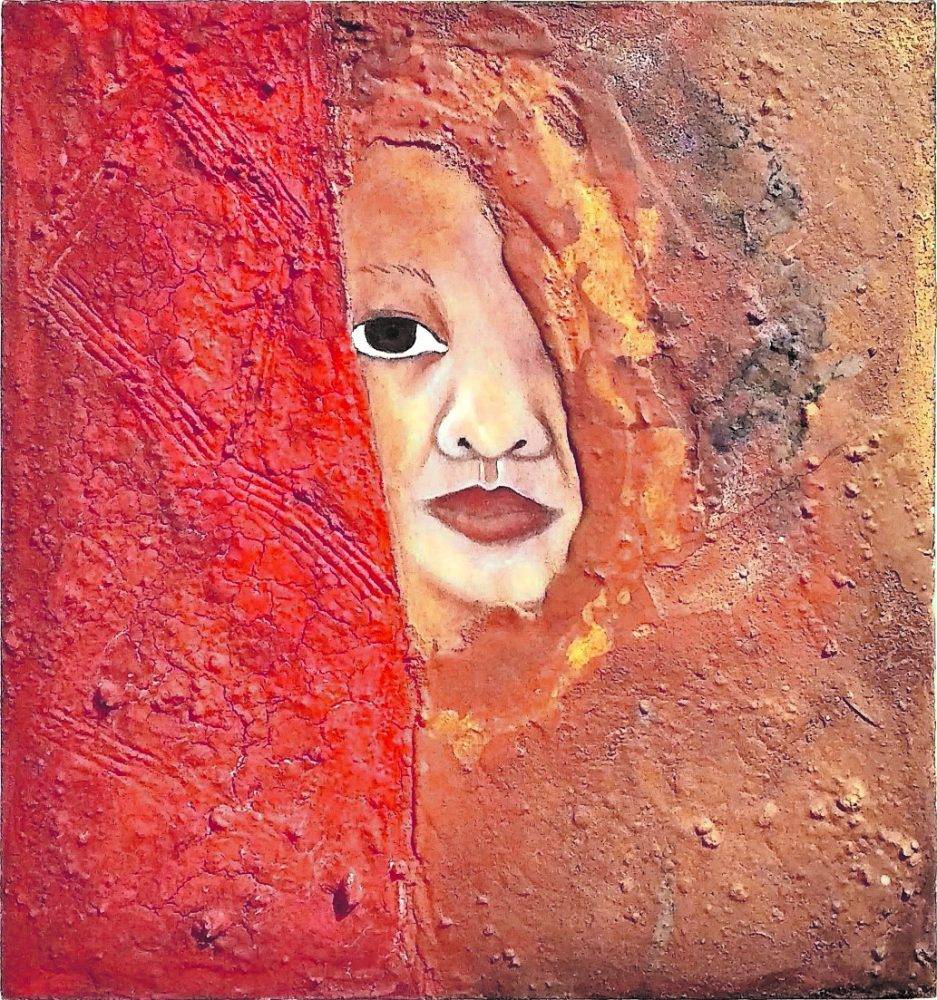
Just a stone’s throw away from the Union Buildings, in the heart of South Africa’s capital city, you will find the Pretoria Art Museum.
It is hosting an exhibition by artist Bongi Bengu.
The exhibition — aptly titled Umhlaba, which can be translated as the world, the globe, the soil, the land — speaks to the multiple ways in which we can, and must, attend to our understanding of life.
It focuses on Bengu’s multi-media work from 1998 to today.
Bengu was born in KwaZulu-Natal but she grew up in exile in various parts of the world, including in Switzerland and eSwatini.
She got a bachelor of arts degree from Mount Vernon College in Washington in the US, and a master’s degree in fine art from the University of Cape Town.
Bengu has participated in numerous international residencies and workshops and has received awards and scholarships from prestigious institutions. Her work has been exhibited in South Africa, as well as at various shows and galleries around the world, such as the Harlem Arts Festival in Chicago and Boston, in the US; Germany; Switzerland and the United Kingdom, to name a few.
Feminine power and energy is visible and central in many of the portraits on the exhibition. Bongi inserts herself through self-portraits and by doing so offers a visual self-storying and reflection on her life.
She brings in the theme of womanhood most vividly through portraits titled The Lady, Sister and Mother.
Another central theme is the importance of the life force. Bengu draws from nature in her use of materials such as feathers, leaves and clay.
One can read her work as a depiction of a decaying world and as a call to re-centre and rebuild the moral fibre of our being in the world.
Looking at her work, we are confronted with how the umbilical cord that should connect us to our society has been severed. As a result, we are left with a capitalist system that thrives by devouring the marginalised and vulnerable.
This is what scholars such as Sabelo Ndlovu-Gatsheni call the invisible vampirism technology of colonial power, which sucks all of us dry, constantly, until we have nothing to give; a technology that lives in our languages, dreams and imaginations.
Bengu’s work is a powerful artistic portrayal of this colonial capture of people’s lives.
The work highlights the importance of going back to the source to rebuild ourselves. As you walk through the exhibition, you are exposed to the powerful depiction of the inter-connectedness of all living beings and their roots in the natural environment. This is how life began.
The decision to name the collection Umhlaba was not taken lightly as it resonates with how removed we have become from the land and how this has affected our well-being as a people.
Within African cosmology, spirituality is intertwined with the land. People use the land to worship, make sacrifices and give thanks.
In her discussion on the issue of land and spirituality, author and healer Mmatshilo Motsei argues that people are inseparable from each other and from the land. The way human beings relate to their physical environment matters.
The environmental calamities confronting the world are not happening in isolation but are linked to people being disconnected from nature.
We need to revive our indigenous knowledge systems as they carry possibilities for how we might respond to environmental challenges.
Bengu as part of her self-storying brings her Zulu culture into the work as a way to call, confront and centre the importance of ritual and ceremony in our engagement with each other and the world.
We have, over time, taken from the earth and there is a need to start focusing on replenishing it as doing so will assist us in replenishing ourselves as human beings. The healing of the physical environment is intricately linked to healing ourselves.
How do we learn about umhlaba? In a capitalist system that puts profit over wellness, understanding umhlaba as wholeness is a challenge. Existing in an individualist system where human connectedness is not at the centre means fertile ground for moral decay is nurtured daily.
Bengu’s work asks for a renewal, for reflection, for reimagining life and our place in the world. This requires us to recentre ubuntu, starting with educating young children.
As Motsei suggests in her book Reweaving the Soul of the Nation, the education process begins at the time of conception. The woman who carries a child in her womb is the first teacher and the kind of life she leads will be a major determinant of her child’s journey.
By zooming in on feminine power in her work, Bengu reminds us of the critical role that women play in the shaping and socialisation of the current and future generations.
The work calls for us to look back in order to look forward and imagine a future where we live in harmony with each other and with nature.
Umhlaba is on at the Pretoria Art Museum until 17 December.
The post Reimagining our sense of being appeared first on The Mail & Guardian.
Ingonyama Trust Board wants Prince Mbonisi Zulu to pay costs of withdrawn application:
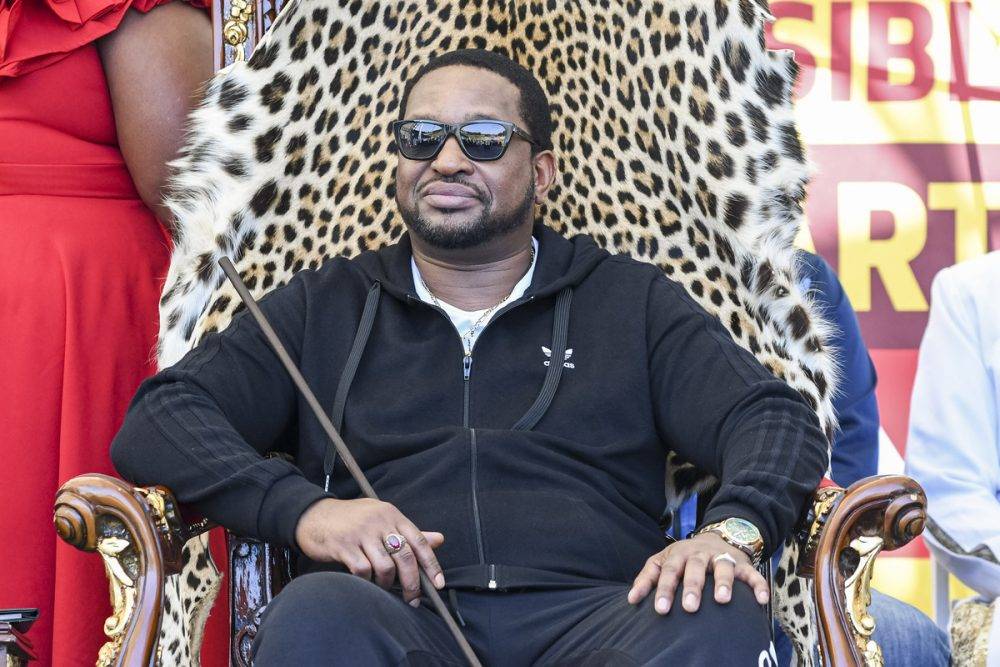
The application is part of a brutal legal fight over control of the Zulu kingdom
The post Ingonyama Trust Board wants Prince Mbonisi Zulu to pay costs of withdrawn application appeared first on The Mail & Guardian.
Submit and get free exposure here: Showcase Your Business | Advertise Your Special Offers.
