Water polo: A cult or a sport?:
As yet another school holiday approaches, interrupted by a sports tour, many readers may come to the conclusion that their school-going child has joined a cult. I am, of course, referring to the water polo team.
What was once a minor sport at school has inexplicably risen to cult status among any school with an Olympic size swimming pool (so no township schools then). Like any cult, water polo now demands absolute loyalty from its followers. Rituals include attending practices at 6am or 8pm on a Friday night (presumably to deprive the participants and their parents of rest) and endless tournaments, especially during long weekends and school holidays. Failure to attend any of these rituals leads to possible excommunication (from the team).
Separating followers from society is the aim of any cult. Water polo achieves this in spades. Parents are easily sucked into the cult, lured by the attraction that their kids cannot play water polo with a screen glued to their face.
As a result, family friends can no longer attend social occasions because little Johnny or Susie is at a practice, a match or a tournament (and we don’t want him/her/them excommunicated).
Organising a get-together with friends involves weeks of planning to find those precious few hours when there is not a water polo something-or-other happening that day.
Families may also be affected, with the achievements of less sporty siblings being ignored or them being relegated to schlepping to every water polo event to support their better-performing brother or sister — and don’t think they will ever forget (or forgive) this.
And then there is the “us” versus “them” on which every cult relies to protect its existence. Those who are not members of the water polo fraternity are denied the smugness of saying “see you at the next event in Joburg/Durban/Cape Town/PE” followed by a look of surprise (or is that envy) that the “outsiders” are not attending.
Those who dare question the devotion required of the sport are seen as promoting laziness over healthy exercise and no one wants to be accused of this.
Moving up the hierarchy is another characteristic of a cult. First team, junior provincial and junior national team attainment remain the ultimate goal of any follower, but not before you have paid homage at the high altar of “the tour to Croatia”, the reasons for which are never to be questioned. Other than the roughly R60??000 cost to parents and vast amounts of seemingly unsupervised time for the youngsters, a visit to Croatia seems to have little effect on the quality of the water polo played on the return home.
While this is an obvious tongue-in-cheek look at one sport, water polo, there is some science to the scrutiny of the cult-like devotion required today from young participants in sporting activities.
For the longest time, we have been told that success in sport requires a single-minded, all-in approach. Stories abound of athletes, at the pinnacle of their career, having devoted most of their waking life to their sport — think Tiger Woods. This view has been popularised by Malcolm Gladwell in his book Outliers, repeating the idea that 10??000 hours of practice are needed to achieve mastery in anything. This may well be true, but at what cost?
A 2021 analysis of 6??000 athletes found that those who reached world-class status tended to have more multisport experience, started later in life, practised less and progressed more slowly.
Another study found that a single-minded approach to sport leads to less experimentation and propensity to avoid problems. This approach also leads to a tendency to narrowly define oneself by the success or failure at the sport you play. As a result, any failure becomes “I am a failure” rather than “I have failed”, which, in turn, increases a fear of failure.
As is often the case, there is a knock-on physiological effect to this fear of failure. The threat-stress response to fear produces more of the stress hormone, cortisol, which encourages a shutdown of body functions and less of the hormone testosterone, which enhances performance. Simply doubling down and practising harder works for a while but then increases exhaustion, resulting, again, in a reduction in performance. It may also explain the “crash and burn” experienced by some top-flight sports persons.
As the inability to restore performance continues, the temptation to use performance-enhancing drugs increases, which may explain the number of top athletes (and increasingly school children) being caught with such banned substances.
Sports coaches, administrators, educators and especially parents need to recognise that demanding too much of their young charges may not be in their long-term interests. Rather, the scientific evidence suggests that they should be encouraging some down time, including time with family and friends (and, yes, their iPhones), and leaving time for these kids to pursue a variety of other interests, which are more likely to survive and stand them in good stead after school is done.
So, as many families plan holidays, interrupted by yet another school water polo/rugby/hockey/netball festival, remember, it’s just a sport.
Shaun Read is a parent.
‘Travel has been my classroom’:
Over and above audience development, market access and book sales for published poets, event organiser at Hear My Voice Ishmael Sibiya says travelling opens the door to cultural diplomacy.
“Travelling creates space for collaboration, exchange and co-creation. Poets who travel abroad, for instance, become ambassadors of South African art.”
Travelling locally, Sibiya adds, allows poets to reach new audiences and connect with different creative communities across provinces.
He shared these views during our interview after a panel discussion at a poetry event hosted by the Word N Sound Live Literature Company.
Taking place at the Goethe-Institut in Johannesburg last month, the panel, which included Sibiya, reflected on the role of travelling and collaborations for poets.
A recent initiative that promoted partnerships and travelling of poets was the Poetry & Acoustics Showcase at this year’s MTN Bushfire Festival in eSwatini. As a partnership between Hear My Voice and eSwatini-based Umsamo we Culture, Sibiya says, “The goal is to deepen artistic and cultural exchange between eSwatini and South Africa and to support the development of spoken-word poetry in both countries.”
Co-director and poet at Umsamo we Culture, Siyabonga Dlamini, shares Sibiya’s enthusiasm about this new partnership. The initiative, he adds, is rooted in the desire to expose poets to new markets while facilitating meaningful knowledge-sharing across borders.
As a poet and an organiser, Dlamini affirms such travelling experiences and exchanges have allowed him to understand the nuances of different audiences, sharpen his adaptability and gain a deeper appreciation for how context shapes art.
“These experiences have not only added layers to my writing but also broadened my perspective on how poetry can function as both mirror and bridge.
“Whether it’s learning new methods of curation from fellow creatives in South Africa or soaking in the layered histories of communities in eSwatini, travel has been my classroom,” he says.
This collaboration for the festival also saw South African poets Jonathan Lefenya and Nomashenge Dlamini participate in performances and cultural site visits, including a workshop hosted by jazz maestro Dr Nduduzo and Omagugu Makhathini.
Poet and musician Nomashenge Dlamini said, “Myself and the incredible Brother Jonathan were delegated to exchange with poets and artists in eSwatini — all this powered by Hear My Voice and Umsamo we Culture. They created a platform in which we could travel to eSwatini to meet and break bread with the likes of Qibho Intalektual and younger poets within the community.”

She beams widely when talking about the grandeur of nature in King Mswati’s country. “In eSwatini the trees are the skyscrapers.
“The trees are abundant and ancient. They are incredibly tall like nothing I’ve ever seen.”
I asked Nomashenge how travelling had benefited her creative career over the years.
“Travelling insists on growth and, ironically, solidifies one’s ‘story’, even on the move. One learns to be still in the way one is, which ultimately becomes the signature of one’s writing and performance.”
Co-founder of Word N Sound Live Literature Company Thabiso Mohare shares similar sentiments. Popularly known as Afurakan when blazing the stage, Mohare says travelling exposes poets to new experiences, cultures, languages and ideas — they are going to be positively impacted in one way or another.
He further argues that, when one engages with poetry in different countries, there is confirmation of the importance of the spoken word and literature in society and as a tool for young people.
“You are reassured that you are not alone in your madness and, when you see the impact poetry has in other countries through the work other organisations do, that encourages you to come back home and do more even, though it’s difficult.”
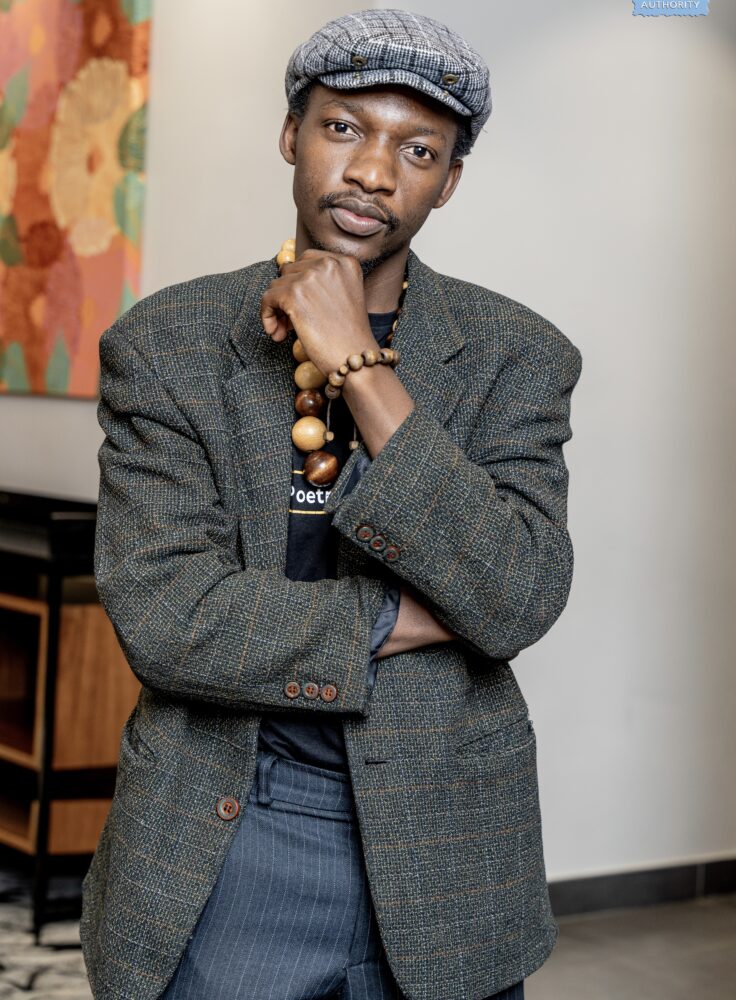
Funding challenges
One of the difficulties organisers face is sourcing funds for trips and other programmes.
Over the years, Sibiya says, at Hear My Voice they have been fortunate to work with like-minded partners such as the Delegation of Flanders in Southern Africa, the Embassy of the Kingdom of the Netherlands and the Embassy of Sweden.
“These and other entities have helped fund our core activities, including poetry exchanges, retreats and showcases. Some have also contracted us to curate poetry components for their own programmes.”
Like Hear My Voice, Word N Sound has also had its fair share of funding challenges in supporting poets. This Johannesburg-based company has been in the forefront of South African poetry for over 15 years and have funded most of their operational expenses from their own pockets.
Regarding funding for programmes, Mohare says it has been difficult, although they have had a few successes, especially with European funders.
“But, again, those are also cyclical, so you’re not always guaranteed to get the funding. I think, overall, funding remains a big challenge, especially consistent funding that goes beyond just programmes that the government or the market is excited about at that time.”
Despite this, Word N Sound has managed to support poets in seeing the world. Mohare tells me about the various international exchanges, with two programmes standing out for him.
One was Next Generation Speaks, a partnership between five organisations from four continents. The other was DExZA, a collaboration between Word N Sound and a German organisation called No Boundaries.
Sibiya shares Mohare’s frustration on the inconsistency and unpredictability of funders. He says, with every shift in a partner’s strategy or vision, funding can dry up, so developing innovative ways to raise money becomes necessary.
“We’ve had to adapt. We actively raise our own funds by offering poetry-focused services and curations to clients, using that income to support our own programming.
“It’s not easy — especially when external funding isn’t available —but it’s made us more resilient and self-sustaining.”
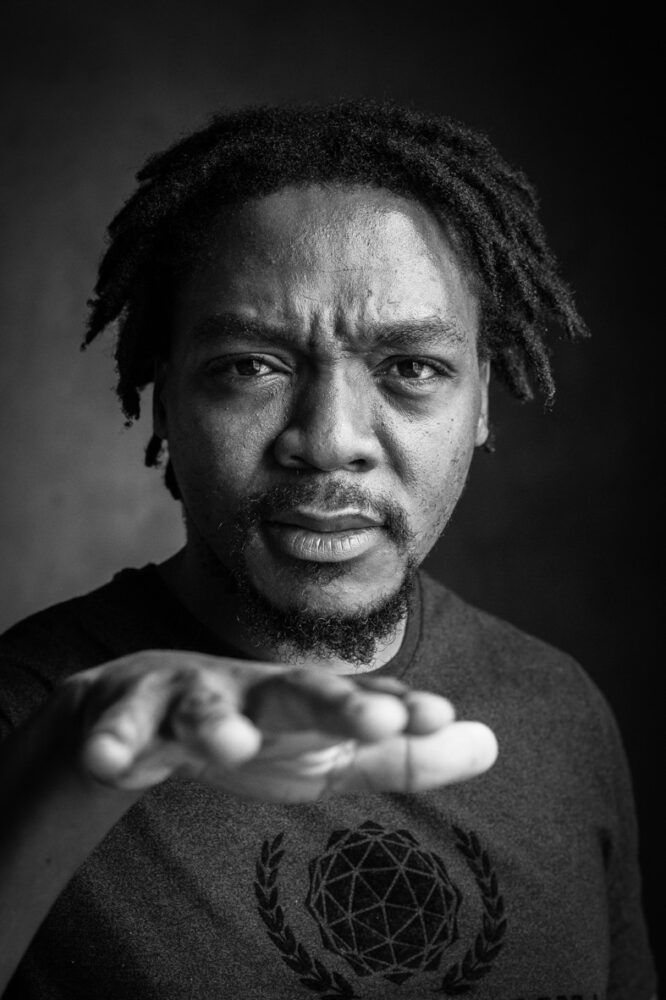
Co-founded alongside Phomolo Sekamotho and MoAfrika Mokgathi, Hear My Voice has been relentlessly committed to the development and promotion of spoken-word poetry for almost a decade.
One initiative that has supported poets to travel has been the Hear My Voice Mobility Fund.
Launched in 2020 when lockdown restrictions started to ease, the fund was created to help South African poets participate in international literary festivals.
“Poets, and artists in general, are often invited to perform at festivals and book fairs, but they’re expected to cover their own travel costs, which can be a major barrier. This fund helps remove that obstacle,” Sibiya says.
Since its inception, the Mobility Fund has supported poets such as Xabiso Vili, Mak Manaka and Emmah Mabye, among others.
For wordsmiths, travel adds enormously to the growth of the skills, emotions and thoughts which inspire their work. But for such opportunities to be fulfilled, they require sustainable supportive structures.
Poetry organisations like Hear My Voice, Word N Sound, Umsamo we Culture, and many other hardworking formations, are playing a key role in being the wind beneath poets’ wings. If the African poetry industry is to soar, such partnerships and initiatives should be supported by audiences, funders and, especially, the government.
Ramaphosa says talks with US on tariffs ongoing as measures are delayed for seven days:
President Cyril Ramaphosa has expressed concern over the 30% tariff imposed by the US on South African exports, despite a seven-day reprieve from implementation of the measure which had been set to kick in on Friday.
South Africa is among several countries facing punitive tariffs from the US as it moves to protect its own manufacturers and labour force. President Donald Trump announced the tariffs in April but delayed them for 90 days to allow countries to negotiate better deals. In July he confirmed that they would take effect on 1 August. This has now been pushed back seven days.
On Friday, Ramaphosa said his government was finalising a package to support companies that are vulnerable to the reciprocal tariffs, adding that the details would be announced “in due course”.
He said Pretoria had submitted a framework deal to Washington in an effort to strengthen “mutually beneficial trade and investment ties”.
“South Africa and US trade relations are complementary in nature and South African exports do not pose a threat to US industry. Importantly, SA exports to the US contain inputs from the African continent and contribute to intra-Africa trade,” he said.
Ramaphosa said his government would pursue all diplomatic avenues to safeguard the country’s national interests.
“It is important that, as a country, we keep our people at work and our companies producing some of the high-quality products destined for many parts of the world.”
Trump’s administration claims that a lack of reciprocity in trade relations has eroded the US’s manufacturing base, disrupted supply chains and weakened its defence industrial base.
Earlier this week, Department of Trade, Industry and Competition said South Africa does not intend to retaliate against the tariffs.
It has set up an export support desk as part of a diversification strategy “to create resilience” in the economy. The desk is collaborating with export councils, industry associations and major exporters to the US to assist in accessing alternative markets.
“We also want to reiterate that we have no intention of decoupling from the United States either. Our view is that negotiations remain the best tool to deal with the issues that are on the table,” it said.
Pretoria is still waiting for a response from Washington on its proposed framework deal, which includes substantial trade and investment incentives.
These include the import of between 750 and 100 petajoules of liquified natural gas over 10 years, potentially unlocking $ 12 billion in investment. The deal also proposes simplifying US poultry exports under the 2016 tariff rate quota system, unlocking about $ 91 million in trade.
Other elements include the import of US blueberries and a commitment by South Africa to invest $ 3.3 billion in US industries such as mining, metals recycling, critical minerals, pharmaceuticals and agricultural machinery.
The deal includes exemptions from reciprocal tariffs in key sectors, including shipbuilding, counter-seasonal agriculture and exports by micro, small and medium enterprises with annual exports of less than $ 1 million.
The trade department said it had been in “intense negotiations” with the US and had signed a condition precedent document, with inputs ready for inclusion in a template expected from Washington.
“Despite the challenges that have been presented by this period, we have put our best foot forward, bringing together the subject specialists within our ranks that have dug deep to ensure that our country is adequately prepared for a number of potential scenarios,” it said.
Submit and get free exposure here: Showcase Your Business | Advertise Your Special Offers.