
What the rest of Africa can learn from Mauritius, the continent’s top ranked economy:
StraFin Corporate has robust network of global partners, and Mauritius is strategically located at the crossroads of Africa, Asia and Europe
AFSIC – Investing in Africa, Africa’s Investment event, is only three months away and will take place from 7 to 9 October 2024 in London. With superb support from a wide array of excellent sponsors AFSIC 2024 promises to be bigger and better with over 1400 delegates expected. This is an unmissable opportunity to attend any or all of the below sessions:
• 3 Days of Presentations, Panel Discussions and Interactive Networking Sessions
• 250+ Speakers from Africa’s most dynamic investment firms, and high growth companies
• “Meet the Investor” and Business Enabler Sessions, facilitating rapid network generation
• Multiple Country Investment Summits, showcasing Africa’s leading economies
• Meet the Dealmaker networking event attended by leading African investment banks
• AFSIC Deal Book, a consolidated summary of some of Africa’s leading investment
opportunities
• Quickfire Pitching by a wide variety of entities seeking investment
• African Investments Dashboard, digital platform connecting investors to entities raising money.

We engaged with Strafin to find out what attracted them to AFSIC 2024 and what the rest of Africa can learn from Mauritius, the continent’s top ranked economy.
What can potential customers expect from StraFin Corporate?
StraFin Corporate stands as a premier boutique service provider, delivering comprehensive solutions under the umbrella of corporate, trust, fund administration and fiduciary services. Clients can expect a relationship-driven approach, ensuring long-term value and business-friendly support across various industries including manufacturing, pharmaceuticals, and mining for example. With deep local knowledge and international expertise, StraFin Corporate also offers the benefit of a robust network of global partners, enhancing their service offering and client experience.
StraFin Corporate provides a broad range of services tailored to meet the specific needs of each client. Whether it’s setting up a new company, managing trusts, administering funds, or offering fiduciary services, clients receive bespoke solutions designed to maximise their business potential.
We believe that building strong, lasting relationships with our clients is critical to driving long-term value. Our team takes the time to understand each client’s unique needs and objectives, ensuring that we provide solutions that are both effective and aligned with their goals.
Our expertise spans various industries, including manufacturing, pharmaceuticals, and mining. This industry-specific knowledge allows us to offer specialised services that address the unique challenges and opportunities within each sector.
Combining local knowledge with international expertise, StraFin Corporate provides clients with the best of both worlds. Our extensive network of global partners ensures that clients benefit from a broad spectrum of insights and resources, while our deep understanding of the local market ensures relevance and compliance.
We’d love to hear more about how your solution-oriented research is meeting the needs of your customers.
At StraFin Corporate, we pride ourselves on our solution-oriented research, designed to meet the unique needs of our clients. Our approach goes beyond understanding client requirements; we provide practical insights and perspectives that address their specific needs. We adopt a global approach when necessary, ensuring comprehensive coverage of all aspects. Our clients benefit immensely from our extensive global network of partners, which allows us to offer well-rounded and effective solutions.
Our approach starts with a deep understanding of client needs and requirements. We engage in thorough consultations to grasp the specific challenges and goals of each client, ensuring that our solutions are tailored to meet their unique needs.
When necessary, we take a global approach to our assignment at hand, ensuring that all aspects of a client’s needs are covered. This includes considering international regulations, market trends, and best practices, providing clients with comprehensive solutions that are both innovative and compliant.
StraFin Corporate is licensed and regulated by the Financial Services Commission of Mauritius. Why Mauritius?
StraFin Corporate is licensed and regulated by the Financial Services Commission (FSC) of Mauritius, a jurisdiction that offers significant advantages for business. Mauritius is on the whitelist of both the Financial Action Task Force (FATF) and Europe and is compliant with OECD standards from a tax perspective. From a global compliance, regulatory, and business perspective, Mauritius ticks all the boxes. It is a business-friendly jurisdiction with a strong legal framework and political stability, making it an ideal location for international business operations.
Mauritius is strategically located at the crossroads of Africa, Asia, and Europe, providing easy access to key markets. This geographic advantage makes it an attractive hub for businesses looking to expand their operations internationally. In addition, the country offers a robust legal and regulatory framework that is both transparent and business friendly. The Financial Services Commission of Mauritius ensures strict compliance with international standards, providing a secure and reliable environment for businesses.
Mauritius is currently ranked as the number 1 economy in Africa. What can other African countries be learning from Mauritius and how they do finance, investment trade and business?
Ranked as the number one business friendly destination in Africa, Mauritius serves as a vital channel for much-needed international Foreign Direct Investment (FDI) into the continent. Cooperation and ecosystem building between businesses, projects, and fund providers are key takeaways for Mauritius and other African countries. Each country needs to specialise in business verticals where they have comparative advantages, this is the prosperous future of the African continent. The Mauritius jurisdiction is an enabler, driving private and public investments in Africa. The ease of doing business, strategic geographic location, and membership in various regional blocks further solidify Mauritius as a prime business hub.
Mauritius is a member of several regional blocks, including the Southern African Development Community (SADC), the Common Market for Eastern and Southern Africa (COMESA), and the African Union (AU). These memberships provide businesses with access to a larger market and enhanced trade opportunities.
What are you hoping to achieve at AFSIC 2024?
We aim at promoting the Mauritius International Financial Centre as a premier destination for financial services. AFSIC 2024 provides an opportunity to reconnect with our existing clients and contacts. By strengthening these relationships, we can ensure continued collaboration and support, fostering long-term success for both parties.
We aim to meet new individuals and organizations who are keen on developing their businesses and expanding their networks. This provides an opportunity to explore new partnerships, collaborations, and business opportunities.
By showcasing the benefits of the Mauritius International Financial Centre and the comprehensive services offered by StraFin Corporate, we aim to attract new clients looking for reliable and effective financial solutions.
AFSIC 2024 is the perfect platform to promote the Mauritius International Financial Centre. By highlighting its advantages, including its strategic location, robust regulatory framework, and attractive tax regime, we aim to position Mauritius as the premier destination for financial services in Africa and beyond.
About AFSIC – Investing in Africa:
AFSIC – Investing in Africa has become perhaps Africa’s most important annual investment event. AFSIC is wholly focused on accelerating Africa’s economic emergence by matching investment opportunities in Africa transforming Africa’s business, trade and investment environment sustainably growing Africa’s economy and increasing African incomes in all business sectors at a continental scale.
African Investments Limited (www.africaninvestments.ai), operates two multi award-winning digital platforms, the African Investments Dashboard which matches investment opportunities to our global network of institutional investors and the Africa Business Opportunities Dashboard, which matches business, trade and investment opportunities across Africa covering all business products, sectors, countries in Africa and multiple business objectives. The digital platforms won the global 2022 Salesforce Partner Innovation Award for Financial Services.
For more information, visit:
www.afsic.net
www.africaninvestments.co
www.africaninvestments.ai
AFSIC 2024 promises to be bigger and better
AFSIC – Investing in Africa, Africa’s Investment event, is only three months away and will take place from 7 to 9 October 2024 in London. With superb support from a wide array of excellent sponsors, AFSIC 2024 promises to be bigger and better, with more than 1 400 delegates expected. This is an unmissable opportunity to attend any or all of the below sessions:
• Three Days of Presentations, Panel Discussions and Interactive Networking Sessions
• 250+ Speakers from Africa’s most dynamic investment firms, and high growth companies
• “Meet the Investor” and Business Enabler Sessions, facilitating rapid network generation
• Multiple Country Investment Summits, showcasing Africa’s leading economies
• Meet the Dealmaker networking event, attended by leading African investment banks
• AFSIC Deal Book, a consolidated summary of some of Africa’s leading investment
opportunities
• Quickfire Pitching by a wide variety of entities seeking investment
• African Investments Dashboard, digital platform connecting investors to entities raising money.
We engaged with asc impact to find out what attracted them to AFSIC 2024.
What are the core values for asc impact?
At asc impact, our core values are deeply rooted in sustainable development principles. Our work prioritises environmental stewardship, community empowerment and ethical standards. Our commitment extends to ensuring long-term ecological and economic sustainability, aiming to leave a positive legacy locally and globally.
What do you do at asc impact?
As co-founder and managing partner, I am responsible for fundraising and investor relations, and institutional investors. I draw from over 12 years of experience in venture capital at b2venture and banking at Credit Suisse. With a proven track record, I specialised in raising and setting up PE/VC and Infrastructure funds, constantly engaging with LPs and GPs.
Why does asc impact believe in the value of investing in sustainable development?
asc impact pursues a clear mission: maximum yield — financially, ecologically and socially.
We believe you don’t have to compromise on return when it relates to positive impact and, hence, the transformative power of sustainable development. By responsibly reforesting and cultivating land, we contribute to climate change mitigation, conserve biodiversity, and foster local economic growth while generating attractive returns for our shareholders.
What challenges and risks do you foresee in the African market, and how does asc impact navigate and mitigate them?
The African market presents a few possible risks such as political instability, regulatory complexities, and logistical hurdles. asc impact mitigates these risks through thorough due diligence, strategic partnerships with local stakeholders, and relatively cheap political risk insurance from reputable international players such as the World Bank/MIGA or Chubb. Proactively navigating these challenges from the start safeguards our investments and ensures sustainable project outcomes.
How does your company approach partnerships with local businesses and governments to foster economic development in the regions where you operate?
As we design and set up our projects from the bottom up, built on respect for local customs, land rights, and communities, strong partnerships with all stakeholders are essential to their success. All our projects have many different spheres of collaboration and partnerships, from cooperating on development activities with DFIs such as GIZ to joint venture investments and offtake agreements with established local players such as Webcor or a social contract with the Ethiopian Anuak tribe to assure that everyone benefits from our activities.
What are you hoping to achieve at AFSIC 2024?
I want to present our unique investment approach in sustainable agriculture and forestry, showcasing how attractive and rewarding our business model can be regarding returns and impact. We also aim to meet interested investors and forge even more strategic partnerships. I look forward to meeting as many like-minded and inspiring attendees as possible to discuss what it takes to unlock Africa’s full potential.
About AFSIC – Investing in Africa:
AFSIC – Investing in Africa has become perhaps Africa’s most important annual investment event. AFSIC is wholly focused on accelerating Africa’s economic emergence by matching investment opportunities in Africa transforming Africa’s business, trade and investment environment sustainably growing Africa’s economy and increasing African incomes in all business sectors at a continental scale.
African Investments Limited (www.africaninvestments.ai) operates two multi award-winning digital platforms, the African Investments Dashboard, which matches investment opportunities to our global network of institutional investors and the Africa Business Opportunities Dashboard, which matches business, trade and investment opportunities across Africa covering all business products, sectors, countries in Africa and multiple business objectives. The digital platforms won the global 2022 Salesforce Partner Innovation Award for Financial Services.
For more information, visit:
www.afsic.net
www.africaninvestments.co
www.africaninvestments.ai
Gauteng ignored finding of ‘corrupt’ relationship with Life Healthcare:
The Gauteng government has, since 2017, allegedly ignored the findings of a court-ordered investigation that detailed multimillion-rand fraud and organised crime in the province’s eight-year “corrupt” relationship with JSE-listed company Life Healthcare Group.
Life Healthcare — which a forensic report found to have irregularly channelled R112??million of taxpayers’ money meant for social programmes into its bank account in the 2022-23 financial period — was not a registered nonprofit organisation (NPO) when it began its drug recovery centres contract with Gauteng in April 2016, according to an August 2017 inquiry.
The investigation was commissioned by the provincial treasury following a court case involving how the social development department used bank accounts of registered NPOs as conduits to pay Life Healthcare, which did not have an accredited account in March 2016.
Recommendations from the August 2017 inquiry, as well as an October 2017 court order that organised crimes charges should be explored regarding the social development department’s work with Life Healthcare, have neither been implemented nor publicised.
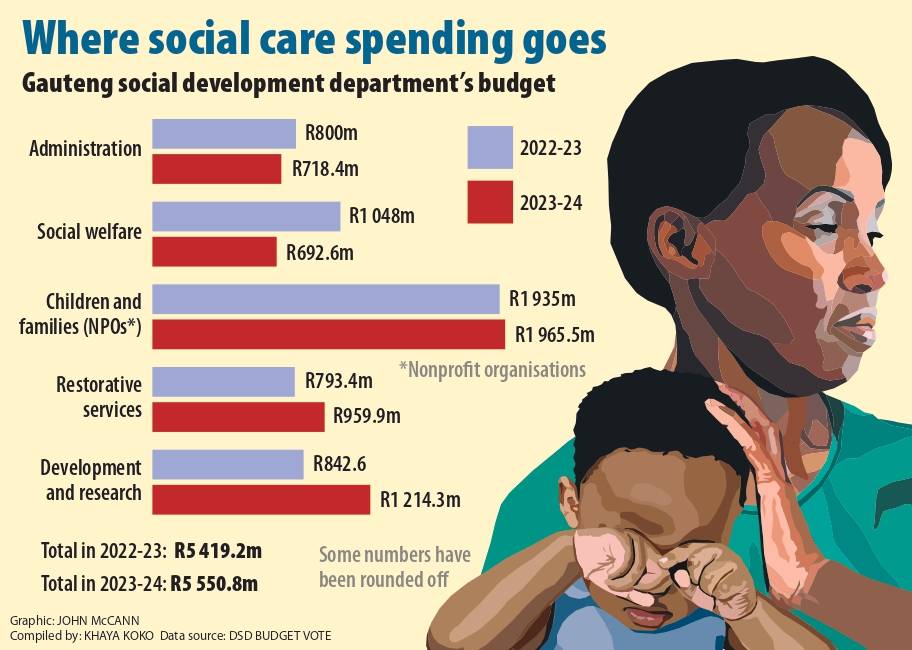
The revelations come amid the department in April freezing payments to NPOs dealing with abused women and children’s shelters, among other organisations, with many closing or downsizing operations while the province investigates graft in its R1.9 billion funding of the department’s total R5.5??billion budget.
The August 2017 report stated that Life Healthcare applied for its registration as a drug treatment centre using another NPO’s credentials because the listed company did not have its own, and there was “date manipulation” to cover what the report found to be “fraud, corruption and racketeering”.
It added that about R27??million Life Healthcare received from April 2016 to March 2017 was unused and had to be returned to the department, in line with the Public Finance Management Act.
“Representatives of Life Recovery [a division of Life Healthcare] and the [social development department] agreed that the funds be moved from the account in a systemic process to reflect utilisation. This may meet elements of fraud, corruption and racketeering, and should be investigated further,” reads the report.
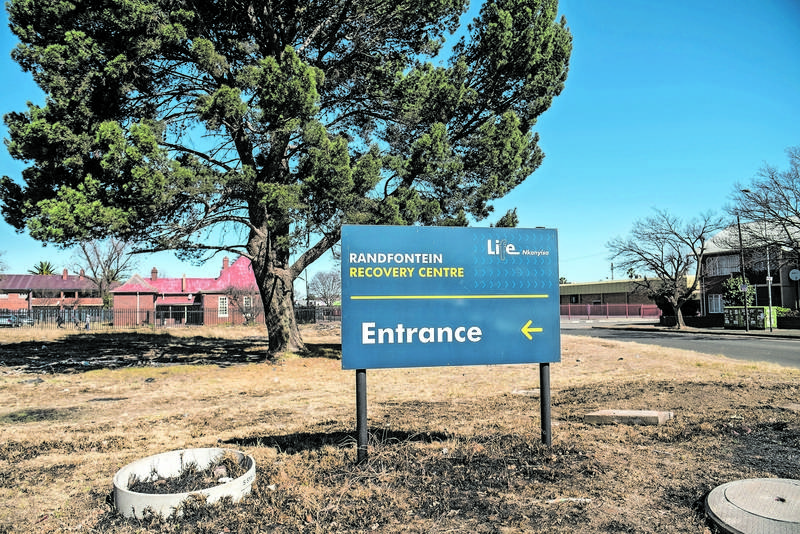
The 2017 findings emerged from well-placed whistleblowers after last month’s Mail & Guardian report detailing the latest forensic investigation into NPO funding, which began in the first three months of 2024, on how “gross dereliction of duty” in the province allowed Life Healthcare — through Nkanyisa Recovery drug treatment centres in Brakpan and Randfontein — to “channel” R112??million in state funds into the main account of the listed company — an act external investigators said was against the law.
This included “staggering” director fees of nearly R9.7??million for three people in one year and salaries of R24.9??million in the 2022-23 financial year, which is more than R4.9??million “in excess” of claim forms submitted.
The investigation recommended disciplinary action against senior departmental officials, namely deputy director general Onkemetse Kabasia, Solly Ndweni, the chief director of NPO partnership and development research, Themba Msimanga, the director for partnerships and funding, and Phumla Nkosi, the regional director for Ekurhuleni.
NPO directors — who spoke to the M&G this week on condition of anonymity, fearing reprisals such as continued funding cuts — detailed the strife they have endured in receiving payment for their services while Life Healthcare has been funded through alleged fraud and corruption.
In October 2017, the Johannesburg high court ordered the provincial government to inform the National Prosecuting Authority (NPA) and the South African Police Service to investigate breaches of the Prevention of Organised Crimes Act regarding Life Healthcare’s “corrupt” relationship with the social services department.
Gauteng NPA spokesperson Phindi Mjonondwane said the authority was not aware of any recommendation to look into Life Healthcare and social development.
Well-placed sources in the Gauteng government told the M&G this week that the NPA and the police have not been informed of the court order, adding that nothing had been done to implement the ruling because Life Healthcare has continued to conduct business with the state.
“All investigative reports into Life Healthcare have been buried by the province for seven years. What is worse is that a court order has been ignored in the process while a private company continues to milk the state through questionable conduct,” said one source, who asked to remain anonymous.
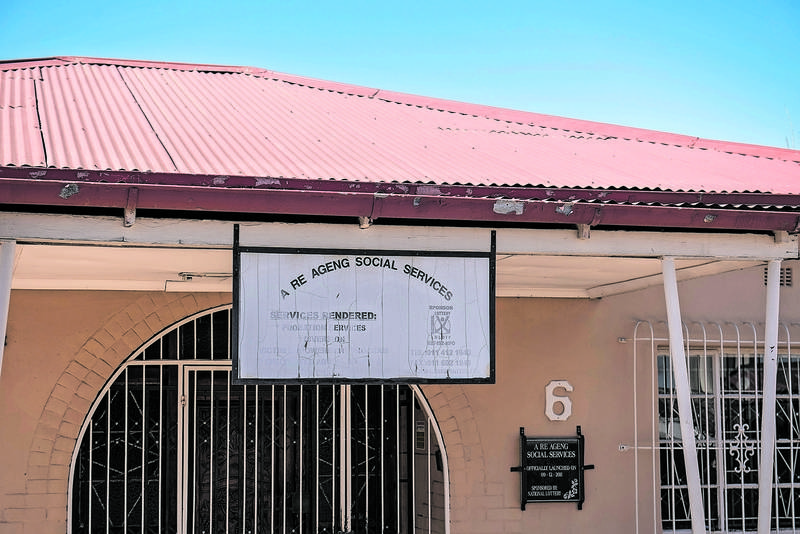
In a ruling by Judge Brian Spilg, it emerged that Life Healthcare did not have a registered account for its drug treatment facilities when it began servicing Gauteng, where an NPO for vulnerable persons — A Re Ageng Social Services, which assists abused women, children and other people — was used as a conduit to pay the JSE-listed company.
Spilg wrote that there was a “confirmed breach of the Public Finance Management Act” in registering Life Healthcare as an accredited departmental service provider, adding that “structures and systems in place appear to have been deliberately compromised by officials within social development”.
“While this may be as a result of poor administration in registering service providers, the potential for the system [to be] abused is self-evident,” Spilg wrote.
“The court’s role cannot be as a passive onlooker when matters come before it which involve the possible misappropriation of public funds allocated in the national budget for alleviating the plight of the most vulnerable and needy in our communities and impact on the NGOs, who provide much-needed services and care,” the judge added.
The court case followed the hacking of the Absa bank account of Mpule Thejane, A Re Ageng Social Services director, who was sued for R10.1??million by former Gauteng premier David Makhura, former executive council member for social development Nandi Mayathula Khoza and Life Healthcare.
Thejane declined to comment.
The R10.1 million was part of the conduit payments the social development department made in 2016 to Life Healthcare, which did not have a registered account, using A??Re Ageng, with the Gauteng government alleging that the NPO had fraudulently appropriated the money.
But the court found that A??Re Ageng’s account was hacked with the possible assistance of government officials, and that the NPO was not liable for paying Life Healthcare or the department.
The judgment added that the R10.1?million was part of the R23??million that social development transferred to Life Healthcare using A??Re Ageng’s account, of which Spilg said: “The underlying justification for doing so appears to offend relevant legislation.”
He said government authorities, in making conduit payments to Life Healthcare in an apparent violation of the law, showed that officials had turned social development into their “personal fiefdom”.
“The course this case took has exposed certain officials who believe they can wield autocratic powers with impunity, as there seemingly is no adequate accountability,” Spilg said. “They have the power to switch funding on and off with scant regard for the well-being of the individuals in need of care, who in this case are generally indigent women and children who are victims of abuse.”
When the M&G visited A Re Ageng offices this week, it was closed. Workers at the neighbouring petrol station said it had been operating on skeleton staff since April, and that the facility had been empty since the end of June.
Social workers at A Re Ageng declined to speak to the M&G.
Life Esidimeni
Documents filed with the court showed that Life Healthcare had a contract with the Gauteng health department through its Life Esidimeni facilities and not the social development department.
Life Esidimeni was the facility from which about 2??000 mental-health patients were removed by the provincial government in 2016 and taken to cheaper, unlicensed and under-resourced care centres, resulting in 141 deaths from a range of causes including starvation, dehydration, pneumonia and gross neglect (see Page 6).
The court papers stated that, after the provincial health department stopped funding Life Esidimeni, “the department of social development saw an opportunity to go in and fund it” in contravention of public financing legislation.
Spilg ruled that this further raised “red flags”.
The judge added that social development offered “no adequate explanation” as to why it funded Life Healthcare after its relationship with the health department ended, “and without any tender process”.
Spilg said this brought “into question the manner in which the social development department dealt in its books with the earlier but similarly structured payment of R14 million it claims to have made in April 2016 to Life Recovery using Sanca [South African National Council on Alcoholism and Drug Dependence] as the conduit, and what agreement or other transaction was used to support the payment”.
The judge’s views are supported by the August 2017 forensic inquiry, which found that there was “no legal framework for the department to make conduit payment”, but that this was done anyway, “contrary to the requirements of the [social development department] and/or sound financial or risk management principles”.
“Making conduit payments into the accounts of parties with whom the department has no contractual relationship for those specific payments will amount to irregular expenditures to be made.
“Those officials who made, permitted, or caused the irregular expenditure (whether by omission or commission) may have committed financial misconduct as defined in the Public Finance Management Act,” the report stated.
The department’s deputy director general, Onkemetse Kabasia, and Themba Msimanga, the director for partnerships and funding, have been implicated in both the 2024 investigation as well as the 2017 inquiry as the senior officials involved in the misconduct.
A high-ranking department official, who asked to remain anonymous, echoed another insider’s views that findings have been “buried” by the provincial government to protect its “corrupt” relationship with Life Healthcare.
“Now, deserving NPOs that help the province with looking after our vulnerable citizens have had their funding cut or stopped altogether. This was not supposed to happen because, without the corruption, there would be enough state funds to take care of all registered organisations,” the source said.
Suffering NPOs
This week, the M&G visited two shelters and centres for abused women and children, which have had to downsize because of a lack of funding, relying mainly on local businesses and supermarkets to cater for the more than 60 people still receiving care at both facilities.
All directors and social workers asked to remain anonymous, saying they did not want the social development department to “punish” them by withholding future funding for speaking to the media.
A director of one shelter in the West Rand said her shelter had space to house 30 families — women and children — but had to reduce this to 12 mothers and 33 children because of funding cuts.
“At any given time, we can receive a mother and her children, and we have to take care of them and place the children in schools. Other children come to us as rape survivors — usually raped by an uncle or another family member — so we cannot release them back home,” the director said.
“We provide counselling for all survivors and help them with ensuring they attend the court cases. Those are the most important cases that we handle and we have to remain a residential centre,” she added.
She said it would be detrimental to society should her facility be closed, adding: “The children will be forced to return to where they were abused, and the uncle who raped a child might kill their victim.”
The social worker and NPO director said she had to rely on donations to stay afloat, including from shops and supermarkets in the area that provide food and other necessities to her shelter.
“I have to hustle from everyone to make sure that we have food to eat, clothes and the basic necessities such as blankets in this cold winter.”
Another director runs victim empowerment centres in Ekurhuleni that are housed in police stations, which alerts the NPO when there are victims of gender-based violence that require assistance.
“We have to provide shelter to gender-based violence victims, who cannot return home after domestic abuse, or do not have safe family or friends who can house them.
“We have scraped together assistance to remain open and stay afloat, but the anxiety of not knowing when our funding will resume is killing me,” the director said.
She added that they have managed to maintain the 28-bed facility despite the cuts through what she said were “angels with big hearts”.
On Tuesday, the M&G sent detailed questions to the social development department and Life Healthcare.
In a statement, Life Healthcare said it could not comment on a report it had not seen.
This week, the M&G supplied the company with a list of exhibits used in the compilation of the report, including the service-level agreement it had with the social development department.
The company said: “As a matter of course, wherever credible concerns are raised we investigate them; and, as we have shown for the last six years, we also cooperate with the authorities in their investigations.”
It stressed that, when providing healthcare services, it followed “the reasonable prescriptions and directions of the commissioning department in good faith”.
“Money received for patient care is used for patient care, which is our overriding and dedicated priority. We have seen no evidence that either purports to sustain or sustains any credible accusation of fraud and financial impropriety by Life Healthcare.”
Questions were sent on Tuesday to social development spokesperson Motsamai Motlhaolwa, who acknowledged receipt and said he could not answer before publication as he was “sourcing responses internally and awaiting them”.
Meanwhile, Premier Panyaza Lesufi, during his 3 July announcement of Faith Mazibuko as the province’s new executive committee member for social development, apologised to NGOs for the Gauteng funding crisis.
“Our relationship with NGOs is of utmost importance. Unfortunately, there were serious missteps, and we need to rectify this,” Lesufi said.
“Our NGOs are doing invaluable work on behalf of government, and they must be treated with the utmost respect. They are not doing us a favour.”
Submit and get free exposure here: Showcase Your Business | Advertise Your Special Offers.
