What’s in it for the ‘friends of Brics’?:

In 2001, then Goldman Sachs chief economist Jim O’Neill identified a group of countries he said would emerge as a formidable economic force. Coining the acronym Bric (Brazil, Russia, India and China) O’Neill predicted the four would eventually experience healthier growth than the advanced economies of the G7.
More than two decades later, and with South Africa added to the mix, the Brics experiment has had mixed results, with some economies in the bloc faring far better than others.
And though the touted Brics expansion would undoubtedly add extra heft to the alliance, which is being seen as throwing its weight around amid the current geopolitical tumult, its economic fate will continue to be steered by its most influential member — China.
‘A political club’
The Brics foreign ministers gathered last week in Cape Town ahead of the alliance’s annual summit set to take place in August.
The meeting was also attended by representatives from Iran, Saudi Arabia, the United Arab Emirates, Cuba, the Democratic Republic of the Congo, Comoros, Gabon and Kazakhstan, who took part as “friends of Brics”. Egypt, Argentina, Bangladesh, Guinea-Bissau and Indonesia participated virtually.
Brics has reportedly received membership applications from some of these countries, as well as Bahrain.
All this suggests that the Brics bloc is poised for an expansion, a prospect that O’Neill himself has supported. A Brics+ alliance, O’Neill wrote earlier this year, would give emerging nations a platform to rebalance the global economic system, which has been dominated by the G7 since it was formed in the 1970s in response to exchange rate collapse.
The G7’s share in the global economy has declined considerably since the early 2000s, when the group held more than 40% of the world’s GDP (based on purchasing power parity, not nominal values).
The G7 now contributes 30.7% of global GDP, according to data compiled by London-based Acorn Macro Consulting.
The inclusion of the aforementioned countries in the Brics alliance would put its combined nominal GDP comfortably above the G7’s. But, according to analysts, this does not necessarily give Brics the components of an especially formidable economic alliance.
The likelihood of the Brics+ alliance becoming an economic club, like the G7, is low, according to Momentum Investments economist Sanisha Packirisamy.
“There are big differences between their geopolitical influence, growth trajectories and economic strength,” she said. But there is reason to assume that it could become more of a political club.”
Heavyweight
China is by far the largest among the Brics economies, having recorded considerable growth since the late 1970s. At about $ 17.73 trillion, the Asian giant’s GDP dwarfs those of Russia, India and South Africa, which — as the laggard of the group — stands at about $ 419 billion.
For a grouping like Brics to form a monetary or fiscal union, its members ought to have similar levels of geo-economic significance, Packirisamy said. They should also share a similar level of influence over the global economic system.
Stanlib chief economist Kevin Lings noted that the Brics grouping, even without additions, is already significant in terms of its economic size. More countries will not necessarily add to the bloc’s economic influence, he said.
“Obviously if they have more countries, then they do represent a more significant grouping. But there are some other substantial issues here. The one is that the grouping, in terms of its participants, is overwhelmingly dominated by China,” Lings added.
“So the other countries are not equal participants in the sense that they are not comparable in size and they are not comparable in terms of financial strength.
“China would dominate in both those respects. So, to a large extent, the grouping’s ability to influence comes down to China’s ability to influence.”
Rather than navigating the complications of dealing with a number of disparate countries, Brics participants could be better off doing deals directly with China, Lings said.
South Africa was, in a sense, the first beneficiary of a Brics expansion when it was invited to join in 2010. But some have questioned the country’s place in the alliance given its lacklustre economic performance.
In 2003, Goldman Sachs made the case for South Africa’s inclusion, forecasting the country’s economy would grow at an average rate of around 3.5% over the following 50 years. However, since South Africa joined, it has recorded far from stellar growth, with GDP expanding at an average rate of just 1.7% per year between 2010 and 2019, lagging behind other emerging market economies.
Though the performance of the Brics members has been mostly disappointing since 2010, particularly Brazil and Russia, South Africa has done little to catch up to its peers.
A number of the countries that may be in contention for the Brics+ alliance have smaller economies than South Africa’s and somewhat less influence — making for an even bigger disparity between the bloc’s biggest member and its smallest.
Seeking clarity
Lings noted bringing more countries in the alliance would call its stability into question, as what binds them together would become less clear.
The bloc’s stated goal is to reform the enduring financial and economic architecture, through which the US has maintained its primacy. However, it has attracted criticism for failing to meaningfully pursue these reforms by offering genuine alternatives to the International Monetary Fund, the World Bank and the three main credit rating agencies.
Meanwhile, according to O’Neill’s assessment, the Brics bloc has disappointed insofar as nurturing trade relations between its members.
The reason it feels as if Brics has drifted, Lings said, is because it is difficult to pin down the measurable difference the alliance has made.
“If you expand the membership and you are very conscious to explain what this is about — what this is trying to achieve — what its relationship is with other big economies and how it affects existing trade relationships, then it can become a more meaningful factor on the world economy,” he said.
“It can have an uplifting impact on the members of Brics and potentially other countries that enter into commercial agreements with Brics. So, absolutely, it’s got the potential, but it has got to be managed effectively.”
Enemies and friends
There is a risk, especially to smaller economies such as our own, in the Brics+ alliance taking a more adversarial posture towards the US and its allies in the West — a prospect that may be borne out given the sanctions against Russia and Washington’s ongoing trade war with China. South Africa’s ties with Russia, for example, already stand to jeopardise the country’s inclusion in the African Growth and Opportunity trade agreement with the US.
Saudi Arabia’s inclusion in Brics might also be seen as a threat to the US, which has maintained its dominance through a deal struck with the Middle Eastern nation back in the 1970s to use the dollar as the standard currency for buying oil globally.
Relations between the two countries have soured somewhat after the White House accused Saudi Arabia of siding with Russia in the wake of a decision by the Organisation of the Petroleum Exporting Countries to cut crude output — ratcheting up prices and Moscow’s oil revenue.
As Brics mulls creating its own currency, a collapse of the petrodollar system would deliver a significant blow to the greenback. Demand for US treasury bonds would decline, resulting in higher interest rates stateside.
Packirisamy noted that, in a more multipolar world order, a country’s geo-economic influence becomes more important than the size of its GDP. This is true for a country like Russia, which holds significant sway over global commodity prices. The same could be said about Saudi Arabia.
In a much more multipolar world order, Packirisamy said, it will become difficult to determine where countries stand on global economic issues, such as the sustainable development goals and climate change. “I think it’s going to become a lot more fragmented.”
According to Lings, an adversarial Brics alliance is bad for all involved — including China, which he says cannot adopt a “go it alone” strategy.
“The path to being the biggest economy in the world and to having a bigger role is not de-globalisation, it’s increased globalisation. It’s making yourself more relevant to the rest of the world, not less relevant,” he said.
“So there is a risk here. If you are expanding Brics because it is becoming largely an adversarial grouping of countries … Then I don’t think that’s a good outcome for anybody. It fragments the world and isolates individuals. And it’s potentially quite dangerous.”
Africa’s peace mission a chance for SA to clarify its foreign policy:

The misalignment and miscommunication of South Africa’s foreign policy continues to be the subject of much scrutiny and criticism. The African peace initiative presents South Africa with an opportunity to recalibrate and eliminate the confusion caused by the ill-articulation of its foreign policy about Russia’s war in Ukraine. With this effort, can South Africa reclaim its position as a moral voice in the international arena during times of conflict or have the recent inconsistent foreign policy blunders done too much damage?
The question that seems to confound political commentators a year later remains: why did so many African countries fail to condemn the Russian invasion and choose to abstain during the March 2022 United Nations General Assembly resolution 12407 “Aggression Against Ukraine”? Historically, African countries have viewed support for the Soviet Union and later Russia as an alternative to Western imperialism and capitalism. The Soviet Union was influential in several liberation wars in Southern Africa — Angola, Mozambique, Namibia, South Africa and Zimbabwe. Unsurprisingly, all these countries abstained from voting during the various UN meetings.
The sequence of official (mis)messaging
South Africa’s assumed role as a global moral voice has been more influential than its military instruments, as seen through its contribution to conflict resolution globally and the promotion of multilateralism. As would be expected, on 24 February last year, the department of international relations and cooperation, as the custodian of guarding and promoting South Africa’s foreign policy, stated: “South Africa calls on Russia to immediately withdraw its forces from Ukraine in line with the United Nations Charter, which enjoins all member states to settle their international disputes by peaceful means in such a manner that international peace and security, and justice are not endangered.” This strong statement was in line with the country’s position seen as a global moral voice of reason earned through its successful transition from apartheid to democratic rule.
What followed was confusion and mixed messaging, which instead of being cleared up, gained momentum as South Africa’s position on the Ukraine conflict became more opaque. After the strong statement from the department, South Africa appeared to backpedal and issue a new statement: Russia’s actions in Ukraine have “violated international law”. This language change angered South Africa’s Western partners because it framed the situation as a conflict between Ukraine and Russia, rather than identifying Russia as the aggressor for invading Ukraine.
In response to this criticism, two arguments were presented justifying its non-aligned position.
First, South Africa called for consistency in the approach of the international community to countries that violate international law. When Israel launched sustained offensive military operations against the Gaza Strip, killing hundreds, flattening homes, burying civilians under the rubble and devastating the already dilapidated infrastructure in such a small and densely populated area, the world failed to respond in the same way as it has over Ukraine. That military aggression is not met with sanctions, isolation and a divestment campaign. This strains relations further.
South Africa is right to point out hypocrisy. Diplomatic efforts by the West would probably be more well received if hypocrisy was more readily acknowledged.
Second, the government proposed a negotiated end to the conflict, a position based on the view that “in the end negotiations will end the conflict” as was the case in South Africa. As an example of a negotiated end to the apartheid rule, South Africa is well positioned to offer advice to any mediation or negotiation process. Instead, South Africa’s proposal of a negotiated settlement was critically derided by several Western leaders. Initially, Ukraine’s President Volodymyr Zelenskiy appeared more amenable to the proposal and stated: “Negotiation is [the] only way out of war.” As the war drags on, some Western leaders also appear to soften their stance; calls for an immediate withdrawal of Russian troops have become calls for peace talks with Moscow.
President Cyril Ramaphosa contacted Russia’s President Vladimir Putin and Zelenskiy offering South Africa’s assistance in any potential negotiation process between the warring countries. This initiative was not supported because doubts persisted regarding its non-aligned status, thus compromising any effort calling for impartiality in a negotiation process.

New opportunity for South Africa’s foreign policy efforts
Ramaphosa presented the newly formulated African Leaders’ Peace Mission on behalf of African heads of state from the Republic of Congo, Egypt, Senegal, South Africa, Uganda and Zambia to Putin and Zelenskiy. The mission is expected to take place later in June. Ramaphosa will travel with the African leaders delegation on a preliminary fact-finding mission to explore ways to end the war. Putin and Zelenskiy have welcomed the initiative.
The African initiative not only demonstrates a growing African agency, as Africa seeks to tackle the negative economic and agricultural effects the war has had on the continent. It also positions South Africa as a leading state capable of joining continental efforts to address international crises. The table is an overview of the delegation.
Table 1: African Leaders Peace Mission team
| Country | February 2023 United Nations General Assembly Vote | Characteristics | Weakness |
| Republic of Congo | Abstained | Central Africa representative Ally to France | More than 39 years in power, spread across two terms, President Denis Sassou-Nguesso has a tainted record for respecting democracy and human rights. |
| Egypt | In Favour | Representing North AfricaEgypt is a leading voice on African Union affairs. | President Abdel Fattah al-Sisi’s commitment to forging closer ties with Russia may prove troublesome. |
| Senegal | Absent | As the previous AU chairperson, President Macky Sall led the AU’s mission to Russia to call for peace. He brings valuable knowledge and experience to lead the team. | Unconfirmed claims of Sall seeking a third term and general elections scheduled for February 2024 may limit his commitment to the initiative. |
| South Africa | Abstained | Ramaphosa is an experienced and respected mediator involved in several successful international mediation processes. | South Africa has been accused of showing partiality to Russia, which may lead to mistrust from certain actors. |
| Uganda | Abstained | Strongman president and ally of Russia. | President Yoweri Museveni’s strongman tendencies and open bias for Putin may disrupt the efforts of the team. |
| Zambia | In Favour | A new leader among the old guard of the Southern African Development Community presidents and one of the few to vote in favour of the UN resolution. | As a relatively new leader on the continent, President Hakainde Hichilema may lack experience in dealing with international crises. |
Based on the outcomes of the preliminary fact-finding mission, the African leaders will discuss whether there is political will for mediation. Whatever the outcome of the mission, it does not mean that the African leaders will lead a mediation process. They are part of an international collective effort seeking to find peace in the Ukraine.
As intended by the Constitution, South Africa’s foreign policy should continue to adopt a principled stance, advocating for principled solutions to complex international relations issues while calling for more accountable global governance. South Africa should continue calling on the international community to work together to achieve the cessation of hostilities and to prevent further loss of life and displacement of civilians in Ukraine. South Africa should promote and live up to its own commitment to being a positive force in times of international crises: “The Government affirms South Africa’s commitment to the articles of the United Nations Charter, including the principle that all members shall settle their international disputes by peaceful means. South Africa supports the principle that members should refrain from the threat or use of force against the territorial integrity or political independence of other states.”
Dr Craig Moffat is at Good Governance Africa, a research and advocacy nonprofit organisation with centres around Africa.
The views expressed are those of the author and do not necessarily reflect the official policy or position of the Mail & Guardian.
Joburg mayor receiving medical treatment after becoming ill during council debate:
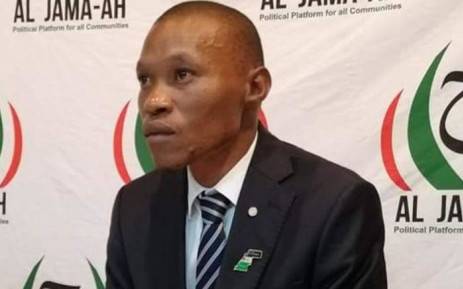
Johannesburg mayor Kabelo Gwamanda is receiving medical treatment after becoming ill during the debate on his state of the city address, his office said on Wednesday.
The mayor’s spokesperson, Mlimandlela Ndamase, said Gwamanda had been unwell and defied doctor’s advice to deliver the speech on Tuesday.
“The executive mayor has been unwell since yesterday morning, however, given the significance and importance of the day to the council and residents of the city, he unfortunately went against medical advice and attended to the state of the city address as delivered.”
Ndamase said Gwamanda was seen by his medical team immediately after he delivered the address.
He said the mayor was present at the start of the debate but his condition deteriorated, forcing him to excuse himself.
“Sadly, during today’s debate, his condition deteriorated and the advice of the medical team has been that he be excused immediately and present himself to a medical facility for urgent treatment and observation.”
Gwamanda was still receiving medical attention, he said.
Leah Knott, the Democratic Alliance’s chief whip in the metro, said Gwamanda arrived late for the debate.
A while after it got underway, the DA caucus was approached by members of the ANC and smaller parties with a proposal that proceedings be adjourned because the mayor was unwell.
It was agreed that the remaining speakers would be heard on Tuesday, before the presentation of the city’s budget.
The metro has for years seen considerable political instability, which worsened after the 2021 local government elections when 18 parties secured seats on the council. Neither the ANC nor the DA won enough seats to govern on their own.
Gwamanda is a member of the Al Jama-ah party and the ninth executive mayor the metro has had since 2016, when the ANC lost control of the city.
He is the second Al Jama-ah mayor within a matter of months, having taken over from Thapelo Amad who was ushered in with the support of the ANC after the DA’s Mpho Phalatse was ousted.
Amad was forced to resign in April after he made claims of having secured a R9.5 billion loan to fund service delivery issues and a smart city.
Submit and get free exposure here: Showcase Your Business | Advertise Your Special Offers.