Who we said goodbye to this year:
Adrian Alper, 51, acting coach, director, writer, comedian, voice artist and presenter who appeared in television series such as Gaz’lam, 7de Laan, Plek van die Vleisvreters and Sterlopers. Died 14 May.
Alain Delon, 88, French actor, producer and writer who won numerous awards, including the Palme d’Or for the director of the Best Feature Film at the Cannes Film Festival, for his contribution to French and European cinema. Died 18 August.
Alberto Fujimori, 86, president of Peru from 1990 to 2000, who was convicted of ordering military death squads to carry out killings and kidnappings, among other crimes including corruption. Died 11??September.
Alexey Navalny, 47, outspoken opposition leader and Kremlin critic who was poisoned in 2020 and later jailed. The prison service said it was investigating his “sudden death”. Died 16 February.
Aletta Bezuidenhout, 76, award-winning actress, playwright and director. Her plays include Time of Footsteps; her TV serials include The Lady of the Camellias and her films include Country of My Skull. Died 13??February.
Bob Newhart, 94, known for his understated satire, achieved fame as a stand-up comic and TV star. He received three Grammys, an Emmy, a Golden Globe and the Mark Twain Prize for American Humor. Died 18??July.
Breyten Breytenbach, 85, leading Afrikaner poet and critic of apartheid who spent seven years in prison on terrorism charges and went into exile, becoming a French citizen. Died 24 November.
Chris April, 84, veteran actor from Nyanga who performed alongside stars such as Forest Whitaker and John Kani. He was attacked by robbers and admitted to hospital. Died 31??March.
Cissy Houston, 91, two-time Grammy-winning singer whose career began at the age of five. She recorded 10 solo albums and four compilations. She was the mother of Whitney Houston. Died 7??October.
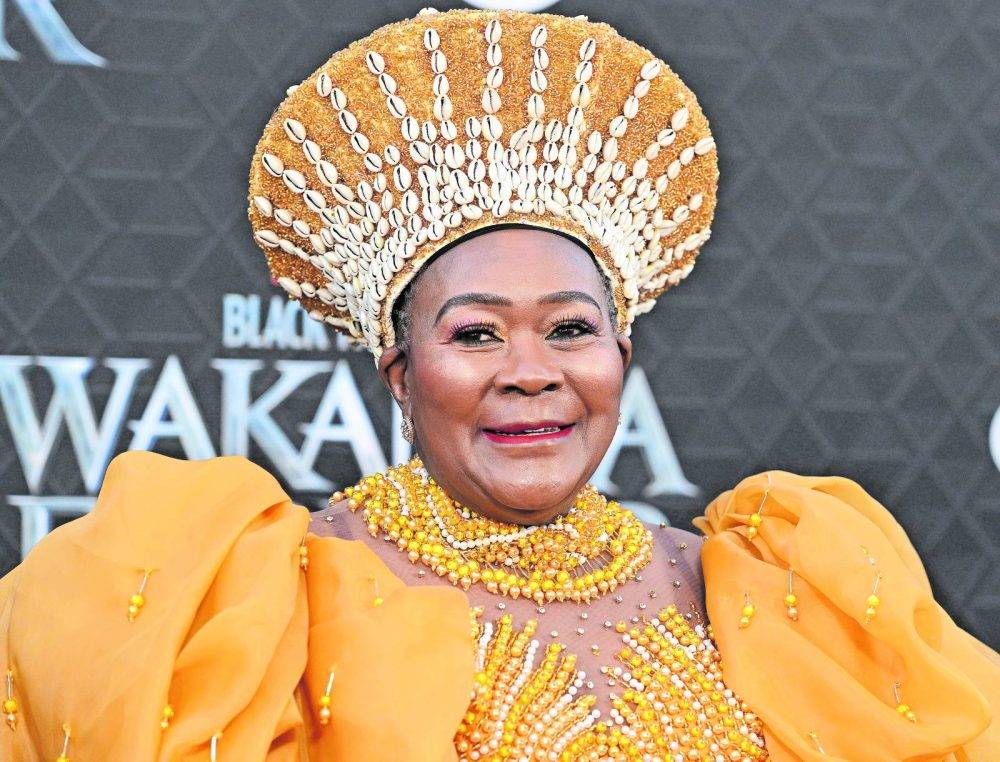
Connie Chiume, 72, actress made famous in the US for her role in Black Panther. She received the South African Film and Television Awards’ lifetime achievement award in 2022. Died 6 August.
Dingaan Thobela, 57, three-time world boxing champion known as “The Rose of Soweto”. Died 29 April.
Donald Sutherland, 88, veteran actor of 60 years who starred in M*A*S*H, Klute and The Hunger Games and received a Primetime Emmy, two Golden Globes, a Bafta, an Academy and an Academy Honorary award. Died 20 June.
Ebrahim Raisi, 63, cleric, prosecutor (known as the “Butcher of Tehran”) and president of Iran (2021–24), during which time citizens protested after the death of Jina Mahsa Amini, who died in custody for wearing “improper” clothing. Died 19??May.
Edna O’Brien, 93, Irish novelist, short-story writer and screenwriter who wrote among other topics about female sexuality and desire (The Country Girls) and the Troubles (House of Splendid Isolation). Died 27??July.
Ethel Kennedy, 96, human rights advocate to whom Barack Obama awarded the Presidential Medal of Freedom for advancing social justice, environmental protection and poverty reduction. Died 10 October.
Fethullah Gülen, 83, Turkish Islamic scholar and spiritual leader of a movement for social and civic reform, the Hizmet (“service”) or Gülen movement. Died 20 October.
Frances Ndlazilwana, 89, actress who played Lydia Maema in the controversial mini-series After Nine and in TV drama series such as 4Play: Sex Tips for Girls, Erfsondes and Diamonds. Died 24 February.
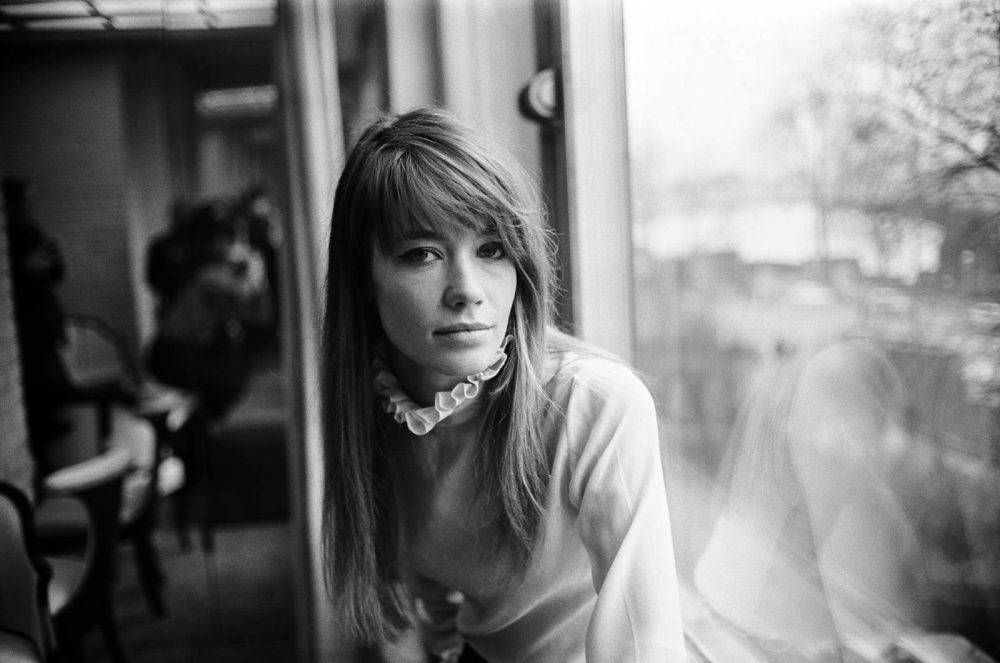
Françoise Hardy, 80, one of France’s most popular singers and a style icon who inspired designers such as Yves Saint Laurent. Her ballad Tous les Garçons et les Filles launched her career in 1962. Died 11 June.
Franz Beckenbauer, 78, German football player, manager and official nicknamed der Kaiser (the Emperor). Died 7 January.
Gerald “Mac” McKenzie, 72, innovative composer and bassist called the Goema Captain, was the frontman of The Genuines, whose music included the song Die Struggle. Died 29 April.
Gustavo Gutiérrez, 96, influential Peruvian priest who was the father of liberation theology and regarded as a prophet of the poor. Died 22 October.
Hage Geingob, 82, third president of Namibia from 2015 until his death, and prime minister from 1990 to 2002 and from 2012 to 2015. Died 4??February.
Hassan Nasrallah, 64, secretary general of Hezbollah, killed in an Israeli air strike during its bombardment of Lebanon. Died 27 September.
Ismail Haniye, 62, Hamas leader and prime minister of the Palestinian Authority assassinated by a covert Israeli operation in Tehran while there for the inauguration of the Iranian president. Died 31 July.
Ismail Kadare, 88, internationally renowned Albanian novelist and poet. Died 1 July.
James Lawson Jr, 95, American Civil Rights activist who helped devise the movement’s strategy of non-violent protest. Died 9 June.
James Selfe, 68, former Democratic Alliance federal council chairperson. Died 21 May.
Kris Kristofferson, 88, a Rhodes scholar who became a country music star and Hollywood actor. Died 28 September.
Luke Fleurs, 24, a footballer from Mitchells Plain, who played centre-back for Kaizer Chiefs and was called up to play for Bafana Bafana, was shot dead in a hijacking. Died 3 April.
Maggie Smith, 89, British actress whose long career included working with Laurence Olivier in Othello and playing roles in Harry Potter and Downton Abbey. Died 27 September.
Markus Jooste, 63, former chief executive of Steinhoff International, who allegedly masterminded the huge fraud case. Died 21 March.
Mário Zagallo, 92, four-time Football World Cup winner with Brazil as a player and coach. Died 6??January.
Mpho Sebeng, 32, actor in productions including Miseducation, Ring of Lies and Collision. Died 5 May.
OJ Simpson, 76, NFL professional and broadcaster who was acquitted of the killings of his former wife Nicole Brown Simpson and her friend Ron Goldman. Died 11 April.
Peter Higgs, 94, physicist, who in the 1960s developed the theory explaining why the building blocks of the universe have mass. His theory was validated in 2012 at CERN with the detection of the Higgs boson particle, for which he was awarded the 2013 Nobel prize for physics. Died 9??April.
Peter Magubane, 91, photographer whose images recorded the worst of apartheid and people’s opposition to it. He spent 586 days in solitary confinement, was shot at and his home burnt down. Died 1 January.
Phil Lesh, 84, the founding member and bassist of the Grateful Dead. Died 25 October.
Pravin Gordhan, 75, anti-apartheid activist who was detained three times and tortured. Post-apartheid, he was the finance minister, South African Revenue Service commissioner and public enterprises minister, and opposed state capture under the Zuma administration. Died 13??September.
Paul Auster, 77, author of The New York Trilogy, Leviathan and 4??3??2??1 and the screenplay for Smoke. He was awarded the Prince of Asturias prize for literature and the Prix Médicis Étranger and was a Commandeur de l’Ordre des Arts et des Lettres. Died 30??April.
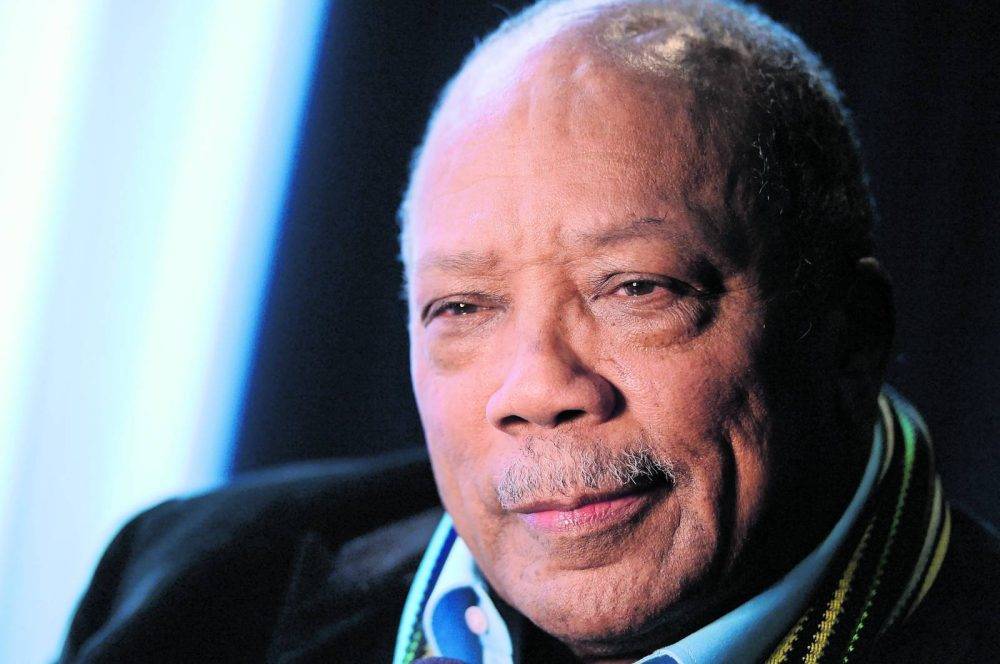
Quincy Jones, 91, composer, musician and producer whose style ranged from jazz, swing and pop to soul and funk. He worked with stars such as Count Basie, Dizzy Gillespie, and Michael Jackson and composed soundtracks for film and TV. Died 3??November.
Ray McCauley, 75, evangelical leader and founder of the Rhema Bible Church. Died 8 October.
Rebecca Cheptegei, 33, Ugandan Olympic marathon runner who was doused in petrol and set on fire by her boyfriend. Died 5 September.
Robin Renwick, 86, British diplomat, author and a member of the House of Lords who served as British ambassador to South Africa from 1987 to 1991. Died 4 November.
Sello Motloung, 54, TV and theatre actor whose work included Human Cargo, uBab’ Stivovo, Master Harold and the Boys and Cold Stone Jug. Died 15??September.
Steven Goldblatt, 67, lawyer and one of the founders of the Weekly Mail (now the Mail & Guardian), who made significant contributions to reforms in various sectors after democracy. Died in May.
Tito Mboweni, 65, democratic South Africa’s first minister of labour, South African Reserve Bank governor and minister of finance. Died 12??October.
Tony Cedras, 72, musician who performed with artists such as Paul Simon, Harry Belafonte, Miriam Makeba, Hugh Masekela and Gigi. Died 29 January.
Tony Heard, 86, former editor of the Cape Times, who opposed the apartheid regime. Died 27 March.
Viktoriia Roshchyna, 27, journalist, detained in a part of Ukraine occupied by Russia. The defence ministry in Moscow gave the death date as 19??September but no cause of death.
Violet Sizani Siwela, 68, member of the ANC’s national executive committee, the National Assembly and of the Mpumalanga legislature. Died 18??January.
Willem Heath, 79, a judge appointed by Nelson Mandela to head the commission of inquiry into maladministration and corruption in the Eastern Cape, from which he became the founding head of the Special Investigating Unit.
Yahya Sinwar, 62, a Hamas leader killed by Israeli troops during a gun battle in southern Gaza. He spent 22 years in an Israeli prison until his release in a prisoner swap. Died 16??October.
Sources: Encyclopaedia Britannica, The Guardian, Al Jazeera, BBC, TimesLive
Buganda cultural heritage is being eroded by vulgar lyrics:
Louis Armstrong stated: “There are two kinds of music, the good and the bad.”
Beninese singer-songwriter Angelique Kidjo put on a stunning performance at the re-opening of the Notre-Dame cathedral of Jerusalema, a song by South African DJ Master KG (Kgaogelo Moagi).
This is in stark contrast to the vulgar and explicit music released in the same week by two Ugandan musicians.
Kidjo’s music reasserts the importance of culture, while Gravity Omutujju (aka Gereson Wabuyi) and Lil Pazo (aka Mukasa Yasin) promote sexual immorality.
Music not only serves as entertainment; it is therapy and educational. Music is powerful. As people listen to it, they are also psychologically and physically affected, prompting responses.
Music revitalises indigenous languages, a big component of cultural heritage. But music has increasingly become more commercialised and competitive, prompting musicians to adopt marketing stunts and explicit music to remain famous. Such gimmicks are eroding our cultural heritage.
Music can be used to express love and sexual fantasies. It should never cross the line of turning into vulgarism.
I listen to music composed by Ugandans Naava Grey, Isaiah Katumwa, Azawi, Bobi Wine, Jose Chameleon, Gravity Omutujju, Lil Pazo, as well as musicians from other countries such as Cassper Noyvest and Nasty C, among others.
I am concerned about the lyrics in new songs compared to those in earlier days of people like Philly Bongoley Lutaaya, Miriam Makeba, Brenda Fassie, Lucky Dube and Dave Matthews. Their music was inspiring and educational and still thrills the world whenever it is played.
Songs such as Enkuddi and Ensujju by Lil Pazo, which are sung in Ugandan languages, are explicit about sexual organs, immorality and sexual misconduct and are dominating social media platforms.
A musical talent is one of greatest gifts the Creator granted a few and it should not be misused.
Both music and indigenous languages preserve and protect African culture with the purpose of organising society. Good music with lyrics in our indigenous languages has built a strong social fabric. It promotes national pride and earns money that boosts African economies.
According to the World Bank, streaming music will raise $ 500 million by 2025 in Africa, about five times the revenue in 2017.
After Angelique Kidjo performed at the 2020 Olympics, Benin’s economy earned $ 202.60 million. Nigeria, the second biggest economy in Africa, is earning about $ 2 billion annually from Music.
Uganda has huge potential of socially and economically benefiting from the music industry, just as Benin, Ghana, Senegal, South Africa and Nigeria do.
But efforts by the Ndere Troupe, Annet Nandujja, Naava Grey, Isaiah Katumwa, Caesar Kajura and other Ugandans are being jeopardised by the likes of Gravity Omutujju and Lil Pazo and their vulgar music.
Recording labels and song writers must take responsibility to produce good, inspiring music and refrain from vulgar music that degrades our indigenous languages and human dignity.
As music lovers, we can reject this kind of music by not listening to it.
Robert Kigongo is a sustainable development analyst.
2024: The year democracy was tested in Africa:
At the beginning of the year, Africa was scheduled to have presidential or general elections in 19 (35%) countries. A total of 180 million eligible voters were expected to make their mark. This was a test for democracy and institutional capacity to successfully provide oversight and ensure smooth transitions, given that since 2020 Africa has experienced seven coups.
In 2020, there were military coups in Guinea, Burkina Faso and Mali. The following year, Chad’s army came to power. And in 2023 there were coups in Niger (July), Gabon (September) and a failed coup in Guinea-Bissau (November-December). These coups were supported mostly by the youth. The reasons for the rise of coups in places that had previously embraced multi-party elections include the failure of the governing elites to create an inclusive framework for development, France’s influence on fiscal policy in most of her former colonies and struggling economies. Over the past five years few countries achieved GDP growth higher than 5% and formal sector employment remains a rarity for youths graduating from universities. The number of Africans trying to migrate out of the continent in search of greener pastures is on the rise. Latest data from the World Migration Report suggests that there are about 43 million African migrants overall, with 21 million living in another African country.
By the end of 2023 it seemed as if electoral democracy had come to its premature collapse in Africa. Beyond the coups, several studies were beginning to point towards a waning influence of democracy, especially among the youths. Youths (people under the age of 25) make up 60% of the population, making them the biggest voting cohort. According to an Open Society Foundation study, African youths are less likely to vote, participate in community meetings or contact political leaders compared to those older than 35. According to research by Marjoke Oosterom (2023), young people are frustrated with their ageing leaders and that democracy has not delivered, in particular with respect to generating decent employment.
It is against this background that the elections of 2024 gave democracy another chance. Peaceful elections that led to change occurred in Botswana, Ghana, Senegal and South Africa, where the ruling ANC lost its majority for the first time. The elections in Namibia led to the ascension of a female president.
Election-related upheavals are to be expected in regions where governments have repeatedly failed to deliver on their promises. For example, Mozambique has experienced civil unrest since the election results were announced.
Democracy has its enduring supporters; there is a desire among African regional bodies such as the African Union and sub-regional bodies such as the Economic Community of West Africa States, Southern African Development Community and East African Community to ensure that multiparty democracy thrives. The AU and sub-regional bodies have invested significantly in developing best practice guidelines on the holding of free and fair elections. Election monitoring and observing has grown as a practice across Africa.
But democracy is costly. The average price of an election in Africa — $ 4.20 per capita — is twice the world’s average and higher than the $ 4 spent in Europe, North America and Australia. Estimates show that Sub-Saharan Africa spent almost $ 50 billion on polls from 2000 to 2018. Despite delivering very little in terms of change, the elections are also a huge drain on the fiscus.
But holding elections is not enough. According to Afrobarometer, the number of citizens in Africa with little or no confidence in their national electoral commission rose from 41% to 55% from 2011-13 to 2021-23. Elections should not be a ritual of changing power among elites; the electorate is impatient for change. In many instances voters have demonstrated their displeasure with incumbent parties for their failure to ensure economic growth and improve livelihoods.
At first glance it seems ideological differences no longer exist, given the collapse of Eastern Europe or the Soviet bloc in terms of the ideologies they used to pursue. It may seem as if there is a new consensus that development is going to be carried out using the tools of the West, which is capitalism. But further analysis beyond the surface suggests there are huge ideological concerns and differences across political parties, usually between incumbents and opposition political parties. Opposition politicians have mostly sold a new utopia of an effective government with adequate resourcing and autonomy to quickly transform economies. They make promises to wipe out corruption and state ineffectiveness. The new ideology spreading across Senegal all the way to South Africa is about a new and capable African state responsive to the needs of citizens.
There is an added dimension in the Francophone belt of “doing away with France”. France has had a huge post-colonial role in terms of the economies of former colonies, through managing the currencies and limiting fiscal autonomy of governments. For instance, the election in Senegal was not just about removing the incumbent, but also about freedom from the control of France.
Remarkably, personality politics is being replaced by a new issues driven framework. Incumbent political parties that have failed to address electoral promises they made in an earlier cycle, resulting in their disappointment in the polls. The electorate in South Africa did not consider the historical role that the ruling ANC played in the liberation struggle but rather focused on contemporary failures of service delivery, an under-performing economy and widespread corruption in the government. The new political discussions are now focused on performance issues, notably the extent to which governments can deliver on election promises.
Although there is evidence of the deepening of democratic practices on the continent, notably through the embracing of elections as an instrument for changing governments, there is a simultaneous increase of authoritarianism through clamping down of dissent and alleged rigging of election results. In Mozambique, violent protests erupted soon after the announcement of the results. Many dispute the victory of Frelimo’s Daniel Chapo. In Tanzania, a country will hold elections in 2025, opposition leaders have been incarcerated, their rallies have been banned and some 500 activists have been arrested, accused of plotting violence. In Zambia, opposition rallies have been banned and protesters against 17-hour power cuts were arrested. Even after elections, those who have opposed the government agenda and spoken out against authoritarianism have been arrested.
The belief that elections are a necessary but not sufficient condition for democracy rings true as we observe the events on the continent. There is the general thinking especially amongst the electorate, that the elections are a silver bullet, that the elections are going to lead countries to the promised land. This messianic view of elections crowds out other democracy enhancing practices such as broader citizen participation. Perhaps the more worrying trend is that many African countries are in perpetual election mode diverting time and attention from development and post-election citizen engagement practices. It becomes difficult even for the new government to focus on governing without being concerned about winning the next election.
Dr Tendai Murisa is the executive director of the Sivio Institute, a think tank based in Harare, Zimbabwe
Submit and get free exposure here: Showcase Your Business | Advertise Your Special Offers.