Why Greenland is strategically vital to US interests:
In his first term as president, current American president-elect Donald Trump was heard hinting that he would welcome Greenland as an American territory under the custodianship of the United States.
At the time, no one seemed to take him seriously, and those who did thought it was highly unlikely to succeed given the myriad other concerns and roadblocks then President Trump would have to navigate.
Now that he has again been elected to the highest office in the land — and is set to become arguably the most powerful person on the planet once again — he has repeated his desires, this time rather more vocally.
But why is he so determined to get Greenland, an Island with a population of roughly 57,000 people who could fit into Johannesburg’s FNB stadium with room to spare?
For starters, the Thule Air Force base. It has been in operation since 1941, when it was known as US Air Force Base Greenland and served as a staging area for operations in Europe by US aircraft following the occupation of Denmark by Nazi Germany.
Since that time it has expanded to serve additional security and scientific purposes, including providing research into vehicle types and designs that can be used by NASA, SpaceX and others.
Thule Air Force base serves as one of numerous sites that assists NORAD (North American Aerospace Defence Command) with its NWS (North Warning System).
While not officially part of NWS, the base provides radar stations and other support to NWS in achieving its objectives of monitoring threats including aircraft, missiles or space objects that may pose a threat to North America.
It also monitors maritime threats to North America and provides aerospace control of the Arctic and parts of Northern Europe by tracking and, if necessary, intercepting aircraft hostile to North America.
The necessity to ensure security over this region has, and will, only become more vital for American interests as climate change increases the arctic melt, opening up previously frozen shipping lanes in the region.
Monitoring of straits
It also provides a position from which to monitor and control the Bering Strait, which links the Arctic and Pacific oceans between Russia and North America, the Fram Strait, which links the Arctic and Atlantic oceans between Greenland and Svalbard (a Norwegian Archipelago in the Arctic ocean north of Europe) and the Davis Strait, which is a vital route between Greenland and Canada’s Archipelago which gives access to North America from the Arctic ocean.
Control of these shipping routes will become more important as the Arctic ice continues to melt, making them more accessible. It is therefore in NATO’s strategic interests to ensure that neither Russia or China is able to assert control over the Island. But the benefits don’t stop there.
The opening of the shipping lanes as the ice melts will also have significant benefits economically for whomever controls the region.
As arctic ice melts and opens up the waterways the North West Passage, which is often too frozen to navigate and requires ice breakers to access, will provide an alternative route between Asia and Europe to those already in use, including the North Sea Route, which is controlled by the Russians (who impose fees and regulations on the route) and the Suez Canal.
The North West Passage is roughly 40% shorter than the Suez Canal route between Asia and Europe. Global tensions between the USA and Russia and China could see the need for a shorter alternative route also becoming of vital strategic importance for USA interests.
All of the above, while strategically important, are not the only benefits the USA would gain from control of Greenland.
Mineral deposits
The world’s largest island is extraordinarily wealthy in mineral deposits that have thus far been difficult to access because of the extreme weather conditions on the Arctic island and environmental concerns that exploration and excavation could have on the region.
The fears include the potential for water contamination with hazardous materials and the effect on the indigenous Inuit people inhabiting the Island, who rely heavily on traditional methods of hunting and fishing.
Mining operation could have detrimental effects on their food security and cultural practices, and there would be the potential for a loss of biodiversity due to the possible loss of species found nowhere else in the world.
Should the United States not only gain control of Greenland, but also authorise mining operations in the region, they would gain access to numerous valuable minerals including molybdenum, which is used in the production of steel and alloys and plays a key role in the production of electronics and chemicals.
In the medical industry it is used in X-rays and other imaging technologies, the production of corrosive resistant coatings and it is used in military and aerospace production due to the capability of molybdenum alloy to withstand extreme conditions such as high stress and heat.
It also happens to be used to create armour piercing ammunition.
Other minerals include niobium, zinc, lead and thorium.
There are also believed to be deposits of graphite, copper, gold, platinum group metals, and diamonds.
A 2023 survey indicated that Greenland contains 25 of the 34 critical minerals identified by the European Commission. Most importantly, Greenland is believed to have one of the largest deposits of rare earth minerals (REEs), including uranium, in the world.
REE’s are used in industries from magnets to lightbulbs, TV and computer screens, ceramics, glass, lithium ion batteries, wind turbines, solar panels, smartphones, electric motors and even hydrogen storage, to name a few.
But most importantly it is used in guided missile technology and some REEs significantly improve the performance of radar and communication systems.
China and rare earth minerals
The problem for the USA is that China currently accounts for between 60 to 70% of REE mining production and 80 to 90% of REE refining globally. This could be seen to pose a significant threat to USA interests, and the desire for REE independence could be a driving factor behind Trump’s desire for USA control of Greenland.
While it can be said that with Greenland as a territory of Denmark the island is still effectively under the control of NATO and its allies, environmental concerns may be more of a hindrance under Danish authority than under a USA with Trump as president.
Finally, it is important to note that Danish authority of Greenland is contradictory to the Monroe Doctrine which prohibits any new colonisation in the western hemisphere by European powers (“new” meaning after President James Monroe’s speech to Congress in 1823, the USA only officially recognised Denmark’s autonomy over Greenland in 1917) and that any attempt to intervene in the Americas by a European power would be viewed as a hostile act by the USA.
Monroe’s intention was to create a separate sphere of influence apart from the problems facing Europe and is one of the reasons for the USA’s history of isolationism. While the Monroe doctrine is not the official foreign policy of the USA, it has been a driving factor in USA relations with the rest of the world.
With all the above in mind it is not difficult to understand why Trump would view annexation of Greenland to be of vital strategic importance for the USA, even if it means alienating some of his European allies.
It would also be of great strategic importance to Russia or China if they were to gain control of the island and that would pose an unacceptable threat to USA interests.
This is why Trump believes protection of Greenland is important, why he believes the USA is the only power capable of doing so and why he has made his desires, if not his intentions, known to the world.
New giraffe taxonomy discovery stands tall: Four species, four unique skulls:
When palaeontologist and zoologist Nikolaos Kargopoulos embarked on a research project two years ago to analyse the skull morphology of giraffes, he believed that “a giraffe was just a giraffe”.
Kargopoulos travelled the world to 3D-scan a huge dataset of giraffe skulls — 515 to be exact — from African national parks, game farms, taxidermists and museum collections.
“I did not expect to find such clear differences in the skull shapes of giraffes — before I started looking more closely, I thought a giraffe is just a giraffe,” the post-doctoral fellow at the University of Cape Town (UCT) and the Giraffe Conservation Foundation, said.
Kargopoulos is the lead author of a new study, led by UCT, which has further confirmed, through their skull shapes, that there are four distinct species of giraffes. It was published in the journal, PLOS One, in December.
Nearly a decade ago, scientists discovered four species of giraffes — based on their genetics — and not, as previously assumed, only one species. They are the Masai, northern, reticulated and southern giraffe.
Although there were theories of differences in the appearance of giraffes, no study had analysed this until UCT and the Giraffe Conservation Foundation began their research project, working with the Universidad Autónoma de Madrid in Spain, other European universities and numerous African government partners.
Using 3D geometric morphometrics analysis, the study’s authors were not surprised that the research revealed distinct differences between male and female giraffe skulls.
What was unexpected was that the results confirmed the existence of four giraffe species, in line with previous genetic analysis. The four species have different cranial morphologies, largely linked to their ossicones (the bony protrusions on their heads).
The problem with giraffe skulls is that, because of their size, museums rarely have the space for more than five to 10 giraffe skulls, Kargopoulos noted.
“This meant that, if we were to gather as much data as possible, we had to combine our efforts and to sample everything that we could. Considering that at the end of our sampling we managed to scan 515 skulls from 39 different sources, this required very efficient scheduling and a lot of coordination.”
With only 117 000 giraffes remaining in the wild in Africa, the study’s findings are vital in “finally shining a light on the silent extinction of these gentle giants”, the authors said.
While the world’s tallest mammal is found in many countries in sub-Saharan Africa, not all the species are equally represented and, “as a result, some species are in more urgent need for protection than others”, said Kargopoulos.
“For example, there are less than 6 000 northern giraffes remaining in the wild and they live in rather ‘difficult’ regions such as Central and West Africa, while the southern giraffe is comparatively numerous with almost 50 000 individuals in Southern African countries, which are often under better conservation governance.
“Now that we know that there are different giraffe species, it becomes clear that some giraffe species require much more urgent measures than others.”
While the International Union for Conservation of Nature (IUCN) — the global authority on the status of the natural world — “is not a taxonomic expert”, many people continue to look to it for guidance, he said.
“A main problem that has been affecting giraffe conservation is the fact that the IUCN has not yet officially split giraffe into four species … but we are optimistic that this will change soon.”
If this happens, regulations and measures will apply separately to each giraffe species, allowing for targeted conservation strategies to be applied.
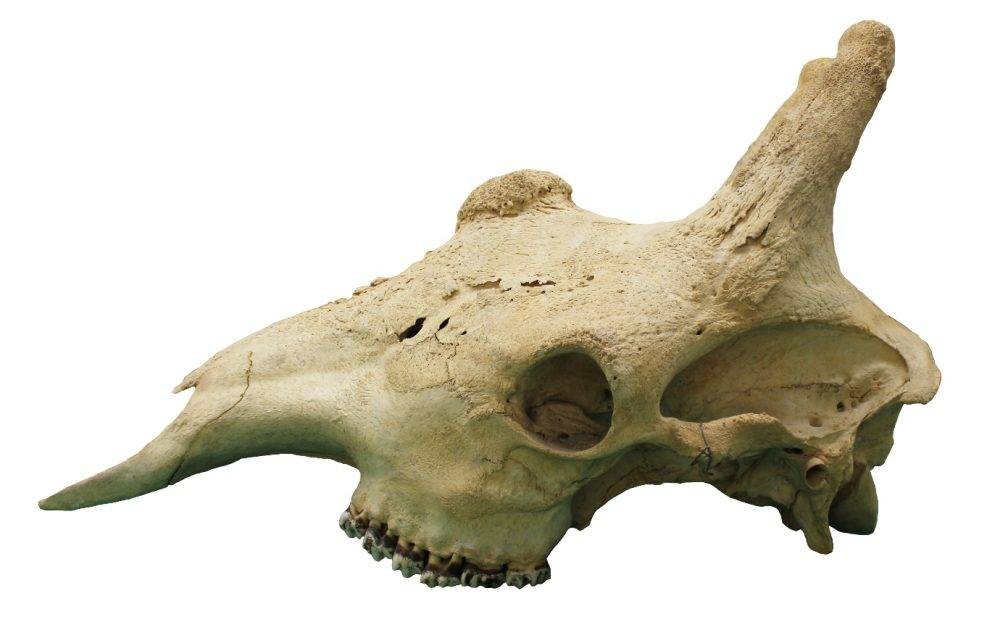
In a statement, Julian Fennessy, the director of conservation at the Giraffe Conservation Foundation and a co-author of the study, said: “For almost a decade our genetic research has proved that four giraffe species exist and now our collaborative morphological research has further confirmed this. It is about time that the world stands tall for giraffes, in particular the IUCN, and changes the outdated taxonomy of giraffes that some still hang on to.”
Conservation efforts need to target all four species, in particular those with precariously low numbers, before it is too late, Fennessy added. “Science is science and facts are facts. I hope that any debate around giraffe taxonomy is now finally put to bed.”
The team’s sampling required the acquisition of 3D models of the skulls, which was performed using 3D scanners, and in some cases, CT scanners. The Giraffe Conservation Foundation — the initial driver behind the study — saw the value and purchased such a scanner, Kargopoulos added.
Geometric morphometrics is used to compare shapes. “To compare the skulls, we placed specific landmarks on the 3D objects [using specialised software] which, when combined, captured the overall shape of the skull.”
The software can identify the coordinates of these landmarks — their 3D distance from the centre of mass of the skull — and then compare their exact position between all the skulls using statistical tools.
“At the end, we can tell whether the position of the landmarks is different between defined groups, such as sexes, species, age classes etcetera.”
Although geometric morphometrics has been used in biology for several decades, sampling and analysing tools have recently developed to such a degree that they enabled complex tests that weren’t previously possible, Kargopoulos pointed out.
There is a lot of variation in giraffe skulls, especially in the ossicones.
“If we dive deeper into our analysis, we can see small differences in many regions of the skulls, such as the orbits, the rostrum, the back part of the skull etcetera. However, the most striking difference between the four species can be seen in the development of the central ossicone, which is located above their eyes, especially in males.”
There seems to be a clear trend in the development of this ossicone that follows geography and taxonomy.
“As we move from the south to the north, this ossicone gradually becomes bigger.
“The two extremes are the southern giraffe, in which this ossicone is practically a faint hill, and the northern giraffe, in which this ossicone is very high and pointy. The Masai giraffe and reticulated giraffe occupy intermediate positions.”
Giraffe ossicones are important because they affect selection for reproduction and, therefore, evolution. Males with more developed ossicones look more intimidating and are more likely to win in a direct fight between males, Kargopoulos said.
“Thus, they are more successful in territorial claims but also more successful in their mating efforts with females. In this framework, ossicone shape is a key aspect of giraffe anatomy that affects their life and evolution.”
The study’s authors are preparing additional scientific papers based on the data. “It’s fascinating how much we can learn from just by looking at the skulls,” he said.
Submit and get free exposure here: Showcase Your Business | Advertise Your Special Offers.