
William Smith’s legacy points the way to fixing deep inequalities in the school system:
William Smith, the beloved teacher whose televised lessons in maths and science became a lifeline for countless students, died on 21 August at the age of 85. For decades, Smith was a beacon of hope for learners across the country, especially those in under-resourced areas who lacked access to quality education.
His clear, accessible teaching style made complex subjects understandable and even enjoyable for those struggling in an education system that left them behind. Reflecting on his death, Paballo Chauke wrote: “Most South Africans from multiple generations owe their educational success in maths & physics to the great teachings of William Smith who just passed away from cancer.” Yumnah Jones also expressed her gratitude: “To the most famous maths teacher in South Africa, rest in peace, Sir. Mr William Smith will always be remembered for making the most hated subject, the most fun and easy to understand.”
These reflections underscore not just Smith’s influence, but the stark reality of South Africa’s educational landscape — a system that remains deeply unequal and fractured. South Africa is grappling with an education crisis, particularly in the areas of literacy and numeracy. According to the 2021 Progress in International Reading Literacy Study (PIRLS), a staggering 78% of grade 4 learners cannot read for meaning. This dismal figure places South Africa last among 50 participating countries, with black learners and those in rural areas disproportionately affected. In comparison, countries such as Kenya and Tanzania have literacy rates for the same age group that are nearly double, despite facing similar economic difficulties. The issue extends to numeracy as well. The 2019 Trends in International Mathematics and Science Study (TIMSS) showed that only 37% of grade 5 learners in South Africa achieved basic numeracy, significantly below international standards. To put this in perspective, countries like Botswana and Ghana, which also struggle with resource limitations, outperform South Africa in both literacy and numeracy.
When South Africa is compared to other Brics nations, the disparity becomes even more glaring. In Brazil, about 55% of grade 4 students can read for meaning, while in India, the number stands at about 45%. Both countries, despite their difficulties, have managed to secure better educational outcomes in primary education than South Africa. Furthermore, in the realm of maths, Brazil and India have consistently outperformed South Africa in the TIMSS rankings, reflecting more effective educational interventions and policies.
The crisis is not limited to the lower grades. At the matric level, the disparities continue to manifest starkly. While the overall matric pass rate in 2023 was about 80.1%, this figure masks deeper problems. Only 36.4% of public school matriculants achieved a Bachelor’s pass — an essential requirement for university entrance — compared with a staggering 98% of private school students. Moreover, in poorer provinces such as the Eastern Cape, the situation is even more dire; in this region, less than 20% of grade 5 learners meet basic numeracy standards, and the Bachelor’s pass rate is significantly lower than the national average.
These statistics highlight the deep-seated inequalities in South Africa’s education system, where outcomes are closely tied to socio-economic status and racial background. Learners from the poorest quintiles, predominantly black, are more likely to attend under-resourced government schools. These schools often lack the basic infrastructure, qualified teachers and learning materials to provide a quality education. In contrast, wealthier students have access to well-resourced schools that offer smaller class sizes, better facilities and more extracurricular activities. For example, while 68% of white students achieve a pass in maths in grade 9, only 24% of black students do so, reflecting the systemic inequalities that continue to limit educational and economic opportunities for the majority of South Africans.
The long-term implications of these educational disparities are dire. South Africa’s youth unemployment rate, which stands at about 61% for those aged 15 to 24, is among the highest in the world. This is partly because of the poor educational outcomes that leave young people without the basic skills needed for employment. Employers often report that young South Africans lack proficiency in critical areas such as numeracy and literacy, making it difficult to find work in a competitive job market. This skills gap contributes to the high levels of unemployment and underemployment, further entrenching poverty and inequality.
Poor education outcomes have far-reaching social consequences. Research has shown a strong correlation between poor educational attainment and various social ills, including crime, substance abuse and mental health issues. The South African National Youth Risk Behaviour Survey, for instance, found that learners who perform poorly at school are more likely to drink alcohol and take drugs. Additionally, there is a significant link between dropping out of school and involvement in criminal activities.
Mental health is another critical area affected by the education crisis. The South African Depression and Anxiety Group (Sadag) reports that one in four teenagers have attempted suicide, with rising rates of depression and anxiety among learners, particularly those in under-resourced schools. The pressure of academic failure, coupled with a lack of future prospects and socio-economic hardships, contributes to these mental health problems.
Addressing these deep-seated educational inequalities requires a comprehensive and multifaceted approach. The government has implemented several initiatives aimed at improving education, but progress has been slow. The National Development Plan (NDP) sets ambitious targets for improving education quality and access, but significant challenges remain, particularly in the areas of resource allocation and infrastructure development. There is an urgent need for increased investment in education, particularly in rural and township schools that are most in need.
Improving teacher training and retention is also crucial. South Africa suffers from a shortage of qualified teachers, particularly in subjects such as maths and science. The government’s efforts to recruit and retain skilled teachers in underserved areas have had limited success, and more innovative approaches are needed to address this critical issue. Additionally, ensuring that all learners have access to the necessary learning materials and resources is essential for improving educational outcomes. This includes not only textbooks and classroom supplies but also digital resources, which have become increasingly important in the wake of the Covid-19 pandemic.
It is imperative that any new approach to education in South Africa considers the digital divide that continues to exacerbate educational inequalities. The pandemic laid bare the disparities in access to digital resources, with many learners in rural and impoverished areas left without access to online learning. A holistic approach to addressing the digital divide is necessary to ensure that all students, regardless of their socio-economic background, can benefit from the new methods of education that are available. This includes not only providing access to digital devices and affordable data but also training teachers and students in the effective use of digital tools for learning.
Beyond government efforts, there is also a critical role for private and NGOs in supporting education. The legacy of educators like Smith demonstrates the effect that dedicated people and well-designed educational programmes can have on learners, particularly those in disadvantaged areas. Programmes that provide accessible, high-quality education to students in need are essential in addressing the educational problems in the country.
The most urgent work required to address our education crisis is, of course, to fix state schooling. But, as Smith showed, agile and at times low-cost interventions from the wider society can also make a difference. It is time for us all, whether in businesses, NGOs, universities, trade unions or elsewhere to think creatively about ways to support our learners.
Dr Vashna Jagarnath is a curriculum developer, historian, trade union educator, Pan-African specialist and former deputy dean of humanities at Rhodes University.
Police crime statistics: Spike in murders of women and children:
South Africa’s overall murder rate may have dropped slightly but rape and contact crimes are on the rise, with more women and children murdered and sexually assaulted during the first quarter of the 2024-25 financial year compared with the same period last year.
According to police crime statistics released on Friday, contact crimes — which include murder, robbery, sexual offences and assault — increased by 2.6% to 153 657 incidents in the first quarter running from April to June 2024 from the same period in 2023. Murder on its own dipped by 0.5% to 6 198. Sexual offences declined by 0.4% to 11 566.
Most of these crimes took place in residences (12 472), public places (9 725), liquor outlets (3 445), spaza shops (467) and educational institutions (259).
South Africa’s murder rate per capita is 10.1 per 100 000 people, while rape stands at 15.1 per 100 000 and assault with grievous bodily harm (GBH) is 61:100 000.
Four of the country’s nine provinces recorded increases in murder cases, with the highest being the Western Cape, followed by North West, the Eastern Cape and Limpopo. All of the top 30 stations for murder were in the Western Cape (11), KwaZulu-Natal (8), Eastern Cape (6) and Gauteng (5). The leading stations were Nyanga, followed by Inanda, Umlazi, Khayelitsha and Harare.
The top five causative factors for murder, attempted murder and assault GBH were arguments, misunderstandings, road rage and provocation; robbery, vigilantism/mob justice; gang-related; and retaliation/revenge punishment. The most frequently used weapon in committing murders were firearms, particularly in KwaZulu-Natal, Western Cape, Gauteng and the Eastern Cape, followed by knives and sharp objects.
Murders of women increased 7.9% to 966 during the first quarter, while attempted murders went up by 16% to 1 644, and assault GBH rose by 69% to 13 757 incidents. Similarly, murders of children climbed 7.2% to 314, attempted murder rose by 19.8% to 424 and assault GBH increased 11.5% to 1 596 incidents.
Sexual offences in general declined 0.4% to 11 566, but rapes rose 0.6% to 9 309, with most of them reported in Gauteng (1 921), KwaZulu-Natal (1 895), the Eastern Cape (1 466), and Western Cape (1 037).
There were 91 rapes and 12 murders reported at educational facilities, including schools, universities, colleges and day care facilities, across the country, of which 74 rapes and nine murders occurred on school premises although not all the victims were learners.
Of the 3 494 kidnappings reported, criminals demanded a ransom in 135 cases, while 30 involved extortion and eight were identified as cases of human trafficking, police crime registrar Major General Thulare Sekhukhune told reporters during the release of the statistics .
Carjacking and robbery at residential and non-residential premises declined 2.7% to 15 230. There were 5 438 carjackings, 5 642 residential robberies and 4 151 non-residential robberies. The number of cash in transit cases dropped 24% to 36, while truck hijackings slid 70% to 429 incidents.
Police Minister Senzo Mchunu said these statistics told a “sobering story” about the severity of the problems the country faces.
“These numbers represent more than just figures on a page, they reflect the lived realities of our citizens — their fears, their losses, and their hopes for a safer tomorrow. The data is a stark reminder of the urgent need for action,” he said.
“We are confronted with a crisis that threatens the safety of our communities and undermines the stability of our nation. Contact crimes in particular are wreaking havoc and instilling fear. This is unacceptable, and we must confront this challenge with unwavering resolve and strategic precision.”
Mchunu said the most worrying crimes are murder, rape, hijacking, kidnapping for ransom payments and extortion. The ministry’s priorities include the “number one priority” of bringing down crime levels, the professionalisation of the police service and uprooting of corruption, investment in technology and capacitation of the crime intelligence unit to provide better insights and strategic advantages in the fight against criminal networks, he added.
The minister undertook to collaborate with sister departments — including the department of social development, justice, correctional services and basic education — in the fight against crime.
“Together, we will map out areas of cooperation, implementing a whole-of-government and whole-of-society approach to tackle the root causes of crime and build safer communities,” he said, adding that the police would sign a crime fighting cooperation agreement with the Western Cape government and the City of Cape Town on Friday.
“We will be implementing this model throughout the country. We will not rest until every South African can walk the streets without fear.”
WRC launches virtual platform to amplify sanitation innovation in Africa:
The Next Generation Sanitation Knowledge Hub will provide resources, access to service providers, funding opportunities, data and insights on this new generation toilet system
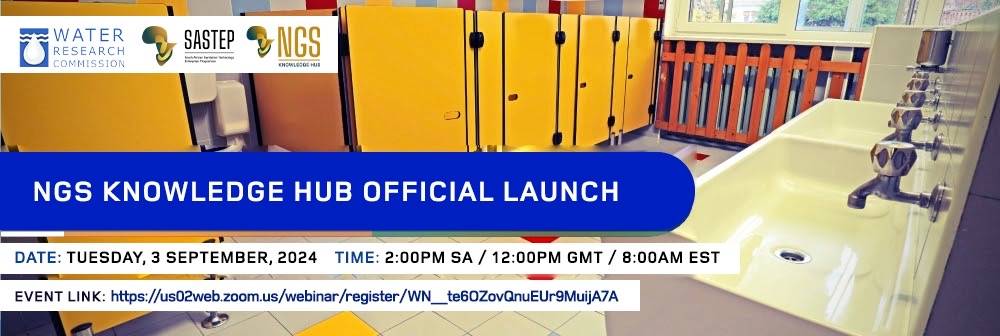
On 3 September 2024, the Water Research Commission (WRC) will launch the Next Generation Sanitation (NGS) Knowledge Hub, a digital platform that will educate and inform stakeholders on waterless sanitation innovation in Africa and build a thriving sustainable industry that addresses the unique water and sanitation challenges faced by countries across the continent.
The Knowledge Hub will provide resources, access to service providers, funding opportunities, data, and insights on this new generation, closed circuit, 100% recycling and off the grid toilet system that transforms wastewater into clean water for flushing or irrigation without the need for connections to sewers, treatment plants, water supply, or continuous electricity.
Stakeholders such as manufacturers, policy makers, development partners, and advocates are encouraged to join the community as members to have access to a seamless and intuitive experience and tools and resources that will include:
? Access to resources to promote and advocate for NGS
? Access to policy briefs to accelerate industrialisation
? Access to a curated database of potential funding and technical assistance partners
? Prospects and potential partnerships
? Use cases and associated benefits
? Connections with NGS suppliers
? NGS Data and Insights
? A Learning Library
? Connections with a thriving NGS community
“We are thrilled to launch this Knowledge Hub platform to offer holistic and integrated solutions to meet the continent’s water and sanitation challenges and contribute directly to the achievement of the UN Sustainable Development Goals and National Development Plans. The platform will streamline up-to-date data and insights, improve communication among stakeholders and suppliers and facilitate adoption of these innovations for policy makers, manufacturers, independent contractors, and governments,” says Phillip Majeke, Commercialisation Manager for The South African Sanitation Technology Enterprise Programme (SASTEP).
NGS innovations have adaptable designs that allow for retrofitting to match existing infrastructure seamlessly and cater to a diverse range of entities, including educational institutions, manufacturing industries, public and private sectors, residential contractors, and municipal bodies. The systems are designed to meet the stringent requirements set by local Departments of Environmental Affairs, Water and Sanitation.
The virtual launch of the platform will be held on 3 September 2024 and will feature an expert panel exploring policy, research and market access of new sanitation technologies in Africa.
To register for the virtual launch, visit:
https://us02web.zoom.us/webinar/register/WN__te6OZovQnuEUr9MuijA7A#/registration
Submit and get free exposure here: Showcase Your Business | Advertise Your Special Offers.
