
Zambia’s economy is controlled by foreigners:

The story of Zambia after 59 years of independence is a sad tale, though not unique to this landlocked country; it’s similar to that of many post-independence African states.
Zambia, which has great potential, is surrounded by eight countries. Unfortunately, the mineral wealth, water resources and the arable land does not in any way benefit the people directly. The problem for Zambia, like that of most of the continent, is the problem of ownership of the means of production. Strategic sectors of this country’s economy are not in the hands of Zambians.
The Republic of Zambia, which came into being on 24 October 1968, promised innovation and adequate resource mobilisation, including state ownership of all relevant sectors of the economy, with research and development being at the heart of nation building. The future of Zambia was as bright as a rising star. The kwacha was on par with the British pound and competed with other major currencies for the best years of post-independence.
But a few years later the performance of the currency became unstable, with a negative trajectory of other economic indicators such as inflation and unemployment. And in light of this observation, Zambia is worse off now after more than five decades of self-rule simply because the masses do not control economic activities that contribute to the GDP.
Zambian leaders’ lack of patriotism is shocking. Nation building does not only require sacrifice by the people. For almost six decades Zambians have been complacent when it comes to what matters the most in terms of fundamental change. Forget about the “today here gone tomorrow” politicians and their promises. Zambians should wake up to the reality that collectively they do not own anything in this country which is their birthright. These people have had the privilege of changing governments a few times, something which is unattainable in other African countries. Despite Zambia being a democracy and a great example for peace in the region, many people still wallow in poverty.
Here are a few things Zambians should consider to bring about the kind of change they need. They must recognise the problems for what they are — that the economy is predominantly in the hands of foreign investors. Government policies since the early 1990s are more favourable for foreign direct investment at the expense of local entrepreneurs and innovators.
For example, many industries are heavily controlled if not owned by non-Zambian corporations. Let us consider the construction sector; all road works and other government contracts or tender, are mostly in the hands of the Chinese. There is nothing wrong with having foreign investors as equal partners in development as a nation but what we are faced with is not an equal partnership, because none of the monies obtained go to the Zambian treasury. Another example is the mining sector. Not one operational and profitable mine is owned by a Zambian individual or corporation. Today the leading mining companies such as First Quantum Minerals, Vedanta and GlenCore are all foreign companies enjoying huge tax holidays from the Zambian government, while making exponential profits year in and year out. Truth be told, Zambia needs a serious leadership that will fix this problem once and for all.
We should consider another vital sector of the economy, the retail industry, which has been taken over by the likes of Shoprite, Pep and Pick n Pay which are in all the major cities and towns in Zambia. These powerful retail chain stores are all South African companies, and no Zambian company comes close. This means all the profits and paid dividends quietly escape Zambia into the hands of the owners. Again, none of such monies goes to the Zambian treasury, because some of these companies have tax breaks from the Zambian government for a certain period of time.
All banks in Zambia are foreign owned, with the exception of the Zambia National Commercial Bank (Zanaco) and Invest Trust Bank. But these two banks are not the major players in this sector, because Absa, FNB, Standard Chartered, Citi Bank, Stanbic and others dominate the industry.
Zambia needs a government that will boost local direct investment and champion the spirit of entrepreneurship among the people. This should be done in practice rather than in rhetoric, by awarding road works and other construction contracts to local engineers and contractors who in return partners with foreign experts. In simple terms, Zambians should be the owners of this industry. Instead of building shopping malls countrywide, the government of Zambia must invest money in building factories and agriculture facilities that will create lasting jobs. Goods produced in these factories can be exported, thereby earning forex for the country, and improving the currency.
A cashier at Pick n Pay makes K4 380 (about R3 838) a month. This is pathetic by any standards, because these people deserve a decent living wage for them to pay for housing or rent, put food on the table and take their children to school.
After 59 years of independence Zambia needs real change. But to achieve meaningful change, Zambia will have to answer the question of ownership and control of its means of production. Taking back the economy from the hands of foreigners and investing in the people is the only option to keep the money in terms of profits in the country and so contribute to the GDP growth. There is no major country in the world that has attained the status of a fully developed or industrialised nation with an economy dominated by foreign ownership.
Aaron Ng’ambi is a geopolitical analyst and newspaper columnist, leadership instructor and a social entrepreneur.
The post Zambia’s economy is controlled by foreigners appeared first on The Mail & Guardian.
Climate finance still a vital issue at COP28, Creecy says:
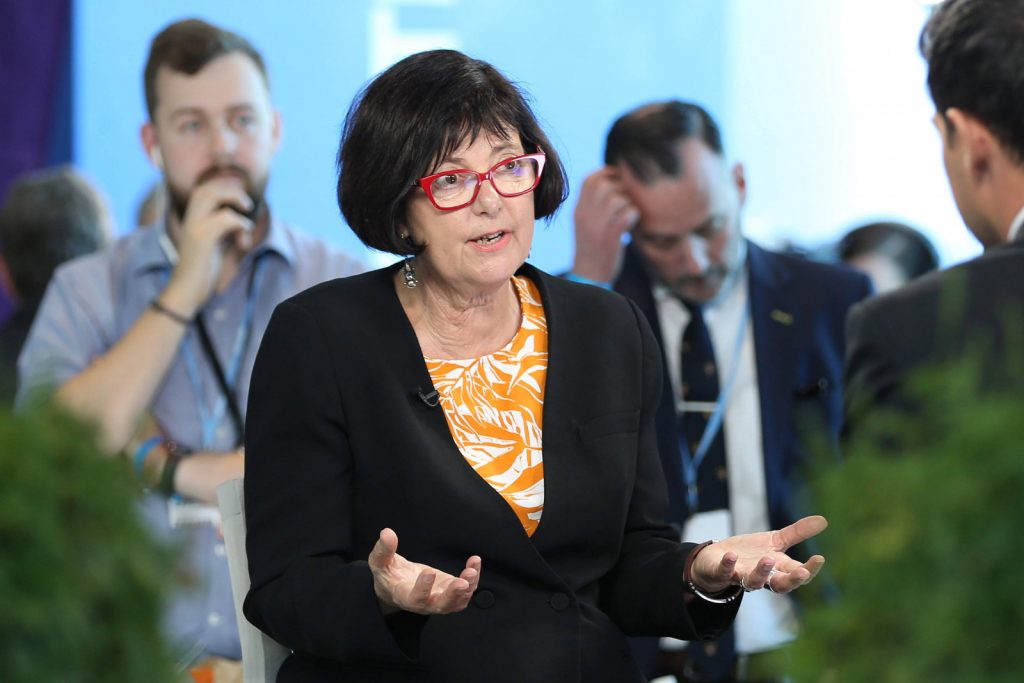
Developing nations have continually called for more support for the financing of their fight against climate change, yet the funding targets pledged by developed countries are still not being met, Forestry, Fisheries and Environment Minister Barbara Creecy said.
The minister, who was addressing the national stakeholder consultations on Thursday before the UN climate meeting, said that, as with all Conference of the Parties, finance would remain a key issue at COP28, which starts on 30 November in Dubai, United Arab Emirates.
“There will be a renewed call for a scaled-up and predictable goal for climate finance at COP28,” Creecy said. “The deadline for agreeing upon this goal is 2024 and the success of this COP, and perhaps future climate talks, will depend on the outcome.”
At COP27, South Africa’s delegation, together with the African continent, put forward a proposal to include the special needs and circumstances of the continent on the conference agenda, but this did not enjoy consensus, she said. This proposal will be made again at COP28.
Acknowledging Africa’s unique circumstances will be an important step in upholding the principle of differentiated responsibility and would recognise the continent’s vulnerability to climate change and the need for support for mitigation and adaptation.
“The African continent has historically only contributed 2% to the build-up of global emissions that are causing the current climate crisis and yet our continent is still being severely affected.”
Important milestone
COP28 is an important milestone as it takes place exactly halfway between the adoption of the Paris Agreement in 2016 and the UN 2030 Agenda on Sustainable Development, Creecy said. The Paris Agreement is a legally binding international treaty on climate change.
“We know that 2030 is regarded by scientists in the climate change space as being a critical milestone and so it’s going to be an important opportunity for the global community to take stock of the progress we have made since the signing of the Paris Agreement,” she said.
This particular COP comes at a time when the world as a whole is starting to “grapple with the impact of climate change on daily life”, the minister said.
“We have seen, very sadly, the enormous impact that climate change is starting to have on our own continent, the devastating drought in the Horn of Africa and the flooding that our country and many of our neighbouring countries have experienced over the last couple of years … And, what we know is that because our continent has not adequately built climate resilience, we’re already substantially moving into the arena of loss and damage.”
At COP27, the big victory for developing countries was the formation of the global loss and damage fund. But while the establishment of the fund is important, the “difficult task” of working out the details of the fund — how it will be financed, where the finance will come from and the form it would take — will be one of the key items on the agenda in Dubai, she said.
Global Stocktake
Significantly, Creecy said, the first Global Stocktake (GST) will be completed at COP28. “This is an opportunity for the world to look backwards and to assess what progress we have made in meeting the terms and conditions we adopted in Paris.”
It’s also an opportunity “for us to look forward and decide how we need to improve ambition going forward”, she said. “We already know we are not on track and we know that much more is needed to be done if we are to achieve the goals that science tells us are so necessary.”
Creecy said the discussions on the outcome of the GST had started and focused on key political messages, and more importantly, on multilateral and national measures that need to be put in place to “accelerate our journey towards a more sustainable and equitable world”.
The outcome of the GST will be the central outcome of COP28 and it “must increase collective action on mitigation, adaptation, loss and damage and the provision of support to developing countries to achieve this, commensurate with the challenges we face”.
As the co-facilitator of the consultations on the outcome of the political phase of the GST, together with Demark, South Africa is supporting the incoming Emirati COP presidency to help identify “areas of convergence and divergence” between parties in the run-up to and during COP28.
Clear targets
At the past three COPs, the South African delegation has joined delegations from other developing countries in calling for a clear adaptation work programme with clear targets for building the resilience of developing countries and clear financial mechanisms to achieve this.
To date, there has not been substantial progress on this matter, Creecy said.
Maesela Kekana, South Africa’s chief negotiator on climate change, said adaptation is a key priority, not only for South Africa, but for the African continent.
“We are busy doing work under the Glasgow-Sharm el-Sheik work programme on the global goal for adaptation and we want to see tangible outcomes.
“We do not have a target, believe it or not, for adaptation or adapting to these impacts of climate change. We do not have agreed indicators, so that will be the big work for us during the COP.”
On doubling finance for adaptation, Kekana said: “Last year, the African continent proposed an agenda item to deal with that particular issue, but it did not fly, and we will try again this year.”
Mitigation is the first line of defence. “If you do not have enough mitigation, your adaptation costs are quite significant, and if you don’t have adequate adaptation measures, then you go into losses and damages, so the mitigation work programme for us is quite important and we do not want to see any backtracking there,” Kekana said.
“We want to see a push to accelerate the reduction of these greenhouse gas emissions, particularly from the developed countries. The Paris Agreement indicates that they should clearly take the lead on this.”
Broken promises
Developed countries need to fulfil their previous climate finance commitment of $ 100 billion a year as this is a “trust building exercise”, Kekana said. If they fail to deliver on this goal there will always be a trust deficit, he said.
“As you know, there have been pledges since 2009 of about $ 100 billion from developed countries to developing countries. That pledge has not yet been fulfilled, so it’s quite important we receive a presentation on that [at COP28] to see what’s really going on there.”
The $ 100 billion commitment expires next year “so by 2025, we should have concluded the negotiations for a new goal”.
“Our view is that the new goal has to be based on the needs of developing countries because the $ 100 billion goal just dropped from the sky and is completely inadequate to meet our needs,” he said.
It is urgent that international co-operation be enhanced, he added. “We all know that even if South Africa were to emit zero emissions today, we will still be impacted if everybody else is still not reducing their emissions, so international solidarity and co-operation is important.
“The issue of providing resources to middle-income countries such as South Africa to do their own actions is also important. The issue of providing resources for less developed countries, the small island developing states, to build resilience and adaptive capacity, is quite critical.”
The post Climate finance still a vital issue at COP28, Creecy says appeared first on The Mail & Guardian.
Why don’t we support the Proteas like we do the Springboks?:

The Proteas are flying at this year’s Cricket World Cup. But why does the team fail to rouse the emotions and patriotism the Springboks do?
There could be a number of reasons. It might be the fact that the “choker” tag has never left them since the bungling of the 1999 semi-final against Australia, where Allan Donald and Lance Klusener couldn’t manage a solitary run in four balls and the Proteas ended up losing to Australia. The team has often choked when it counts in World Cups.
It could also be down to the racial issues that have plagued the team for years. The recent Black Lives Matter debacle, where the team battled to find common ground on a topic they so obviously should have supported, is just one example.
I could go on about the choking at almost every World Cup since 1999. Or I could bring up the racial problems Makhaya Ntini, and numerous other players of colour, have faced, but you get the gist — these are two major reasons why people don’t get behind the Proteas.
“Transformation” is a dreaded word in public spaces when it comes to sport. Rassie Erasmus, the director of rugby for the Springboks, has it spot on. To sum up his views, it is essential to have a diverse team, a multi-cultural team — that wins. Everyone must be represented. He made that clear when he took charge and look where the team is now.
One can argue that the Proteas are transformed, that there is representation across different races in the coaching and playing staff. So why all the hullabaloo? The problem is that the team has a history of racial issues, despite a good blend of colour in the squad. But also, the Proteas don’t win when it counts.
If the team lost the “choker” tag, perhaps South Africans would get behind them like they do the Boks. Take the last T20 World Cup, for example. We looked odds-on for a semi-final spot, only to fall short to the Netherlands. I repeat, the Netherlands, who are definitely not known for their cricketing prowess. Even if you didn’t watch the game and you read that the Netherlands ended our World Cup prospects, you’ll shake your head and move on.
The Boks evoke national pride when they win, the Proteas leave us with a collective head-scratching when they lose, either because of the manner in which they lose or the team they lose to.
But I confess, I still follow and support them ardently. In their past 10 matches, they’ve lost just one — to the Netherlands. (Can someone check if the Netherlands know what muti is.) They’ve hammered Australia, England and Sri Lanka. The team look a certainty for a semi-final berth at this World Cup.
Perhaps the nation will rally around them. There seems to be a shift in social media sentiment in favour of the Proteas after their drubbing of England last week.
But there’s an issue in this team that divides opinion among fans. The captain, Temba Bavuma. I think the criticism levelled towards him is unfair, especially in this format of the game. He is often the target of hatred on social media, with people regularly calling for him to be dropped.
But the man has an average of around 50, which is remarkable. In the ICC rankings, he is higher than teammate Aiden Markram (who nobody ever questions), higher than Australia’s Marnus Labuschagne (who is traitorous but remarkably talented) and higher than Kane Williamson, New Zealand’s talisman (maybe injury plays a role in this).
So why all the hate? The problem possibly is because he is a black captain, so when he, or the team, do not do well, criticism rains down on him. Naysayers will say he is captain because of transformation. That is the unbearable weight of pressure a black captain must deal with.
If the Boks were useless, Siya Kolisi would probably be a target as well.
But it’s not just that, it’s Reeza Hendricks. He is in line for Bavuma’s spot, and boy is he talented. He regularly performs with the bat. It seems as if whenever he plays, and is called in for Bavuma, he scores runs. Take the recent England game. He was called up to play five minutes before the match after Bavuma fell ill. He scored a very impressive 85.
So now the conundrum, how do you drop your captain who is very good in this format for Hendricks who doesn’t have as high an average but, when he gets form, he is simply brilliant? I don’t have the answer and the selectors and coaches have a difficult choice to make.
But whether it’s racial issues or the “choke”, the Proteas can’t seem to rouse national pride like the Boks do. However, a place in the final might just do the trick. At the time of writing, we sit in second place on the World Cup table — we’re almost guaranteed a semi spot. One foot is in the door.
I reckon the team is close to getting the nation behind them. Either way, I’ll be here backing them, watching them and hoping Bavuma leads us to a much-desired World Cup win.
The post Why don’t we support the Proteas like we do the Springboks? appeared first on The Mail & Guardian.
Submit and get free exposure here: Showcase Your Business | Advertise Your Special Offers.
